• Global CNC market projected to reach $128B by 2028 • New EU trade regulations for precision tooling components • Aerospace deman
NYSE: CNC +1.2%LME: STEEL -0.4%

What Affects Cost-Effective CNC Manufacturing? Key Drivers Behind Part Price and Lead Time
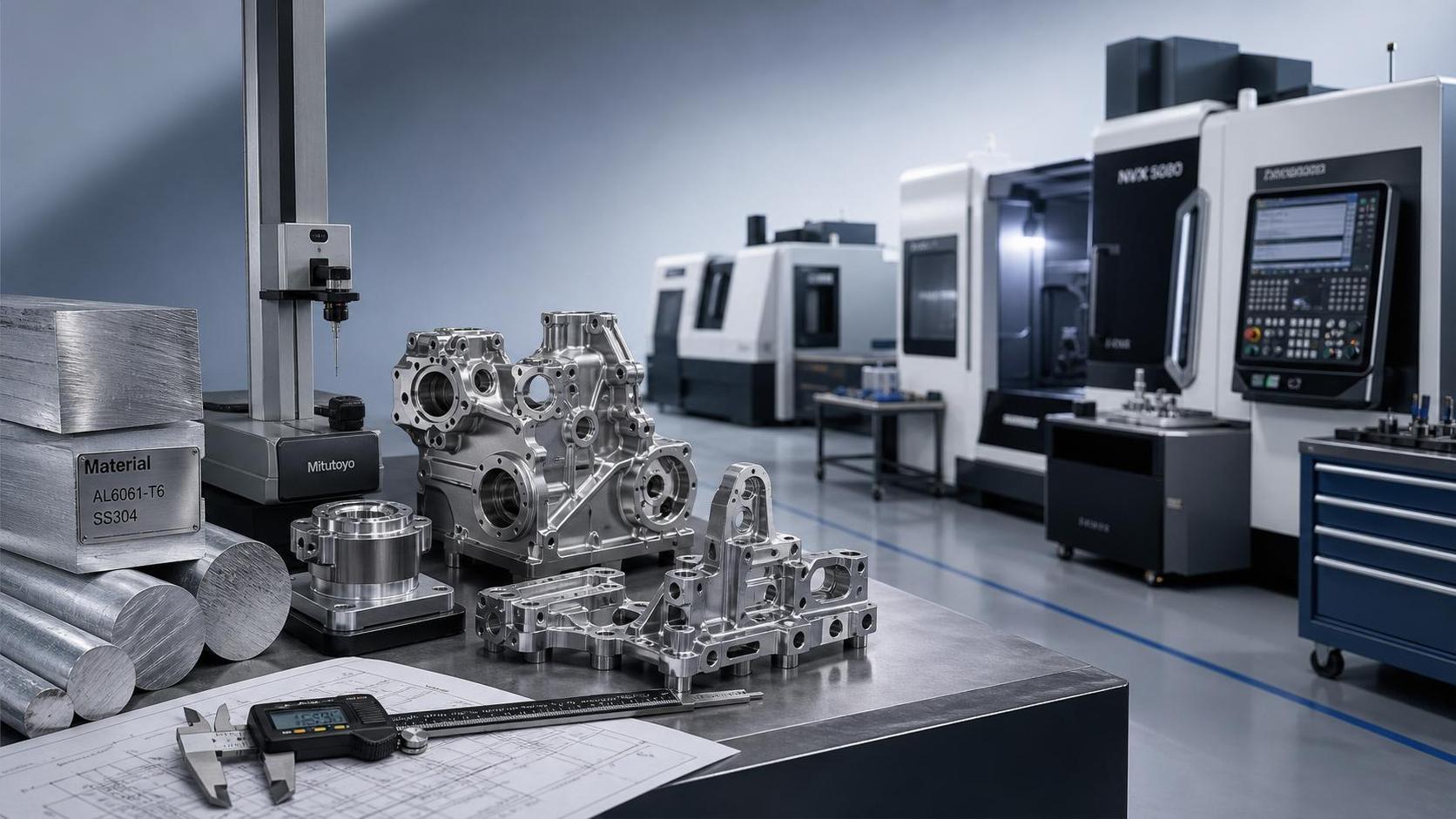
What Affects Cost-Effective CNC Manufacturing? Key Drivers Behind Part Price and Lead Time
For financial decision-makers, cost-effective CNC manufacturing is not about chasing the lowest unit price.
It is about understanding what truly drives total cost, delivery speed, and supply reliability.
A quote can look attractive at first glance, yet hidden variables often change the real outcome.
Part geometry, material grade, tolerance level, order volume, and scheduling pressure all shape the final result.
In actual procurement work, these factors also influence scrap risk, quality consistency, and supplier flexibility.
That is why cost-effective CNC manufacturing should be evaluated as a full business decision, not a simple price comparison.
Why Cost-Effective CNC Manufacturing Starts with Part Design
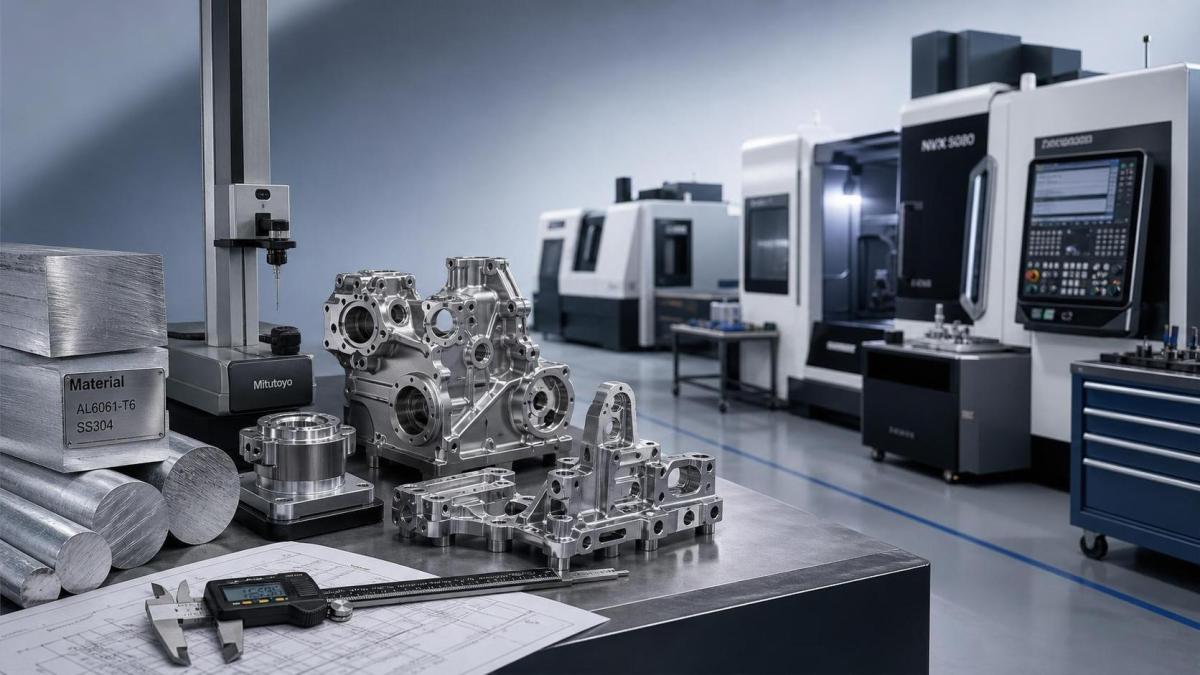
Part design is usually the first major lever behind cost-effective CNC manufacturing.
Even before raw material is purchased, geometry decisions can increase machining time and setup complexity.
Deep pockets, thin walls, undercuts, and hard-to-reach features often require extra tool changes.
They may also require slower cutting speeds or multi-axis equipment, which raises the quoted price.
More importantly, complex design often lengthens lead time because production planning becomes less flexible.
A supplier may need special fixturing, test runs, or additional quality checks before release.
From a budget standpoint, small design changes can deliver meaningful savings without affecting performance.
For example, standard corner radii are easier to machine than custom internal shapes.
Likewise, avoiding unnecessary cosmetic features can improve cost-effective CNC manufacturing across repeated orders.
Design choices that often increase cost
- Very tight internal corners that need small tools and slower feeds.
- Extremely deep cavities that create tool deflection risk.
- Thin walls that may deform during clamping or cutting.
- Multiple special surfaces requiring several setups.
- Features that force five-axis machining when three-axis would otherwise work.
When reviewing drawings, the question should be simple: which features create value, and which only create process burden?
Material Selection Has a Direct Impact on Cost and Lead Time
Material choice is another core factor in cost-effective CNC manufacturing.
The material affects raw stock price, machinability, tool wear, inspection standards, and procurement time.
Aluminum is often faster to machine than stainless steel or titanium.
That difference changes both cycle time and tooling consumption, especially in large production runs.
Some engineering plastics also machine efficiently, but dimensional stability and thermal behavior must be reviewed carefully.
From a sourcing perspective, exotic alloys may create another problem: availability.
If material must be imported or certified through a narrow supply chain, lead time expands quickly.
This also increases the risk of price volatility, especially when demand shifts across aerospace, energy, or electronics sectors.
In cost-effective CNC manufacturing, the best material is the one that meets function without creating unnecessary production friction.
A practical way to review material decisions
- Confirm the real mechanical, thermal, and corrosion requirements.
- Check whether a more common grade can meet the same function.
- Review stock availability in the target sourcing region.
- Estimate the impact on machining speed and tool life.
- Evaluate whether certification needs add cost or delay.
Tolerance, Surface Finish, and Inspection Requirements Matter More Than Expected
Many procurement teams focus on material and volume first, but tolerance often drives hidden cost.
A part with standard tolerances may run smoothly through production and inspection.
A part with very tight dimensional control may need slower machining, more in-process measurement, and higher rejection reserves.
That changes both unit price and delivery confidence.
The same is true for surface finish requirements.
If a finish is tighter than the application truly needs, extra polishing or secondary operations may be added.
Inspection standards also affect cost-effective CNC manufacturing.
Full dimensional reports, CMM validation, material traceability, and first article inspection all add value.
But they also add labor, machine occupancy, and documentation work.
The right target is not minimal quality control. The target is fit-for-purpose control that supports cost-effective CNC manufacturing.
Batch Size, Setup Efficiency, and Capacity Planning Shape the Quote
Order volume strongly influences cost-effective CNC manufacturing because setup cost must be absorbed somewhere.
For prototype work or very small batches, programming, fixturing, and machine preparation can dominate the quote.
As batch size increases, these fixed costs are spread across more units.
That usually improves unit economics, provided demand is stable and inventory risk remains manageable.
Capacity planning also matters.
A supplier with open machine time may quote aggressively for standard jobs.
A supplier under heavy load may increase pricing or extend lead times, even for similar parts.
This is one reason quote comparisons can be misleading when timing is ignored.
In recent market conditions, production schedules have become a major variable in cost-effective CNC manufacturing.
Questions worth asking before placing the order
- Is this order a prototype, pilot batch, or repeat production run?
- Can the volume be consolidated to reduce setup cost?
- Does the supplier have matching equipment available now?
- Will split deliveries improve inventory and cash flow balance?
- Is the quoted lead time based on current capacity or future assumptions?
Rush Delivery and Supply Chain Risk Can Erase Savings Quickly
Fast delivery is valuable, but it rarely comes free.
Urgent schedules often mean overtime, schedule reshuffling, premium freight, or lower process efficiency.
That is why expediting can undermine cost-effective CNC manufacturing even when the base quote looks manageable.
A second issue is sourcing risk.
Long logistics routes, unstable material supply, and weak communication processes often create hidden delay costs.
Even if unit price is lower, disruption can trigger line stoppage, missed deadlines, or expensive reorders.
The stronger signal in today’s market is this: resilience has become part of procurement value.
Reliable suppliers support cost-effective CNC manufacturing by reducing emergency actions and improving forecast accuracy.
How to Evaluate Cost-Effective CNC Manufacturing More Strategically
A smart evaluation model looks beyond headline price.
It connects engineering details with budget impact, lead time exposure, and long-term supply performance.
This is where cost-effective CNC manufacturing becomes a decision framework rather than a sourcing slogan.
In practical business terms, a useful review should include several checkpoints.
- Compare quotes using the same drawing revision, tolerance scope, and inspection requirement.
- Separate material cost, machining cost, finishing cost, and logistics cost.
- Identify which features or requirements drive most of the price.
- Review lead time assumptions against real production capacity.
- Assess supplier communication speed and problem-solving discipline.
- Factor in scrap risk, delay risk, and rework exposure.
When these checkpoints are used consistently, sourcing decisions become easier to defend internally.
They also help explain why one supplier may offer better total value, even with a higher unit quote.
That is the real logic behind cost-effective CNC manufacturing.
It is the balance between design efficiency, material suitability, production stability, and realistic delivery planning.
As global CNC machining and precision manufacturing continue moving toward higher precision and smarter automation, this balance matters even more.
The most effective next step is to review current part drawings and quote structures side by side, then remove cost drivers that do not add business value.
Recommended for You
 How to Select a CNC Metal Lathe for Tight-Tolerance Shaft and Sleeve PartsCNC Machining Technology Center
 How to Select an Industrial Lathe for High-Volume Shaft ProductionMachine Tool Industry Editorial Team
 Selecting Machine Tools for Automotive Parts: Accuracy, Throughput, and AutomationMachine Tool Industry Editorial Team
 Industrial Machining: Selecting Processes for Tight-Tolerance Metal PartsCNC Machining Technology Center
 Manufacturing Technology Trends That Improve Throughput and Quality ControlManufacturing Market Research Center
 How to Design Cost-Effective Fixtures That Maintain Cycle Time in Mass ProductionCNC Machining Technology Center

Aris Katos
Future of Carbide Coatings
15+ years in precision manufacturing systems. Specialized in high-speed milling and aerospace grade alloy processing.
▶
How to Evaluate a Machine Tool Factory Before Sourcing CNC EquipmentGlobal Machine Tool Trade Research Center▶
How to Evaluate a CNC Machine Tool Manufacturer for Precision and Service SupportGlobal Machine Tool Trade Research Center▶
What Affects Cost-Effective CNC Manufacturing? Key Drivers Behind Part Price and Lead TimeGlobal Machine Tool Trade Research Center▶
How to Evaluate a CNC Tooling System Supplier in Germany for Quality, Lead Time, and CostGlobal Machine Tool Trade Research Center▶
How to Evaluate a CNC Tooling System Supplier in Germany for Quality, Lead Time, and SupportGlobal Machine Tool Trade Research Center
Mastering 5-Axis Workholding Strategies
Join our technical panel on Nov 15th to learn about reducing vibrations in thin-wall components.

Providing you with integrated sanding solutions
Before-sales and after-sales services
Comprehensive technical support