• Global CNC market projected to reach $128B by 2028 • New EU trade regulations for precision tooling components • Aerospace deman
NYSE: CNC +1.2%LME: STEEL -0.4%

Choosing Industrial Robots for Warehouse Picking and Palletizing
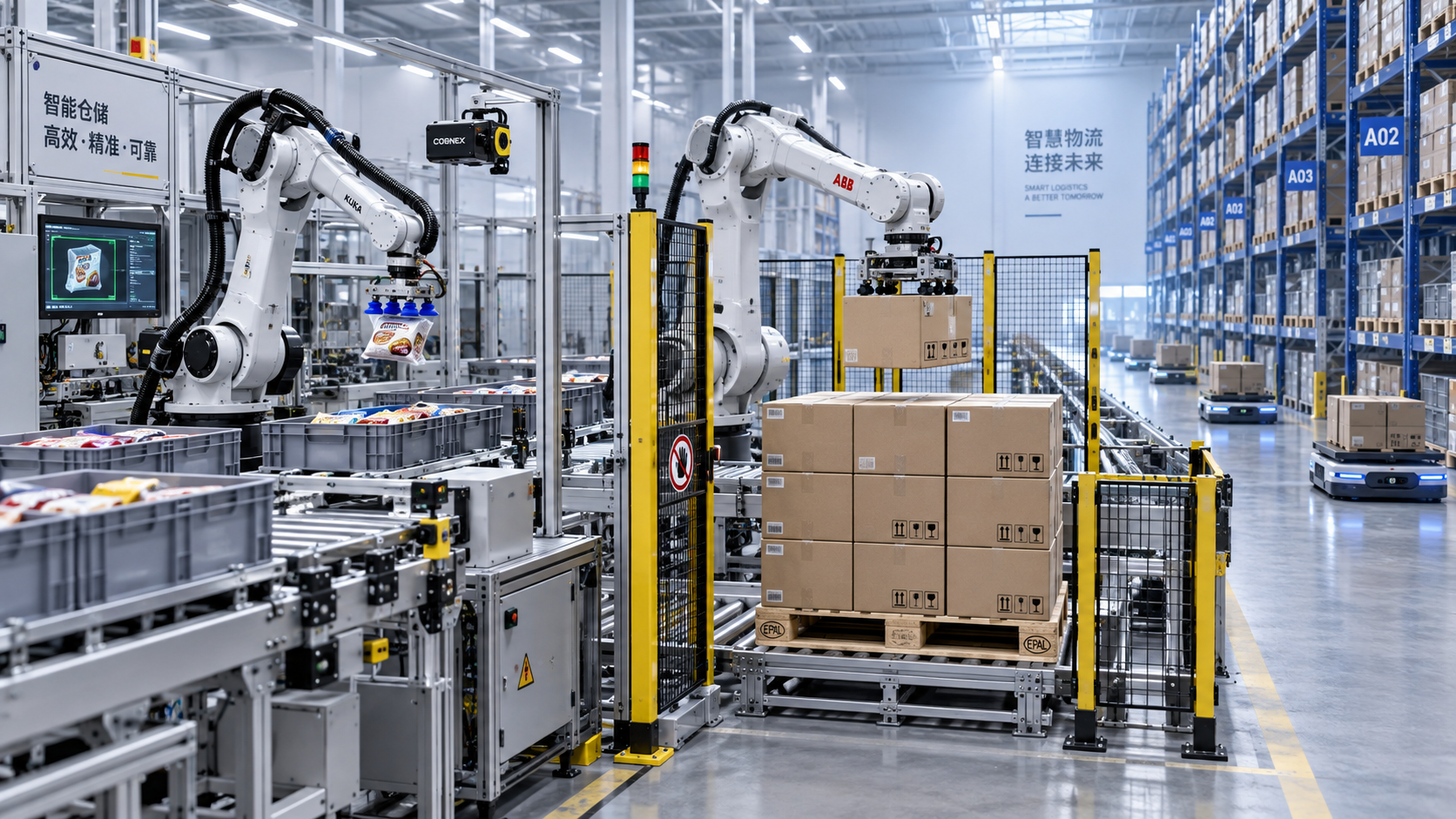
The right robot for warehouse picking is not necessarily the right robot for palletizing. Mixed-SKU picking depends on recognizing an accessible item, establishing a reliable grasp, and handling exceptions. Palletizing depends more heavily on load capacity, working envelope, stack geometry, and sustained material flow. Selecting one platform for both tasks only makes sense when its tooling, motion, and operating constraints satisfy both applications without excessive compromise.
The central selection question is therefore not which robot has the highest payload or fastest published cycle time. It is which complete cell can deliver the required rate of correctly handled goods under the actual product mix, layout, and recovery conditions. In industrial robotics for warehouse automation, the arm specification establishes feasibility; the surrounding system determines usable performance.
Define the handling task before comparing robot models
“Picking” can mean retrieving individual products from a tote, transferring sealed cartons from a conveyor, or removing cases from a pallet. These tasks present different uncertainties. An isolated carton arriving at a known position requires less perception and grasp planning than a flexible package partially obscured inside a bin.
Build the application specification from representative operating data, including dimensions, weight, packaging material, surface condition, orientation, and arrival pattern. Record exceptions explicitly: damaged cartons, transparent wrapping, loose lids, protruding straps, and products that cannot tolerate compression. A list containing only nominal dimensions and average weight hides the conditions most likely to interrupt production.
For palletizing, define pallet dimensions, maximum stack height, case orientation, permitted overhang, interlayer sheets, and downstream stability requirements. A robot may place every carton accurately while producing an unsuitable load because the stacking pattern, carton compression strength, or pallet condition is inadequate.
Separate mandatory coverage from optional coverage. If a small subset of products requires a fundamentally different gripper or handling method, a controlled manual bypass may be more economical than forcing every item through one automated process. That bypass must be included in capacity and labor calculations.
Choose the robot architecture around the motion
Robot architecture should follow the required trajectories and product presentation—not a general preference for flexibility.
A collaborative robot is not a separate answer to the handling problem. It may provide suitable reach, programming features, or deployment options, but its achievable production rate depends on the safety measures required for the complete application. Heavy cartons, rigid tools, and trapping points can remove the practical advantage of operating without perimeter guarding.
Check payload and reach at the difficult positions
Rated payload includes everything carried at the wrist: product, gripper, adapter plates, valves, sensors, and any carried portion of service lines. A robot selected solely against the heaviest carton can become undersized once the end effector is designed.
Mass alone is insufficient. Compare the proposed tool and product combination with the manufacturer’s permitted center-of-gravity, wrist-moment, and inertia limits. A wide carton held away from the flange imposes a different load from a compact object of equal weight. Multi-case handling can improve throughput, but it also increases tooling mass and rotational inertia.
Reach requires the same application-level scrutiny. Maximum published reach does not establish that the robot can access a pallet’s far corner at maximum stack height with the required tool orientation. Verify the full tool path, including approach, placement, withdrawal, and clearance above adjacent cases. Check low pickup points as well as high placements.
Use a simulation containing the proposed tool, conveyors, pallets, guarding, and overhead obstructions. Confirm critical positions against the selected robot’s load data and motion limits. A layout that works only with an empty gripper or an unfinished pallet is not a valid layout.
The gripper and perception system determine product coverage
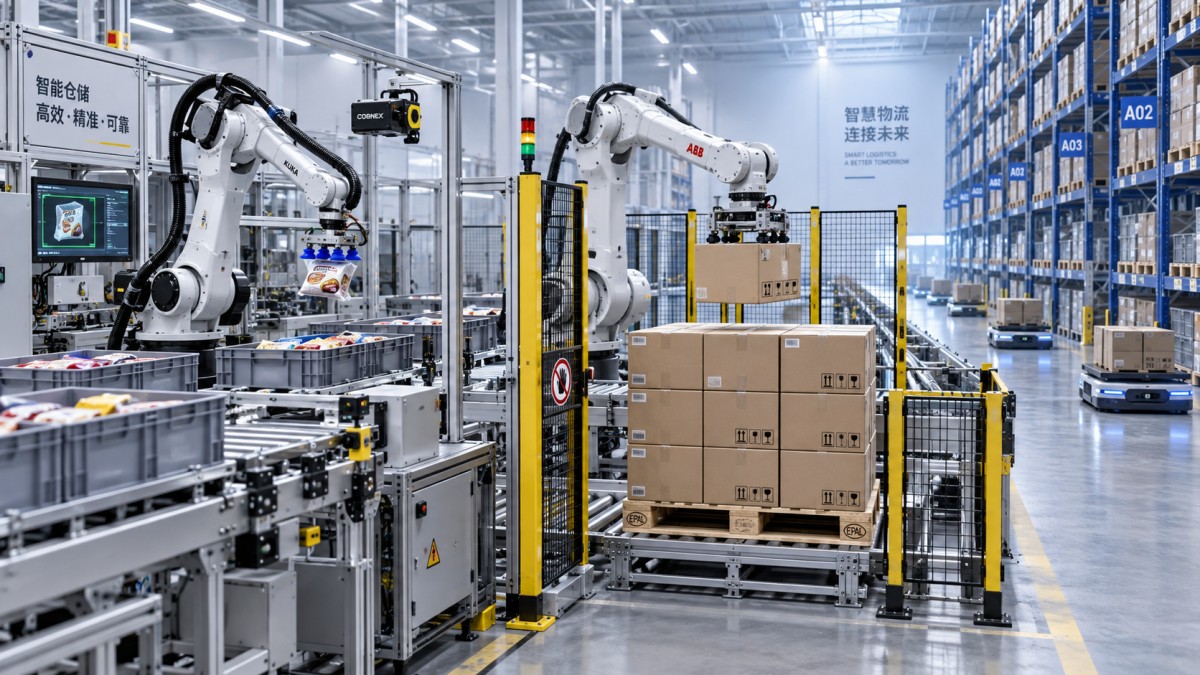
Vacuum gripping is attractive for cartons and products with accessible sealing surfaces. Its reliability depends on leakage, surface porosity, wrinkles, dust, and available contact area. Vacuum level alone does not prove a secure grasp: a partial seal may lift an item but fail during acceleration.
Evaluate holding capacity with appropriate allowance for acceleration and loss of effective contact area. Specify how the system detects an unsuccessful seal, a dropped product, or an unintended double pick. Where a dropped load could create a hazard, assess retention and loss-of-energy behavior as part of the safety design.
Mechanical fingers can handle products that do not seal reliably, but they need clearance and can damage weak packaging. Under-support tools reduce dependence on top-surface strength, although they require suitable access beneath the load. Hybrid tooling broadens coverage at the cost of weight, complexity, and maintenance.
For mixed-SKU picking, perception must do more than identify an object. The system needs a usable grasp location, a collision-free approach, and a verified destination. Transparent film, reflective surfaces, dark materials, and occlusion can challenge particular sensing methods. Test the proposed camera, lighting, and software combination on the real packaging rather than accepting a generic “3D vision” capability statement.
Ask how unfamiliar products enter the system. Some solutions require SKU models, dimensions, grasp rules, or sample-based commissioning; others generate grasps from observed geometry. Neither approach eliminates validation. Establish whether operators can add products independently and what performance checks are required before release.
Size throughput around successful output, not arm speed
A published robot cycle time describes a defined motion under stated conditions. It does not include every operation needed to move warehouse goods: locating products, waiting for conveyor presentation, establishing a grasp, confirming release, changing pallets, or recovering from errors.
Start with required good units per hour during the relevant operating window. If demand is 600 cases per hour, a single-case process has an average budget of six seconds per successfully completed case before allowing for interruptions. This is a capacity calculation, not evidence that a particular robot can achieve the rate.
Distinguish operations that overlap from those that occur sequentially. Vision processing may run while the robot moves, but only if the next product is visible and its position remains valid. Pallet exchange may happen in parallel at a second station, yet that arrangement requires additional space and safe access control.
For variable picking, average cycle time can conceal a significant long tail. Difficult grasps, repeated perception attempts, and blocked destinations can create queues even when average capacity appears sufficient. Evaluate cycle-time distribution, sustained output, and recovery frequency together. Also confirm that upstream presentation and downstream discharge can support the proposed rate.
Buffers should absorb defined disruptions, not disguise a persistent capacity deficit. Size them against the duration and frequency of expected interruptions, then determine what happens when they fill or empty.
Integration quality becomes visible during exceptions
A robot cell needs clear ownership of order data, SKU attributes, pallet recipes, conveyor zones, and inventory transactions. Depending on the architecture, these responsibilities may sit across the warehouse management system, warehouse execution system, cell controller, PLC, and robot controller.
Protocol compatibility is only the starting point. Agree on message content, acknowledgments, timeouts, retries, and recovery states. If a carton is physically moved but the transaction acknowledgment is lost, the system must resolve the discrepancy without creating a duplicate movement or incorrect inventory record.
Define responses to operational faults before commissioning:
- A product cannot be identified or grasped after the permitted attempts.
- The destination tote is missing, full, or inconsistent with the assigned order.
- A pallet is misaligned or its actual stack differs from the expected pattern.
- A conveyor stops while the robot carries a product.
- Power or communications return after an interrupted transfer.
Each condition needs a safe physical response, a consistent software state, and a practical recovery procedure. Specify who can make the recovery and what information the interface provides. Repeated specialist intervention can erase the benefit of a high nominal pick rate.
Check access to diagnostic logs, recipe backups, configuration files, and software support. For vision-based systems, clarify image retention, remote-access controls, update procedures, and whether operation depends on an external service.
Safety and site constraints can change the preferred solution
Assess the complete cell, including conveyors, grippers, suspended products, pallet movement, and maintenance activities. Relevant standards can include the ISO 10218 series for industrial robot safety, ISO 12100 for machinery risk assessment, and ISO 13849-1 for safety-related control systems. Applicable editions and legal requirements depend on the installation jurisdiction and project scope.
Do not treat a robot’s safety functions as proof that the integrated application is safe. Stopping distance, access openings, crushing points, load retention, and unexpected restart require application-specific evaluation. A collaborative operating mode does not remove hazards created by the product or tooling.
Confirm floor loading and anchoring, electrical supply, compressed-air capacity, ambient conditions, and service access. Include the space needed to replenish pallets, remove rejected products, replace tools, and maintain vacuum equipment. The footprint of the arm is a poor proxy for the footprint of an operable cell.
Make acceptance evidence match the operating requirement
A convincing demonstration uses a defined product mix and reports all attempts, not just successful cycles. Agree on test conditions before purchase: packaging variation, pallet patterns, operating duration, product presentation, and permitted manual intervention. Include difficult but legitimate products in proportion to their operational importance.
Measure correct completed transfers, damage, wrong-item handling, double picks, sustained throughput, downtime, and recovery time. Define first-attempt pick success separately from eventual success after retries. Otherwise, a system can report high success while missing the required output rate.
Factory testing can establish core capability, but site acceptance must also validate local interfaces, conveyor behavior, safety functions, and operating procedures. Document what constitutes a failure, which interruptions are excluded, and how software or tooling changes trigger retesting.
Compare lifecycle cost only after these performance boundaries are clear. Include integration, tooling changes, spare parts, vacuum consumables, software fees, maintenance, residual manual handling, and production disruption. The stronger choice is the system whose demonstrated operating envelope covers the required work—and whose limitations can be managed without undermining capacity or safety.
NEXT ARTICLE
Recommended for You
 Choosing Industrial Robots for Warehouse Picking and PalletizingMachine Tool Industry Editorial Team
 How to Cut CNC Machining Energy Use per Part Without Longer Cycle TimesCNC Machining Technology Center
 How thermal drift affects accuracy in high-precision manufacturingCNC Machining Technology Center
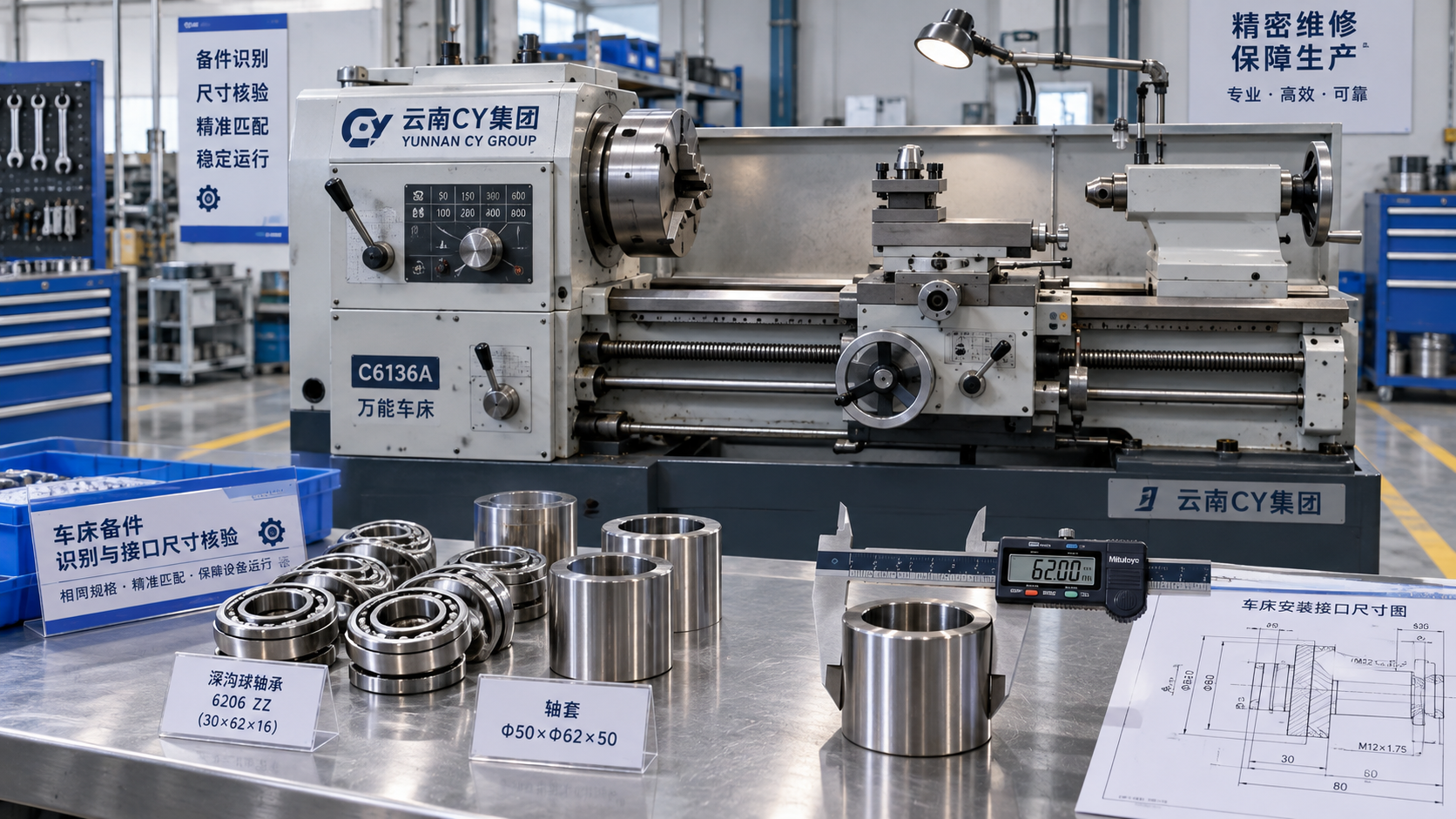
 How to verify spare part compatibility for Yunnan CY Group lathesMachine Tool Industry Editorial Team
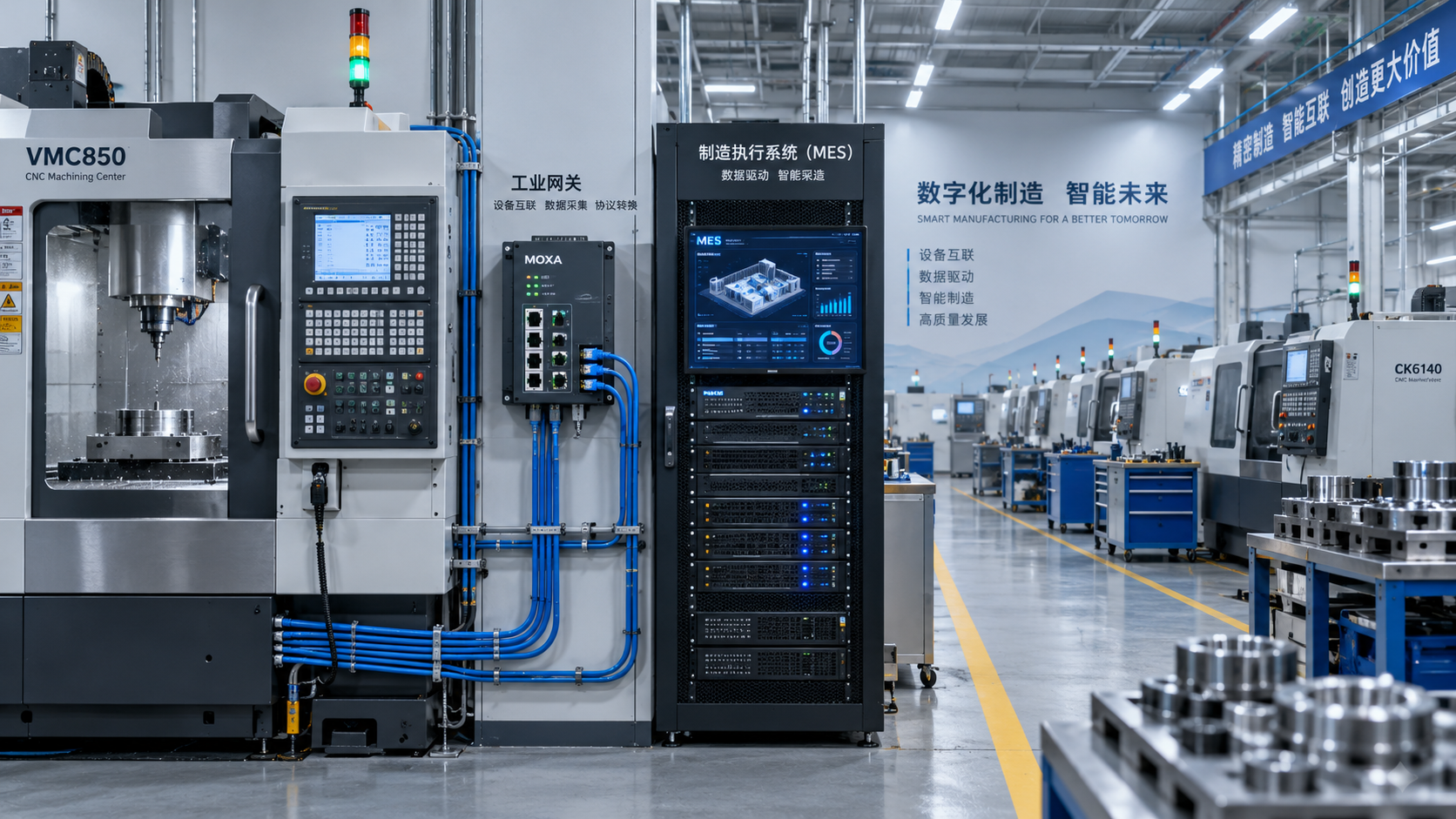
 Digital Manufacturing for Smart Factories: Connecting Legacy Machines to MESMachine Tool Industry Editorial Team
 How to Select a CNC Metal Lathe for Tight-Tolerance Shaft and Sleeve PartsCNC Machining Technology Center

Aris Katos
Future of Carbide Coatings
15+ years in precision manufacturing systems. Specialized in high-speed milling and aerospace grade alloy processing.
▶
Choosing Industrial Robots for Warehouse Picking and PalletizingMachine Tool Industry Editorial Team▶
Digital Manufacturing for Smart Factories: Connecting Legacy Machines to MESMachine Tool Industry Editorial Team▶
Selecting Machine Tools for Automotive Parts: Accuracy, Throughput, and AutomationMachine Tool Industry Editorial Team▶
Smart Manufacturing for Small Businesses: Where Automation Delivers the Fastest ROIMachine Tool Industry Editorial Team▶
How Smart Manufacturing Technology Improves OEE Across Industry 4.0 Production LinesMachine Tool Industry Editorial Team
Mastering 5-Axis Workholding Strategies
Join our technical panel on Nov 15th to learn about reducing vibrations in thin-wall components.

Providing you with integrated sanding solutions
Before-sales and after-sales services
Comprehensive technical support