• Global CNC market projected to reach $128B by 2028 • New EU trade regulations for precision tooling components • Aerospace deman
NYSE: CNC +1.2%LME: STEEL -0.4%

CNC Lathe Quick Installation Guide: How to Avoid Alignment and Wiring Mistakes
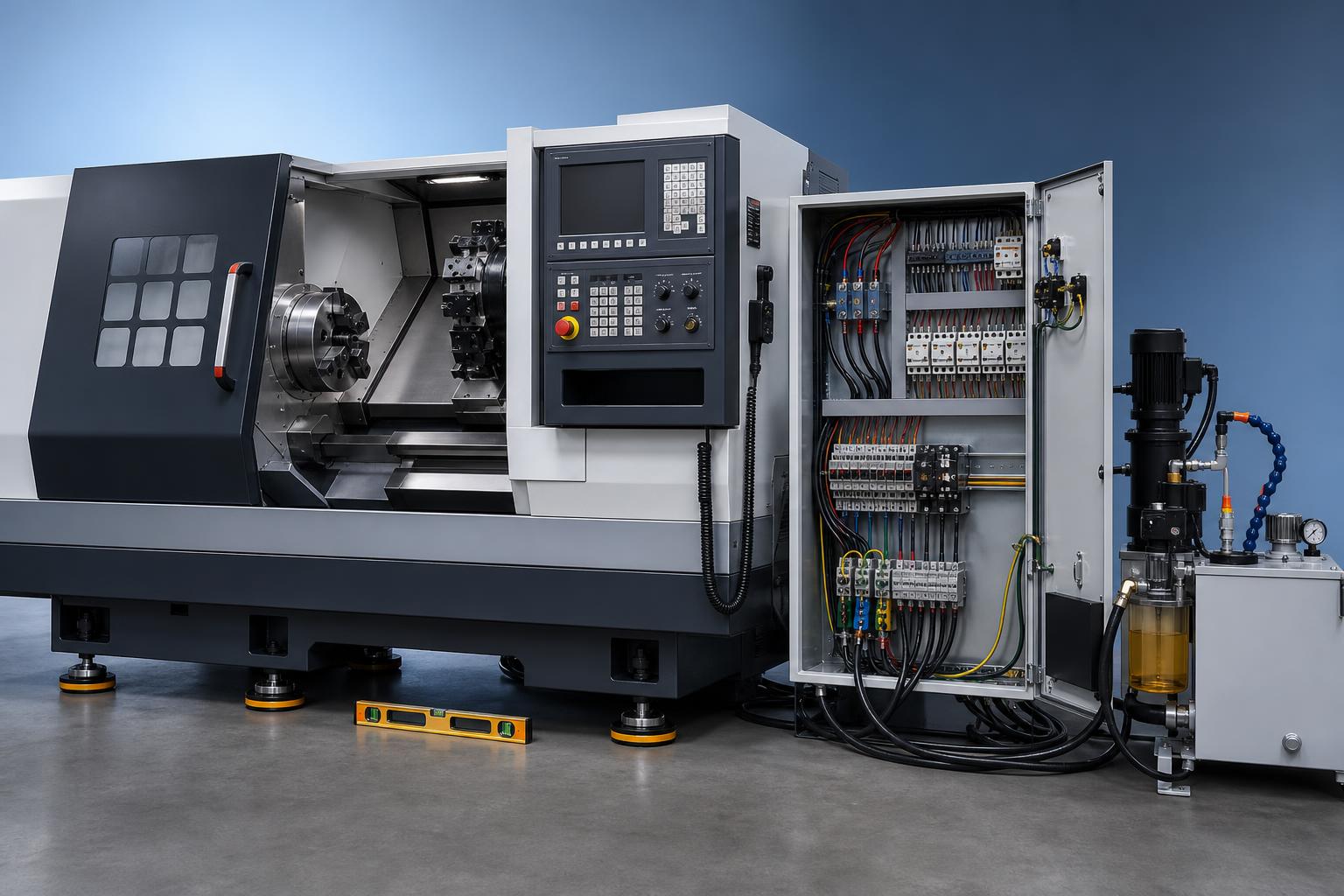
CNC Lathe Quick Installation Guide: How to Avoid Alignment and Wiring Mistakes
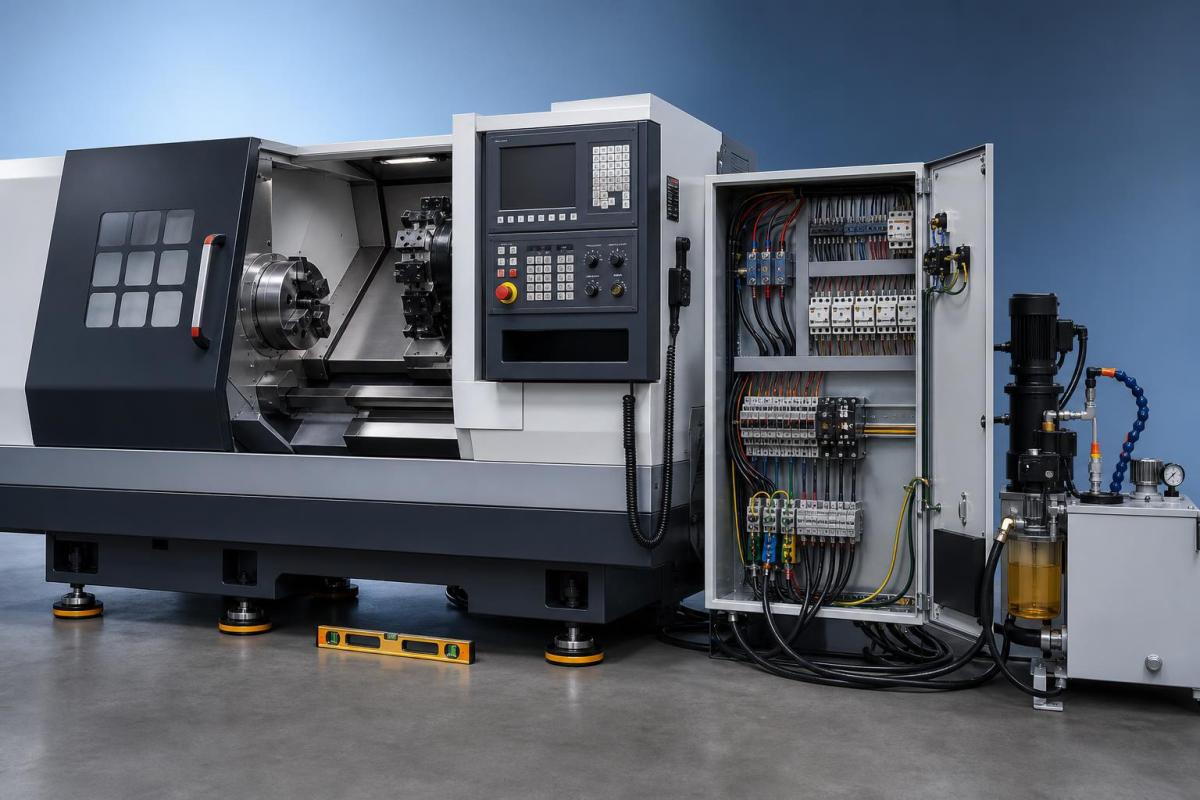
This CNC Lathe Quick Installation Guide is built for fast field installation without losing control of accuracy, safety, or startup stability.
In practice, most early failures come from simple setup errors, not from major component defects.
A rushed level check, a loose ground wire, or a wrong phase sequence can trigger vibration, alarms, or poor cutting results.
That is why a reliable CNC Lathe Quick Installation Guide should focus on the few checks that prevent the most expensive rework.
This article walks through alignment, wiring, and startup verification in the order that makes site work faster and cleaner.
It also highlights the mistakes that tend to appear during urgent handovers or first-time machine placement.
Start With Site Conditions Before Touching the Machine
A practical CNC Lathe Quick Installation Guide always begins with the floor, power source, and surrounding workspace.
If the foundation is weak or uneven, alignment work becomes unstable and must be repeated later.
Check whether the installation area is clean, dry, and free from forklift impact paths or coolant drainage problems.
Measure the incoming voltage before connection, and compare it with the machine nameplate and electrical drawings.
From recent field changes, unstable plant power has become a more common startup issue than many teams expect.
This also means a quick installation is only possible when basic environmental risks are cleared first.
- Confirm floor load capacity and anchor point layout.
- Verify power rating, frequency, and phase consistency.
- Keep enough service space around the electrical cabinet and tailstock side.
- Check air supply quality if the machine uses pneumatic components.
Base Positioning and Leveling: The First Accuracy Gate
In any CNC Lathe Quick Installation Guide, base leveling is the first real accuracy gate.
If the bed twists during installation, spindle performance and turret repeatability will suffer before cutting even starts.
Place the machine according to the manufacturer lifting and support points, then release shipping locks carefully.
Never level the machine on dirty pads, paint flakes, or temporary shims with poor contact.
Use a calibrated precision level and follow the machine builder’s measurement positions, not convenient flat surfaces.
A common mistake is over-correcting one corner and introducing twist into the opposite end.
The better method is small, paired adjustments with rechecking after each change.
- Set all leveling points into light, even contact.
- Rough-level the bed in longitudinal and cross directions.
- Tighten anchors gradually, then repeat fine leveling.
- Wait for machine settlement, then perform a final confirmation.
This part of the CNC Lathe Quick Installation Guide often decides whether later geometry checks stay stable or drift within hours.
How to Avoid Alignment Mistakes That Lead to Vibration
Alignment mistakes rarely look dramatic during installation, but they show up quickly during rapid traverse or heavy turning.
The first warning sign is usually abnormal vibration, uneven sound, or poor surface finish on a simple test cut.
One frequent cause is incomplete removal of transport supports or shipping brackets.
Another is connecting chip conveyors, bar feeders, or coolant tanks in a way that pulls the machine base sideways.
In real service work, accessory installation often changes the original leveling condition more than expected.
So this CNC Lathe Quick Installation Guide recommends one rule: recheck level after every major peripheral connection.
Also inspect spindle center alignment, tailstock alignment, and turret indexing status before production release.
- Remove all transport restraints and confirm free axis movement.
- Check tailstock quill movement and centerline consistency.
- Confirm turret lock signal and station repeatability.
- Run a dry cycle before any loaded cutting test.
Electrical Wiring Checks That Prevent Alarm Faults
A strong CNC Lathe Quick Installation Guide treats wiring checks as a startup priority, not a final formality.
Many alarm faults during commissioning are tied to power quality, terminal looseness, or incorrect phase rotation.
Begin with the main incoming supply, isolator, breaker rating, and protective grounding continuity.
Then inspect cabinet terminals one by one against the wiring diagram and terminal numbering.
Do not assume factory-tight terminals stayed tight after long transport or repeated cabinet movement.
More clearly than before, global equipment shipping has made vibration-related connector loosening a routine issue.
Pay special attention to servo connectors, spindle drive terminals, transformer taps, and I/O plugs.
This CNC Lathe Quick Installation Guide also recommends checking cable shielding and separation from power lines.
Poor routing can create unstable signals, encoder feedback errors, or intermittent communication faults.
Fluid, Lubrication, and Peripheral Checks Before Power-On
Before first power-on, the CNC Lathe Quick Installation Guide should shift from static checks to support system readiness.
Low lubrication oil, empty hydraulic tanks, or blocked coolant lines can cause immediate faults after startup.
Fill all fluids to specification, not to guesswork, and use the recommended grade where available.
Check hose direction, pump rotation, filter condition, and visible leakage around fittings.
This is especially important on machines shipped in separate modules with external tanks or conveyors.
At the same time, verify chuck pressure, tailstock pressure, and air preparation units if fitted.
Small pressure mistakes often get misread as electrical trouble, which slows down diagnosis.
- Lubrication reservoir level and delivery status
- Hydraulic oil type, level, and pressure build-up
- Coolant tank connection and flow direction
- Air regulator setting and moisture removal
First Startup Sequence: Keep It Slow and Verifiable
A useful CNC Lathe Quick Installation Guide never jumps from wiring completion to full-speed machine operation.
The first startup should be controlled, staged, and easy to pause.
Power the machine, clear emergency stops, and monitor the control, drives, fans, and pump behavior.
Listen for unusual cabinet noise, relay chatter, or hydraulic cavitation during the first minutes.
Then reference the axes and jog each axis at low speed across a short travel range.
Check limit sensors, lubrication pulses, spindle orientation, chuck actuation, and turret indexing one function at a time.
Only after those steps should you extend travel, increase spindle speed, and run a dry machining cycle.
- Main power on and alarm screen review
- Axis reference return and low-speed jogging
- Spindle low-speed rotation and direction check
- Turret, chuck, tailstock, and coolant function test
- Dry run, then light test cutting
This startup order keeps troubleshooting narrow and prevents stacked errors from hiding the real cause.
Final Checklist for a Stable Handover
The last part of a CNC Lathe Quick Installation Guide is not paperwork alone.
It is the final check that confirms the machine can hold accuracy after installation pressure is gone.
Recheck bed level, inspect terminal heat, review alarm history, and confirm lubrication and hydraulic cycling.
Run a sample part if possible, because machining results reveal hidden setup issues faster than visual inspection.
Keep a short record of torque checks, voltage readings, axis behavior, and any parameter changes made onsite.
That record becomes valuable when the same site later expands to machining centers, automation cells, or flexible production lines.
As machine tool systems become more digital and interconnected, disciplined installation work matters even more.
In short, this CNC Lathe Quick Installation Guide helps avoid the two biggest startup risks: alignment drift and wiring mistakes.
When those basics are handled carefully, the machine reaches stable production faster and with fewer call-backs.
Use this CNC Lathe Quick Installation Guide as a repeatable field checklist, and each installation will become faster, cleaner, and more dependable.
Recommended for You
![]() Mitsubishi Electric Announces Physical AI System Linking Humanoid Robots and CNC MachinesMachine Tool Industry Editorial Team
Mitsubishi Electric Announces Physical AI System Linking Humanoid Robots and CNC MachinesMachine Tool Industry Editorial Team Precision Machining for Defense: Supplier Quality and Traceability ChecksManufacturing Market Research Center
![]() Nidec Machine Tool Launches MVR-5X Five-Axis Gantry MachineMachine Tool Industry Editorial Team
Nidec Machine Tool Launches MVR-5X Five-Axis Gantry MachineMachine Tool Industry Editorial Team Choosing a Precision Disc Parts Manufacturer in China: Tolerances and Quality ChecksManufacturing Market Research Center
![]() Siemens Executive Says AI Could Raise Factory Automation to 80%Manufacturing Market Research Center
Siemens Executive Says AI Could Raise Factory Automation to 80%Manufacturing Market Research Center Choosing Automated Machine Tools for High-Mix, Low-Volume ProductionMachine Tool Industry Editorial Team



Aris Katos
Future of Carbide Coatings
15+ years in precision manufacturing systems. Specialized in high-speed milling and aerospace grade alloy processing.
▶
How to Select an Industrial Lathe for High-Volume Shaft ProductionMachine Tool Industry Editorial Team▶
When Does CNC Turning Pay Off? A Break-Even Guide by Annual Part VolumeMachine Tool Industry Editorial Team▶
How to Compare CNC Metal Lathe Brands ObjectivelyMachine Tool Industry Editorial Team▶
CNC Lathe Quick Installation Guide: How to Avoid Alignment and Wiring MistakesMachine Tool Industry Editorial Team▶
CNC Lathe Quick Installation Guide: Common Setup Mistakes and How to Avoid ThemMachine Tool Industry Editorial Team
▶
Mastering 5-Axis Workholding Strategies
Join our technical panel on Nov 15th to learn about reducing vibrations in thin-wall components.

Providing you with integrated sanding solutions
Before-sales and after-sales services
Comprehensive technical support