• Global CNC market projected to reach $128B by 2028 • New EU trade regulations for precision tooling components • Aerospace deman
NYSE: CNC +1.2%LME: STEEL -0.4%

Is CNC Machining Hub Better Than Local Shops for Prototyping?
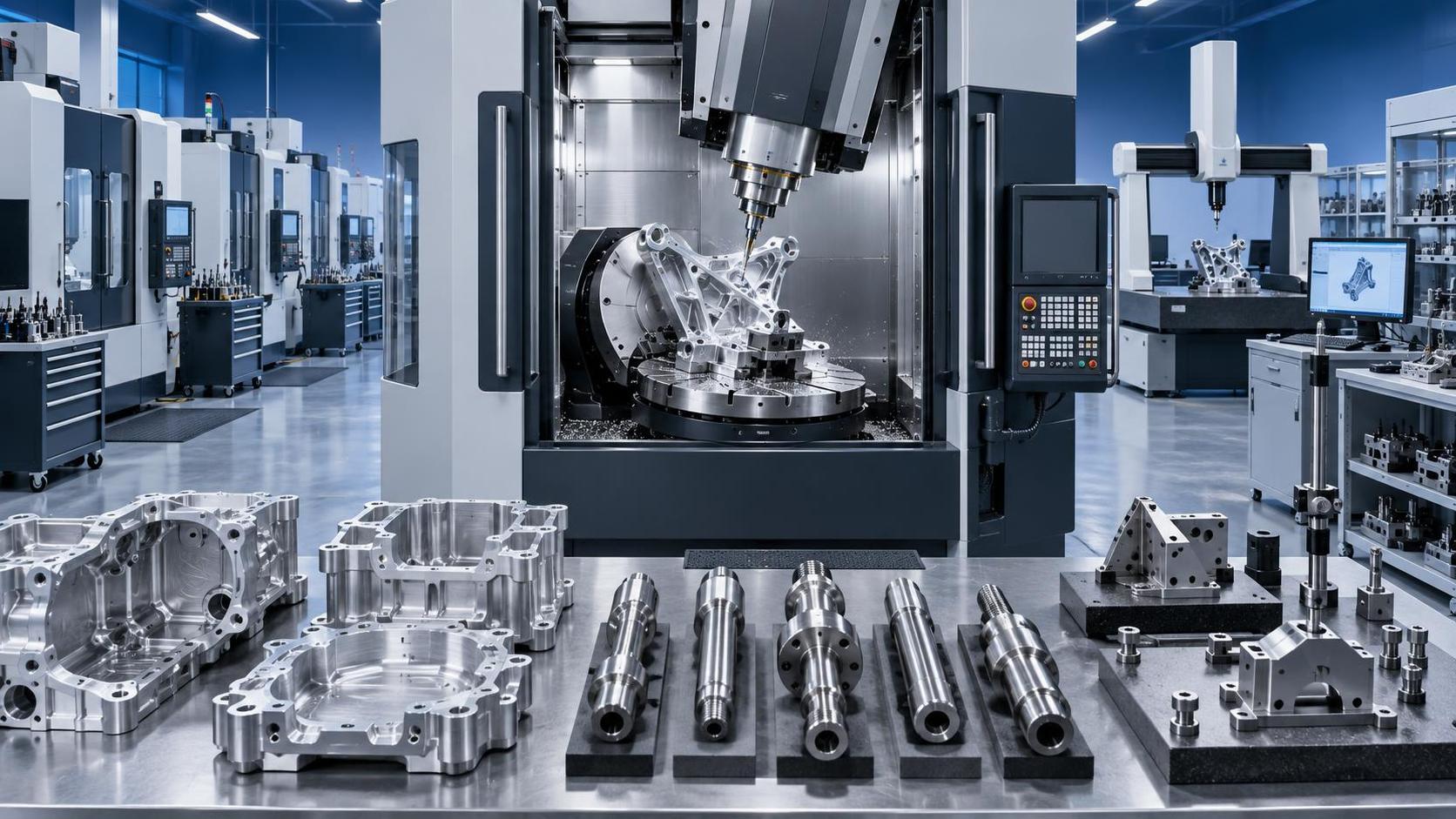
Is CNC Machining Hub Better Than Local Shops for Prototyping?
For manufacturers developing new parts, the question is CNC Machining Hub better than local shops for prototyping depends on far more than the quoted unit price. A prototype program can succeed or fail on details that appear small at the purchasing stage: whether the supplier recognizes an inaccessible internal corner, whether the requested alloy is actually available, whether a drawing revision reaches the machinist before setup, or whether inspection results are clear enough for the next design decision.
Centralized machining hubs and local machine shops solve different problems. A hub generally coordinates a distributed or integrated network of machining resources, engineering review, material sourcing, quality processes, and logistics. A local shop often provides direct access to the people programming and running the machines, with shorter physical distance and a relationship that can deepen across repeated projects. Neither model is automatically superior. The better choice depends on prototype maturity, geometry, risk tolerance, communication needs, and what the part is expected to become after validation.
That distinction matters as CNC manufacturing becomes more connected. Modern lathes, vertical and horizontal machining centers, mill-turn equipment, and multi-axis systems now support highly complex prototype work that once required multiple setups or specialized suppliers. At the same time, digital quoting, cloud-based document control, automated inspection, and flexible production planning have changed how buyers can access those capabilities. The sourcing decision is no longer simply “nearby versus overseas.” It is often a question of which operating model gives the project the right level of technical control.
What a CNC Machining Hub Actually Changes
A machining hub is not defined by one machine type or one country. Its main feature is coordination. Instead of asking a single workshop to accommodate every requirement, the hub can route work to facilities with suitable capacity, equipment, material access, or process expertise. A three-axis aluminum enclosure, a five-axis aerospace-style bracket, a turned stainless-steel shaft, and a precision disc may not need the same production environment. A well-managed hub can match each part to an appropriate process rather than forcing every job through the same shop floor.
This can be valuable when prototypes include many different parts. Product teams in industrial automation, energy equipment, electronics, automotive systems, and laboratory equipment often need a mix of milled housings, turned pins, threaded adapters, fixtures, and assembly-related components. Coordinating those categories separately can consume substantial engineering and procurement time. A hub may reduce that administrative burden by maintaining a single technical point of contact and a consistent documentation flow.
The strongest hubs do not treat routing as a purely commercial task. They review manufacturability before machining begins. That review should identify practical issues such as thin walls likely to distort, deep pockets with poor tool reach, ambiguous thread callouts, tolerance chains that cannot be meaningfully inspected, or surface-finish requirements that conflict with geometry. For an early prototype, that feedback can be more valuable than a marginal reduction in piece price.
However, “hub” should not be mistaken for “hands-off.” The buyer still needs to confirm who owns engineering communication, who approves substitutions, what inspection record will be supplied, and how nonconforming parts are handled. A centralized model can hide complexity from the customer, but it cannot remove the underlying manufacturing risks.
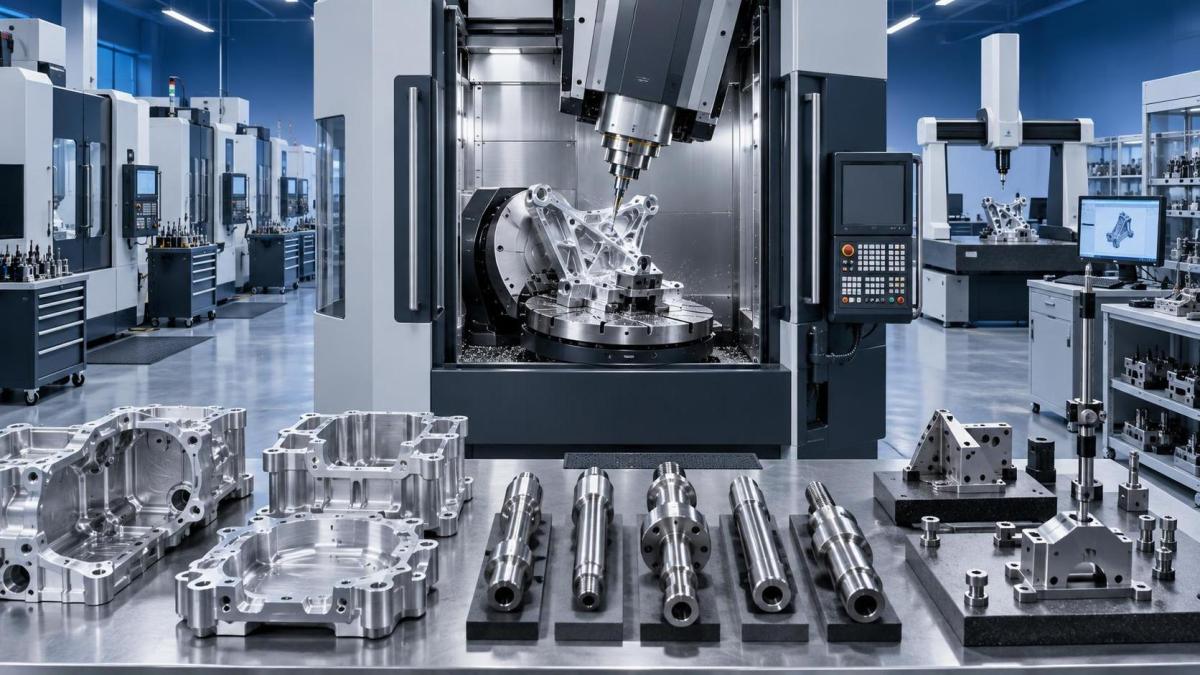
Where Local Shops Retain a Real Advantage
Local machine shops remain especially effective when the prototype is still being discovered rather than merely manufactured. If an engineer expects to visit the shop, inspect a first-off part, discuss a setup with a programmer, or make same-day dimensional changes, physical proximity can be decisive. A direct conversation beside a machine can resolve questions that would otherwise generate several drawing revisions and email cycles.
This is common with development fixtures, experimental mechanisms, repair-related parts, and assemblies where mating components must be adjusted iteratively. The local shop may already understand how a company’s equipment is used, how its technicians assemble products, or which features have created problems in the past. That practical familiarity is difficult to capture in a CAD file.
A local supplier can also be the safer choice when confidentiality depends on tightly controlled access, when a program has export restrictions or customer-specific requirements, or when the buyer needs a rapid physical response to an unexpected issue. These situations do not mean that a hub cannot perform the work. They mean the communication path, data controls, and applicable obligations need closer review before releasing files.
The limitation is capacity concentration. A capable local shop may still have only certain machine envelopes, a narrow material inventory, or scheduling constraints during busy periods. If the project requires simultaneous milling, turning, secondary finishing, and inspection across several part families, one nearby supplier may not be the fastest route.
The Prototype Stage Should Drive the Decision
The word “prototype” covers several very different jobs. A proof-of-concept part used to test motion is not the same as an engineering prototype intended for functional testing, and neither is the same as a pre-production build used to validate assembly methods. Choosing a supplier without defining the stage often leads to unnecessary cost or, worse, false confidence in an unrepresentative result.
For a simple one-off bracket, the best supplier may be the shop that can clarify a missing dimension in minutes. For a product with twenty components in aluminum, stainless steel, and engineering plastics, a hub may provide more control over material procurement, part tracking, and delivery consolidation. Complexity changes the economics.
Capability Is More Than the Number of Axes
Buyers often compare suppliers by asking whether they have three-, four-, or five-axis machines. That is relevant, but it is not enough. A five-axis machine does not automatically guarantee a better part, just as a three-axis machine is not inherently limited for every design. The critical question is whether the shop can hold the required geometry, datum relationship, surface condition, and inspection method with a process appropriate to the quantity.
Consider a complex structural part with angled holes, thin ribs, and critical mating faces. The issue may be less about access and more about workholding strategy, machining sequence, stress relief of the selected material, and how the part is measured after it is unclamped. A hub may locate a specialist with the required equipment and metrology resources. A trusted local shop may have better insight into the customer’s functional datum scheme and use that knowledge to prevent an expensive mistake. The drawing alone rarely tells the full story.
Material access deserves similar attention. Prototype buyers sometimes specify a material by a broad label when the project actually depends on a particular condition, traceability level, or property range. If the material is substituted, the part may still look correct while performing differently under load, heat, corrosion, or electrical conditions. Ask whether a supplier will identify unavailable material early, whether substitutions require approval, and whether the documentation level matches the build’s purpose.
Speed Is Mostly a Communication Problem
A centralized platform can be fast because it has more capacity options and can digitally route work. A local shop can be fast because it can make a decision immediately and may allow the engineer to resolve questions in person. The actual lead time is often governed by the gaps between decisions: waiting for a missing CAD revision, clarifying an anodizing requirement, approving a tooling approach, or discovering that a thread standard was not specified.
For that reason, buyers should evaluate response quality rather than only response speed. A quote returned almost instantly may not account for tolerance conflicts, special inspection, deburring expectations, or finishing constraints. Conversely, a supplier that asks focused questions before committing may be protecting the schedule. Fast prototype delivery is credible only when the technical scope is stable.
Digital integration has improved this process. Revision-controlled files, online approvals, inspection uploads, and shipment tracking can make distributed manufacturing easier to manage. Global machine tool clusters in China, Germany, Japan, South Korea, and other manufacturing regions have also expanded the range of specialized resources available to international buyers. Yet digital visibility is not a substitute for accountability. Someone must be responsible for interpreting requirements and escalating exceptions before parts are shipped.
Quality Control: Ask for Evidence Relevant to the Part
Prototype quality should not be judged only by whether the parts arrive on time and appear well finished. The right evidence depends on the risk. A noncritical enclosure may need dimensional spot checks and visual confirmation. A part that locates a bearing, seals a fluid path, aligns an optical element, or interfaces with a safety-related assembly may need a more explicit inspection plan.
Before placing an order, clarify which dimensions are critical, what datums govern acceptance, whether thread gauges or mating components are needed, and whether a first-article-style record is useful for the project. If geometric tolerancing is present, make sure the supplier understands how the feature will be verified. A measurement report without a clear datum strategy can create the appearance of control without proving that the part functions in assembly.
Hubs can offer consistency when they use standardized review and reporting procedures across suppliers. Local shops can offer confidence when the same team repeatedly handles the same customer’s parts and understands the application. In both cases, quality is strongest when engineering expectations are visible before machining, not when they are introduced during a complaint.
Cost Should Include Rework, Not Just the Quote
A hub may be cost-effective when it aggregates volume, uses a suitable regional supplier, or avoids the overhead of managing several vendors. A local shop may be cost-effective when it prevents redesign cycles, eliminates logistics complexity, or helps resolve a fit issue before multiple parts are produced. Comparing prices without comparing scope is unreliable.
Buyers should check whether the quotation includes programming, material, setup, finishing, inspection documentation, shipping, and any anticipated secondary operations. They should also distinguish between a low price based on an assumed interpretation and a price based on a confirmed requirement. The least expensive prototype is not necessarily the one that reduces development cost if it cannot support a valid engineering decision.
A Practical Sourcing Approach
Many manufacturers do not need to choose one model permanently. They use local machining partners for highly iterative work, urgent troubleshooting, and programs requiring close physical collaboration. They use hubs for multi-part builds, specialized processes, material options, or projects that need scalable supply coordination. This hybrid approach can work well when drawing ownership, revision control, and acceptance criteria are disciplined.
Before selecting either route, prepare a release package that includes the current CAD model, controlled drawing where needed, material and finish requirements, critical features, quantity, target date, and any inspection expectations. State what can be changed only with written approval. If the part is intended to transition into automated production, say so early; process choices for a one-piece prototype may not be suitable for a future flexible production line or higher-volume program.
A CNC machining hub is better than a local shop when broader capability, coordinated sourcing, and structured digital management outweigh the value of being physically close to the machinist. A local shop is better when rapid iteration, direct collaboration, and application-specific familiarity carry the greater risk. The right decision is the one that gives the engineering team clear answers before the prototype becomes an expensive assumption.
PREVIOUS ARTICLE
NEXT ARTICLE
Recommended for You
 Smart Manufacturing for Small Businesses: Where Automation Delivers the Fastest ROIMachine Tool Industry Editorial Team
 How to Specify a CNC Lathe for High-Volume Automotive Shaft ProductionCNC Machining Technology Center
 How Automated Precision Machining Maintains Tolerance in High-Mix ProductionCNC Machining Technology Center
 How to Evaluate a Machine Tool Factory Before Sourcing CNC EquipmentGlobal Machine Tool Trade Research Center
 CNC Programming Explained: From CAD Models to Reliable Shop-Floor ToolpathsCNC Machining Technology Center
 How Multi-Axis Machining Produces Complex Components With Fewer SetupsCNC Machining Technology Center



Aris Katos
Future of Carbide Coatings
15+ years in precision manufacturing systems. Specialized in high-speed milling and aerospace grade alloy processing.
▶
Is CNC Machining Hub Better Than Local Shops for Prototyping?Machine Tool Industry Editorial Team▶
German Hydraulic Parts Plant Sale Signals Local Supply ShiftMachine Tool Industry Editorial Team▶
How to Evaluate a Machine Tool Factory: 7 Checks Before Requesting a QuoteMachine Tool Industry Editorial Team▶
Shenwei CNC Dual-Spindle Transfer Machine Passes TÜV Rheinland Production-Line Integration CertificationMachine Tool Industry Editorial Team▶
Delta NC5 Series Gains TÜV SIL3 Certification, Enters BMW Production ValidationMachine Tool Industry Editorial Team
Mastering 5-Axis Workholding Strategies
Join our technical panel on Nov 15th to learn about reducing vibrations in thin-wall components.

Providing you with integrated sanding solutions
Before-sales and after-sales services
Comprehensive technical support