• Global CNC market projected to reach $128B by 2028 • New EU trade regulations for precision tooling components • Aerospace deman
NYSE: CNC +1.2%LME: STEEL -0.4%

Cutting Tools Selection Guide: Materials, Coatings, and Tool Life Explained
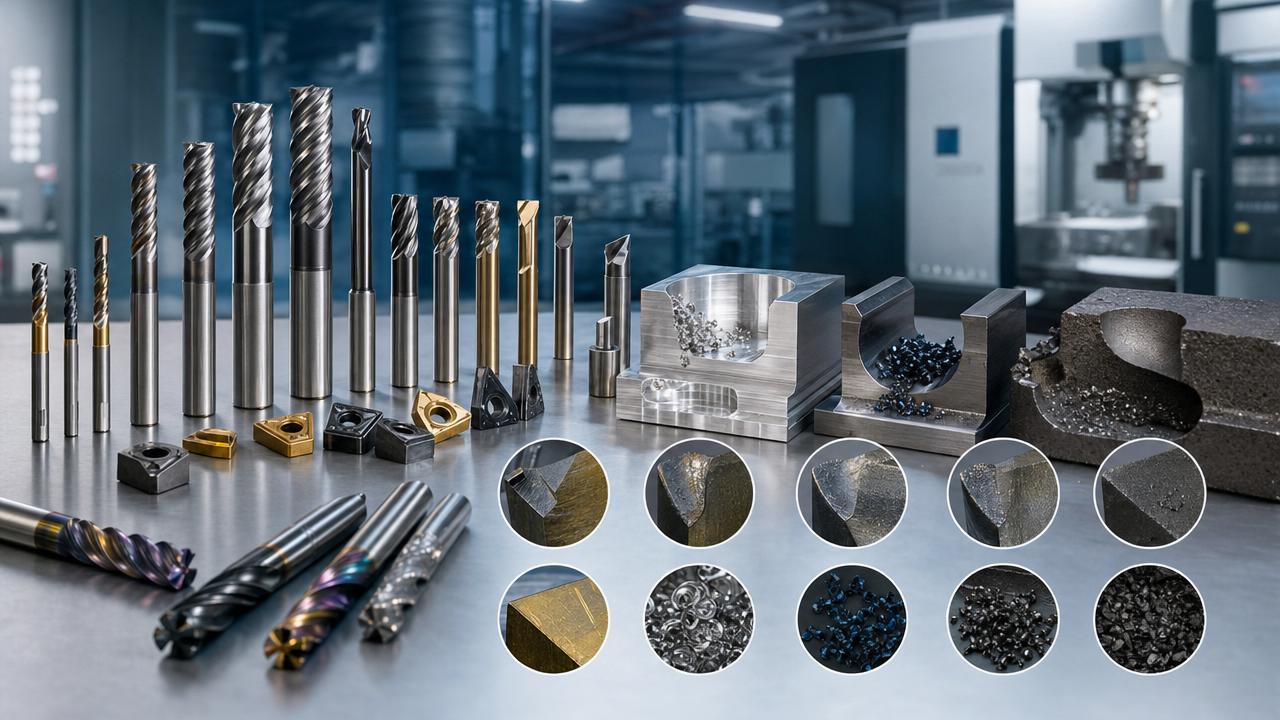
Cutting Tools Selection Guide: Materials, Coatings, and Tool Life Explained
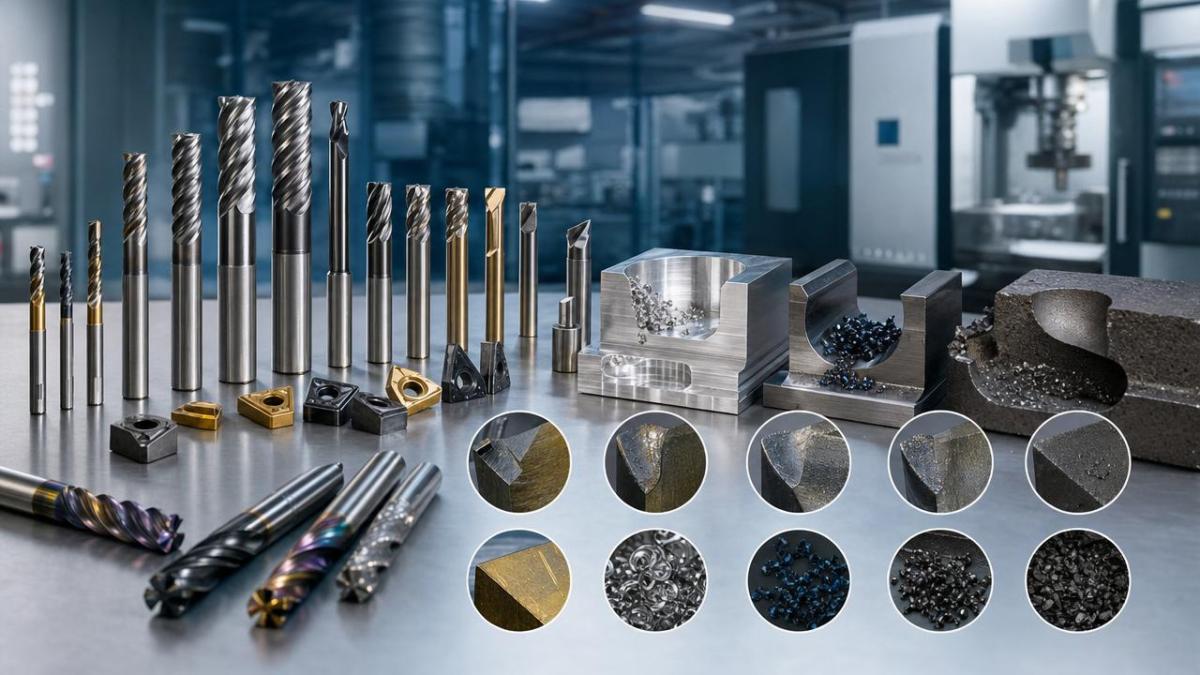
Choosing the right Cutting Tools shapes part accuracy, cycle time, and cost per piece.
A poor match often causes unstable wear, burrs, chatter, and frequent tool changes.
A strong match improves consistency across CNC turning, milling, drilling, and finishing operations.
This guide explains how tool materials, coatings, and tool life work together in real production conditions.
The goal is simple: make Cutting Tools selection faster, safer, and easier to justify.
Why Cutting Tools Selection Matters More Than It Seems
In modern machining, the tool is not just a consumable.
It directly affects spindle load, heat generation, surface finish, and machine utilization.
That becomes more important in automated cells and unmanned shifts.
If Cutting Tools fail unexpectedly, downtime spreads far beyond one machine.
From a decision standpoint, selection should balance performance, repeatability, and total operating cost.
The lowest purchase price rarely delivers the best production result.
Start With the Workpiece Material
The first step in choosing Cutting Tools is understanding the workpiece.
Material hardness matters, but it is not the only factor.
Toughness, thermal conductivity, chemical reactivity, and chip behavior all influence selection.
Common material groups and what they demand
- Carbon steel and alloy steel need balanced toughness and wear resistance.
- Stainless steel creates heat and built-up edge, so edge stability is critical.
- Cast iron prefers wear-resistant Cutting Tools and stable dry machining performance.
- Aluminum needs sharp edges, smooth chip evacuation, and low adhesion behavior.
- Titanium and nickel alloys demand heat control and strong coating performance.
- Hardened steel often requires advanced carbide, ceramics, or CBN solutions.
In practice, one shop may process several material families on the same equipment.
That usually pushes selection toward versatile Cutting Tools, not just peak-speed options.
Understanding Tool Material Choices
Tool substrate is the core of any Cutting Tools decision.
It defines hardness, toughness, temperature resistance, and breakage risk.
High-speed steel
High-speed steel remains useful for drills, taps, and complex form tools.
It offers good toughness and easy regrinding, but lower cutting speed capacity.
Cemented carbide
Carbide is the mainstream choice for CNC Cutting Tools.
It balances wear resistance and productivity across turning, milling, and drilling.
Different grades shift that balance between hardness and toughness.
Ceramics, CBN, and PCD
Ceramics support high-speed finishing, especially in cast iron and heat-resistant alloys.
CBN works well on hardened ferrous materials where dimensional control is essential.
PCD excels in aluminum, copper alloys, composites, and nonferrous precision machining.
These advanced Cutting Tools often cost more, but lower total cost in stable volume production.
How Coatings Change Real Performance
Coatings are not cosmetic upgrades.
They change friction, oxidation resistance, heat shielding, and wear patterns.
That is why two Cutting Tools with the same geometry can behave very differently.
Typical coating logic
- TiN supports general wear resistance and easier visual wear detection.
- TiCN adds hardness and works well in many steel applications.
- TiAlN or AlTiN handles higher heat in dry or fast machining.
- AlCrN often improves oxidation resistance in demanding milling conditions.
- Diamond-like coatings help reduce sticking in aluminum machining.
The right coating depends on material, coolant strategy, and cutting temperature.
For example, sticky materials often need low-friction Cutting Tools more than ultra-hard surfaces.
Geometry Often Decides Success First
Material and coating matter, but geometry is often the first deal breaker.
Rake angle, edge preparation, nose radius, flute design, and chipbreaker shape all matter.
A wrong geometry can ruin excellent Cutting Tools before coating benefits ever appear.
Key geometry checkpoints
- Use sharper edges for soft, gummy, or low-strength materials.
- Use stronger edge prep for interrupted cuts and unstable setups.
- Match chipbreaker style to feed rate and chip control target.
- Keep overhang low to protect edge stability and surface finish.
- Select flute count based on evacuation, rigidity, and engagement level.
This is especially important in multi-axis machining and deep cavity milling.
What Tool Life Really Means in Production
Tool life is not only about how long Cutting Tools survive.
It is about how long they hold acceptable quality within planned process limits.
That distinction matters when tolerances are tight and scrap cost is high.
Common end-of-life signals
- Flank wear increases gradually and changes size control.
- Crater wear affects edge strength in high-temperature cutting.
- Chipping appears in interrupted cutting or poor clamping conditions.
- Built-up edge harms finish and creates unstable dimensions.
- Thermal cracking appears in harsh temperature cycling conditions.
A good evaluation method tracks wear mode, not only tool count.
That gives better insight into whether Cutting Tools fail from heat, load, vibration, or adhesion.
Practical Selection Matrix for Faster Decisions
A simple matrix helps compare Cutting Tools without overcomplicating the review process.
This type of structure is useful when several suppliers offer similar Cutting Tools.
Mistakes That Distort Cutting Tools Evaluation
Some evaluation errors look small but create misleading conclusions.
- Comparing different Cutting Tools under different cutting data.
- Ignoring holder runout and blaming the insert or end mill.
- Judging only by tool price instead of cost per acceptable part.
- Testing on one batch and assuming the result always holds.
- Skipping wear analysis after trial completion.
From a business view, these mistakes slow supplier decisions and raise production risk.
A clean trial method produces better purchasing outcomes and stronger process confidence.
A Simple Decision Process You Can Use
When evaluating Cutting Tools, keep the process disciplined and practical.
- Define the material group, hardness range, and operation type.
- Review machine rigidity, spindle limits, and coolant delivery.
- Shortlist Cutting Tools by substrate, geometry, and coating fit.
- Run controlled trials with matched cutting conditions.
- Measure wear mode, part quality, and cycle time together.
- Select the option with the best total production value.
This approach works well in automotive, aerospace, electronics, and general precision manufacturing.
It also supports smarter decisions as factories move toward digital and automated production.
Final Takeaway
The best Cutting Tools are not simply the hardest, fastest, or most expensive.
They are the tools that fit material behavior, machine conditions, coating logic, and production targets.
If selection starts with real process data, tool life becomes more predictable.
And when tool life is predictable, quality, productivity, and cost control usually improve together.
For the next evaluation, use a structured checklist, compare Cutting Tools fairly, and focus on cost per stable part rather than price alone.
PREVIOUS ARTICLE
Recommended for You
![]() Zhongshan Xiaolan Machinery Exhibition Opens With Global Product DebutsMachine Tool Industry Editorial Team
Zhongshan Xiaolan Machinery Exhibition Opens With Global Product DebutsMachine Tool Industry Editorial Team Automated Production Machining: Which Parts and Batch Sizes Are a Good Fit?Machine Tool Industry Editorial Team
![]() FANUC Links FIELD System Data with Copilot to Advance Shop-Floor Data UseCNC Machining Technology Center
FANUC Links FIELD System Data with Copilot to Advance Shop-Floor Data UseCNC Machining Technology Center Smart Manufacturing for Aerospace: Building Traceability Across CNC OperationsCNC Machining Technology Center
![]() Mitsubishi Electric Announces Physical AI System Linking Humanoid Robots and CNC MachinesMachine Tool Industry Editorial Team
Mitsubishi Electric Announces Physical AI System Linking Humanoid Robots and CNC MachinesMachine Tool Industry Editorial Team Precision Machining for Defense: Supplier Quality and Traceability ChecksManufacturing Market Research Center


Aris Katos
Future of Carbide Coatings
15+ years in precision manufacturing systems. Specialized in high-speed milling and aerospace grade alloy processing.
▶
KATS Expands CE Recognition for CNC Clamping SystemsMachine Tool Industry Editorial Team▶
How to Evaluate a Tooling System for Precision Machining: 7 Key Specs That MatterMachine Tool Industry Editorial Team▶
ITC Opens 337 Probe Into Chinese CNC Tool CoatingsMachine Tool Industry Editorial Team▶
Vietnam Ends 5% Tariff on Chinese CNC Tool ImportsMachine Tool Industry Editorial Team▶
Japan Ends Import License Rule for Chinese Cutting ToolsMachine Tool Industry Editorial Team
▶
Mastering 5-Axis Workholding Strategies
Join our technical panel on Nov 15th to learn about reducing vibrations in thin-wall components.

Providing you with integrated sanding solutions
Before-sales and after-sales services
Comprehensive technical support