• Global CNC market projected to reach $128B by 2028 • New EU trade regulations for precision tooling components • Aerospace deman
NYSE: CNC +1.2%LME: STEEL -0.4%

How to Choose a CNC Tooling System for Titanium Machining: Key Factors That Affect Tool Life
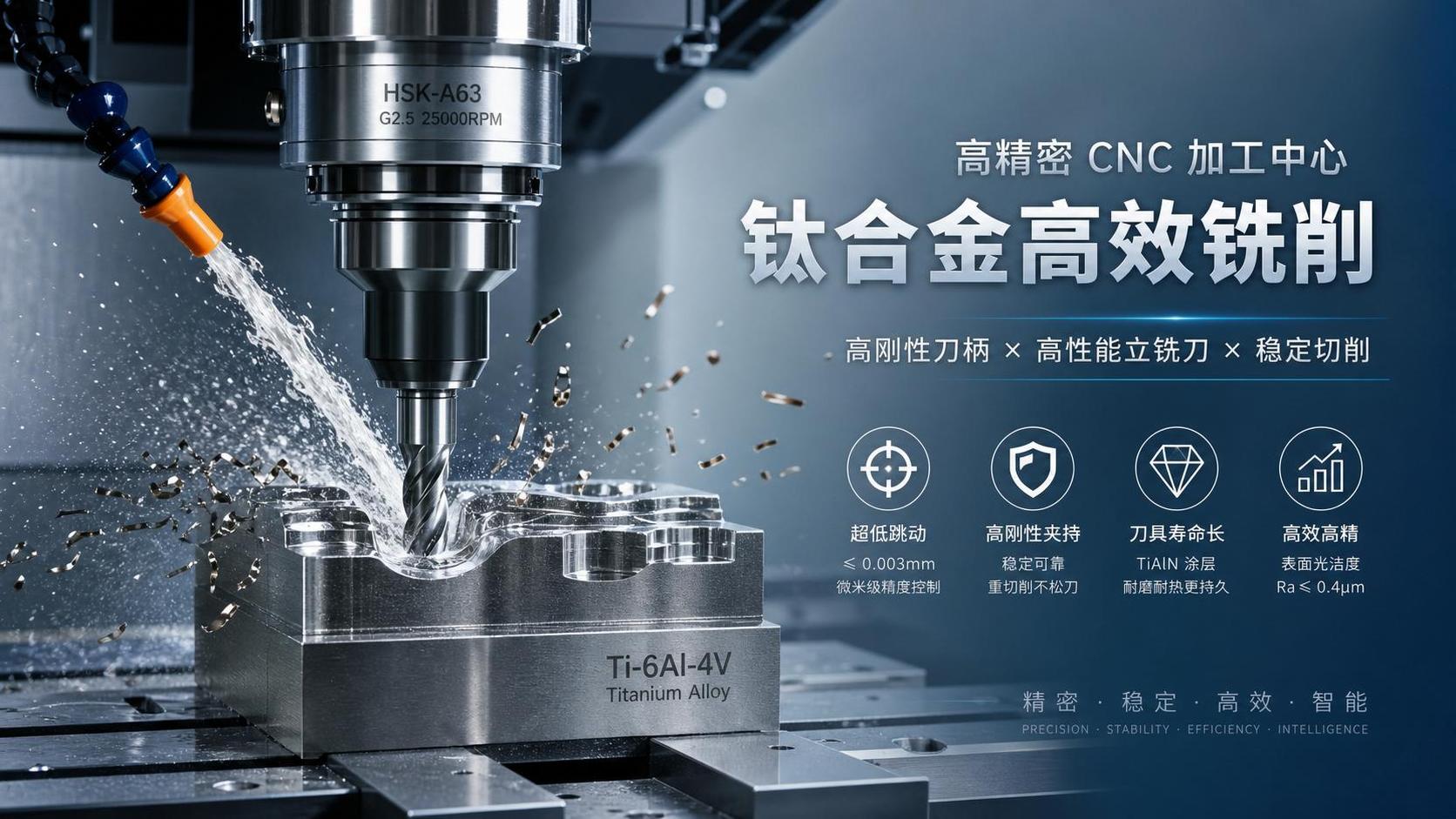
How to Choose a CNC Tooling System for Titanium Machining: Key Factors That Affect Tool Life
Choosing the right CNC Tooling System for titanium machining is rarely a simple tooling purchase.
It is a process decision that affects spindle load, part quality, cycle time, and tool replacement frequency.
Titanium is valuable, but it is demanding.
Heat stays near the cutting edge, chips can weld to the tool, and unstable setups fail fast.
That is why CNC Tooling System for titanium machining decisions should be based on mechanics, thermal control, and repeatability.
In practical terms, the best system is not the most expensive one.
It is the one that keeps runout low, clamping force stable, and cutting conditions predictable over time.
Why Titanium Changes the Tooling Decision
Titanium alloys behave differently from aluminum, mild steel, or cast iron.
They keep strength at high temperature and resist heat transfer away from the cut.
This concentrates thermal stress at the edge and in the contact zone.
As a result, small weaknesses in the CNC Tooling System for titanium machining become visible very quickly.
A holder with marginal rigidity may chatter.
Poor coolant delivery may create notch wear or edge breakdown.
Excessive runout may overload one flute and shorten tool life dramatically.
This also means tooling evaluation cannot focus only on catalog cutting data.
The full stack matters, including spindle interface, holder design, tool geometry, coolant pressure, and setup consistency.
Start with Holder Rigidity and Interface Stability
The holder is often the first place to look when tool life is unstable.
For titanium, bending resistance and taper contact quality directly affect vibration and edge loading.
A CNC Tooling System for titanium machining should favor the shortest practical gauge length.
Overhang increases deflection, especially in pocketing, side milling, and deep cavity work.
Common holder choices include shrink fit, hydraulic, and high-precision collet systems.
Each has strengths, but they are not interchangeable in every titanium application.
- Shrink fit holders offer strong concentricity and high rigidity for many milling tasks.
- Hydraulic holders improve damping, which can help in lighter finishing cuts.
- High-precision collet systems offer flexibility, but assembly quality becomes critical.
If the process includes aggressive roughing, interface strength usually matters more than convenience.
If the process is thin-wall finishing, damping and smooth load transfer may be more valuable.
Control Runout Before Chasing Cutting Parameters
Runout is one of the fastest ways to lose tool life in titanium.
When one flute cuts more than the others, local heat and wear rise immediately.
That imbalance often looks like a tooling grade problem, but the real issue is setup accuracy.
A CNC Tooling System for titanium machining should be evaluated with measured TIR, not only supplier claims.
Check the spindle, holder, collet, and tool shank as a complete assembly.
Even a premium cutter underperforms if the clamping stack introduces variation.
In actual evaluation work, three questions help:
- Does runout stay consistent after repeated tool changes?
- Does the holder maintain accuracy after thermal cycling?
- Can operators reproduce the same assembly result across shifts?
Those questions are practical because titanium processes often fail from variation, not from average performance.
Match Coolant Strategy to the Tooling System
Heat management is central to any CNC Tooling System for titanium machining.
Because titanium traps heat near the cutting zone, coolant delivery cannot be an afterthought.
The holder and tool should support a coolant path that actually reaches the edge.
Through-tool coolant is often preferred for drilling, pocket milling, and deep features.
External coolant may still work, but only when nozzle direction and flow are tightly controlled.
This is where many tooling comparisons become misleading.
One setup may show better tool life simply because coolant access is cleaner.
When reviewing a tooling system, verify these points:
- coolant pressure available at the spindle
- holder compatibility with through-tool delivery
- seal integrity under repeated use
- chip evacuation in closed or narrow cutting zones
Better cooling often extends tool life more reliably than minor speed adjustments.
Tool Geometry and Coating Still Matter, but in Context
A CNC Tooling System for titanium machining is not only a holder decision.
Cutting geometry must match the material condition, feature shape, and machine dynamics.
Sharp edges reduce cutting force, but they may chip if the setup lacks rigidity.
A stronger edge lasts longer in unstable conditions, but may increase heat.
This tradeoff is why geometry and tooling system design must be reviewed together.
The same logic applies to coatings.
A coating that performs well in a rigid, cooled process may fail early in a less controlled setup.
So when comparing options, avoid isolating insert grade or end mill coating from the full process stack.
Evaluate Tool Change Repeatability and Shop-Floor Practicality
A technically strong system can still underperform if daily use introduces variation.
That is especially true in multi-machine environments and higher mix production.
A CNC Tooling System for titanium machining should support repeatable assembly with realistic operator behavior.
Look at balancing needs, presetting time, cleaning sensitivity, and replacement part availability.
If a system performs well only under lab-like conditions, it may not hold up in production.
Useful review criteria include:
This kind of review keeps the decision tied to production reality.
Use a Decision Framework Instead of a Single Performance Claim
Tool life claims are useful, but only when the test conditions match the intended process.
For a CNC Tooling System for titanium machining, a structured comparison works better.
Score each option across a small set of operational factors.
- Rigidity under expected overhang and radial engagement.
- Measured runout at the tool tip after assembly.
- Coolant effectiveness at the actual cutting zone.
- Repeatability across tool changes and operators.
- Compatibility with current machines, spindles, and presetting methods.
- Total cost per part, not only holder purchase price.
This approach gives a clearer basis for choosing between premium and mid-range systems.
It also reduces the risk of buying a solution optimized for a different machine or cutting style.
Final Selection Guidance
The best CNC Tooling System for titanium machining is the one that keeps the process stable every day.
In most cases, tool life improves when rigidity, runout control, and coolant delivery improve together.
That is the more reliable path than adjusting speed and feed alone.
When making the final decision, test the tooling system on real titanium features, not generic samples.
Track wear pattern, dimensional drift, spindle load, and part-to-part consistency.
If the system performs consistently under those conditions, it is likely the right long-term choice.
That kind of disciplined evaluation leads to longer tool life, fewer process interruptions, and more predictable titanium machining results.
PREVIOUS ARTICLE
Recommended for You
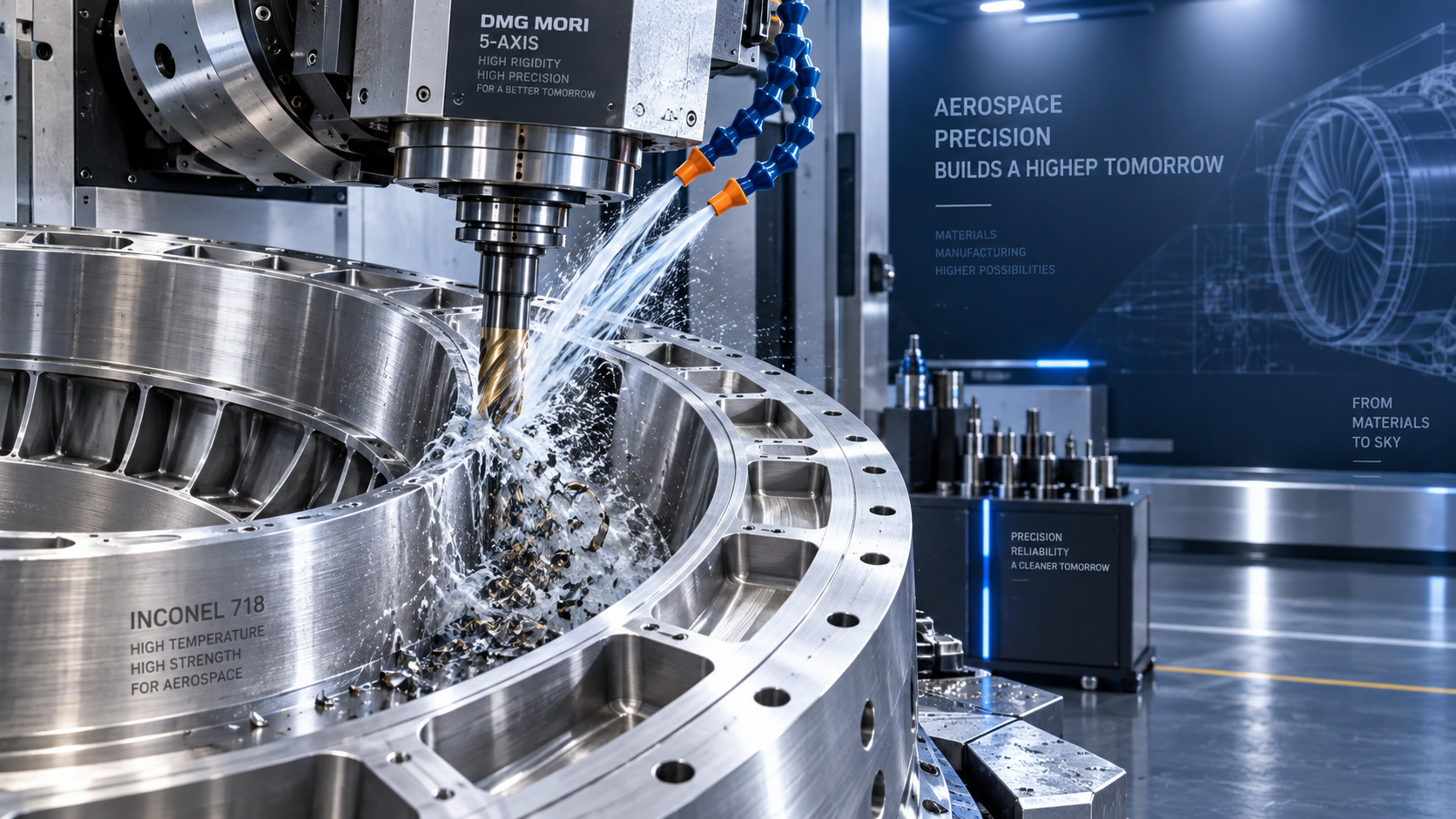
 Can CNC Machining Inconel Control Tool Wear in High-Temperature Aerospace Parts?CNC Machining Technology Center
 Machine Tool Market Outlook: Demand Drivers, Capacity Shifts, and Investment RisksManufacturing Market Research Center
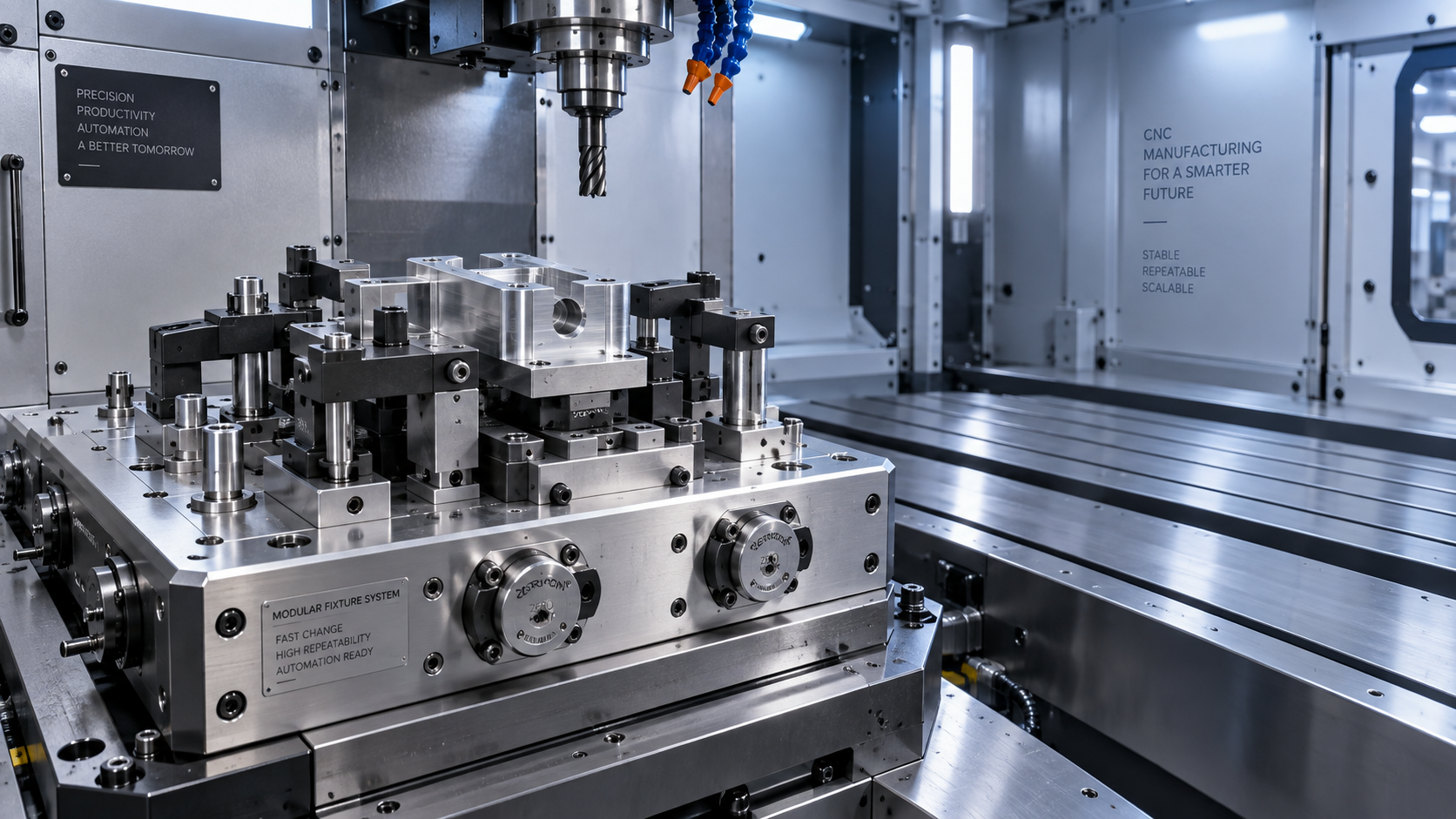
 Zero-Point Clamping or Modular Fixtures? Choosing a Faster CNC Changeover SystemCNC Machining Technology Center
 How to Cut CNC Fixture Changeover Time Without Sacrificing Part AccuracyCNC Machining Technology Center
 When Does CNC Turning Pay Off? A Break-Even Guide by Annual Part VolumeMachine Tool Industry Editorial Team
 Machine Tool Standards by Country: What Importers Must Verify Before PurchaseManufacturing Policy Research Center


Aris Katos
Future of Carbide Coatings
15+ years in precision manufacturing systems. Specialized in high-speed milling and aerospace grade alloy processing.
▶
KATS Expands CE Recognition for CNC Clamping SystemsMachine Tool Industry Editorial Team▶
How to Evaluate a Tooling System for Precision Machining: 7 Key Specs That MatterMachine Tool Industry Editorial Team▶
ITC Opens 337 Probe Into Chinese CNC Tool CoatingsMachine Tool Industry Editorial Team▶
Vietnam Ends 5% Tariff on Chinese CNC Tool ImportsMachine Tool Industry Editorial Team▶
Japan Ends Import License Rule for Chinese Cutting ToolsMachine Tool Industry Editorial Team
Mastering 5-Axis Workholding Strategies
Join our technical panel on Nov 15th to learn about reducing vibrations in thin-wall components.

Providing you with integrated sanding solutions
Before-sales and after-sales services
Comprehensive technical support