• Global CNC market projected to reach $128B by 2028 • New EU trade regulations for precision tooling components • Aerospace deman
NYSE: CNC +1.2%LME: STEEL -0.4%

Industrial Robotics demand is rising fastest in which tasks

Industrial Robotics demand is rising fastest in tasks that combine high repetition, tight precision, and nonstop throughput requirements. From CNC machine tending and precision assembly to welding, material handling, and inspection, manufacturers are prioritizing automation where labor pressure, quality consistency, and efficiency gains matter most. Understanding these high-growth applications helps researchers track where smart manufacturing investment is creating the strongest momentum.
For information researchers following CNC machining, precision manufacturing, and factory automation, the key question is not whether robots are growing, but where adoption is accelerating first. In machine tool environments, the fastest-rising applications are usually those with 3 clear characteristics: cycle times under 120 seconds, repeatability requirements tighter than manual handling can reliably sustain, and production schedules that run 16 to 24 hours per day.
This matters across automotive components, aerospace structures, energy equipment, electronics housings, and high-mix industrial parts. In these sectors, Industrial Robotics is no longer limited to isolated welding cells. It is becoming part of connected production systems that include CNC lathes, machining centers, vision inspection, tool management, and automated material flow. The result is a shift from single-task automation to integrated robotic manufacturing.
The fastest demand growth is concentrated in applications where robots reduce labor bottlenecks, stabilize dimensional consistency, and support digital factory targets. Researchers assessing smart manufacturing investment should therefore focus on task-level demand signals rather than broad automation headlines. The most meaningful changes are visible on the shop floor, in the exact tasks manufacturers choose to automate first.
Where Industrial Robotics Demand Is Rising First in Manufacturing
In CNC and precision manufacturing, Industrial Robotics demand is rising fastest in five task groups: machine tending, arc and spot welding, pick-and-place material handling, precision assembly, and automated inspection support. These tasks account for a large share of repetitive labor on modern production lines and often create the first automation bottleneck when output targets increase by 20% to 40%.
1. CNC machine tending remains a top entry point
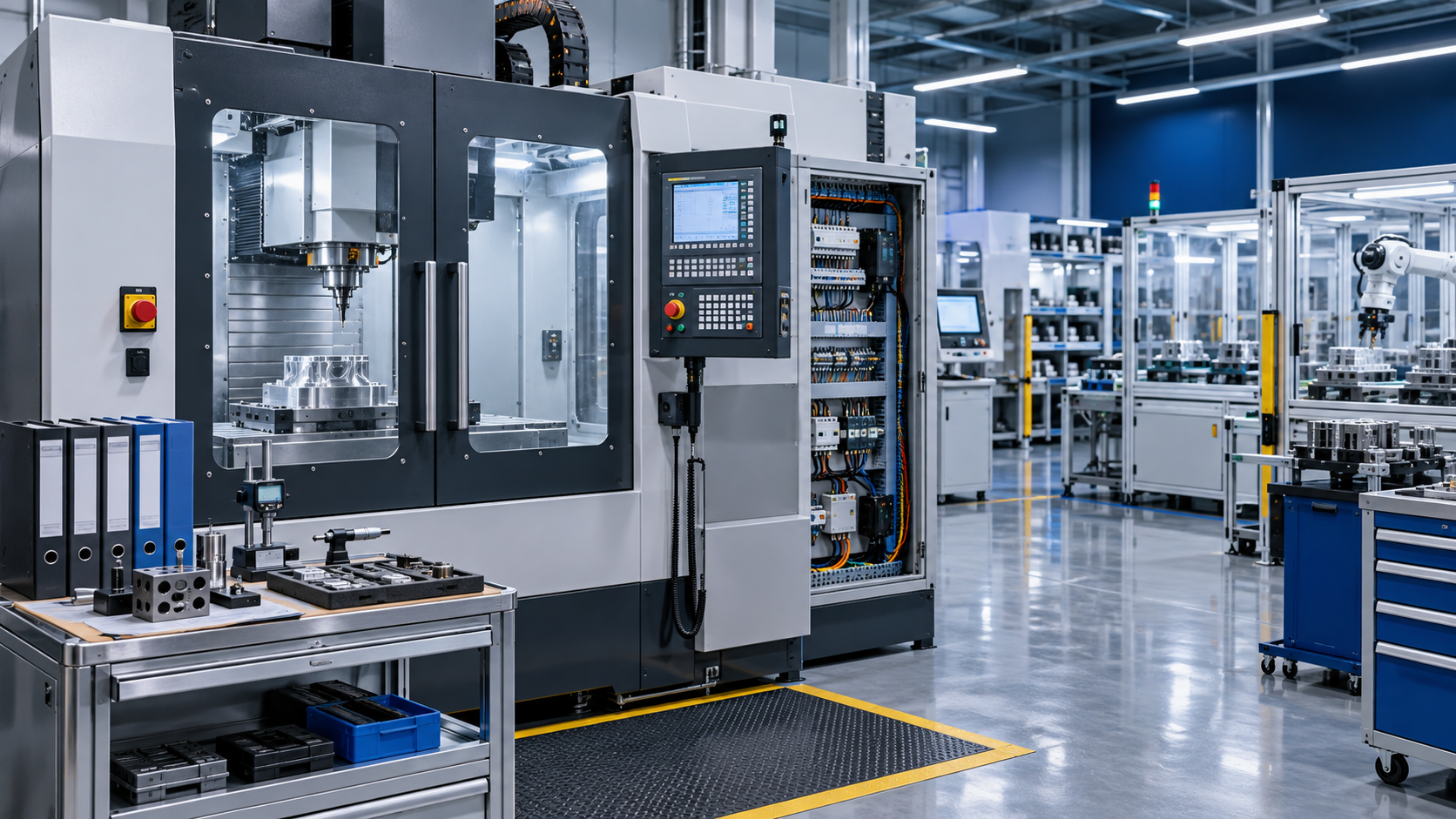
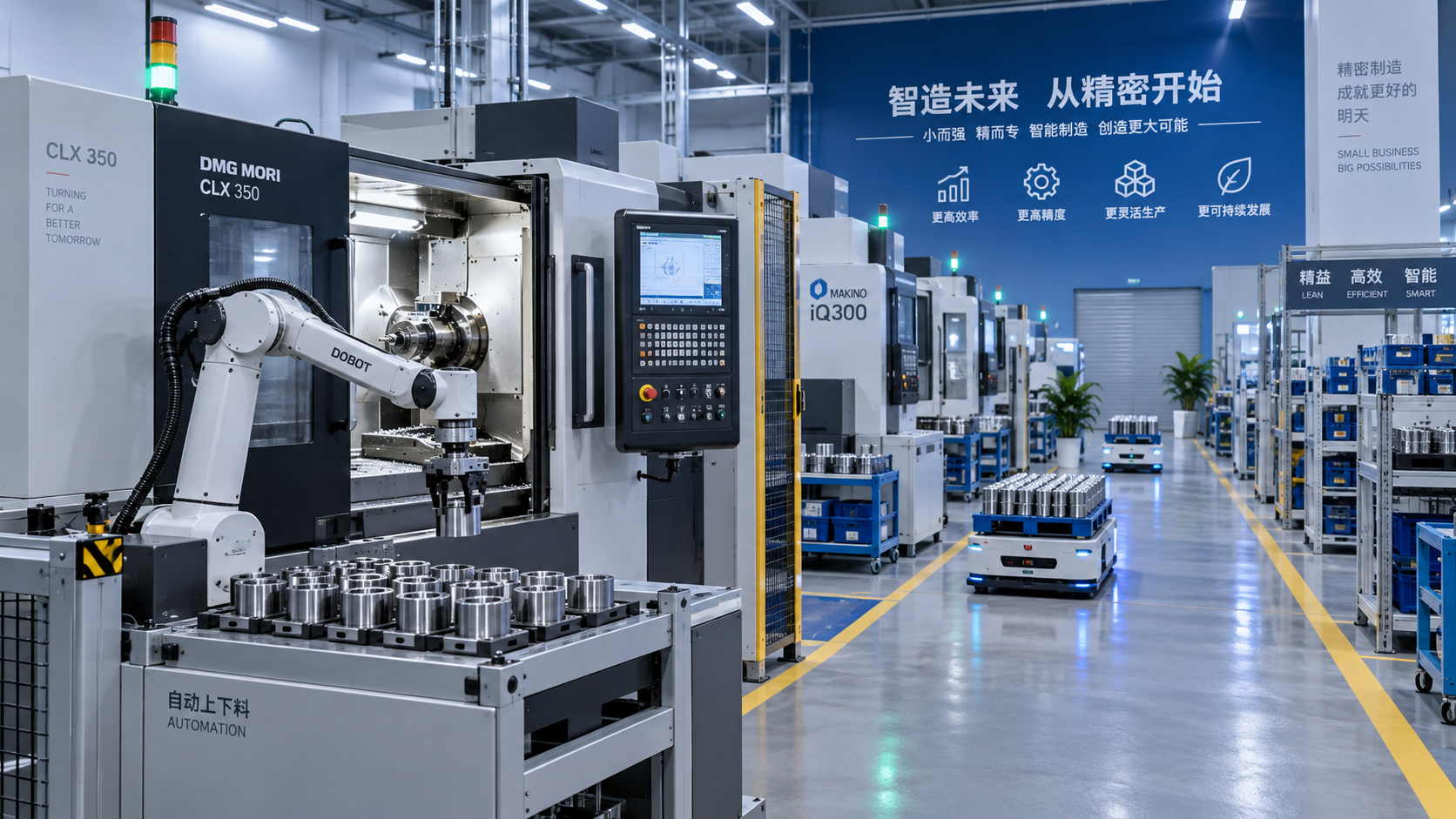
Machine tending is one of the most practical robotic applications because the task structure is simple but labor-intensive. A robot can load raw blanks, unload finished parts, orient workpieces, and transfer components between 2 to 4 process stations. In shops running 2 shifts or more, this often delivers stronger returns than automating less frequent tasks.
The appeal is especially strong for CNC lathes, vertical machining centers, and multi-axis systems producing shafts, discs, housings, and precision brackets. When part handling must stay consistent within a fixed cycle window of 30 to 90 seconds, robotic loading reduces delays caused by fatigue, operator turnover, and inconsistent part presentation.
2. Welding demand is expanding with throughput pressure
Welding continues to be a high-growth area because it combines heat, fumes, safety risk, and strict repeatability. Manufacturers of automotive subassemblies, construction equipment, frames, cabinets, and energy components increasingly deploy robotic welding where seam quality and bead consistency directly affect rework rates. In repetitive weld paths, robots can maintain travel speed, torch angle, and positioning more consistently across hundreds of cycles.
Where production volume exceeds several hundred units per week, robotic welding cells often become easier to justify than manual stations, especially when labor shortages force overtime or create unstable scheduling. Demand rises even faster when welding is linked to upstream CNC cutting and downstream inspection in one continuous line.
3. Material handling is scaling across flexible lines
Material handling includes palletizing, depalletizing, transfer between conveyors, bin picking, and line-side feeding. Although these tasks may seem less technical than machining or assembly, they often absorb a large share of labor hours. In factories with 10 kg to 50 kg parts, repetitive transfer work quickly becomes a productivity constraint and a safety concern.
Industrial Robotics is well suited to these jobs because the process logic is stable, and the benefit extends beyond labor replacement. Better material flow can reduce idle spindle time, shorten queue buildup between stations, and improve traceability when each transfer is digitally logged.
The table below outlines where demand is moving fastest and why these applications are gaining priority in machine tool and precision manufacturing environments.
A clear pattern emerges: the strongest demand does not always start with the most advanced task. It starts with the most repetitive one that creates a visible bottleneck. In many factories, machine tending and handling move first, then welding or inspection follows once production data confirms the return.
Why These Robotic Tasks Attract the Fastest Investment
Manufacturers adopt Industrial Robotics fastest when a task affects 4 measurable areas at once: labor availability, quality stability, machine utilization, and safety. In CNC machining and precision production, these pressures tend to converge around routine operations that repeat hundreds or thousands of times per week.
Labor shortages make repetitive tasks harder to staff
Factories across major manufacturing regions increasingly struggle to recruit and retain operators for physically repetitive or low-variation jobs. The issue is often not total headcount alone, but shift coverage, especially at night or on weekends. A robotic cell that keeps one machining center or one welding station running for an extra 6 to 10 hours per day can materially improve equipment utilization.
Typical labor-driven triggers
- Operator turnover affecting 2 or more shifts
- Manual loading causing machine idle time above 10%
- High rework in repetitive assembly or weld operations
- Difficulty staffing tasks involving heat, dust, oil mist, or heavy lifting
Precision demands reward consistency more than speed alone
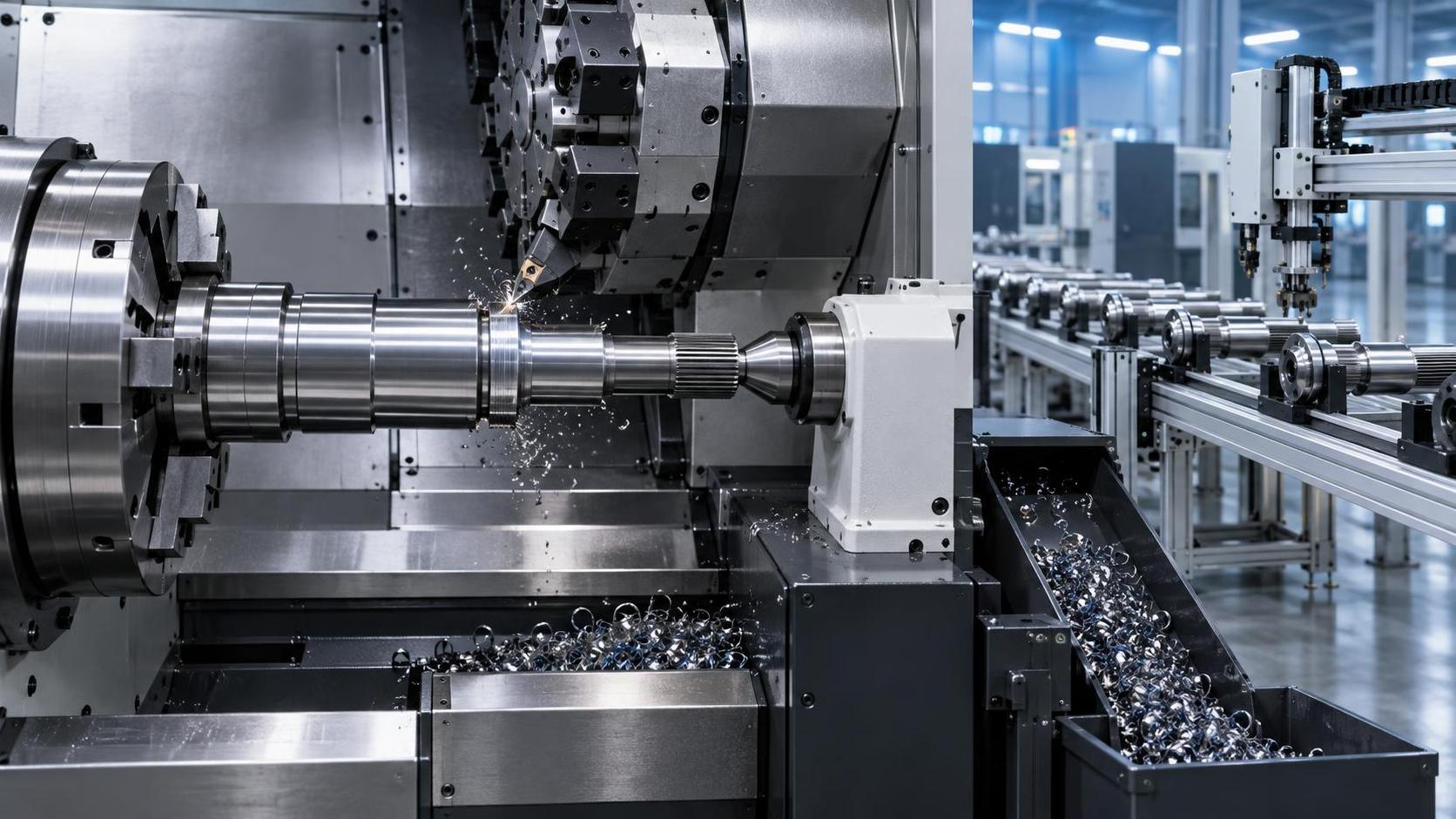
In precision manufacturing, automation value often comes from repeatability rather than headline speed. A robot that presents parts with consistent orientation, gripping force, and placement sequence helps protect downstream quality. This is important when machining tolerances are tight, fixtures are specialized, or inspection reject thresholds are narrow.
For example, a robotic loading system can support steady part positioning before clamping, while a robotic assembly station can maintain repeatable insertion depth or fastener sequence over long production runs. Such consistency matters even more when lines operate with low buffer capacity and each quality escape can interrupt multiple stations.
Digital integration increases the value of each robot
Demand also rises quickly when robots connect with machine signals, vision systems, tool monitoring, and production tracking software. A robot on its own can automate movement. A robot linked to CNC status, barcode scanning, part traceability, and quality feedback becomes part of a smart manufacturing architecture.
That integration enables functions such as automatic part sorting, pass/fail routing, work-in-process tracking, and alarm-based intervention. In practical terms, this means manufacturers can improve not only cycle time but also data visibility, scheduling discipline, and response speed during deviations.
High-Growth Applications in CNC and Precision Manufacturing
For researchers focused on the machine tool sector, the strongest Industrial Robotics demand is tightly linked to the physical realities of part production. Growth is especially visible in applications involving medium-volume batches, recurring part families, and tolerance-sensitive handoffs between processes.
CNC loading and unloading for shafts, discs, and housings
These components are common in automotive systems, pumps, motors, reducers, and industrial equipment. Their geometry is often regular enough for robotic gripping, while their production volume is high enough to justify fixtures, feeders, or tray systems. When one robot services 1 to 3 CNC machines, manufacturers can smooth utilization without redesigning the whole workshop.
Robotic deburring and secondary handling
Secondary operations such as deburring, flipping, washing transfer, and part staging are increasingly automated because they consume labor but add little strategic value when done manually. In many plants, these steps create hidden delays between primary machining and final inspection. Automating them improves flow discipline and reduces handling damage on finished surfaces.
Inspection assistance and part sorting
Full autonomous inspection is not always the first step, but robotic assistance is expanding quickly. Robots can present parts to gauges, cameras, or coordinate measurement interfaces, then separate accepted and rejected pieces. This is useful where visual checks are repetitive, where part orientation matters, or where takt time leaves little room for manual inspection transfer.
The following comparison helps identify which CNC-related tasks typically show the strongest near-term automation potential.
The key takeaway is that high-growth applications are those where the robot solves both a labor problem and a process control problem. If a task only saves motion but does not improve line stability, adoption tends to be slower.
How Buyers and Researchers Should Evaluate Robotic Demand by Task
To judge where Industrial Robotics demand will rise next, it helps to evaluate tasks using a practical screening model rather than a broad technology view. In CNC machining and precision factories, 5 questions usually reveal whether a task is likely to move toward automation within the next 12 to 24 months.
A 5-point screening framework
- Does the task repeat at least several hundred times per week?
- Does manual variation affect quality, scrap, or rework?
- Is the cycle time structured enough for robotic sequencing?
- Does the task create safety, ergonomic, or shift-coverage pressure?
- Can the robot connect with existing CNC, fixture, or inspection systems without major line reconstruction?
If the answer is yes to 4 out of 5 of these questions, the task often becomes a strong candidate for early adoption. This framework is especially useful for information researchers comparing sectors such as automotive parts, precision hardware, electronics housings, valve bodies, and energy equipment components.
Common implementation risks to watch
Risk 1: Overestimating flexibility
Not every high-mix operation is immediately suitable for automation. If part changeovers happen 8 to 12 times per day and grippers, fixtures, or vision logic must be reset frequently, a standard robotic cell may deliver less benefit than expected unless changeover engineering is built in from the start.
Risk 2: Ignoring upstream and downstream constraints
A robot can only add value if the surrounding process supports flow. If raw material presentation is inconsistent, chips accumulate in the machining area, or inspection feedback is delayed, the robotic cell may stop often despite strong core programming. This is why cell design must include guarding, trays, sensors, and fault recovery logic.
Risk 3: Focusing only on robot payload
Payload is important, but it is only one selection factor. Reach, end-effector design, acceleration, wrist access, machine interface compatibility, and maintenance support can be equally important in machine tool applications. A 20 kg robot may be sufficient for part weight, yet still fail if reach or gripping orientation does not suit the enclosure layout.
What Rising Industrial Robotics Demand Means for the Global Machine Tool Sector
As machine tool industries in China, Germany, Japan, South Korea, and other manufacturing hubs continue advancing toward digital integration, Industrial Robotics is increasingly treated as standard production infrastructure rather than optional automation. This shift is particularly relevant for suppliers serving export-oriented manufacturers, where consistency, delivery reliability, and traceability are decisive in vendor selection.
For CNC equipment builders, fixture suppliers, integrators, and production line planners, the implication is clear: demand growth will remain strongest in tasks that convert isolated machine capacity into coordinated, repeatable output. The more a robotic application helps connect machining, handling, inspection, and assembly, the more strategic it becomes.
Researchers should also note that adoption often starts with compact, lower-complexity cells before expanding into flexible lines. A factory may begin with one tending robot on a single machining center, then scale to 2-machine cells, automated pallets, or integrated inspection handling within 6 to 18 months. Tracking these stepwise upgrades reveals more about real market momentum than watching robot volume alone.
Practical demand signals worth monitoring
- More inquiries for robot-ready CNC machine layouts
- Growing demand for standardized grippers, fixtures, and feeding systems
- Higher interest in unattended night-shift machining
- More projects combining robots with vision inspection and traceability
- Expansion of flexible production lines instead of isolated standalone machines
The fastest-rising Industrial Robotics demand is concentrated in tasks where repetition, precision, and throughput meet real operating pressure. In today’s CNC machining and precision manufacturing sector, that means machine tending, welding, material handling, assembly support, and inspection-related transfer are leading the way. These applications help manufacturers stabilize quality, improve machine utilization, and respond to labor constraints without waiting for a full factory rebuild.
If you are researching automation opportunities, evaluating manufacturing trends, or planning sourcing strategy in the global machine tool market, a task-based view will give you the clearest picture of where demand is moving next. To explore more insights on CNC machining, robotic integration, and precision manufacturing solutions, contact us today to get a tailored perspective or learn more about practical smart factory applications.
PREVIOUS ARTICLE
Recommended for You
 Machine Tool Standards by Country: What Importers Must Verify Before PurchaseManufacturing Policy Research Center
 CNC Lathe Quick Installation Guide: Alignment Checks Before First Production RunCNC Machining Technology Center
 How to Select a CNC Lathe for Small Parts Without Sacrificing Accuracy or Cycle TimeCNC Machining Technology Center
 How to Select a Slant Bed Lathe for High-Precision Shaft and Chuck WorkCNC Machining Technology Center
 Smart Manufacturing for Small Businesses: Where Automation Delivers the Fastest ROIMachine Tool Industry Editorial Team
 How to Specify a CNC Lathe for High-Volume Automotive Shaft ProductionCNC Machining Technology Center

Aris Katos
Future of Carbide Coatings
15+ years in precision manufacturing systems. Specialized in high-speed milling and aerospace grade alloy processing.
▶
Japan Subsidy Plan Narrows CNC Export OpeningsManufacturing Market Research Center▶
Industrial Robotics ROI: Cost Drivers, Integration Risks, and Payback Benchmarks for BuyersManufacturing Market Research Center▶
India’s 20% Rice Export Tax Lifts Demand for Processing EquipmentManufacturing Market Research Center▶
Anhui Growth Lifts Demand for High-End Machine ToolsManufacturing Market Research Center▶
China CNC Rate to Hit 75% by 2027Manufacturing Market Research Center
Mastering 5-Axis Workholding Strategies
Join our technical panel on Nov 15th to learn about reducing vibrations in thin-wall components.

Providing you with integrated sanding solutions
Before-sales and after-sales services
Comprehensive technical support