• Global CNC market projected to reach $128B by 2028 • New EU trade regulations for precision tooling components • Aerospace deman
NYSE: CNC +1.2%LME: STEEL -0.4%

Production Process gaps that create hidden delivery risk

In CNC and precision manufacturing, hidden delivery risk often begins with unnoticed Production Process gaps rather than obvious capacity shortages. For business evaluators, understanding how workflow disconnects, quality-control delays, supplier coordination issues, and automation bottlenecks affect lead times is essential to judging operational reliability, cost stability, and long-term supplier performance.
What Production Process gaps mean in delivery risk evaluation
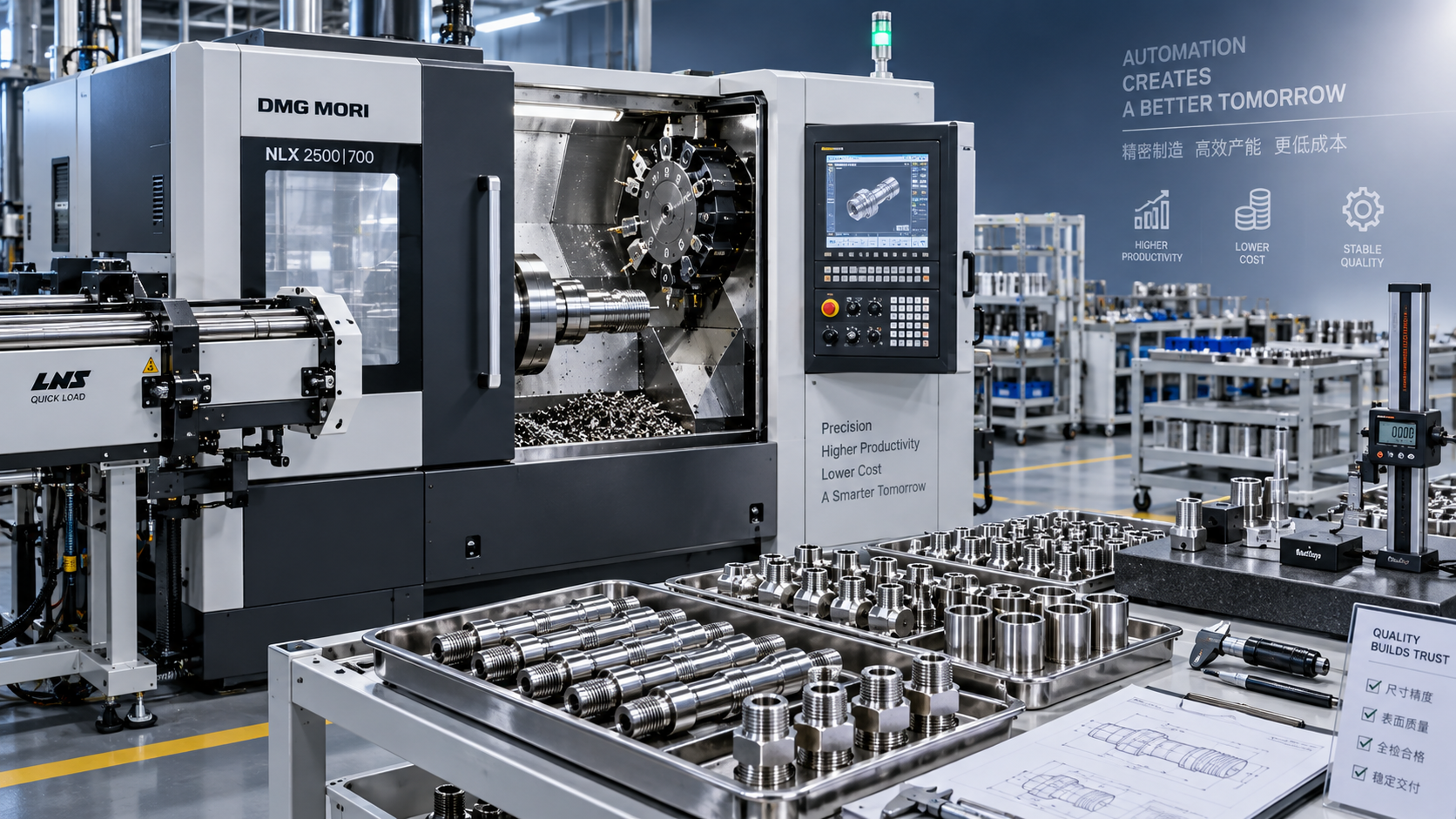
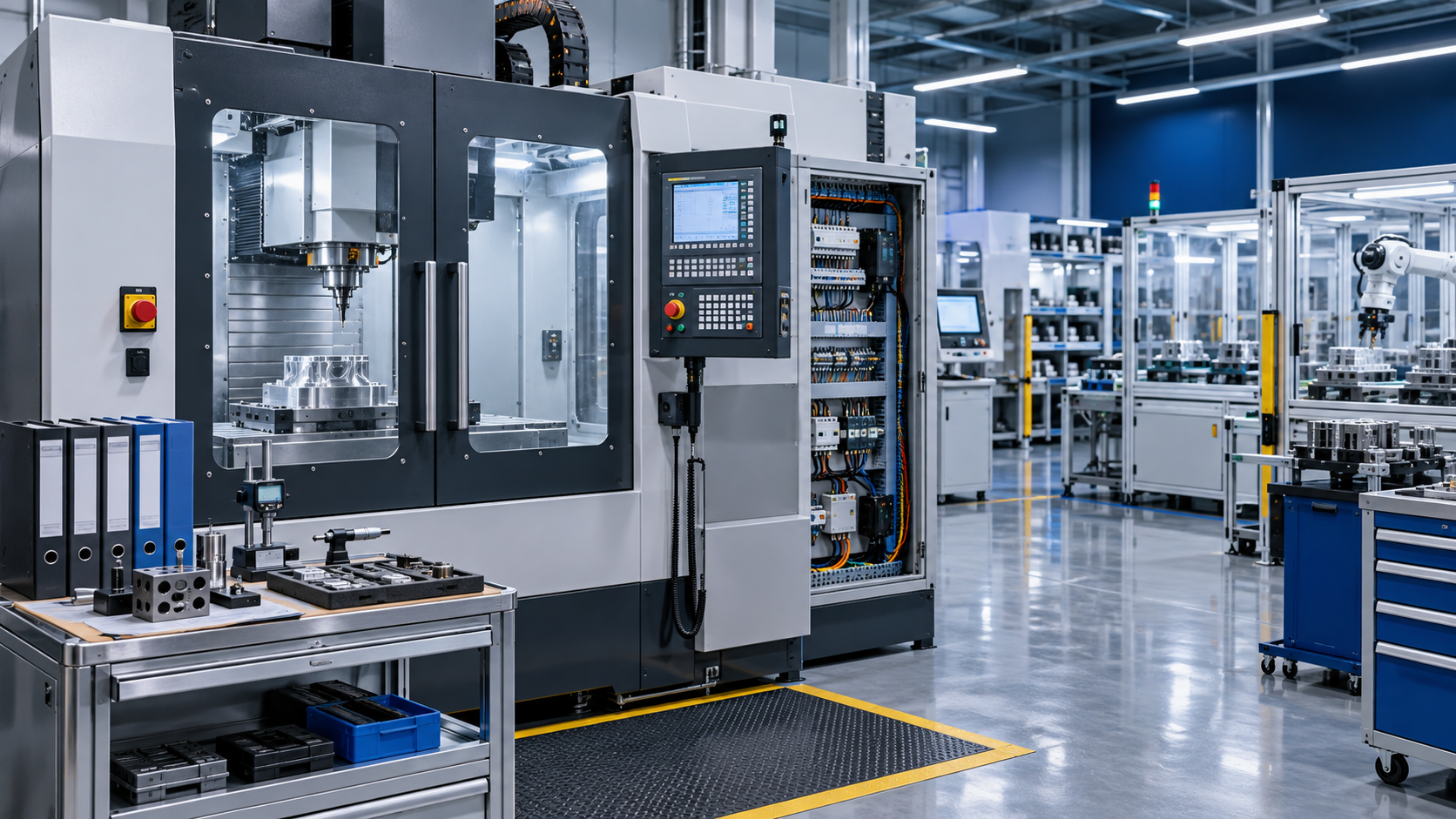
In industrial operations, the term Production Process does not only describe the sequence of machining, assembly, inspection, and shipment. It also includes how information, materials, tooling, labor, machine availability, and quality data move across that sequence. A supplier may own advanced CNC lathes, machining centers, automation cells, and inspection equipment, yet still struggle to deliver on time if the links between these elements are weak.
For business assessment professionals, this distinction matters. Delivery performance is often judged from visible metrics such as installed capacity, order volume, or published lead times. However, hidden risk usually sits inside the Production Process itself: an engineering change that does not reach the shop floor fast enough, a fixture bottleneck that disrupts a high-mix order schedule, or a quality approval step that accumulates delays across multiple batches. These issues can remain invisible until a deadline is missed.
In the CNC machine tool and precision manufacturing sector, where tolerance control, repeatability, and process discipline are critical, small disconnects can expand into significant commercial exposure. That is why a reliable review of supplier capability must go beyond equipment lists and examine how the Production Process actually functions under pressure.
Why the industry pays attention to hidden Production Process failures
Global manufacturing has moved toward shorter product cycles, more customized parts, tighter traceability requirements, and broader international sourcing. In sectors such as automotive, aerospace, electronics, and energy equipment, suppliers are expected to deliver precision components at stable quality levels while managing fluctuating demand. This has made the Production Process a strategic topic rather than a purely operational one.
Modern factories may look digitally advanced, but not every production environment has achieved true process integration. Some have excellent machine utilization but weak production planning. Others have strong quality systems but slow release procedures. In cross-border supply chains, the risk grows further because shipping windows, export documentation, subcontracting dependencies, and communication delays can amplify minor internal problems.
For evaluators, the practical concern is simple: a hidden Production Process gap can distort delivery forecasts, raise expediting costs, weaken customer confidence, and create recurring margin pressure. When these weaknesses persist, they also reduce a supplier’s ability to scale or absorb urgent programs.
How hidden gaps appear inside CNC and precision manufacturing
In precision manufacturing, delivery risk rarely comes from a single dramatic breakdown. More often, it develops through cumulative friction across the Production Process. A machine shop may have enough spindle hours on paper, but if tooling preparation is late, material certificates are missing, or in-process inspection interrupts flow, available capacity becomes unreliable.
One common pattern is the disconnect between front-end planning and actual shop-floor behavior. Sales teams may accept urgent orders based on nominal machine availability, while production teams know that fixture preparation, programming validation, and operator allocation will take longer than the schedule assumes. Another pattern is quality containment that is too reactive. If a problem is only discovered at final inspection instead of during earlier process control points, the result is often batch rework, delayed dispatch, and avoidable transport changes.
Supplier coordination is another major factor. Heat treatment, coating, grinding, special tooling, electronics integration, or outsourced sub-assembly may sit outside the primary factory. If those partners are not tightly integrated into the Production Process, lead-time promises become fragile. Even highly automated production lines can suffer when upstream parts arrive late or downstream release approvals are slow.
Why these gaps matter to business evaluators
For business evaluators, the value of studying the Production Process is not limited to operational curiosity. It directly informs supplier risk, financial predictability, and strategic fit. A company with hidden process gaps may appear competitive during quotation, yet later create indirect costs through delays, emergency freight, engineering support burden, warranty exposure, and unstable replenishment planning.
This is especially relevant when reviewing suppliers in the global CNC machine tool ecosystem. High-precision parts often serve critical equipment, and a delayed component can affect an entire assembly schedule. In industries using automated production lines, one late part may halt installation or postpone commissioning. Therefore, Production Process maturity should be treated as an indicator of delivery resilience, not merely of internal organization.
Business evaluators also benefit because process analysis helps distinguish temporary disruption from structural weakness. A short-term raw material shortage may be manageable. But if the Production Process lacks revision control, process visibility, supplier synchronization, or disciplined bottleneck management, the risk is more deeply rooted and likely to repeat.
Typical gap categories worth reviewing
A practical review becomes easier when the Production Process is broken into observable categories. The following classification is useful across general industrial manufacturing, especially in CNC machining and precision component production.
Industry value of stronger Production Process discipline
A stronger Production Process creates value beyond on-time shipment. In CNC and smart manufacturing environments, process discipline improves quoting accuracy, stabilizes labor planning, supports traceability, and raises the effectiveness of automation investments. It also helps factories absorb product variation without losing control of cost and lead time.
For customers and evaluators, this discipline translates into clearer forecasting and lower volatility. Reliable routing and inspection logic reduce surprises. Better supplier coordination lowers the probability of sudden bottlenecks. Integrated digital systems improve the credibility of progress updates. Over time, these advantages make supplier relationships more scalable and reduce the management effort required to keep deliveries on track.
This is particularly important in international manufacturing networks, where factories in China, Germany, Japan, South Korea, and other major machine tool regions compete not only on precision and price but also on execution reliability. A mature Production Process becomes part of competitive positioning.
Practical review points for assessment and due diligence
When assessing a supplier, it is useful to move from surface indicators to process evidence. Review whether production plans reflect actual setup and queue conditions. Check how engineering changes are communicated to machine operators and quality teams. Ask how the factory manages bottleneck equipment, outsourced operations, and rush-order insertion. Evaluate whether lead-time commitments are backed by structured workflow control or by informal experience.
It is also wise to compare what the supplier says with what production records reveal. If the business reports stable output but expediting, overtime, and rework remain common, the Production Process may be compensating for deeper weaknesses rather than operating smoothly. Likewise, strong equipment investment should not be mistaken for process maturity unless accompanied by dependable scheduling, preventive maintenance, and inspection throughput.
For higher-value components, evaluators should pay particular attention to first-pass yield, queue time between operations, subcontract turnaround control, and the ratio between planned and actual completion dates. These signals often reveal whether delivery risk is isolated or systemic.
From risk awareness to better decisions
The most effective business decisions come from understanding that delivery reliability is shaped by the entire Production Process, not by machine count alone. In precision manufacturing, hidden gaps emerge where planning, quality, automation, supplier coordination, and execution fail to align. These gaps are often subtle, but they directly affect lead time confidence, cost control, and long-term supplier performance.
For business evaluators working across the CNC machining and industrial equipment landscape, a structured review of the Production Process offers a practical way to identify hidden delivery risk before it becomes commercial damage. Factories that can show consistent workflow control, transparent quality gates, realistic scheduling, and integrated external coordination are generally better positioned to support stable growth. When evaluating current or potential partners, focus on the process links that connect promise to execution. That is where delivery risk most often begins, and where reliability is most clearly proven.
Recommended for You
 When Does CNC Turning Pay Off? A Break-Even Guide by Annual Part VolumeMachine Tool Industry Editorial Team
 Machine Tool Standards by Country: What Importers Must Verify Before PurchaseManufacturing Policy Research Center
 CNC Lathe Quick Installation Guide: Alignment Checks Before First Production RunCNC Machining Technology Center
 How to Select a CNC Lathe for Small Parts Without Sacrificing Accuracy or Cycle TimeCNC Machining Technology Center
 How to Select a Slant Bed Lathe for High-Precision Shaft and Chuck WorkCNC Machining Technology Center
 Smart Manufacturing for Small Businesses: Where Automation Delivers the Fastest ROIMachine Tool Industry Editorial Team

Aris Katos
Future of Carbide Coatings
15+ years in precision manufacturing systems. Specialized in high-speed milling and aerospace grade alloy processing.
▶
What Should You Check When a CNC Machine Arrives at Your Factory?CNC Machining Technology Center▶
What Safety Checks Are Required for CNC Cutting Operations?CNC Machining Technology Center▶
What Are Machine Tools? Common Types, Functions, and Typical Shop ApplicationsCNC Machining Technology Center▶
CNC Industrial Machines Maintenance Checklist: How to Reduce Downtime and Tool WearCNC Machining Technology Center▶
What Is Industrial Machining? Common Processes, Materials, and Typical UsesCNC Machining Technology Center
Mastering 5-Axis Workholding Strategies
Join our technical panel on Nov 15th to learn about reducing vibrations in thin-wall components.

Providing you with integrated sanding solutions
Before-sales and after-sales services
Comprehensive technical support