• Global CNC market projected to reach $128B by 2028 • New EU trade regulations for precision tooling components • Aerospace deman
NYSE: CNC +1.2%LME: STEEL -0.4%

Shaft Parts machining defects that repeat across batches
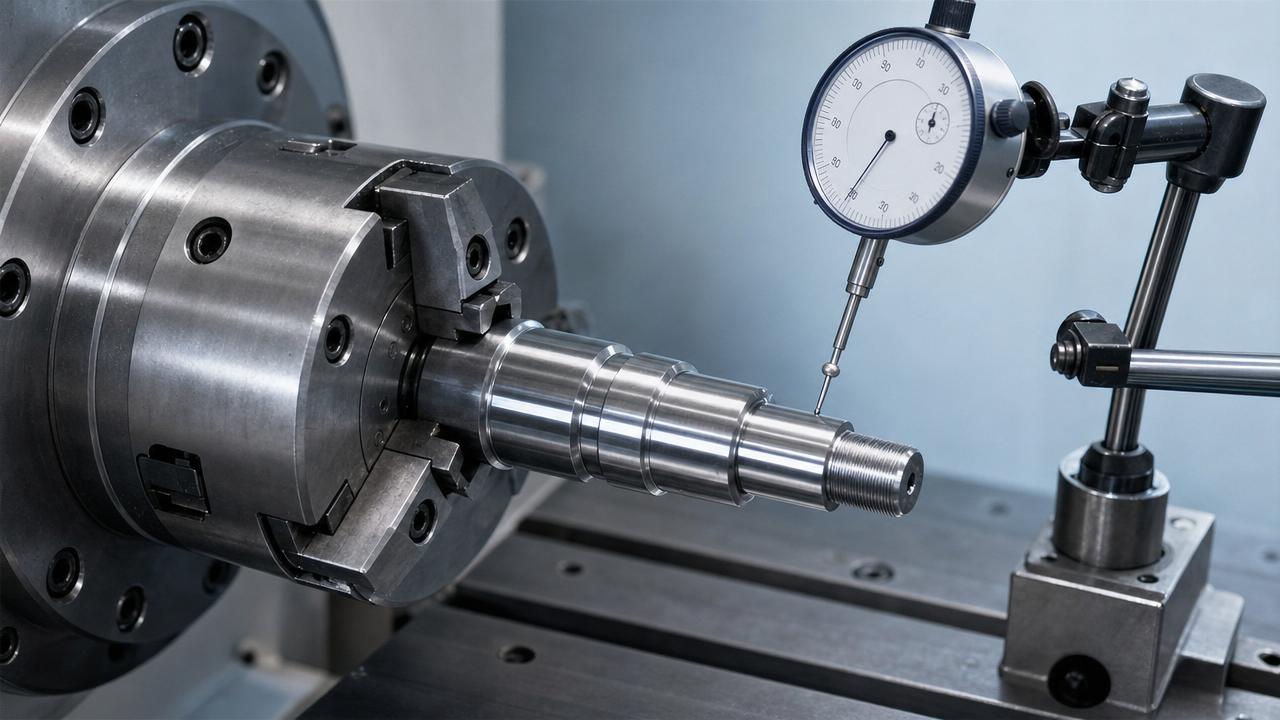
When Shaft Parts machining defects repeat across batches, quality risks quickly turn into delivery delays, safety concerns, and rising costs. For quality control and safety management teams, identifying the root causes behind recurring dimensional errors, surface flaws, or concentricity issues is critical to maintaining stable production. This article explores why these defects persist and how to build more reliable prevention and inspection processes.
Why do recurring defects in Shaft Parts deserve immediate attention?
Repeated defects are rarely isolated quality events. In most CNC production environments, if Shaft Parts show the same out-of-tolerance dimensions, chatter marks, taper variation, runout, or poor surface finish across multiple batches, the process is signaling instability. For quality control personnel, that means the issue is likely embedded in tooling, fixturing, machine condition, programming logic, raw material behavior, or inspection methods rather than operator luck.
For safety management teams, recurring defects in Shaft Parts matter because these components often transfer torque, support rotation, maintain alignment, or connect moving assemblies. A shaft with hidden concentricity error, fatigue-prone surface damage, or improper heat-treatment distortion can eventually affect machine vibration, premature bearing wear, seal failure, and in severe cases operational hazards in downstream equipment.
The business impact is also substantial. Repeated nonconformities increase sorting cost, rework hours, line stoppages, customer complaints, warranty exposure, and delivery risk. In high-volume industries such as automotive, energy equipment, general machinery, and industrial automation, even a small repeat issue in Shaft Parts can multiply quickly because the same setup, tool path, and inspection routine are reused batch after batch.
What kinds of Shaft Parts machining defects usually repeat across batches?
The most common repeating defects tend to fall into a few recognizable groups. Knowing these categories helps teams narrow root causes faster instead of treating every reject as a separate event.
In many plants, teams focus heavily on final inspection numbers but miss the defect signature. If the same dimensions go out first, or if the same location on Shaft Parts repeatedly develops marks or form error, the pattern itself is evidence. Repeatability of failure often points more clearly to process design weakness than to random execution mistakes.
Why do the same defects keep appearing even when operators already know about them?
This is one of the most common and frustrating questions in precision manufacturing. Repeating defects in Shaft Parts persist because awareness does not equal process control. Operators may know the problem exists, but if the source is systemic, local corrections will only hide the issue temporarily.
One major reason is tool-life variation. A process may run well for the first 30 or 50 pieces, then drift as inserts wear, built-up edge forms, or chip evacuation changes. If tool replacement is based on experience instead of measured wear or statistical trend, each batch can repeat the same defect curve.
Another cause is unstable clamping and support. Shaft Parts are especially sensitive because length-to-diameter ratio, center support, chuck force, and secondary operation positioning all affect geometry. If the workholding system lacks repeatability, the same setup error can be recreated each shift and every batch restart.
Programming and datum transfer errors are also common. A CNC process may be logically correct for one feature but weak when multiple diameters, grooves, shoulders, or threads must align from different references. If the datum strategy is not robust, concentricity defects in Shaft Parts can remain hidden until enough production accumulates to reveal the trend.
Measurement system weakness should not be overlooked. Sometimes the defect is not repeating more often; rather, the process never had enough detection sensitivity. Inconsistent gauging, poor fixture for inspection, low sampling frequency, or disagreement between operators and CMM results can allow unstable Shaft Parts to pass until customer complaints expose the pattern.
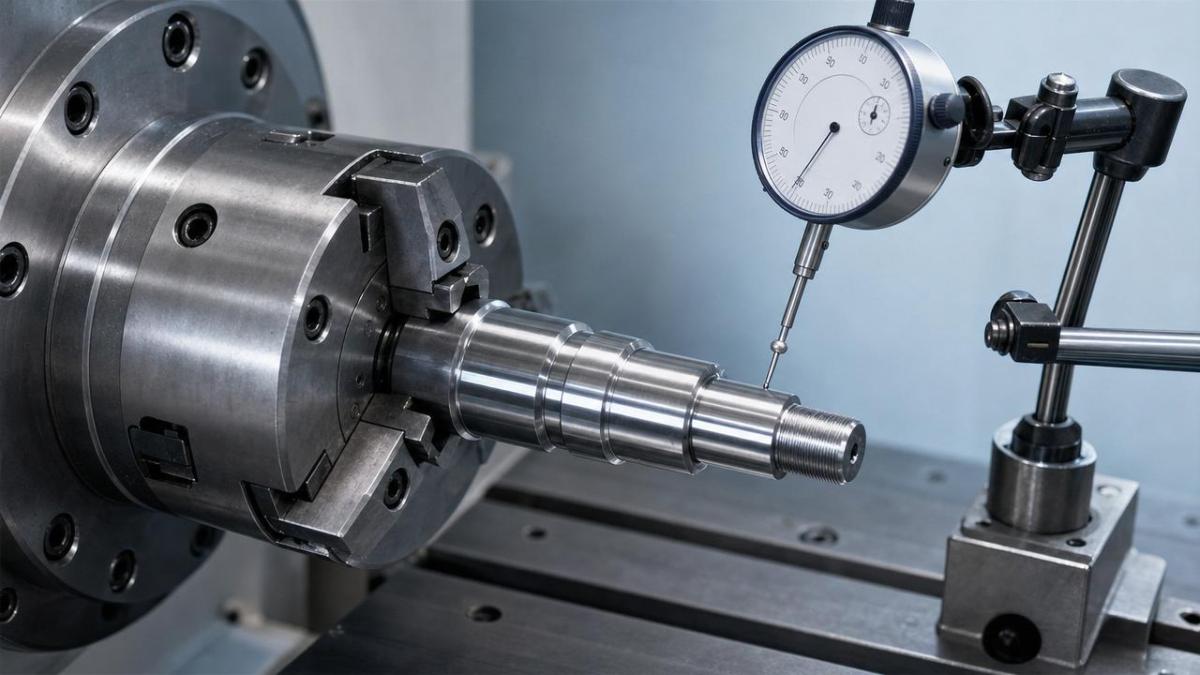
Which root causes should quality control teams check first on Shaft Parts?
A practical investigation should begin with the highest-probability and highest-impact factors. Quality teams do not need to inspect everything at once; they need a disciplined sequence that separates symptom from source.
1. Is the machine condition stable enough?
Check spindle runout, turret repeatability, backlash, thermal drift, lubrication, and tailstock or live-center condition. Shaft Parts often amplify machine wear because small alignment deviations become visible over long turning lengths or multi-step diameters.
2. Is the workholding method creating distortion or misalignment?
Review chuck jaw wear, clamping force consistency, soft jaw machining quality, center hole condition, steady rest setting, and loading orientation. A perfect cutting program cannot compensate for poor support on slender Shaft Parts.
3. Are tooling and parameters matched to the material and geometry?
Look at insert grade, nose radius, tool overhang, edge preparation, coolant targeting, surface speed, feed rate, and depth of cut. Repeating chatter or surface tearing on Shaft Parts often results from a parameter window that is technically workable but not stable enough for batch production.
4. Has raw material variability been verified?
Bar straightness, hardness variation, residual stress, and surface scale can all change the machining outcome. If repeated defects in Shaft Parts seem linked to certain heats or suppliers, incoming material control may be the real starting point.
5. Is the inspection plan capable of catching process drift early?
Verify gauge R&R, measurement fixturing, first-off approval logic, in-process sampling intervals, and SPC usage. If the control plan only checks finished Shaft Parts after a large batch is complete, recurrence is almost guaranteed.
How can safety managers and QC staff tell whether the issue is random or systemic?
The distinction matters because random defects call for containment, while systemic defects require process redesign. On Shaft Parts, the easiest way to tell is to compare defect timing, feature location, and production conditions.
If the same defect appears at similar tool life, during the same machine warm-up phase, on the same feature, or after the same secondary operation, the process is likely systemic. If defects are scattered with no pattern, random contamination, mixed material, operator handling, or intermittent machine faults may be involved.
A strong method is to build a simple defect correlation sheet for Shaft Parts. Record machine number, program version, tool ID, tool life count, operator, material heat, fixture used, inspection result, and ambient condition. Even basic trend mapping can reveal that the recurring issue always follows one tool family, one supplier lot, or one setup sequence.
Safety teams should also classify the defect by functional severity. Not every cosmetic issue has the same risk level, but runout, undersize critical journals, thread damage, or grinding burn on Shaft Parts can directly affect fatigue life, rotating balance, or assembly safety. This severity ranking helps prioritize corrective action instead of treating all defects equally.
What are the most common mistakes companies make when trying to fix recurring Shaft Parts defects?
Many factories react quickly but not effectively. One common mistake is adjusting offsets too often without understanding why the dimension is moving. This can mask the true drift pattern in Shaft Parts and make root-cause analysis harder.
Another mistake is blaming operators too early. Human error exists, but repeated defects across shifts and batches usually indicate a process that is not resilient enough. When the process depends on exceptional operator skill to keep Shaft Parts in tolerance, the system is already weak.
A third mistake is separating machining, quality, and maintenance data. If maintenance tracks spindle vibration, production tracks tool life, and QC tracks reject codes in different systems with no shared review, patterns remain hidden. Recurring Shaft Parts defects are often cross-functional by nature.
Companies also underestimate the role of secondary processes. Washing, deburring, heat treatment, coating, grinding, and transport can all turn marginal Shaft Parts into rejected parts. If analysis stops at the lathe or machining center, the real source may be missed.
What prevention plan actually works for batch-to-batch stability?
An effective prevention plan for Shaft Parts should combine process discipline, data visibility, and escalation rules. The goal is not only to catch bad parts, but to stop the process before the same defect repeats.
The most reliable plants also standardize visual defect examples, not just measurement limits. Operators and inspectors should see approved and non-approved examples of chatter, burnishing, burr severity, and edge damage on Shaft Parts. Visual alignment reduces subjective decisions that often allow marginal batches to continue.
What should be confirmed before launching corrective action, supplier escalation, or process improvement?
Before taking major action, teams should confirm a few essentials. First, define the defect with precision: which feature, what specification, how often, and under what production conditions? Vague statements such as “Shaft Parts quality is unstable” are not actionable.
Second, verify whether the defect is generated in primary machining, secondary finishing, heat treatment, or handling. Third, confirm whether the measurement system is trustworthy enough to support decisions. Fourth, separate containment from correction: sorting bad Shaft Parts protects customers, but it does not solve the process.
Finally, align quality, production, maintenance, and if needed the material supplier on one fact-based review. Recurring defects rarely disappear through isolated department action. If further confirmation is needed on process capability, fixture design, sampling frequency, critical tolerances, inspection method, lead time impact, supplier responsibility, or cooperation model for improvement, those should be the first discussion points before moving to full implementation.
PREVIOUS ARTICLE
Recommended for You
 Machine Tool Standards by Country: What Importers Must Verify Before PurchaseManufacturing Policy Research Center
 CNC Lathe Quick Installation Guide: Alignment Checks Before First Production RunCNC Machining Technology Center
 How to Select a CNC Lathe for Small Parts Without Sacrificing Accuracy or Cycle TimeCNC Machining Technology Center
 How to Select a Slant Bed Lathe for High-Precision Shaft and Chuck WorkCNC Machining Technology Center
 Smart Manufacturing for Small Businesses: Where Automation Delivers the Fastest ROIMachine Tool Industry Editorial Team
 How to Specify a CNC Lathe for High-Volume Automotive Shaft ProductionCNC Machining Technology Center

Aris Katos
Future of Carbide Coatings
15+ years in precision manufacturing systems. Specialized in high-speed milling and aerospace grade alloy processing.
▶
How Does Precision Machining Differ From Standard Machining?CNC Machining Technology Center▶
CNC Precision: Which Tolerances, Materials, and Processes Fit Your Part?CNC Machining Technology Center▶
How to Choose Metal Machining Processes for Tight Tolerances and Production VolumeCNC Machining Technology Center▶
Production Process Explained: Key Stages, Controls, and Quality CheckpointsCNC Machining Technology Center▶
How to Select a Machine Tool for Electronics Manufacturing with Tight Tolerance NeedsCNC Machining Technology Center
Mastering 5-Axis Workholding Strategies
Join our technical panel on Nov 15th to learn about reducing vibrations in thin-wall components.

Providing you with integrated sanding solutions
Before-sales and after-sales services
Comprehensive technical support