• Global CNC market projected to reach $128B by 2028 • New EU trade regulations for precision tooling components • Aerospace deman
NYSE: CNC +1.2%LME: STEEL -0.4%

JPMorgan Forecasts U.S. Humanoid Robot Production to Reach 400,000 by 2030

JPMorgan forecasts that U.S. humanoid robot production will reach 400,000 units by 2030 as deployments accelerate, according to a Reuters report on the bank's November 12 research note. The forecast points to the possibility of production at a scale that could reshape demand for precision machining, CNC equipment, automated production lines and robot components.
The figure is a forecast, not a record of production or a confirmed order pipeline. Its significance lies in the manufacturing capacity that would be needed if output approaches that level, and in the questions it raises for suppliers serving a market that may move from smaller production runs toward more repeatable processes.
What the production forecast could mean
A higher volume of humanoid robots would require more parts to be produced, assembled and checked consistently. That creates a potential route from robot deployment to demand across the manufacturing supply chain: deployments would need to support production plans, those plans would translate into component orders, and sustained orders could justify additional equipment or production capacity.
Each step matters. A forecast for finished robots does not by itself specify how many components will be needed, when suppliers will receive orders or how much work will go to any particular manufacturing process. The effect on individual businesses would depend on robot designs, sourcing decisions and the extent to which manufacturers can use existing capacity.
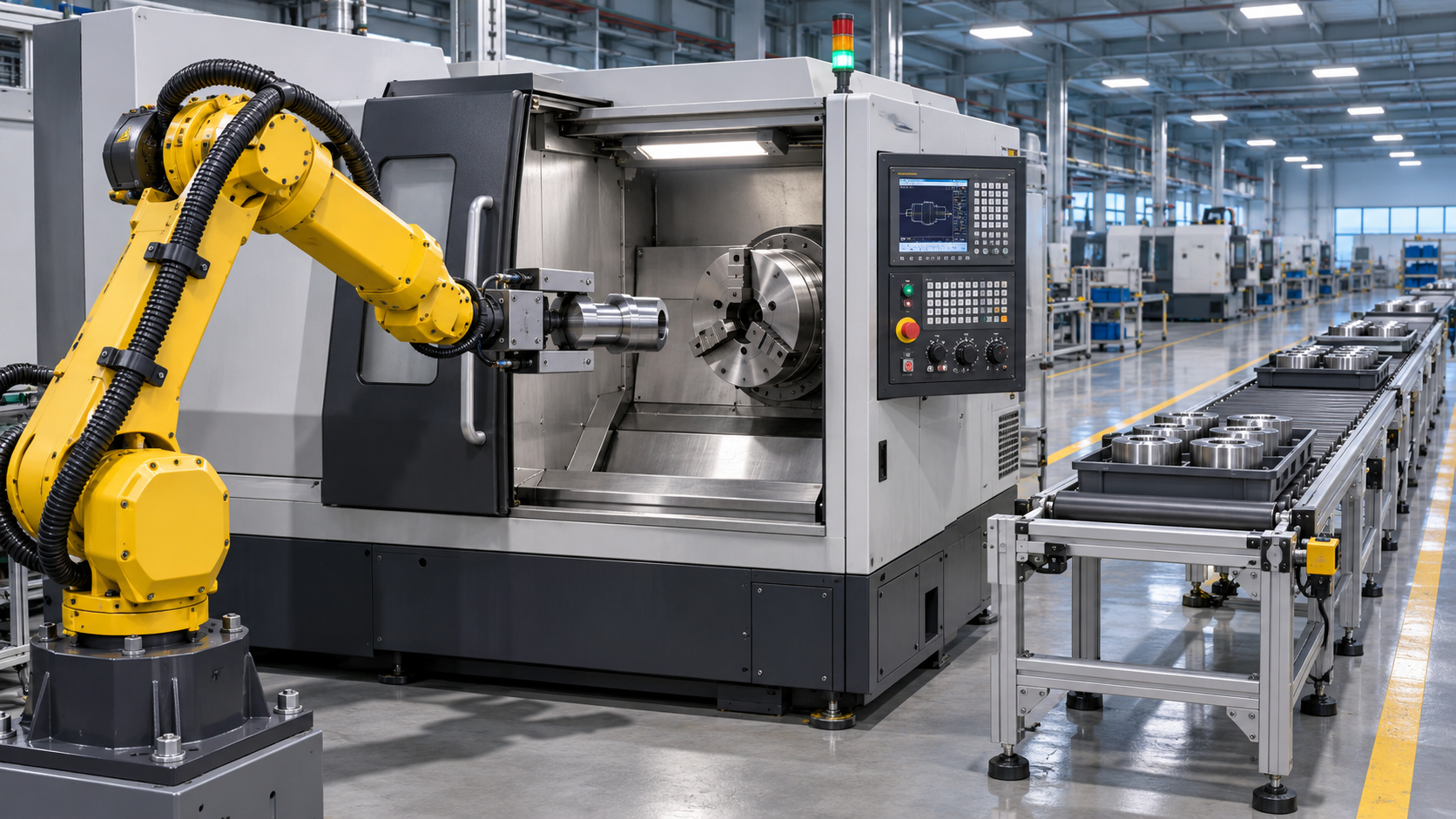
For precision machining suppliers, a sustained increase in output could bring greater emphasis on producing parts consistently across larger runs. Suppliers of CNC machines could see opportunities where robot manufacturers or their component suppliers need more machining capacity. Automated production lines could become more relevant if production volumes support investment in repeatable assembly and inspection processes.
These effects should not be treated as simultaneous or guaranteed. Component orders could rise before a manufacturer commits to a new production line, while some additional demand might initially be absorbed by equipment already in use. The timing and scale of any investment would depend on actual orders and production plans.
From deployment to manufacturing demand
The forecast links production growth with accelerating deployment. That relationship is central to its implications: manufacturers have a stronger reason to expand output when they can see continuing demand for completed robots. For suppliers, the most useful signal would therefore be a sustained connection between deployments, production schedules and component purchasing.
Different parts of the supply chain would face different questions. A component supplier would need to understand the specifications and quantities attached to orders. A machining equipment supplier would be concerned with whether customers plan to add capacity. A production-line provider would look at whether the expected volume and stability of a manufacturing process support automation.
The headline figure alone does not answer those questions. It also does not establish the value of the associated equipment market or show how much of the production work would be handled by any one category of supplier. Its practical value is as an indication of the scale the bank expects, rather than a precise measure of revenue for related industries.
What to watch as 2030 approaches
Subsequent production and deployment announcements can help show whether activity is moving toward the forecast. Manufacturing plans and supplier orders would also shed light on how demand reaches machining, components and production equipment. Changes in robot design or manufacturing methods could affect which processes and parts benefit, even if output rises.
The distinction between planned capacity and actual production will remain important. A production target can signal intent, while completed units provide a clearer indication of output. Likewise, an expansion plan may point to future equipment demand, but its effect on suppliers depends on implementation and purchasing decisions.
JPMorgan's forecast offers a concrete benchmark for assessing the development of U.S. humanoid robot manufacturing. Whether the associated demand for precision manufacturing and automation grows on the same path will depend on deployments, production execution and the supply-chain choices made along the way.
Recommended for You
![]() Perpetua Resources Signs MOU to Evaluate US Tungsten Supply ChainManufacturing Market Research Center
 Choosing an Automated Lathe: Bar Capacity, Accuracy and Production VolumeCNC Machining Technology Center
![]() US Cutting Tool Shipments Reach $287.6 Million in September 2026Machine Tool Industry Editorial Team
 Choosing a Machine Tool Supplier: Service, Lead Times and Total CostManufacturing Market Research Center
![]() India Announces Domestic Five-Axis CNC Machine With 2-Micron AccuracyMachine Tool Industry Editorial Team
 Integrating Industrial Automation into Existing Production Lines: Key StepsMachine Tool Industry Editorial Team

Aris Katos
Future of Carbide Coatings
15+ years in precision manufacturing systems. Specialized in high-speed milling and aerospace grade alloy processing.
▶
Bloomberg: Japan's Machinery Exports to ASEAN Fall 40% as China Gains GroundManufacturing Market Research Center▶
JPMorgan Forecasts U.S. Humanoid Robot Production to Reach 400,000 by 2030Manufacturing Market Research Center▶
Machining Industry News: How Automation Is Reshaping Machine ShopsManufacturing Market Research Center▶
China's Official Manufacturing PMI Falls to 49.3 in OctoberManufacturing Market Research Center▶
Siemens Executive Says AI Could Raise Factory Automation to 80%Manufacturing Market Research Center
▶
Mastering 5-Axis Workholding Strategies
Join our technical panel on Nov 15th to learn about reducing vibrations in thin-wall components.

Providing you with integrated sanding solutions
Before-sales and after-sales services
Comprehensive technical support