• Global CNC market projected to reach $128B by 2028 • New EU trade regulations for precision tooling components • Aerospace deman
NYSE: CNC +1.2%LME: STEEL -0.4%

Machining Industry News: How Automation Is Reshaping Machine Shops
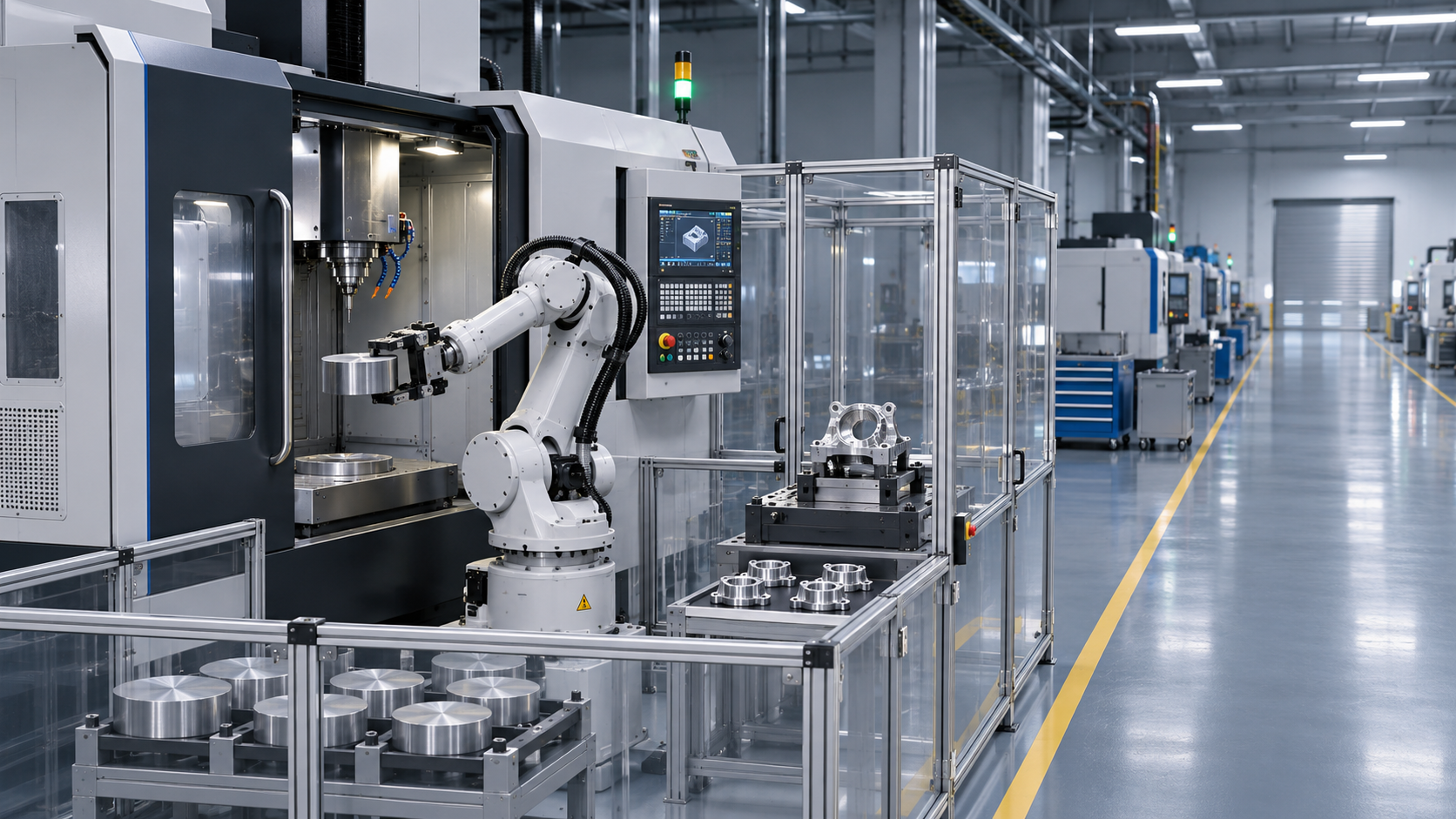
Automation is changing how machine shops compete, from robotic part loading and multi-axis CNC machining to digitally connected production lines. For business leaders, these developments raise important questions about productivity, workforce capabilities, capital investment, and operational flexibility. This machining industry news overview examines the technologies reshaping precision manufacturing and the decisions behind a successful investment.
The shift is not simply from manual work to robots. It is from treating a machine tool as an individual asset to managing an entire process: material presentation, machining, inspection, tool replacement, and the movement of information between them. A shop can buy an impressive machining center and still struggle to deliver parts if any one of those steps remains unpredictable.
The robot is rarely the whole answer
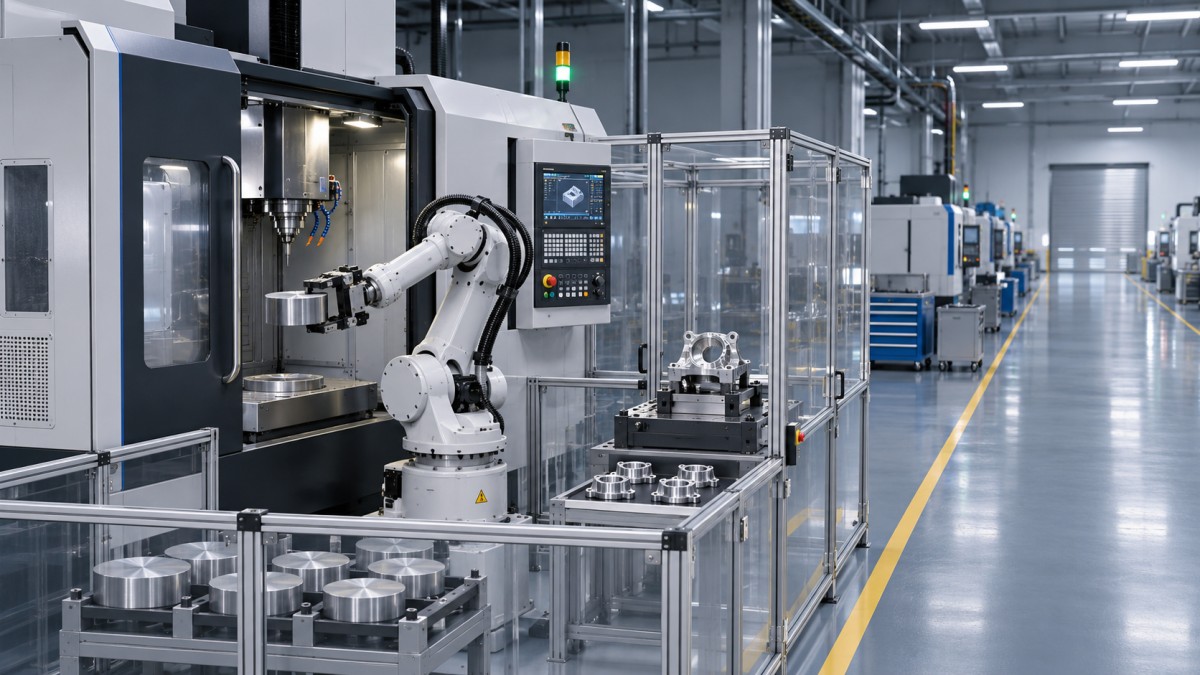
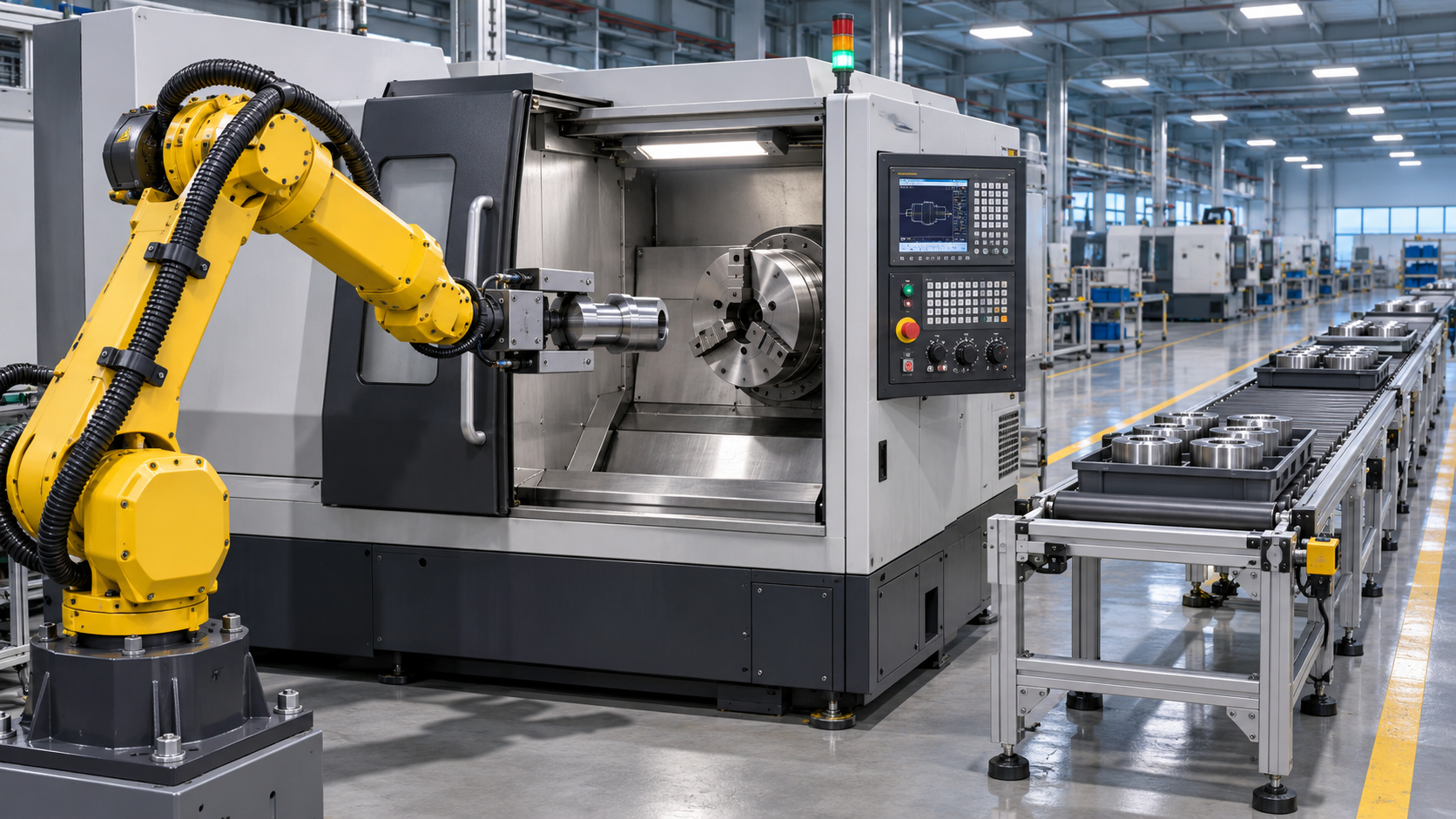
Automated loading is often the most visible change on a shop floor. A robot or bar feeder can tend a CNC lathe, while a pallet system can keep work flowing through a machining center. For repeat parts with stable demand, these arrangements can reduce the time operators spend opening doors, handling blanks, and waiting for a cycle to finish.
The less visible work determines whether that extra capacity is usable. A shaft may arrive with inconsistent blank dimensions; chips may collect around a chuck; a gripper may need different fingers for another part family. If the cell cannot detect an incorrectly seated component, it can produce a series of nonconforming parts before anyone notices.
That is why a good first automation project often starts with a repeatable family of parts rather than the most complex job in the building. Look for predictable cycle times, reliable workholding, manageable chip formation, and enough recurring demand to justify engineering the process. A straightforward loading task can expose integration problems without putting the shop’s most demanding delivery at risk.
High-mix work is not automatically a poor fit. It does, however, put more weight on changeover: how quickly fixtures, grippers, programs, and inspection routines can be switched and verified. A robot that runs one part beautifully but takes too long to adapt to the next may not suit a contract manufacturer with volatile orders.
Multi-axis machining changes the economics of handling
Multi-axis machines and mill-turn systems can combine operations that would otherwise require several setups. For a precision structural component, fewer transfers may reduce handling and the risk of locating the part differently at each machine. For a complex shaft, turning and milling in one setup can make it easier to maintain relationships between features.
But consolidation is not free. Programming becomes more demanding, fixtures must provide tool access without sacrificing rigidity, and collisions can be expensive. A part that fits on a five-axis machine is not necessarily a part that should run there. If a simpler process already meets tolerance and delivery requirements, reserving advanced capacity for genuinely complex work may be the better commercial choice.
Decision-makers should compare the complete route, not just the quoted cycle time. Include setup, probing, inspection, deburring, tool changes, and the practical effect of removing a bottleneck. In some shops, the biggest gain from a multi-axis machine is not a faster cut; it is avoiding a queue between operations.
Unattended production depends on process control
Running a machine after the staffed shift can be attractive, particularly when floor space and skilled labor are constrained. Yet leaving a cell unattended extends the consequences of small problems. Tool wear, broken inserts, coolant delivery, chip buildup, and variation in incoming stock all deserve attention before the lights are turned down.
A practical approach is to establish a stable attended process first. Then determine which conditions can be monitored, which faults should stop the machine, and who responds to an alarm. Tool-life management and in-process probing may help, but neither replaces a plan for what happens when a measurement falls outside an acceptable range.
Inspection strategy matters as much as loading capacity. An aerospace component, an automotive part, and an electronics housing can have very different requirements for traceability and verification. In-process measurements can support control, but whether they are sufficient for final acceptance depends on the customer’s requirements, the measurement method, and the specific feature. Assume neither that every part needs the same level of scrutiny nor that automated probing eliminates independent inspection.
Safety also needs to be designed into the cell from the start. Guarding, access for maintenance, restart procedures, and the interaction between people and moving equipment should be assessed for the actual installation and applicable local requirements. Retrofitting these considerations after the layout is fixed can be disruptive and costly.
Connected machines are useful only when the data leads somewhere
Machine monitoring has become a common part of the automation conversation. Connected controls can report machine states, alarms, and production counts; shop-floor systems can link those signals to jobs and schedules. This can help managers see whether equipment is cutting, waiting for material, stopped for an alarm, or idle between jobs.
The important distinction is between collecting signals and understanding losses. A machine marked “idle” may be waiting for an approved program, a replacement tool, an inspector, or a forklift. Those causes require different responses. If operators must enter too many reason codes, the data can become unreliable; if no one reviews it with the people doing the work, the dashboard becomes decoration.
Start with a question that affects a decision: Where is the queue growing? Why are scheduled hours not translating into completed parts? Which alarms repeatedly interrupt an unattended shift? Agree on definitions before comparing machines, and check whether the control data can be tied to the correct job. Older equipment may need additional interfaces, while different suppliers’ systems may not exchange information as easily as a demonstration suggests.
Connectivity also introduces operational risks. Network access, user permissions, software updates, backups, and recovery procedures should be discussed with both equipment suppliers and the people responsible for plant systems. A cell that cannot be restored promptly after a software or network issue is not as resilient as its utilization chart may imply.
Investment decisions are moving beyond the machine price
The capital request for an automated cell may begin with a machine and robot, but the business case must account for everything required to make them productive. Workholding, end-of-arm tooling, guarding, probing, software integration, operator training, installation, and commissioning can all affect the final cost and schedule. So can the production time lost while a process is proved out.
A useful comparison starts with the current cost and capacity of a defined part family. Estimate the expected change in staffed time, available machine hours, setup effort, scrap exposure, and maintenance requirements. Then test the assumptions: What happens if order volume falls, a product changes, or the cell runs fewer unattended hours than planned? Payback calculations are only as credible as the operating assumptions behind them.
There is also an opportunity cost. Automating a stable, lower-margin job may release skilled people and equipment for more complex work. Equally, tying an expensive flexible machine to a single repetitive part can leave the shop short of capacity for urgent, higher-value orders. The right answer depends on the order book and the alternatives, not on a general preference for automation.
Supplier support deserves the same scrutiny as the equipment specification. Ask who owns integration between the robot, machine control, fixtures, and inspection system; how faults will be diagnosed; and what training and spare-parts support are available locally. For imported equipment, response times and access to technical documentation can matter as much as the initial purchase price.
Workforce requirements are changing, not disappearing
Automation can reduce repetitive handling, but it increases demand for people who understand the entire process. Someone still has to prove programs, select tooling, troubleshoot workholding, interpret measurements, and decide whether an alarm indicates a minor interruption or a quality risk.
A common mistake is to train one programmer or maintenance technician and leave everyone else dependent on that person. Operators need enough practical instruction to load jobs correctly, recognize abnormal conditions, and follow a clear escalation path. Maintenance teams need access to documentation and diagnostic tools. Programmers need time on the floor to see how their process behaves with real chips, worn tools, and normal variation in material.
Involving those people before equipment is ordered can prevent expensive layout and workflow errors. The operator who changes jaws every morning may know more about a proposed cell’s limitations than a drawing can show.
What to watch across the global machine tool market
Machine tool clusters in China, Germany, Japan, and South Korea are part of a broad international supply base for CNC machines, components, controls, and automation. For buyers comparing equipment across markets, the relevant differences are not captured by country of origin alone. Machine configuration, application engineering, documentation, service coverage, and compatibility with existing systems vary by supplier and project.
Demand patterns vary by sector too. Automotive programs may favor repeatability and throughput across established part families, while aerospace work can place greater emphasis on complex geometries, process documentation, and material challenges. Energy equipment may involve large or difficult-to-handle components; electronics manufacturing can demand compact features and consistent precision. These are tendencies, not substitutes for checking the actual part and customer requirements.
For a shop planning its next investment, the most useful starting point is a specific production constraint, not a technology trend. Map one candidate part family from incoming stock to accepted component, record where time and defects occur, and ask suppliers to address those points in the proposed cell. If the process cannot be made dependable during a staffed shift, adding an unattended one will usually make the underlying problem more visible—not make it disappear.
Recommended for You
![]() Perpetua Resources Signs MOU to Evaluate US Tungsten Supply ChainManufacturing Market Research Center
 Choosing an Automated Lathe: Bar Capacity, Accuracy and Production VolumeCNC Machining Technology Center
![]() US Cutting Tool Shipments Reach $287.6 Million in September 2026Machine Tool Industry Editorial Team
 Choosing a Machine Tool Supplier: Service, Lead Times and Total CostManufacturing Market Research Center
![]() India Announces Domestic Five-Axis CNC Machine With 2-Micron AccuracyMachine Tool Industry Editorial Team
 Integrating Industrial Automation into Existing Production Lines: Key StepsMachine Tool Industry Editorial Team


Aris Katos
Future of Carbide Coatings
15+ years in precision manufacturing systems. Specialized in high-speed milling and aerospace grade alloy processing.
▶
Bloomberg: Japan's Machinery Exports to ASEAN Fall 40% as China Gains GroundManufacturing Market Research Center▶
JPMorgan Forecasts U.S. Humanoid Robot Production to Reach 400,000 by 2030Manufacturing Market Research Center▶
Machining Industry News: How Automation Is Reshaping Machine ShopsManufacturing Market Research Center▶
China's Official Manufacturing PMI Falls to 49.3 in OctoberManufacturing Market Research Center▶
Siemens Executive Says AI Could Raise Factory Automation to 80%Manufacturing Market Research Center
▶
Mastering 5-Axis Workholding Strategies
Join our technical panel on Nov 15th to learn about reducing vibrations in thin-wall components.

Providing you with integrated sanding solutions
Before-sales and after-sales services
Comprehensive technical support