• Global CNC market projected to reach $128B by 2028 • New EU trade regulations for precision tooling components • Aerospace deman
NYSE: CNC +1.2%LME: STEEL -0.4%

Choosing a Machine Tool Supplier: Service, Lead Times and Total Cost
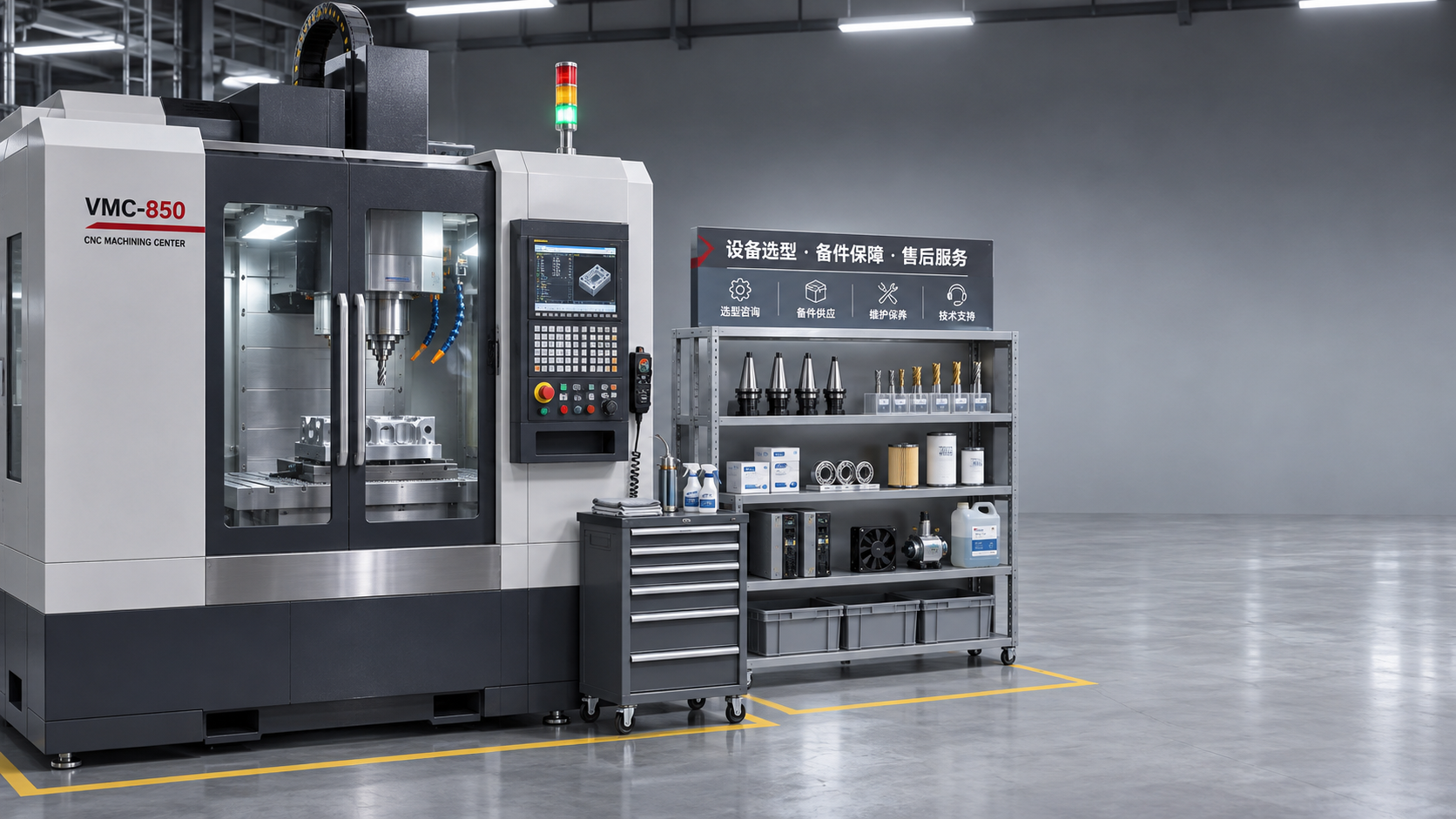
A machine tool quotation can look reassuringly precise: a machine model, a specification sheet, a price and an estimated delivery date. Yet procurement teams know that the harder questions often sit outside those boxes. Who will respond when the machine stops? What happens if a control component is unavailable? And how much production time will be lost if delivery slips by several weeks?
Choosing a machine tool supplier means looking beyond the purchase price to the support, delivery commitments and operating costs that follow. Whether the investment is a CNC lathe, a machining center or a multi-axis system, the right comparison connects the supplier’s offer to the parts you make, the capacity you need and the consequences of an interruption.
Start with the production requirement, not the machine catalog
Before requesting quotations, define what the machine must accomplish in your environment. A supplier cannot offer a meaningful delivery schedule or operating cost estimate without understanding the application. Share representative part drawings, materials, batch sizes, required tolerances, surface finish expectations and target output. Identify which features are critical to quality and which operations may change as the product develops.
Be equally clear about the intended process. Will the machine run a single family of shaft components, or must it switch regularly between complex structural parts? Is unattended operation a future objective? Will the new equipment need to communicate with existing automation, inspection or production monitoring systems? These answers affect configuration, tooling, integration work and the skills required on the shop floor.
A useful request for quotation separates mandatory requirements from preferences. That gives suppliers room to propose alternatives without obscuring the essentials. Ask each bidder to identify assumptions and exclusions, rather than allowing a low headline figure to create the impression that every requirement is covered.
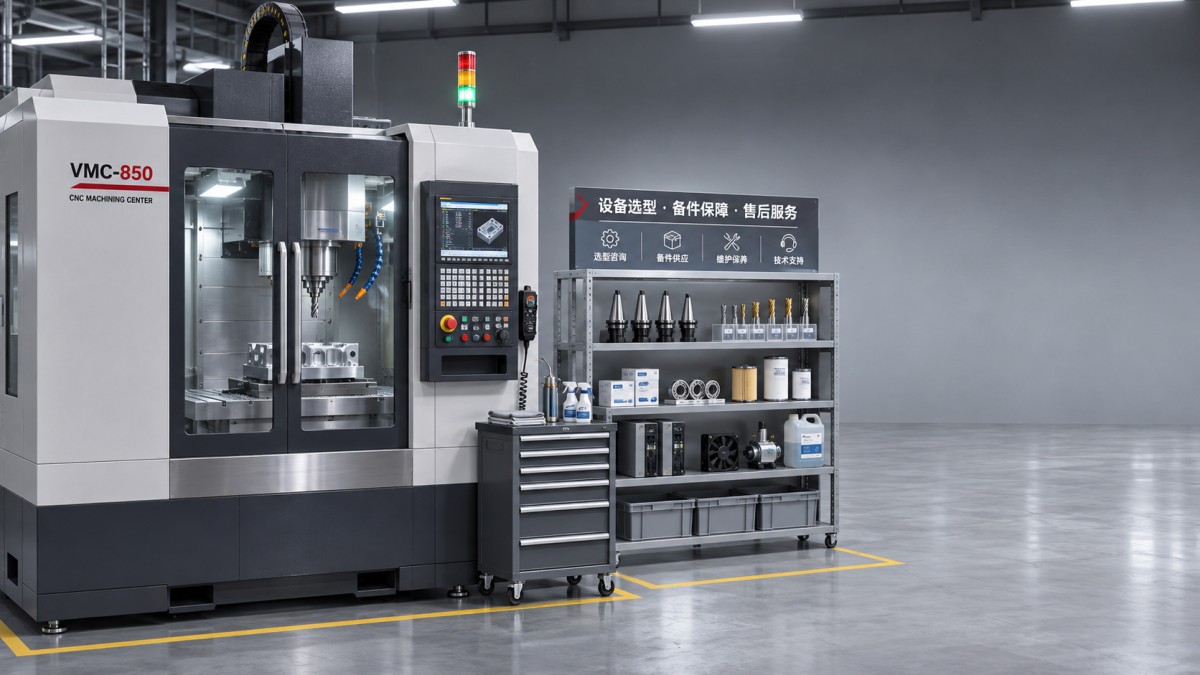
Service coverage: find out what support looks like in practice
A machine may be purchased through one office, installed by another team and supported by a third. For procurement, the important question is not simply whether a supplier offers service, but how that service reaches your facility when production is under pressure.
Request a description of the support chain: the first point of contact, available service hours, remote diagnostic capability and the location of field technicians. If a local distributor is involved, clarify which organization handles diagnosis, dispatch, warranty decisions and spare parts. A local sales presence is not necessarily the same as local technical support.
Questions worth asking before an order
- What response and on-site attendance times are offered, and are they contractual commitments or targets?
- Can technicians support the machine’s CNC control, drives, spindle, probing system and automation interface?
- What is included in installation, commissioning and operator or maintenance training?
- Are remote connections available, and do they meet your company’s cybersecurity requirements?
- How are urgent issues escalated outside normal business hours?
Response time and resolution time are different. A quick acknowledgement is helpful, but it does not guarantee that the right technician or replacement part will arrive quickly. Ask suppliers to explain the typical steps from a reported fault to diagnosis and repair, including situations where the machine builder, control manufacturer and automation integrator must work together.
Training deserves the same scrutiny. A brief handover may be sufficient for an experienced team using a familiar control. A new five-axis process, robotic loading cell or unfamiliar programming environment may require more time, separate maintenance instruction and follow-up support after operators have gained experience.
Spare parts are a supply-chain question
A service agreement has limited value if a critical part cannot be sourced when needed. Ask for a recommended spare parts list tied to the proposed machine configuration, not just a generic catalog. It should distinguish consumables and routine maintenance items from components whose failure could stop production, such as selected sensors, drive components or spindle-related parts.
For each critical item, establish where it is stocked, the normal replenishment process and whether a substitute is approved. Availability can change, so treat stated lead times as planning information rather than a guarantee unless the contract says otherwise. If the application is highly time-sensitive, compare the cost of holding selected spares on site with the potential cost of waiting for them.
Also ask how long the supplier expects to support the machine and what happens when control or electronic components become obsolete. Documented upgrade paths, access to software backups and clear ownership of machine parameters can make future maintenance less dependent on one individual or service provider.
Lead time means more than the factory shipment date
When a supplier quotes a delivery period, determine exactly when the clock starts and stops. An estimate beginning at receipt of a deposit is not the same as one beginning after drawings, options and automation interfaces are approved. Likewise, shipment from the factory is not equivalent to an accepted machine producing parts in your facility.
Build a shared schedule around these milestones:
- Order clarification: final configuration, technical approvals and any required payment.
- Machine build and preparation: manufacture, option installation and readiness for inspection.
- Factory acceptance, if agreed: tests performed before shipment and resolution of outstanding items.
- Transport and site delivery: packing, freight, import responsibilities where applicable, unloading and positioning.
- Installation and acceptance: utilities, commissioning, training and agreed production or accuracy tests.
Ask suppliers to identify long-lead options and dependencies, including automation equipment or customer-supplied tooling. An ambitious machine delivery date may be of little use if the bar feeder, robot interface or special fixture arrives later. On your side, confirm that foundations, electrical supply, compressed air, network access and lifting arrangements will be ready when needed.
For an international purchase, specify the delivery terms and the party responsible for freight, insurance, customs clearance and duties. These choices affect both cost and schedule risk. If the machine is required for a launch, discuss how progress will be reported and what remedies or escalation procedures apply if a contractual milestone is missed.
Compare total cost, not just quoted price
The least expensive quote can still be the best choice—but only after the offers have been normalized. One supplier may include a coolant system, probing, tooling interfaces and commissioning; another may list them as options. Put each quotation on the same scope before comparing the numbers.
A practical total cost of ownership calculation covers a defined period that matches your investment plan. Add the purchase and startup costs to estimated operating, maintenance and downtime costs over that period, then account for any expected end-of-life value separately. Where estimates are uncertain, compare scenarios rather than presenting a single number as fact.
For example, two machines may meet the same part tolerance but achieve the required output with different setups, tooling consumption or staffing. A faster cycle time alone does not establish the lower cost: include loading, tool changes, inspection, scrap and changeover. Ask suppliers to state the assumptions behind any cycle-time estimate and, where practical, validate the process using representative parts.
Acceptance criteria turn expectations into something testable
Disputes often arise because buyer and seller use the same words differently. “Ready for production” could mean that the machine powers on, or that it produces an agreed part at an agreed rate. Define the difference in the purchase documents.
Acceptance criteria may include machine configuration, safety functions, geometric checks, spindle operation, probing performance and a test cut. If part quality or cycle time is essential, specify the material, tooling, program, measurement method, sample quantity and conditions of the test. Decide who supplies each item and how results will be documented.
A factory acceptance test can expose problems before shipment, especially for a complex turnkey cell. A site acceptance test checks performance after transport and installation, but it depends on your facility being ready. State how deficiencies will be recorded, who will correct them and whether acceptance is conditional on resolving particular items. Warranty start dates should also be clear; a warranty that begins well before commissioning may leave less useful coverage once production starts.
Make the supplier decision visible and defensible
Bring production, maintenance, engineering and finance into the evaluation before the shortlist is finalized. Procurement may own the commercial comparison, but maintenance can challenge the service plan, while manufacturing engineers can assess whether the proposed process is realistic.
A weighted scorecard can make trade-offs visible. Set the criteria before reviewing final bids and include technical fit, support capability, delivery confidence, commercial terms and estimated ownership cost. Give greater weight to the risks that matter for the application: a bottleneck machine supporting a time-critical production line may justify a stronger service requirement than equipment with available backup capacity. Avoid letting a high aggregate score hide a failure on a mandatory requirement.
Finally, verify claims proportionately. Ask for a demonstration, a reference willing to discuss a comparable application, or a review of the proposed service arrangements. Check the actual model and configuration being offered; experience with a different machine or region may not answer the question you need to resolve.
The best supplier relationship begins with a clear understanding on both sides. A well-scoped quotation, a credible path to production and support that fits the factory’s operating reality give buyers a stronger basis for approval than price alone—and fewer unwelcome surprises after the machine arrives.
Recommended for You
![]() Perpetua Resources Signs MOU to Evaluate US Tungsten Supply ChainManufacturing Market Research Center
 Choosing an Automated Lathe: Bar Capacity, Accuracy and Production VolumeCNC Machining Technology Center
![]() US Cutting Tool Shipments Reach $287.6 Million in September 2026Machine Tool Industry Editorial Team
 Choosing a Machine Tool Supplier: Service, Lead Times and Total CostManufacturing Market Research Center
![]() India Announces Domestic Five-Axis CNC Machine With 2-Micron AccuracyMachine Tool Industry Editorial Team
 Integrating Industrial Automation into Existing Production Lines: Key StepsMachine Tool Industry Editorial Team


Aris Katos
Future of Carbide Coatings
15+ years in precision manufacturing systems. Specialized in high-speed milling and aerospace grade alloy processing.
▶
Perpetua Resources Signs MOU to Evaluate US Tungsten Supply ChainManufacturing Market Research Center▶
Choosing a Machine Tool Supplier: Service, Lead Times and Total CostManufacturing Market Research Center▶
Report: 56% of China's Key Steelmakers Lost Money in SeptemberManufacturing Market Research Center▶
Precision Machining for Defense: Supplier Quality and Traceability ChecksManufacturing Market Research Center▶
Choosing a Precision Disc Parts Manufacturer in China: Tolerances and Quality ChecksManufacturing Market Research Center
▶
Mastering 5-Axis Workholding Strategies
Join our technical panel on Nov 15th to learn about reducing vibrations in thin-wall components.

Providing you with integrated sanding solutions
Before-sales and after-sales services
Comprehensive technical support