• Global CNC market projected to reach $128B by 2028 • New EU trade regulations for precision tooling components • Aerospace deman
NYSE: CNC +1.2%LME: STEEL -0.4%

Why the Manufacturing Industry is rethinking supply risk
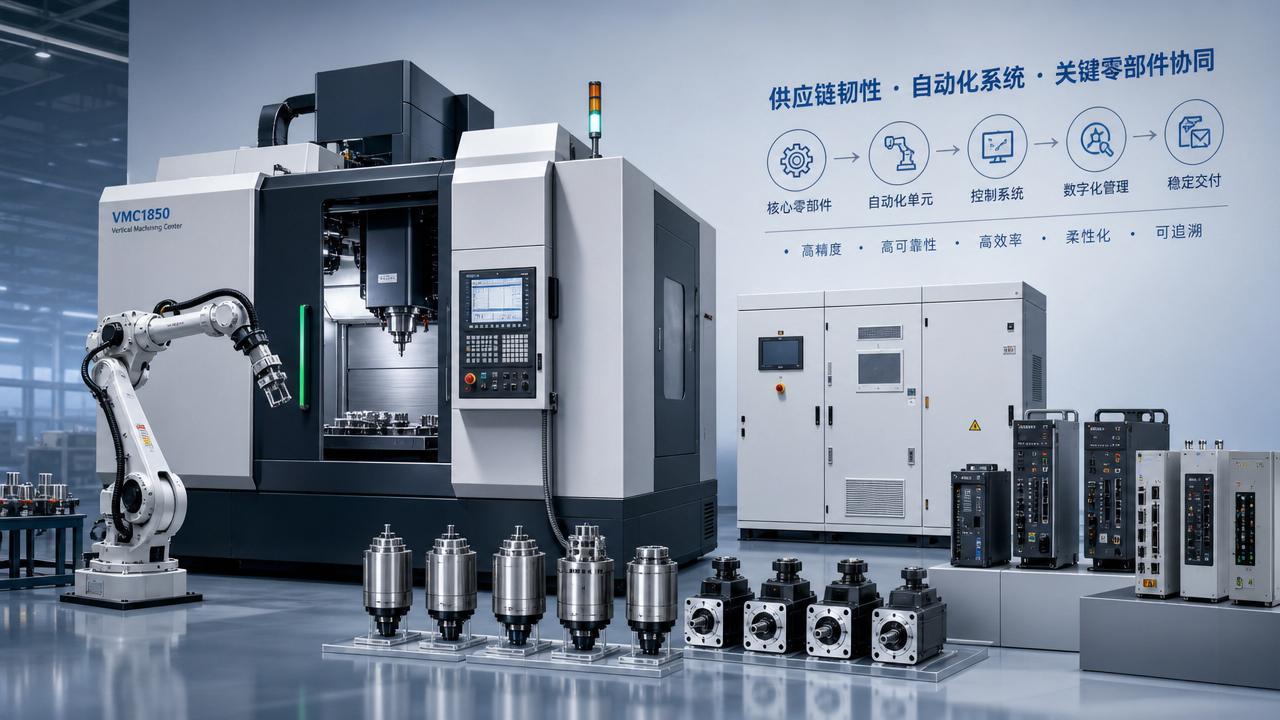
The Manufacturing Industry is rethinking supply risk as global disruptions, rising costs, and geopolitical uncertainty expose the limits of traditional sourcing models. For business decision-makers in CNC machining and precision manufacturing, resilience is now as critical as efficiency. From machine tools and components to automation systems, companies are reevaluating supplier networks, regional capacity, and digital visibility to protect production continuity and long-term competitiveness.
Why supply risk has become a board-level issue in the Manufacturing Industry
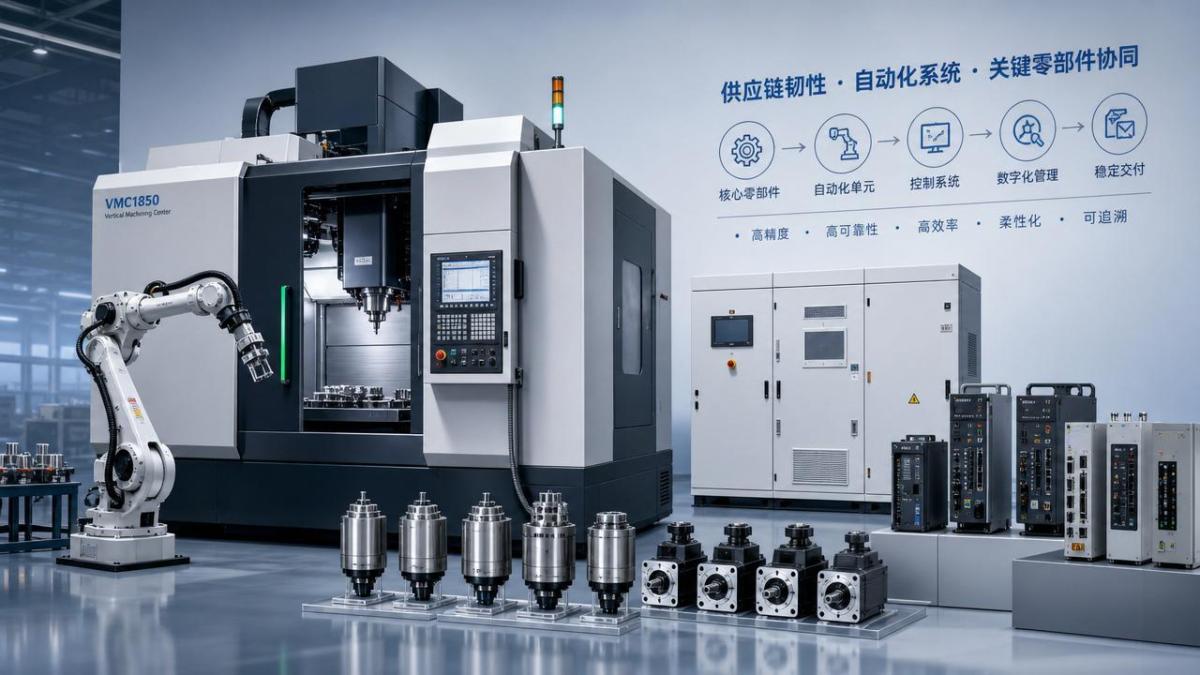
For years, many manufacturers optimized sourcing around unit price, freight cost, and supplier concentration. That model worked when logistics were predictable and lead times were stable. Today, the Manufacturing Industry faces a different operating environment, especially in CNC machine tools, precision parts, cutting tools, drives, controls, and automation subsystems.
A delayed spindle, a missing servo drive, or an unavailable controller can stop production far beyond the value of the missing item. In high-precision manufacturing, a single disrupted input may affect machine commissioning, part qualification, customer delivery, and after-sales commitments.
That is why supply risk is no longer a procurement-only concern. It now affects capital planning, production scheduling, customer retention, and margin protection. Executive teams are asking a new question: is the supply chain merely efficient, or is it durable under stress?
- Longer and less predictable lead times for machine tool components, electrical systems, castings, and imported functional parts.
- Regional policy shifts, export controls, and customs friction that can suddenly change sourcing feasibility.
- Higher quality risk when suppliers are changed too quickly without process validation or documentation transfer.
- Lower visibility across tier-2 and tier-3 suppliers, where hidden bottlenecks often begin.
In the Manufacturing Industry, these pressures are amplified by the move toward smart manufacturing. As factories become more automated and digitally integrated, dependency on specialized hardware, software, and service ecosystems increases. Supply risk therefore becomes both a physical and digital continuity issue.
Where decision-makers are feeling the pressure most
Business leaders in precision manufacturing usually face supply risk in practical, measurable ways. The problem is not abstract. It appears in delayed installations, frozen working capital, cost overruns, and missed customer windows. The highest pressure often comes from a combination of technical dependence and commercial urgency.
Typical pain points in CNC and precision manufacturing
- A buyer can source machine tools competitively, but struggles to evaluate whether replacement parts and service support are regionally available.
- An operations team secures a production line, yet discovers that fixtures, cutting tools, and automation interfaces have longer lead times than the core machine.
- A finance leader pushes for cost savings through consolidation, while production managers worry that single-source dependence raises shutdown risk.
- A quality team approves a new supplier, but documentation, traceability, and process capability are not aligned across regions.
These issues are common in automotive manufacturing, aerospace machining, energy equipment, and electronics production. In each case, tolerances are tight, validation cycles are expensive, and downtime has a disproportionate cost. That is why the Manufacturing Industry increasingly evaluates suppliers on continuity, not just price.
What has changed in sourcing logic for the Manufacturing Industry?
The old sourcing logic prioritized lean inventories and global arbitrage. The new logic balances efficiency with optionality. Manufacturers still care about cost, but they now ask whether a supplier network can absorb transport delays, local shortages, engineering changes, and sudden swings in demand.
This shift is especially visible in CNC machining and machine tool ecosystems, where the final asset depends on many linked inputs: cast bases, linear guides, ball screws, controls, tooling systems, enclosures, sensors, lubrication units, and software integration. Risk can spread quickly across the value chain.
The table below shows how sourcing priorities in the Manufacturing Industry are changing from a cost-first model to a resilience-aware model.
The key message is clear: a lower purchase price can become expensive if it introduces unstable lead times, difficult qualification, or weak service coverage. In the Manufacturing Industry, resilience is increasingly treated as an operational asset rather than overhead.
How to assess supply risk across machine tools, components, and automation systems
Effective risk assessment starts by separating strategic categories. Not every item deserves the same sourcing model. A standard fastener is not managed like a CNC control, spindle unit, precision bearing assembly, or robotic interface. Decision-makers need a practical framework that connects technical criticality with business exposure.
A practical assessment framework
- Map critical items by impact on uptime, qualification, and customer delivery rather than by unit price alone.
- Identify single points of failure, including software dependencies, proprietary interfaces, and region-specific spare parts.
- Review lead time volatility over time instead of relying on quoted averages from one quarter.
- Check whether alternate suppliers can match tolerances, materials, documentation, and process control requirements.
- Evaluate post-sale support, installation capability, and availability of local technical service.
This is where industry knowledge matters. In CNC and precision manufacturing, the risk profile of a part or subsystem is closely tied to machining accuracy, assembly repeatability, and downstream compatibility. Buyers who understand these linkages make stronger sourcing decisions than those who compare quotations in isolation.
Which sourcing models make sense now?
There is no universal answer for the Manufacturing Industry. The right model depends on part criticality, annual volume, validation cost, service requirements, and regional exposure. Still, most companies now choose from three broad strategies: single source with safeguards, dual source for critical categories, or regionalized sourcing for high-risk programs.
The comparison below helps executive teams match sourcing strategy to practical operating conditions in CNC machining and precision manufacturing.
Many companies in the Manufacturing Industry now combine these models. They may keep globally sourced machine structures or standard hardware, while regionalizing electrical components, service parts, tooling, and automation interfaces that directly affect uptime.
What procurement teams should check before approving a supplier
A resilient supplier review is more detailed than a price and lead-time comparison. For CNC equipment and precision manufacturing inputs, the approval process should confirm whether the supplier can support the full operating life of the asset or component, not just the initial shipment.
Key checkpoints for supplier approval
- Technical fit: tolerances, materials, interface compatibility, control architecture, and documentation completeness.
- Quality controls: inspection plans, traceability practices, change management, and nonconformance response.
- Capacity realism: actual throughput, subcontracting reliance, surge capability, and lead-time stability by season.
- Service support: spare parts access, remote diagnostics, field service coverage, and response commitment.
- Compliance readiness: ability to provide routine technical documentation and support common market-entry requirements.
In practical terms, this means procurement should work closely with engineering, quality, and operations. The Manufacturing Industry often loses time when purchasing approves a lower-cost source that later fails in installation, validation, or maintenance support.
How digital visibility reduces supply risk
Digital integration is changing how supply risk is managed. Smart factories do not only automate production; they also improve supply chain visibility when companies connect procurement signals, machine status, inventory data, and supplier communication into one decision flow.
In the Manufacturing Industry, digital visibility is especially useful for long-lead machine tool parts, service-critical consumables, and automation line components. Better data does not remove risk, but it shortens reaction time and improves prioritization.
Useful visibility practices
- Track demand signals from actual machine loading, maintenance schedules, and project milestones instead of static forecasts only.
- Create early-warning rules for long-lead items such as control units, spindle assemblies, and imported drive systems.
- Maintain digital records for part revisions, approved alternatives, and quality documentation to speed supplier switching when needed.
- Use shared planning reviews with strategic suppliers for major programs, especially where commissioning dates are fixed.
For decision-makers, the takeaway is straightforward: visibility reduces blind spots. When a company understands which component, supplier, or region creates the largest continuity risk, it can act before a shortage becomes downtime.
Standards, documentation, and compliance still matter
Resilience should not come at the expense of compliance. In machine tools, automation equipment, and precision manufacturing systems, supplier transitions often fail because technical files, inspection records, or conformity documents are incomplete. A supplier may be commercially attractive yet operationally difficult to onboard.
Common expectations in the Manufacturing Industry can include material traceability, dimensional records, process documentation, electrical safety documentation, and export-related paperwork depending on destination market and product category. Requirements vary, but disciplined documentation always reduces execution risk.
For executive teams, compliance should be viewed as part of supply assurance. If a supplier cannot support audits, revision control, or standard documentation flow, the practical risk is higher even if the quoted lead time looks acceptable.
Common mistakes when the Manufacturing Industry reacts too quickly
In response to disruption, some companies swing too far in the other direction. They overstock slow-moving items, change suppliers without validation, or split volumes in ways that weaken quality control. A better response is selective, data-based, and aligned with product criticality.
Frequent mistakes to avoid
- Treating all parts as equally risky instead of focusing on items that can stop production or delay machine acceptance.
- Assuming alternate suppliers are interchangeable without checking tolerance capability, software compatibility, or assembly implications.
- Reducing cost on paper while increasing hidden cost through requalification, delayed ramp-up, or inconsistent field support.
- Ignoring tier-2 and tier-3 constraints, especially for motors, electronics, castings, and specialist tooling inputs.
The Manufacturing Industry benefits most when risk management is disciplined rather than reactive. The objective is not to eliminate every vulnerability. It is to build a supply structure that can absorb shocks without losing customer confidence or production control.
FAQ: what decision-makers often ask about supply risk
How should we prioritize which suppliers to review first?
Start with components and services that have the highest effect on uptime, customer delivery, and qualification cost. In the Manufacturing Industry, that often includes controls, spindles, servo systems, tooling interfaces, fixtures, and application-specific automation parts. High-value items are not always the highest-risk items.
Is dual sourcing always the best answer?
No. Dual sourcing adds management overhead and qualification expense. It works best for critical categories where downtime cost is high and approved alternatives are technically realistic. For some proprietary machine tool systems, contingency stock and service agreements may be more practical than full dual sourcing.
What should we ask suppliers beyond price and lead time?
Ask about capacity allocation, subcontracting exposure, revision control, spare parts policy, field service coverage, documentation flow, and response time for engineering changes. In precision manufacturing, these factors often determine whether a supplier supports long-term continuity or only initial delivery.
How long does it take to reduce supply risk meaningfully?
The first gains can come quickly through item segmentation, supplier mapping, and targeted safety stock for critical parts. Broader improvement usually takes longer because alternate qualification, regional sourcing setup, and digital visibility projects require coordination across procurement, engineering, quality, and operations.
Why informed market insight matters now
The Manufacturing Industry is evolving toward higher precision, greater automation, and deeper digital integration. That makes supply decisions more technical and more strategic at the same time. A sourcing choice for a machine, spindle, fixture system, or automation module can shape production continuity for years.
For business decision-makers, better results come from combining market visibility with engineering judgment. Tracking developments across China, Germany, Japan, South Korea, and other machine tool hubs helps companies compare regional capacity, technology trends, and supplier behavior before a disruption forces urgent action.
Why choose us for CNC machining and precision manufacturing insight
We focus on the global CNC machining and precision manufacturing industry, with attention to machine tools, production automation, precision components, and international supply developments. That industry focus helps decision-makers filter market noise and concentrate on the supply factors that directly affect equipment selection, sourcing strategy, and delivery confidence.
If your team is reassessing supply risk in the Manufacturing Industry, you can contact us to discuss specific procurement and planning questions, including parameter confirmation for machine tools or components, supplier comparison logic, delivery cycle evaluation, customization feasibility, documentation and certification considerations, sample support, and quotation communication for cross-border sourcing programs.
We can also help you review application scenarios across automotive, aerospace, energy equipment, and electronics production, so your sourcing decisions match accuracy requirements, automation targets, and service expectations. For companies balancing cost, continuity, and technical fit, that clarity is often the difference between a stable rollout and an expensive delay.
Recommended for You
 How to Select CNC Equipment for High-Mix, Low-Volume ProductionCNC Machining Technology Center
 Can CNC Machining Inconel Control Tool Wear in High-Temperature Aerospace Parts?CNC Machining Technology Center
 Machine Tool Market Outlook: Demand Drivers, Capacity Shifts, and Investment RisksManufacturing Market Research Center
 Zero-Point Clamping or Modular Fixtures? Choosing a Faster CNC Changeover SystemCNC Machining Technology Center
 How to Cut CNC Fixture Changeover Time Without Sacrificing Part AccuracyCNC Machining Technology Center
 When Does CNC Turning Pay Off? A Break-Even Guide by Annual Part VolumeMachine Tool Industry Editorial Team

Aris Katos
Future of Carbide Coatings
15+ years in precision manufacturing systems. Specialized in high-speed milling and aerospace grade alloy processing.
▶
How to Choose a CNC Manufacturing Wholesaler for Quality, Lead Time, and CostManufacturing Market Research Center▶
China Temporarily Bans Helium ExportsManufacturing Market Research Center▶
Yangshan Port Launches Smart Clearance for CNC ExportsManufacturing Market Research Center▶
Shanghai Port Adds Real-Time CNC Shipment TrackingManufacturing Market Research Center▶
Waigaoqiao Port Tightens CNC Export Slot BookingManufacturing Market Research Center
Mastering 5-Axis Workholding Strategies
Join our technical panel on Nov 15th to learn about reducing vibrations in thin-wall components.

Providing you with integrated sanding solutions
Before-sales and after-sales services
Comprehensive technical support