• Global CNC market projected to reach $128B by 2028 • New EU trade regulations for precision tooling components • Aerospace deman
NYSE: CNC +1.2%LME: STEEL -0.4%

CNC Programming Errors That Lead to Scrap and Rework
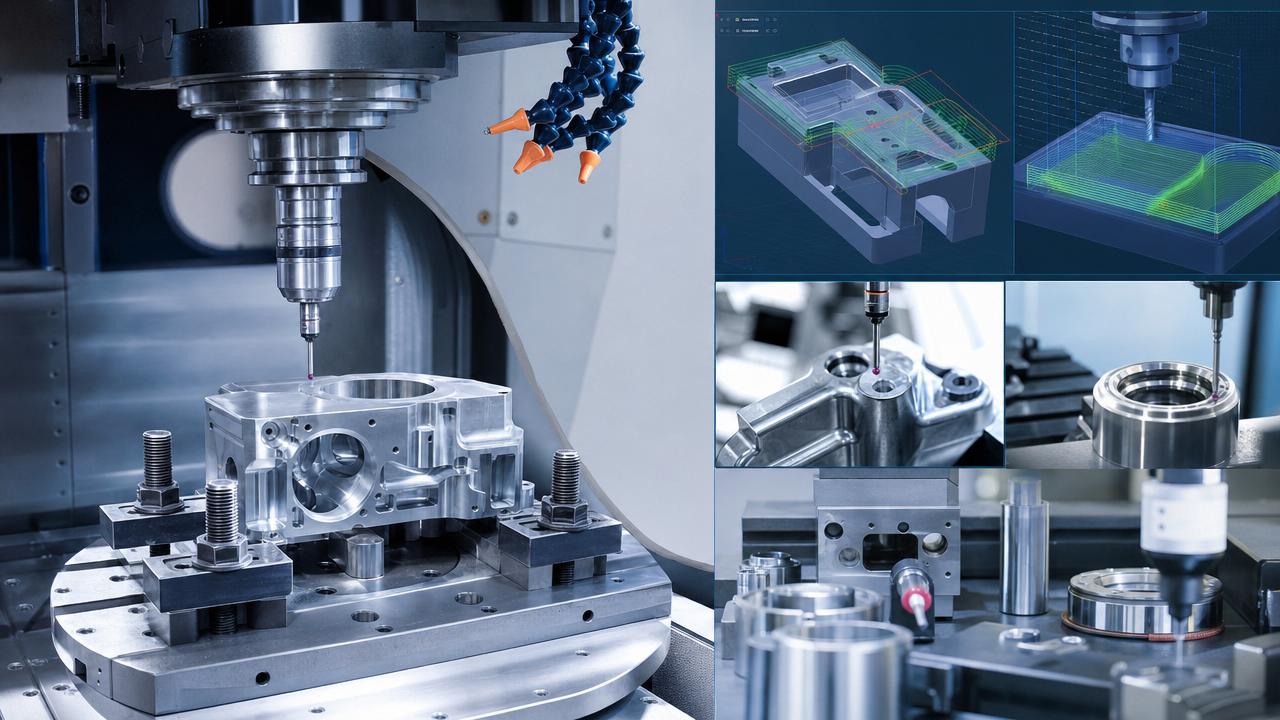
In precision manufacturing, even small CNC Programming mistakes can trigger costly scrap, rework, and production delays. For technical evaluation, programming quality directly affects dimensional accuracy, cycle time, surface finish, and machine stability.
When CNC Programming is weak, the problem rarely stays inside code. It spreads into tooling wear, setup confusion, inspection failures, missed delivery, and inconsistent output across different machines or operators.
This guide explains the most common CNC Programming errors that create scrap and rework, plus practical checks that improve reliability in automotive, aerospace, energy, electronics, and general machining environments.
Why a structured review matters in CNC Programming
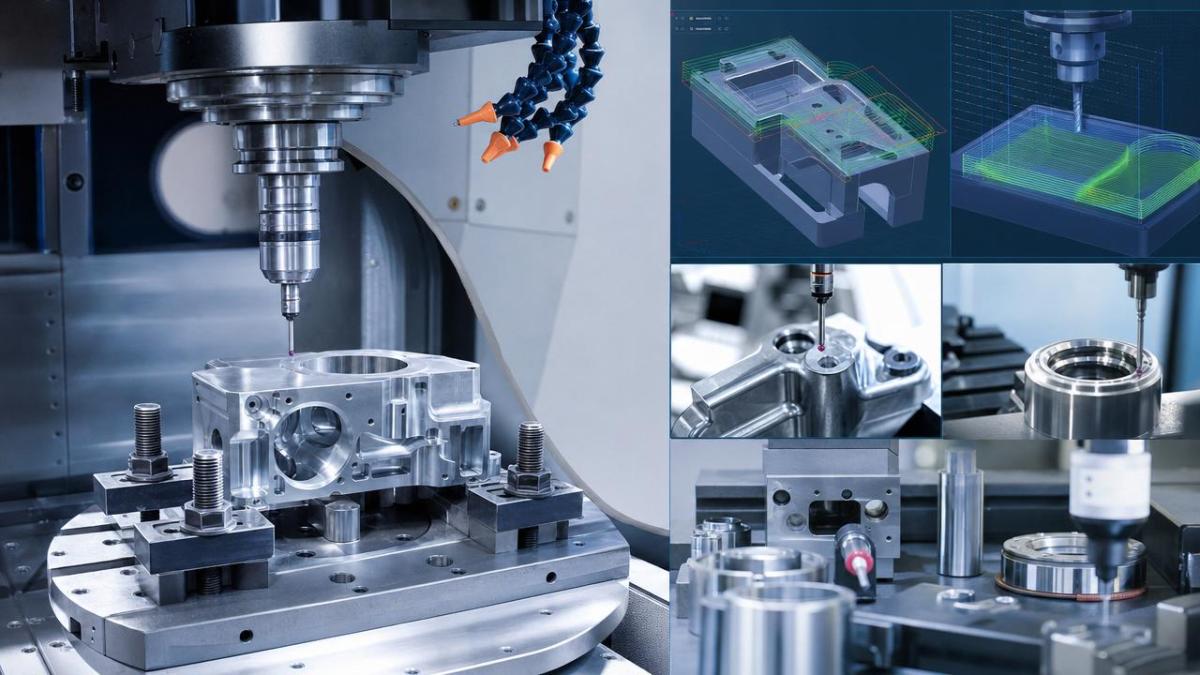
Modern CNC machine tools run faster, with tighter tolerances and more complex geometries. That means one programming oversight can ruin multiple parts before anyone notices a pattern.
A structured review reduces hidden risk. It helps confirm toolpaths, offsets, feeds, work coordinates, and machining logic before material, spindle time, and inspection resources are wasted.
In multi-axis machining, automated production lines, and repeat production, disciplined CNC Programming review is especially important because small code errors scale quickly into expensive losses.
Core checks that prevent scrap and rework
Use the following points before releasing any CNC Programming package to the shop floor. Each item targets a frequent source of part rejection or avoidable rework.
- Verify work coordinate selection matches the setup sheet, fixture orientation, and machine zero reference, especially when similar jobs reuse previous CNC Programming templates.
- Confirm tool length and diameter compensation are called correctly, because a wrong offset number can instantly create oversized features, collisions, or severe surface damage.
- Check feed rates and spindle speeds against material grade, tool type, and depth of cut to avoid chatter, tool breakage, thermal distortion, and unstable dimensional results.
- Review entry and exit moves for every toolpath, since poor lead-ins, abrupt retracts, or unsafe clearance values often leave marks or cause unexpected interference.
- Validate cutter compensation direction and contour side, because left-right mistakes in CNC Programming frequently produce mirrored profiles or undersized sealing surfaces.
- Simulate all drilling, tapping, and boring cycles to confirm depth, peck logic, dwell time, and retract plane, preventing broken tools and incomplete hole quality.
- Inspect coordinate sign conventions carefully, since plus-minus errors in X, Y, or Z can send the tool to the wrong location or crash into fixtures.
- Match post-processed code with the target controller version, because unsupported syntax, modal behavior differences, or arc handling issues can alter actual machine motion.
- Check stock allowance strategy between roughing and finishing, ensuring enough material remains for final passes without overloading finishing tools or leaving excess stock.
- Review tool numbering and magazine allocation to avoid loading the wrong cutter, especially on machines shared across jobs with similar but not identical CNC Programming.
- Confirm fixture and clamp avoidance zones are modeled or manually reviewed, because unverified workholding clearance is a major cause of scrap and machine downtime.
- Verify revision control for drawings, CAM files, setup sheets, and CNC Programming output so obsolete geometry does not enter production unnoticed.
Where CNC Programming errors appear in different applications
Complex aerospace and multi-axis parts
Five-axis and high-value parts carry higher scrap costs. A small mismatch in tool vector, rotation limit, or collision envelope can destroy expensive material in one cycle.
For these jobs, CNC Programming review should focus on machine kinematics, holder clearance, rest machining logic, and whether the post output matches actual rotary behavior.
Automotive batch production
In high-volume lines, repeated CNC Programming errors multiply quickly. A wrong offset or drilling depth may affect hundreds of parts before a quality trend becomes visible.
Key checks include first-off validation, tool life assumptions, probing logic, and stable cycle transitions between roughing, semi-finishing, and finishing operations.
Electronics and small precision components
Small parts often have tight tolerances and delicate features. Here, CNC Programming mistakes commonly appear as burrs, deflection marks, corner overcut, and feature location drift.
Review minimum tool engagement, micro-tool feeds, spindle acceleration limits, and compensation values that may seem minor but strongly affect part consistency.
Energy equipment and heavy machining
Large components bring long cycle times and costly setups. Rework becomes difficult when bores, sealing faces, or datum features are machined from incorrect references.
CNC Programming for heavy parts should prioritize datum strategy, tool reach, thermal growth, safe retract distances, and restart procedures after interruptions.
Often overlooked causes of scrap
Mismatch between CAM intent and shop-floor reality
A perfect simulation can still fail if the actual holder, insert, fixture, or raw stock differs from the digital setup used during CNC Programming.
Unsafe program restarts
Restarting mid-cycle without restoring modal states, offsets, spindle direction, and coolant conditions can damage a nearly finished part within seconds.
Poor tolerance interpretation
Some features require controlled toolpath strategy, not just nominal geometry. If CNC Programming ignores GD&T intent, parts may measure acceptable in one area but fail functionally.
Overreliance on old proven code
Legacy programs save time, but copied CNC Programming often carries outdated offsets, unsuitable feeds, or assumptions that no longer fit the current setup.
Insufficient communication around revisions
Even accurate CNC Programming fails when setup sheets, inspection plans, and drawing revisions are not synchronized across engineering and production records.
Practical steps to strengthen CNC Programming control
- Create a pre-release review covering zero points, offsets, tools, toolpaths, fixtures, controller compatibility, and revision status.
- Require simulation plus manual review for critical surfaces, deep cavities, hole cycles, and close-clearance clamp areas.
- Run a documented first-piece validation before full production, comparing measured results with programmed stock removal assumptions.
- Standardize naming, tool libraries, and post settings to reduce variation between programmers, machines, and shifts.
- Track recurring scrap causes and feed them back into CNC Programming rules, setup standards, and operator notes.
FAQ about CNC Programming errors
What is the most common CNC Programming mistake?
Wrong offsets and incorrect work coordinates are among the most common causes. They create immediate dimensional errors and can also lead to collisions.
Can simulation alone prevent scrap?
No. Simulation is essential, but it cannot fully replace real checks for tooling, fixturing, stock condition, machine behavior, and revision accuracy.
Why does CNC Programming quality matter in smart manufacturing?
Digital production depends on repeatability. Poor CNC Programming weakens automation, increases variation, and reduces the value of connected machines and inspection systems.
Conclusion and next action
CNC Programming errors are not minor technical details. They directly influence scrap rates, rework hours, machine utilization, delivery performance, and confidence in machining capability.
A disciplined review process, supported by simulation, setup verification, and revision control, helps protect quality across modern CNC lathes, machining centers, and automated production systems.
Start by formalizing one review checklist for every new or revised CNC Programming release. That simple step can reduce avoidable waste and improve consistency across the entire manufacturing workflow.
PREVIOUS ARTICLE
Recommended for You
 Zero-Point Clamping or Modular Fixtures? Choosing a Faster CNC Changeover SystemCNC Machining Technology Center
 How to Cut CNC Fixture Changeover Time Without Sacrificing Part AccuracyCNC Machining Technology Center
 When Does CNC Turning Pay Off? A Break-Even Guide by Annual Part VolumeMachine Tool Industry Editorial Team
 Machine Tool Standards by Country: What Importers Must Verify Before PurchaseManufacturing Policy Research Center
 CNC Lathe Quick Installation Guide: Alignment Checks Before First Production RunCNC Machining Technology Center
 How to Select a CNC Lathe for Small Parts Without Sacrificing Accuracy or Cycle TimeCNC Machining Technology Center

Aris Katos
Future of Carbide Coatings
15+ years in precision manufacturing systems. Specialized in high-speed milling and aerospace grade alloy processing.
▶
How Automated Precision Machining Maintains Tolerance in High-Mix ProductionCNC Machining Technology Center▶
CNC Programming Explained: From CAD Models to Reliable Shop-Floor ToolpathsCNC Machining Technology Center▶
How Multi-Axis Machining Produces Complex Components With Fewer SetupsCNC Machining Technology Center▶
How Much Does CNC Programming Software Cost in 2026?CNC Machining Technology Center▶
CNC Machining Explained: Processes, Tolerances, and Parts It Can ProduceCNC Machining Technology Center
Mastering 5-Axis Workholding Strategies
Join our technical panel on Nov 15th to learn about reducing vibrations in thin-wall components.

Providing you with integrated sanding solutions
Before-sales and after-sales services
Comprehensive technical support