• Global CNC market projected to reach $128B by 2028 • New EU trade regulations for precision tooling components • Aerospace deman
NYSE: CNC +1.2%LME: STEEL -0.4%

Cost-Effective Fixture Design for Mass Production: How to Balance Accuracy and Tooling Cost
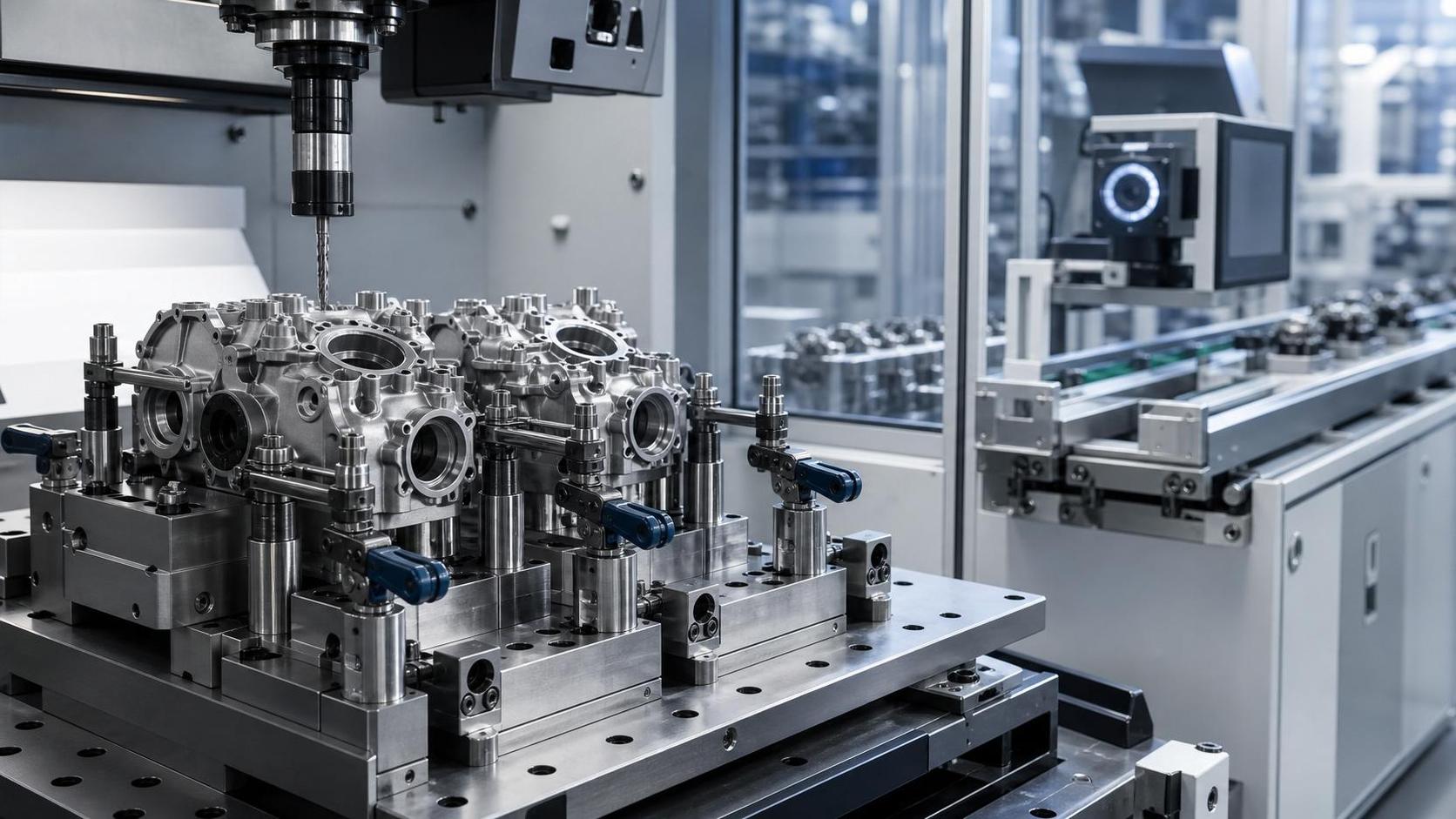
Cost-Effective Fixture Design for Mass Production: How to Balance Accuracy and Tooling Cost
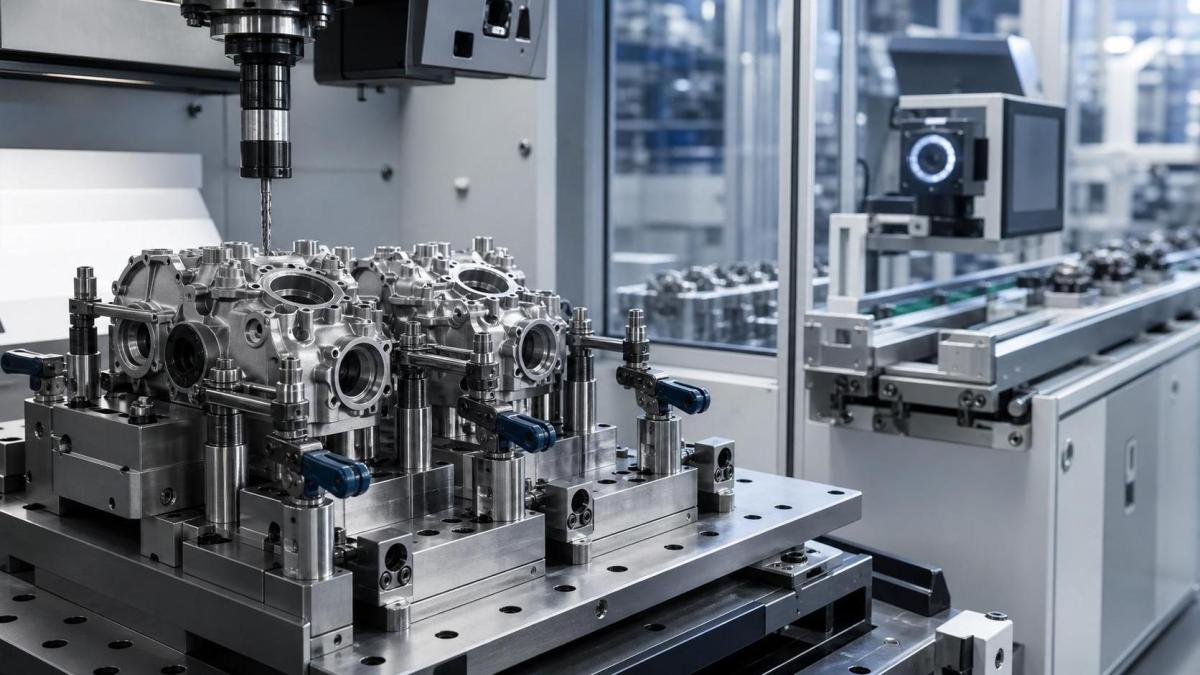
In high-volume manufacturing, Cost-effective Fixture Design for mass production shapes both profit and process stability.
A fixture that is too simple may drift, chatter, or create unstable positioning.
A fixture that is too complex can consume budget before production even scales.
That is why Cost-effective Fixture Design for mass production is never just a tooling exercise.
It is a production decision tied to accuracy, cycle time, labor, maintenance, and future changeovers.
In CNC machining, the best fixture is not always the most rigid or expensive one.
The best one delivers repeatable quality at the lowest total cost per qualified part.
This is especially important in automotive, electronics, energy equipment, and precision component production.
As batch sizes grow, even a small setup delay or clamping inconsistency multiplies quickly.
So the real question is straightforward.
How do you build Cost-effective Fixture Design for mass production without sacrificing process capability?
Start with the Actual Cost Drivers
Many teams focus first on fixture purchase price.
That is understandable, but it is only one part of the equation.
Cost-effective Fixture Design for mass production depends on total lifecycle economics.
A lower-cost fixture can become expensive when scrap rises or machine uptime falls.
A slightly higher initial investment may pay back fast if loading time drops by seconds.
In actual production, fixture cost usually comes from five sources:
- design and engineering hours
- material and machining cost
- assembly and tryout time
- maintenance and wear replacement
- quality losses from poor repeatability
When these factors are reviewed together, trade-offs become clearer.
For example, hardened locators may increase direct cost.
But they also reduce wear-related drift in long production runs.
That means less adjustment, fewer rejected parts, and more predictable dimensional control.
Match Fixture Precision to Part and Process Risk
Not every part needs the same fixture sophistication.
One common mistake is overbuilding fixtures for low-risk geometries.
Another is underestimating tolerance stack-up on thin-wall or multi-side parts.
Cost-effective Fixture Design for mass production begins with risk classification.
Ask three practical questions before releasing fixture design:
- Which dimensions are truly critical to function or assembly?
- Where is the part most likely to deform during clamping?
- How sensitive is the process to datum variation and tool approach?
These answers guide the right fixture architecture.
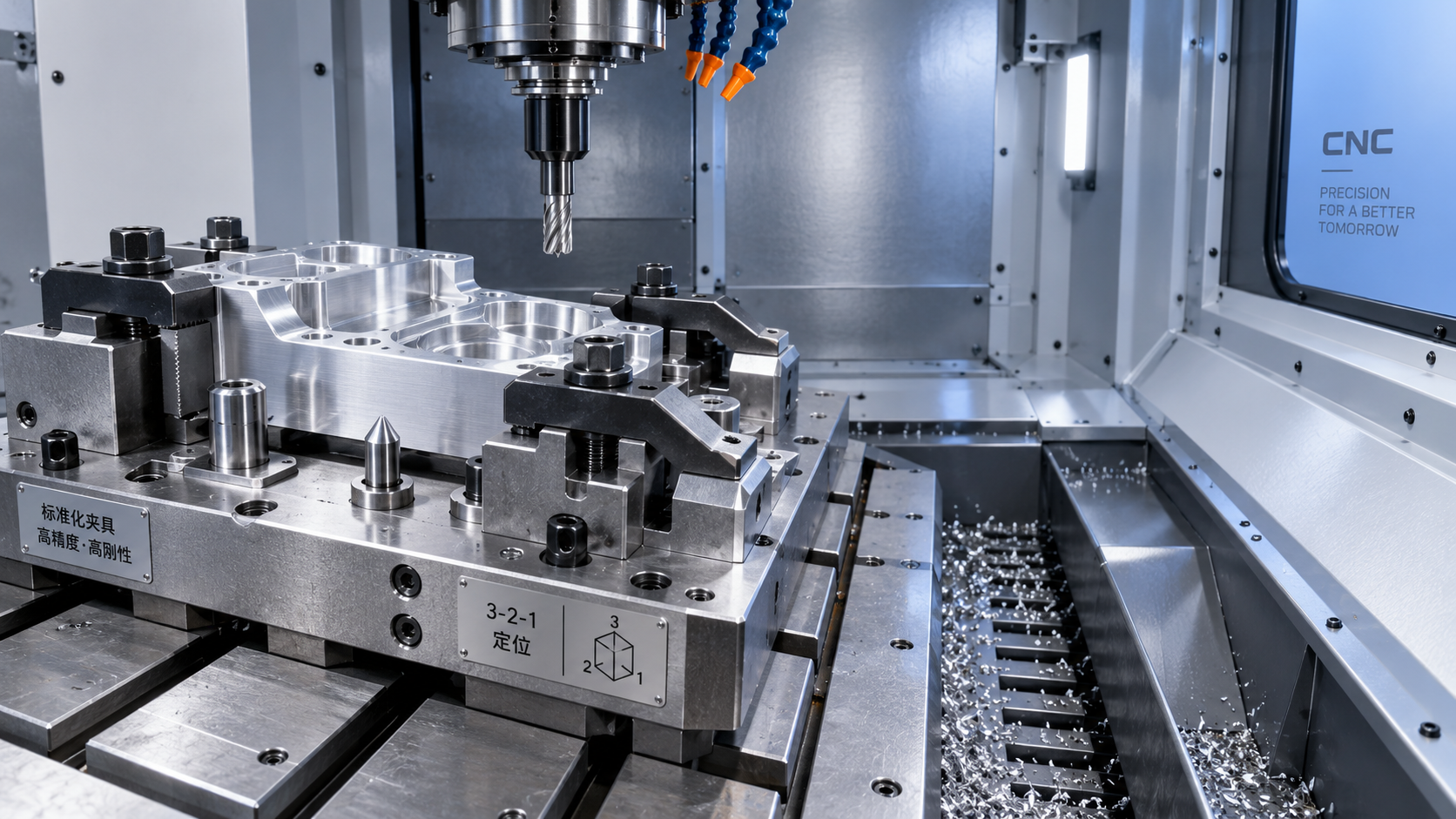
Simple prismatic parts may only need stable 3-2-1 locating and quick clamping.
Complex castings or aerospace structures often need force balancing and deformation control.
The point is not to minimize fixture features blindly.
The point is to buy precision only where precision creates measurable value.
Use Standardized Elements Wherever Possible
Standardization is one of the strongest levers in Cost-effective Fixture Design for mass production.
Custom components should solve specific problems, not fill every space in the fixture.
Standard locators, clamps, risers, bushings, and support elements reduce lead time fast.
They also simplify spare parts planning across multiple lines or plants.
This matters even more when global production footprints are expanding.
A fixture built from common modules is easier to service and duplicate.
It also reduces engineering effort when part revisions arrive.
Useful standardization practices include:
- common base plate sizes for similar machine envelopes
- shared clamping modules across related part families
- replaceable wear pads and locator pins
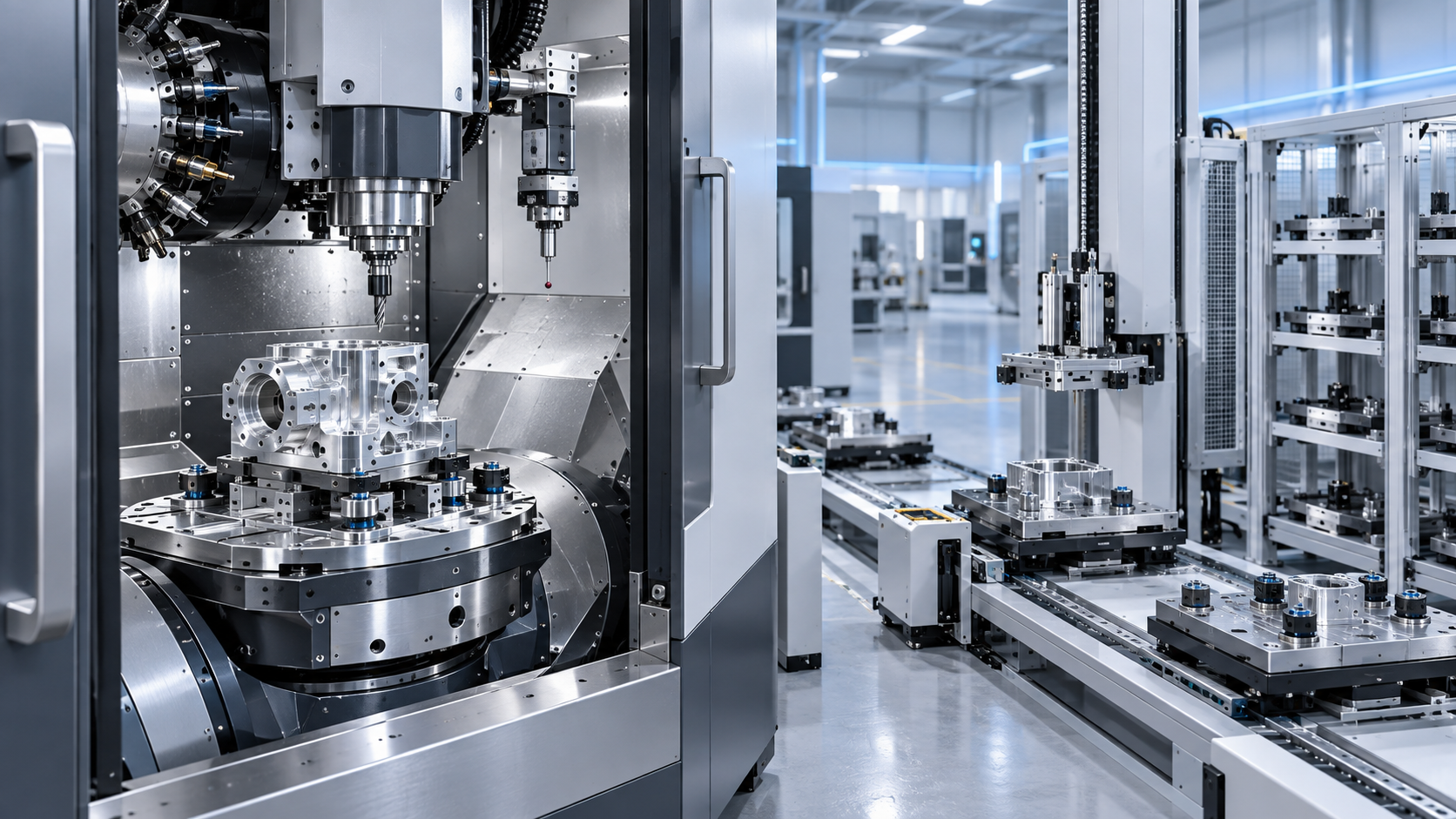
- repeatable interface points for robotic loading
From a management perspective, this also improves quotation accuracy.
Known modules create more reliable cost forecasting than one-off tooling concepts.
Reduce Setup Time Without Creating New Quality Risks
Fast loading is valuable, but only when part positioning stays repeatable.
This is where many fixture projects drift off target.
Teams chase quicker operator handling, then introduce unstable contact points or weak guidance.
Cost-effective Fixture Design for mass production should shorten setup in controlled ways.
Good examples include swing clamps, poka-yoke loading features, and guided locating funnels.
These features reduce handling motion while keeping the datum scheme stable.
Hydraulic or pneumatic clamping can also help.
But they are not automatically cost-effective.
Their value depends on cycle volume, maintenance capability, and downtime sensitivity.
For medium-volume work, manual quick clamps may offer better economics.
For fully automated cells, powered clamping usually supports more stable throughput.
The right answer depends on production reality, not fixture fashion.
Design for Wear, Maintenance, and Process Drift
A fixture may pass tryout and still fail the business case later.
The usual reason is long-run wear.
Locating points wear down, chips build up, and clamping force changes over time.
Cost-effective Fixture Design for mass production must account for this from the start.
That means accessible cleaning zones, replaceable wear parts, and simple inspection references.
When maintenance is difficult, operators delay it.
When maintenance is delayed, repeatability erodes quietly.
A practical review should cover the following points:
These details may look small during design review.
In mass production, they usually determine whether a fixture stays economical after six months.
Use Data Before Committing to Complex Tooling
There is a clear shift toward digital validation in fixture development.
That shift matters because fixture mistakes are expensive to correct after release.
Cost-effective Fixture Design for mass production benefits from early simulation and trial evidence.
Simple stack-up studies, force analysis, and access checks can prevent redesign loops.
For thin or compliant parts, clamping simulation is especially useful.
It helps distinguish real rigidity needs from assumptions.
Pilot runs also deserve more attention than they often receive.
A short pre-production trial can reveal operator handling issues, chip flow problems, and cycle imbalance.
That is far cheaper than scaling a flawed fixture across multiple machines.
More importantly, it creates a factual basis for tooling decisions.
A Practical Decision Framework for Better Fixture ROI
When deadlines are tight, teams need a simple way to judge fixture direction.
A useful framework is to score each concept against four criteria.
- repeatability under real machining loads
- setup and cycle-time impact
- maintenance burden over expected volume
- adaptability to engineering changes
This keeps the discussion centered on measurable production value.
It also reduces the tendency to choose fixtures based on habit alone.
In many CNC environments, the winning solution is moderately sophisticated.
It uses standard components, focused precision, easy service access, and stable operator interaction.
That is the core of Cost-effective Fixture Design for mass production.
You are not chasing the cheapest tool.
You are building the most reliable path to qualified output at scale.
When fixture decisions follow process risk, volume logic, and maintenance reality, accuracy and tooling cost stop competing.
They start supporting the same result: predictable production, stronger margins, and fewer surprises during ramp-up.
Recommended for You
 Manufacturing Technology Trends That Improve Throughput and Quality ControlManufacturing Market Research Center
 How to Design Cost-Effective Fixtures That Maintain Cycle Time in Mass ProductionCNC Machining Technology Center
 Is Learning CNC Programming Worth It for Shop Owners Seeking Higher Margins?CNC Machining Technology Center
 CNC Machine Arrival Inspection: Check Shipping Damage, Accuracy, Safety, and DocumentsCNC Machining Technology Center
 How to Select a Machine Tool for Aerospace Parts with Tight Tolerances?Machine Tool Industry Editorial Team
 How to Select CNC Equipment for High-Mix, Low-Volume ProductionCNC Machining Technology Center

Aris Katos
Future of Carbide Coatings
15+ years in precision manufacturing systems. Specialized in high-speed milling and aerospace grade alloy processing.
▶
How to Design Cost-Effective Fixtures That Maintain Cycle Time in Mass ProductionCNC Machining Technology Center▶
Zero-Point Clamping or Modular Fixtures? Choosing a Faster CNC Changeover SystemCNC Machining Technology Center▶
How to Cut CNC Fixture Changeover Time Without Sacrificing Part AccuracyCNC Machining Technology Center▶
Can One Fixture Handle Multiple Part Geometries Efficiently?CNC Machining Technology Center▶
Fixture Design Cost Breakdown: What Buyers Should Review Before RFQ and ApprovalCNC Machining Technology Center
Mastering 5-Axis Workholding Strategies
Join our technical panel on Nov 15th to learn about reducing vibrations in thin-wall components.

Providing you with integrated sanding solutions
Before-sales and after-sales services
Comprehensive technical support