• Global CNC market projected to reach $128B by 2028 • New EU trade regulations for precision tooling components • Aerospace deman
NYSE: CNC +1.2%LME: STEEL -0.4%

How to Choose Fixtures for CNC Machining: Clamping Methods, Accuracy, and Changeover Time
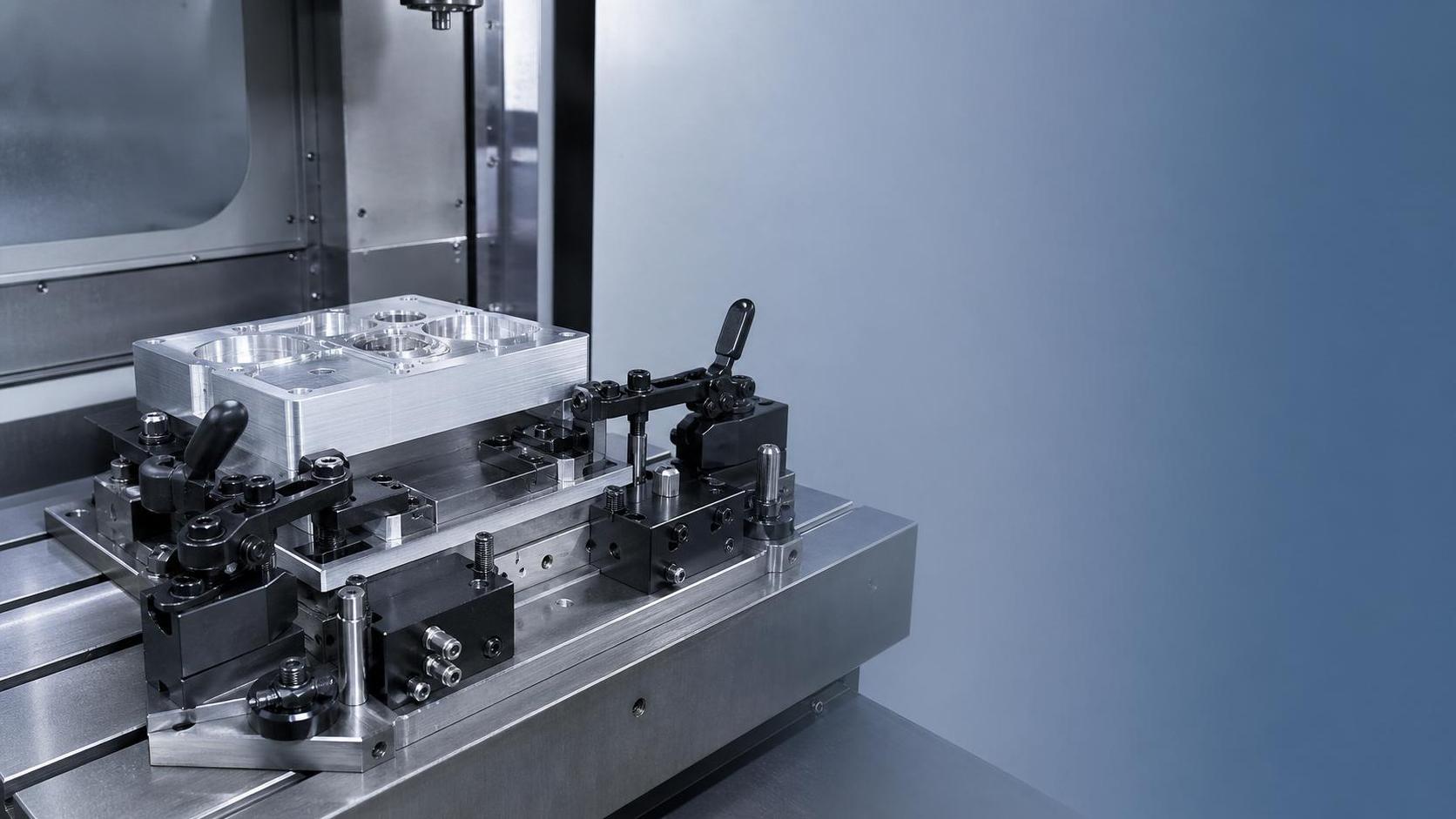
Why Fixtures Matter More Than Many Shops Expect
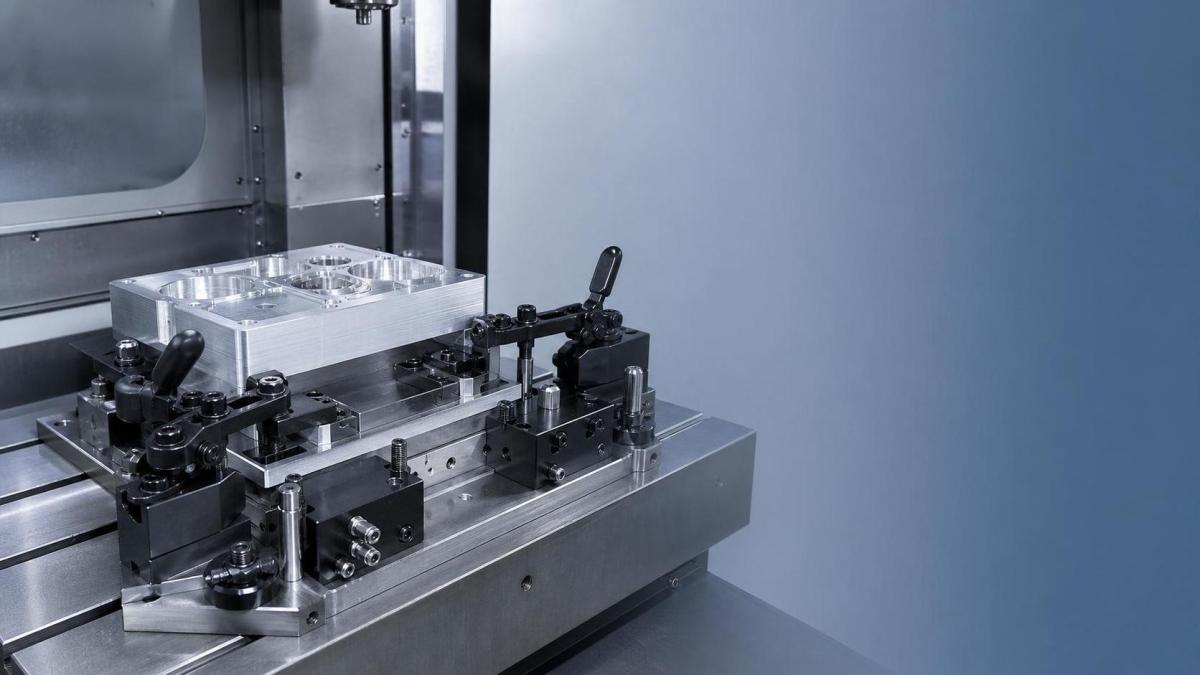
Choosing the right Fixtures for CNC machining shapes accuracy, cycle stability, and daily output.
A weak setup can waste more time than an inefficient toolpath.
That is why fixture selection should start before the first part reaches the machine.
In practical shop work, the best Fixtures do three jobs at once.
They hold the workpiece securely, protect dimensional accuracy, and shorten changeover time.
When one of these factors is ignored, problems show up quickly.
You may see chatter, part movement, poor surface finish, or repeatability drift between batches.
More importantly, operators lose confidence in the setup.
For decision-making, it helps to treat Fixtures as a production system, not just hardware.
The right choice depends on part geometry, cutting force, material, batch size, and machine layout.
From a cost perspective, fixture decisions also influence labor, scrap, and spindle utilization.
A cheaper fixture is not really cheaper if every setup needs extra adjustment.
So the goal is simple: choose Fixtures that match the real production condition, not the ideal one.
Start With the Part and the Process
Before comparing Fixtures, review what the part actually needs during machining.
The first question is where the cutting force goes.
Heavy roughing creates different demands than light finishing on a thin wall component.
The second question is how the datum is controlled.
Good Fixtures support repeatable positioning from the same reference surfaces every time.
The third question is what must stay accessible.
A fixture that blocks tools, probes, or chip evacuation creates hidden production losses.
It is also useful to separate one-off jobs from repeat work.
For prototype or mixed-part production, flexible Fixtures often deliver better value.
For stable high-volume programs, dedicated Fixtures usually win on speed and consistency.
This early review prevents shops from buying fixture systems that look advanced but fit poorly.
Key evaluation points
- Part size, shape, and wall stiffness
- Material behavior under clamping pressure
- Roughing and finishing force levels
- Datum strategy and tolerance stack-up
- Tool access, chip flow, and coolant reach
- Batch size and expected setup frequency
- Machine table space and spindle travel limits
Compare Clamping Methods by Real Production Needs
Clamping method is often the first visible difference between Fixtures.
But the right method depends on stability, speed, and the risk of part distortion.
Manual clamps remain common because they are simple, affordable, and easy to maintain.
They work well for low-volume work and irregular parts.
However, clamp force can vary between operators, which affects repeatability.
Hydraulic Fixtures offer strong and consistent clamping with fast loading cycles.
They are a strong option for medium to high-volume production.
Pneumatic Fixtures are also fast, but they usually provide less force than hydraulic systems.
They fit lighter cutting applications and automation-friendly cells.
Vacuum Fixtures are useful for thin plates and non-ferrous materials.
Still, they need careful review when side loads are high.
Magnetic Fixtures can speed up loading for ferrous parts with broad contact areas.
Yet they are not universal, especially when aggressive milling creates lifting forces.
The best Fixtures balance clamping speed with predictable control of part movement.
Quick comparison table
Protect Accuracy Without Over-Clamping
A fixture can feel solid and still hurt accuracy.
This usually happens when clamp force is high but support logic is weak.
The classic rule is to locate first, then clamp.
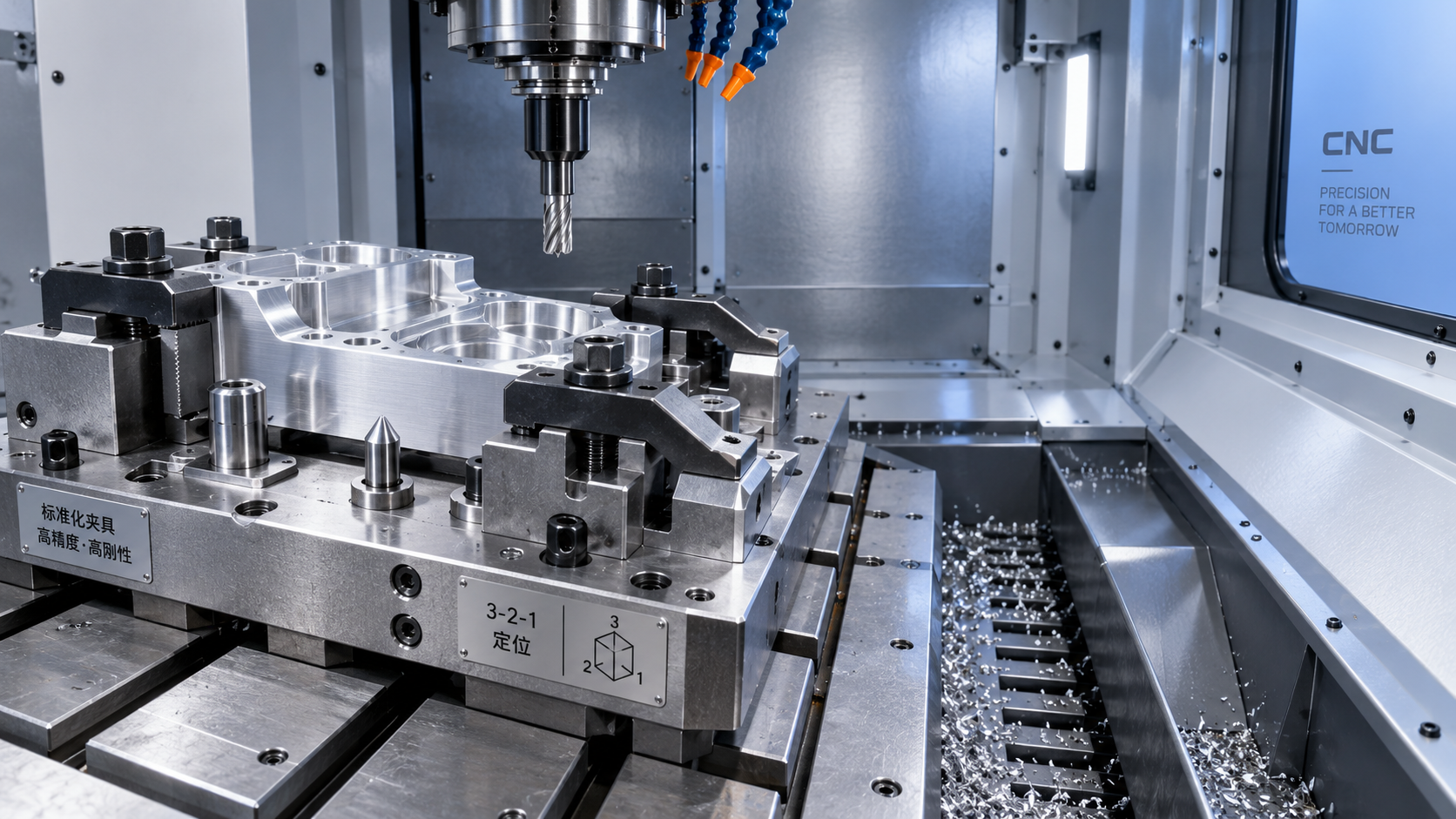
Fixtures should constrain motion in a controlled way without bending the part.
That matters even more for aluminum, thin-wall stainless parts, and complex castings.
Look closely at the 3-2-1 locating concept and how it is applied.
Good Fixtures use supports, pins, and contact points that match the load path.
The clamp should press toward the support, not twist the workpiece away from it.
Repeatable accuracy also depends on chip control.
If chips collect under the part or around locating surfaces, the fixture loses reference integrity.
This is one reason why fixture cleaning features matter more than they first appear.
In short, the best Fixtures support tolerance control by design, not by extra tightening.
Accuracy checkpoints before approval
- Is the datum repeatable after every reload?
- Does clamp force deform thin or tall features?
- Are supports placed under major cutting loads?
- Can chips escape from contact surfaces easily?
- Is probe access available for quick verification?
Reduce Changeover Time Where It Actually Counts
Many fixture buying decisions focus too much on machining time.
But in real production, changeover time often decides machine utilization.
Fixtures that reduce setup steps can improve output without changing cutting parameters.
Quick-change systems are useful when programs switch often.
Zero-point systems, modular bases, and preset locating plates can remove repeated alignment work.
This is especially valuable in shops running multiple part families.
Dedicated Fixtures still make sense when one part runs all day.
However, even dedicated setups should be easy to load, unload, and inspect.
One useful test is to observe one complete operator cycle.
Count every hand motion, tool needed, and adjustment point.
If the process depends on memory or feel, the fixture is still too operator-sensitive.
The best Fixtures simplify work in a consistent, repeatable way shift after shift.
Practical ways to cut setup time
- Use common locating references across part families.
- Replace loose hardware with captive clamping elements.
- Add hard stops to remove repeated measurement steps.
- Choose Fixtures with open access for deburring and probing.
- Standardize fixture mounting positions on the machine table.
Match Fixture Type to Production Volume
Fixture selection becomes clearer when volume is defined honestly.
Low-volume and prototype work usually favor modular Fixtures.
They adapt quickly and reduce the need for part-specific hardware.
Their weakness is that they may take longer to optimize for each job.
Medium-volume work often benefits from hybrid Fixtures.
These combine standard bases with custom locating or clamping features.
This approach keeps cost under control while improving repeatability.
High-volume production usually justifies dedicated Fixtures.
They are built for speed, stable loading, and minimal variation.
In automotive, electronics, and other repeat industries, this matters a lot.
The strongest decision comes from balancing investment cost against saved setup hours and reduced scrap.
Common Fixture Selection Mistakes and Better Decisions
Several mistakes appear again and again when shops choose Fixtures.
The first is selecting only by holding force.
High force does not guarantee better machining results.
The second is ignoring operator workflow.
If loading is awkward, changeover delays will erase any technical advantage.
The third is underestimating maintenance.
Fixtures need wear control, seal checks, and clean locating surfaces.
Another mistake is buying a highly specialized fixture for unstable demand.
That can lock production into poor flexibility.
A better decision process is simple and measurable.
Score Fixtures by accuracy risk, loading speed, repeatability, maintenance need, and fit with actual order volume.
That method leads to better purchasing and fewer surprises on the shop floor.
A Simple Way to Choose the Right Fixtures
When comparing Fixtures, start with three priorities: part stability, required accuracy, and setup frequency.
Then check whether the clamping method supports those priorities without adding complexity.
If a fixture improves one area but slows the whole operation, it is the wrong fit.
In today’s CNC environment, better Fixtures are part of better manufacturing decisions.
They support precision, reduce wasted motion, and help production stay predictable.
The most effective choice is rarely the most complicated one.
It is the fixture system that fits the part, the machine, and the daily workload.
Review your current setups against these points, and the right Fixtures usually become easier to identify.
Recommended for You
 Industrial Machining: Selecting Processes for Tight-Tolerance Metal PartsCNC Machining Technology Center
 Manufacturing Technology Trends That Improve Throughput and Quality ControlManufacturing Market Research Center
 How to Design Cost-Effective Fixtures That Maintain Cycle Time in Mass ProductionCNC Machining Technology Center
 Is Learning CNC Programming Worth It for Shop Owners Seeking Higher Margins?CNC Machining Technology Center
 CNC Machine Arrival Inspection: Check Shipping Damage, Accuracy, Safety, and DocumentsCNC Machining Technology Center
 How to Select a Machine Tool for Aerospace Parts with Tight Tolerances?Machine Tool Industry Editorial Team

Aris Katos
Future of Carbide Coatings
15+ years in precision manufacturing systems. Specialized in high-speed milling and aerospace grade alloy processing.
▶
How to Design Cost-Effective Fixtures That Maintain Cycle Time in Mass ProductionCNC Machining Technology Center▶
Zero-Point Clamping or Modular Fixtures? Choosing a Faster CNC Changeover SystemCNC Machining Technology Center▶
How to Cut CNC Fixture Changeover Time Without Sacrificing Part AccuracyCNC Machining Technology Center▶
Can One Fixture Handle Multiple Part Geometries Efficiently?CNC Machining Technology Center▶
Fixture Design Cost Breakdown: What Buyers Should Review Before RFQ and ApprovalCNC Machining Technology Center
Mastering 5-Axis Workholding Strategies
Join our technical panel on Nov 15th to learn about reducing vibrations in thin-wall components.

Providing you with integrated sanding solutions
Before-sales and after-sales services
Comprehensive technical support