• Global CNC market projected to reach $128B by 2028 • New EU trade regulations for precision tooling components • Aerospace deman
NYSE: CNC +1.2%LME: STEEL -0.4%

Multi-axis CNC manufacturing delivers geometry—but not always the thermal stability needed for metrology-grade parts
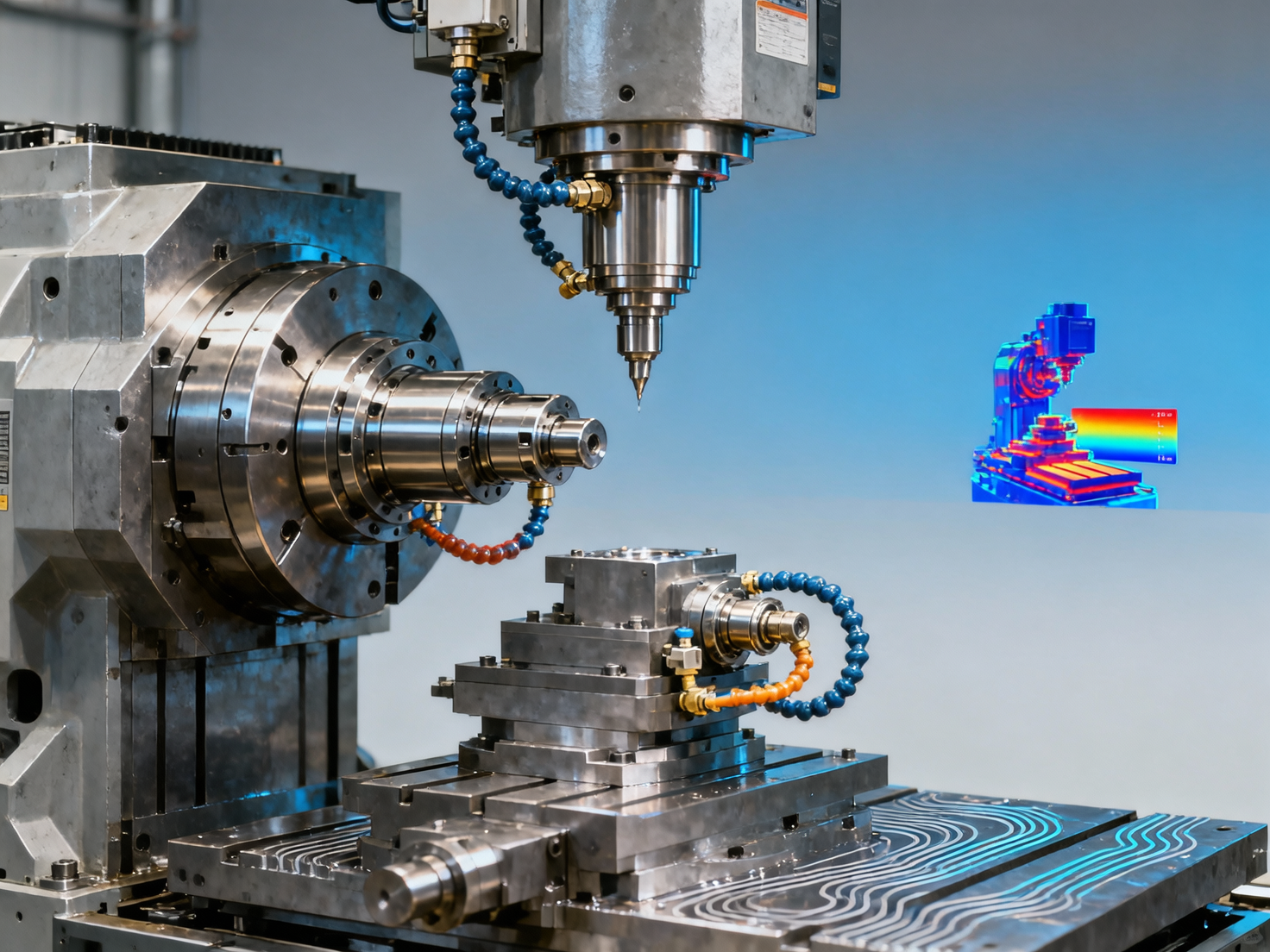
Multi-axis CNC manufacturing enables unparalleled geometric accuracy for metrology-grade parts—yet thermal stability remains a critical, often overlooked challenge. As precision CNC manufacturing advances across aerospace, medical devices, energy equipment, and electronics, demand surges for high-precision CNC manufacturing solutions that combine space-saving CNC manufacturing design, low maintenance CNC manufacturing operation, and energy-saving CNC manufacturing efficiency. Whether you’re a procurement professional sourcing from a trusted CNC manufacturing wholesaler, an engineer evaluating a CNC manufacturing factory’s capabilities, or a decision-maker seeking a cost-effective CNC manufacturing supplier—understanding thermal behavior in multi-axis CNC manufacturing is essential to achieving true metrology-grade repeatability.
Why Thermal Stability Is the Hidden Bottleneck in Metrology-Grade Machining
Geometric accuracy—achieved via simultaneous 4- or 5-axis interpolation—is now routinely delivered within ±0.002 mm by modern machining centers. But metrology-grade parts require more than shape fidelity: they demand dimensional repeatability under real-world shop-floor conditions. Thermal drift—the dominant source of error in high-precision CNC systems—can introduce deviations up to ±3–8 µm over an 8-hour shift, even with sub-micron positional resolution.
This occurs because multi-axis kinematics amplify thermal sensitivity. Each axis contributes independent thermal expansion (e.g., linear axes expand ~12 µm/m·°C for cast iron), while rotary axes add angular drift and coupling errors. Without active compensation, ambient fluctuations of just ±2°C—or localized heat from spindle motors, coolant pumps, or even operator proximity—can exceed ISO 230-3 repeatability thresholds for Class 1 metrology applications.
Unlike traditional turning or milling, where thermal errors are largely predictable and static, multi-axis systems exhibit dynamic, path-dependent thermal behavior. A part machined at 9 a.m. may differ measurably from an identical part run at 3 p.m.—despite identical G-code, tooling, and fixtures. This undermines traceability, increases inspection frequency, and raises scrap rates in regulated sectors like aerospace (AS9100) and medical device manufacturing (ISO 13485).
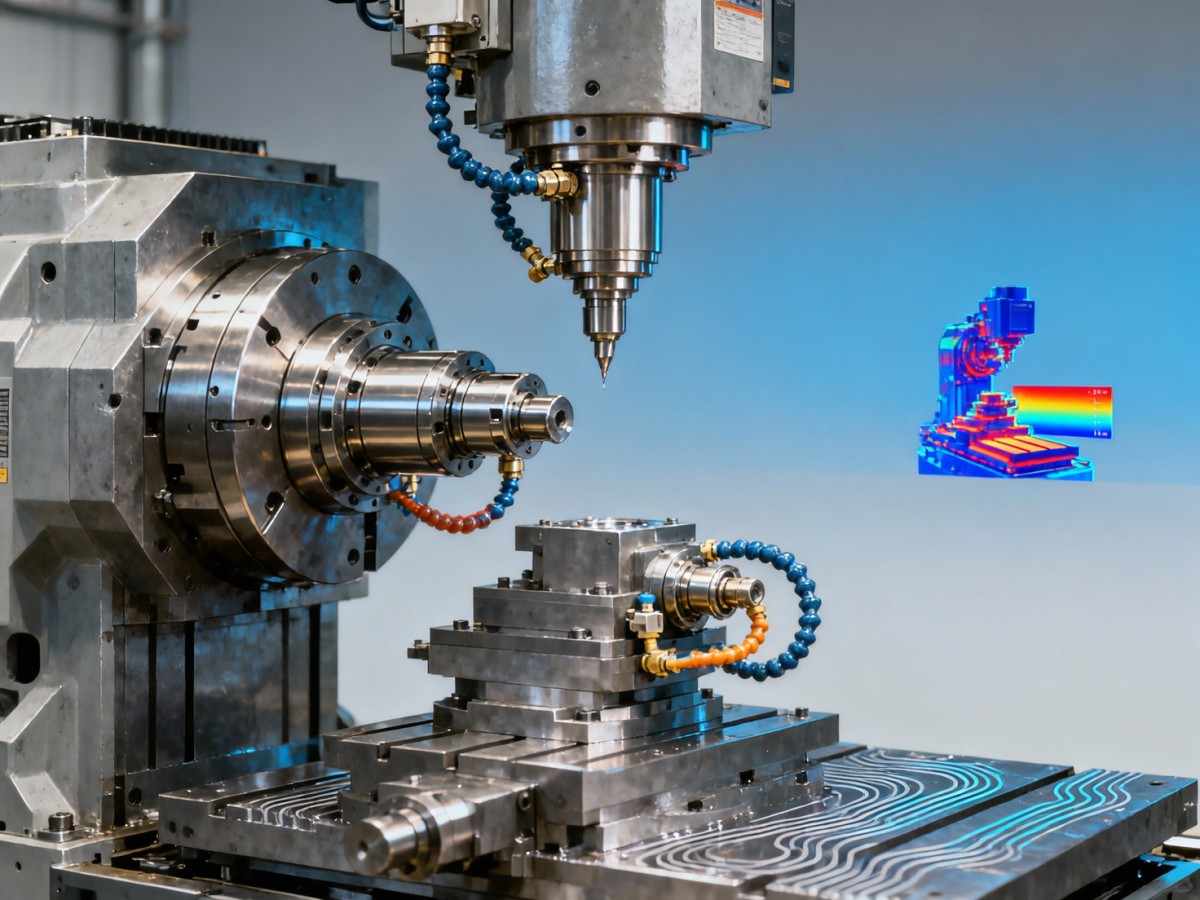
How Leading CNC Manufacturers Address Thermal Drift
Three Proven Engineering Strategies
- Thermally Symmetric Machine Structures: Dual-column designs with symmetrical thermal mass distribution reduce bending moments; granular cast iron bases with internal coolant channels stabilize baseplate temperature within ±0.3°C over 12 hours.
- Real-Time Thermal Compensation: Integrated sensor networks (≥12 PT100 sensors per machine) feed data into ISO 230-3-compliant algorithms—correcting for 6 degrees of freedom drift in real time during cutting cycles.
- Spindle & Drive Thermal Management: Oil-air lubrication with closed-loop chillers maintains spindle bearing temperatures at 20°C ±0.5°C, reducing thermal growth to <1.2 µm over 30 minutes of continuous operation.
These features are not optional upgrades—they define eligibility for metrology-critical work. Machines certified to VDI/VDE 2617 Part 11 (thermal performance testing) demonstrate ≤1.5 µm thermal drift over 8 hours at 20±1°C ambient, versus ≥5 µm for standard industrial-grade machines.
Procurement Checklist: 5 Non-Negotiable Thermal Specifications
When evaluating multi-axis CNC systems for metrology-grade production, prioritize verifiable thermal performance—not just geometric specs. The following five parameters must be documented in factory acceptance test (FAT) reports, not brochures:
Note: Machines claiming “high-precision” without publishing these values under standardized test conditions should be disqualified for metrology applications. Request full FAT thermal logs—not summary tables.
Cost vs. Stability Trade-Offs: When to Invest in Thermal Mitigation
Thermal stabilization adds 12–18% to base machine cost—but delivers measurable ROI in high-value sectors. For aerospace structural components (e.g., titanium wing ribs), thermal-induced rework costs average $1,200–$3,500 per part due to coordinate measuring machine (CMM) re-inspection and manual adjustment. In contrast, thermal-compensated multi-axis systems reduce CMM pass/fail variance from 18% to ≤3.2% across 3-month production runs.
Two scenarios justify premium investment: (1) batch sizes >50 units/year requiring first-article inspection (FAI) compliance per AS9102, and (2) in-process measurement integration (e.g., touch-probe or laser interferometer feedback loops), where thermal noise corrupts closed-loop control signals.
Conversely, for prototyping or low-volume R&D, passive thermal management (e.g., climate-controlled rooms, pre-heat cycles) may suffice—provided thermal budgets are explicitly modeled before quoting.
Why Partner With a Global CNC Manufacturing Specialist
We support engineers and procurement teams across China, Germany, Japan, and South Korea with metrology-grade multi-axis CNC solutions validated to ISO 10360-2, VDI/VDE 2617, and ASME B89.4.1 standards. Our engineering team provides free thermal performance gap analysis—including shop-floor ambient mapping, spindle heat-rise simulation, and compensation algorithm tuning—before machine commissioning.
Whether you need help interpreting FAT thermal logs, comparing thermal compensation architectures across OEMs (e.g., Heidenhain TNC vs. Siemens SINUMERIK), or validating a supplier’s claim of “metrology-ready” configuration, we offer actionable technical consultation—not sales pitches. Contact us to request: (1) thermal specification checklist for your next RFQ, (2) sample FAT thermal report template, or (3) 30-minute thermal stability assessment for your current machine tool fleet.
Recommended for You
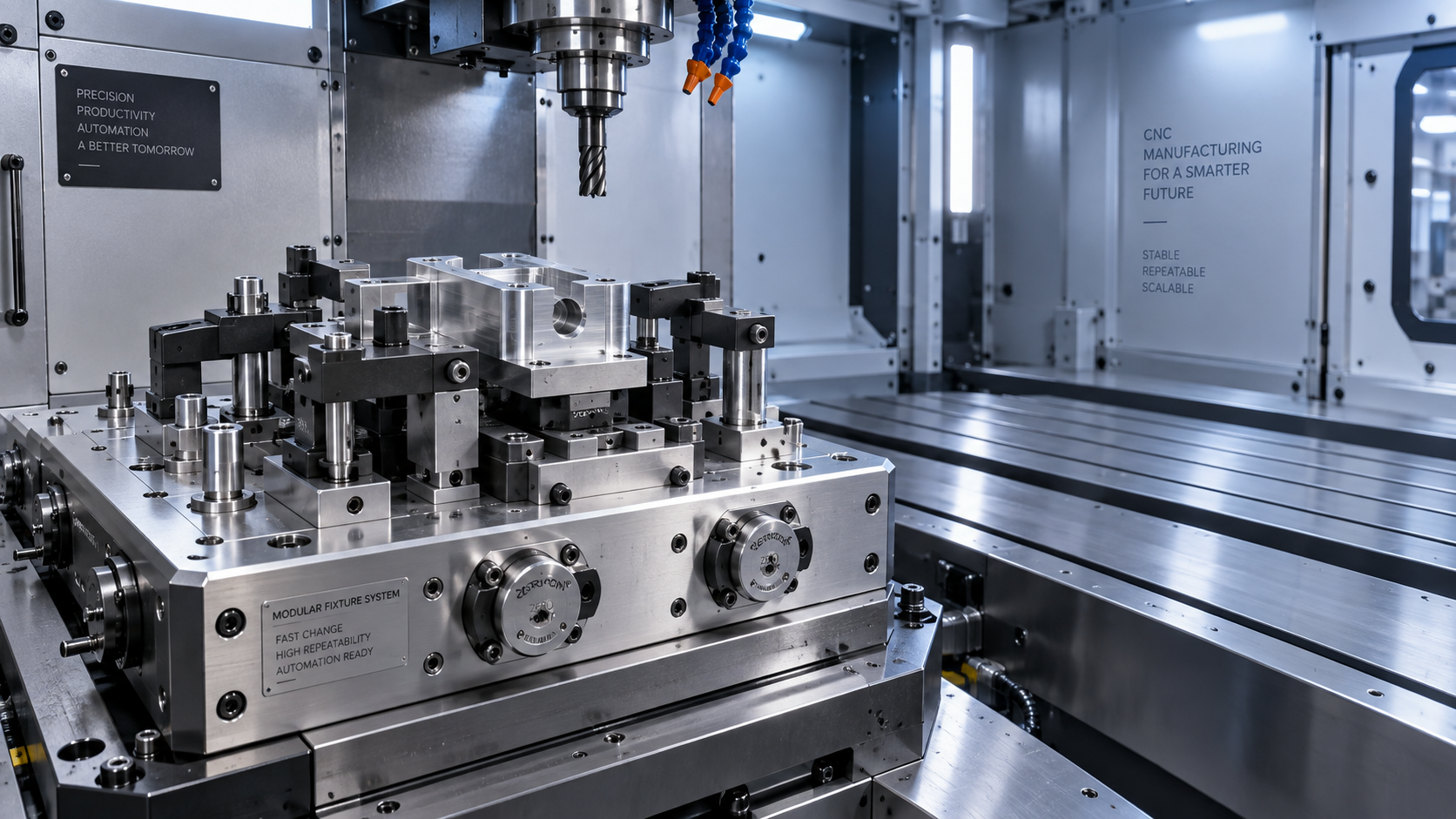
 Zero-Point Clamping or Modular Fixtures? Choosing a Faster CNC Changeover SystemCNC Machining Technology Center
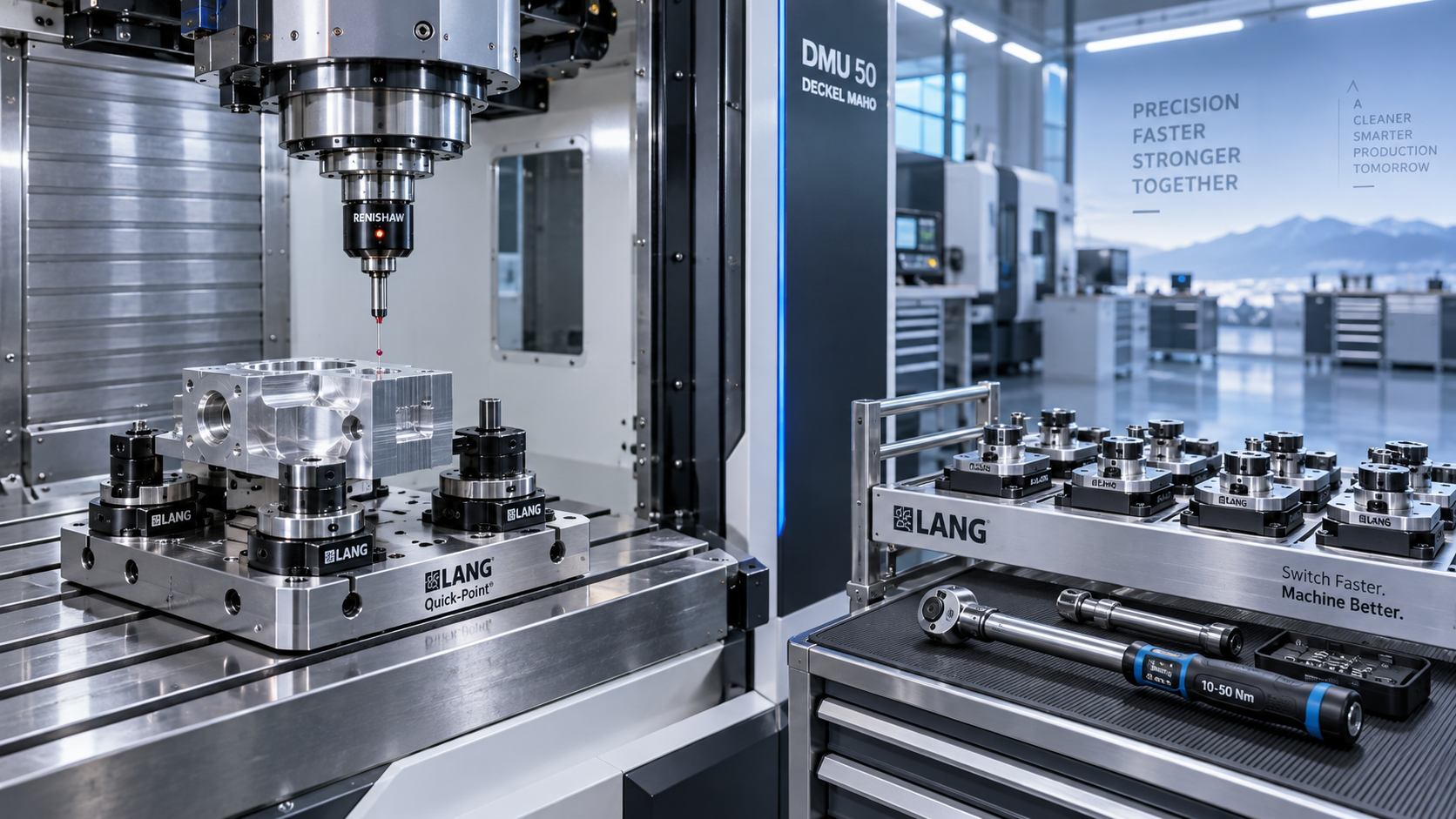
 How to Cut CNC Fixture Changeover Time Without Sacrificing Part AccuracyCNC Machining Technology Center
 When Does CNC Turning Pay Off? A Break-Even Guide by Annual Part VolumeMachine Tool Industry Editorial Team
 Machine Tool Standards by Country: What Importers Must Verify Before PurchaseManufacturing Policy Research Center
 CNC Lathe Quick Installation Guide: Alignment Checks Before First Production RunCNC Machining Technology Center
 How to Select a CNC Lathe for Small Parts Without Sacrificing Accuracy or Cycle TimeCNC Machining Technology Center

Aris Katos
Future of Carbide Coatings
15+ years in precision manufacturing systems. Specialized in high-speed milling and aerospace grade alloy processing.
▶
How Does Precision Machining Differ From Standard Machining?CNC Machining Technology Center▶
CNC Precision: Which Tolerances, Materials, and Processes Fit Your Part?CNC Machining Technology Center▶
How to Choose Metal Machining Processes for Tight Tolerances and Production VolumeCNC Machining Technology Center▶
Production Process Explained: Key Stages, Controls, and Quality CheckpointsCNC Machining Technology Center▶
How to Select a Machine Tool for Electronics Manufacturing with Tight Tolerance NeedsCNC Machining Technology Center
Mastering 5-Axis Workholding Strategies
Join our technical panel on Nov 15th to learn about reducing vibrations in thin-wall components.

Providing you with integrated sanding solutions
Before-sales and after-sales services
Comprehensive technical support