• Global CNC market projected to reach $128B by 2028 • New EU trade regulations for precision tooling components • Aerospace deman
NYSE: CNC +1.2%LME: STEEL -0.4%

U.S. Rule Lowers Steel Threshold for CNC Tariff Relief

On June 1, 2026, the White House announced a rule change affecting tariff treatment for steel and aluminum derivative products under Section 232. For CNC equipment and other covered industrial products, the adjustment lowers the U.S.-content threshold by weight from 95% to 85%, creating a narrower but more accessible path to a 10% preferential tariff rate through December 31, 2027. For manufacturers, exporters, procurement teams, and supply-chain service providers, the practical issue is no longer only product pricing, but also how metal sourcing, content documentation, and delivery planning may need to align with the revised requirement.
What the June 1 announcement changes
According to the provided event summary, President Trump signed a proclamation on June 1, 2026 that reduces the eligibility threshold for tariff preference on steel and aluminum derivative products under Section 232 from 95% to 85% by weight. The measure applies to products including tractors, HVAC equipment, and mobile industrial machinery. For CNC machine tools, a 10% preferential tariff rate may be available if more than 85% of the metal structural components are made from U.S. steel or aluminum. The stated validity period runs through December 31, 2027.
Where the operational effects are most likely to appear
Metal sourcing becomes a trade and costing issue
From an industry perspective, the revised threshold may matter most for companies that buy steel or aluminum inputs for CNC equipment and related machinery. The potential impact is not limited to raw material selection; it also touches supplier qualification, bill-of-material review, and the ability to demonstrate whether the weight-based U.S. metal content exceeds 85%. What deserves closer attention is whether procurement records and supplier declarations are robust enough to support tariff treatment claims.
Manufacturing teams may need closer product-content verification
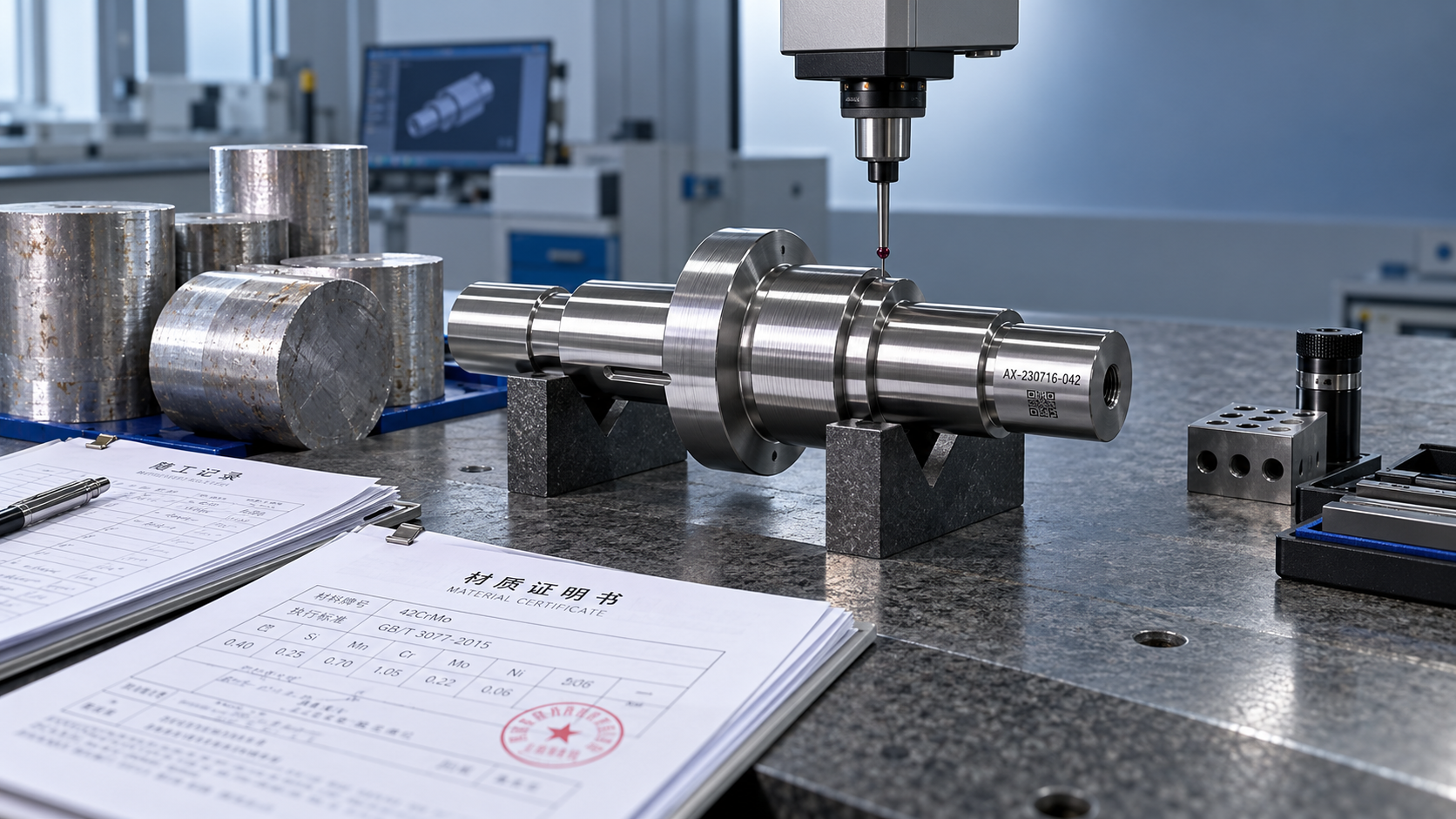
For processing and manufacturing businesses, the rule change may influence how metal structural components are specified and documented during production. Analysis shows that any company seeking the preferential rate would likely need a clearer internal method for identifying which structural metal parts count toward the threshold and how their weight is calculated. The operational effect may therefore appear in engineering documentation, production records, and shipment files rather than only in customs-facing paperwork.
Export and delivery planning may require tighter file control
For exporters, trading companies, and supply-chain service providers, the announcement may affect quotation strategy, customs preparation, and shipment scheduling. Observably, the existence of a lower threshold could create an incentive to reassess whether certain CNC products now fall within a more workable compliance range. At the same time, businesses may need to pay closer attention to origin-related supporting materials, product descriptions, and consistency between technical documents and trade documents.
Buyers and after-sales channels may face new review points
Purchasers and downstream distribution channels may also be affected if tariff treatment becomes part of supplier selection or contract review. From an industry perspective, this is relevant not only at the ordering stage but also during delivery confirmation and later traceability checks. Where a project depends on specific landed-cost assumptions, buyers may need to ask for clearer evidence on metal content and eligibility positioning before locking in procurement decisions.
Practical issues companies should track now
Review whether existing product files can support a weight-based claim
Analysis shows that the rule change is tied to a percentage by weight, so companies dealing in CNC equipment should pay attention to whether product files, technical documentation, and supplier records can support that calculation. If supporting materials are incomplete, the existence of a lower threshold may not automatically translate into usable tariff treatment.
Watch for later wording and enforcement interpretation
The provided information confirms the threshold change and the validity period, but it does not provide detailed enforcement language or filing mechanics. It is more appropriate to understand this as a concrete policy shift with execution details that still require close observation. Companies should therefore monitor how official wording, customs interpretation, or transactional document requirements are expressed in later practice.
Reassess procurement and delivery windows through 2027
Because the stated availability runs through December 31, 2027, businesses may need to consider whether current sourcing arrangements, production cycles, and delivery schedules align with that timeframe. Observably, this does not guarantee a commercial advantage in every case, but it does make timing, supplier selection, and content traceability more relevant to cross-border planning.
Keep bid, contract, and traceability language consistent
For companies participating in tenders or negotiated equipment sales, what deserves closer attention is alignment across bid documents, commercial terms, technical descriptions, and traceability records. If a CNC product is presented as meeting the threshold for the preferential rate, inconsistencies between those documents may create compliance and delivery risks later in the transaction chain.
Why this looks like an execution signal, not a finished story
Analysis shows that this development is significant because it changes a measurable entry condition rather than merely signaling policy intent. The move from 95% to 85% by weight suggests a more operationally reachable standard for some covered products, including CNC machine tools. At the same time, it is more appropriate to understand this as both a landed rule change and an execution signal that still needs follow-through in documentation practice, transaction review, and market interpretation. Industry participants therefore have reason to watch not only the headline threshold, but also how the rule is reflected in compliance routines and commercial negotiations.
How the market is likely to read this change for now
At this stage, the announcement is best understood as a specific tariff-rule adjustment with direct relevance to sourcing and compliance decisions for certain machinery products. It does not by itself confirm how broadly companies will benefit in practice, nor does it settle all execution questions. A neutral reading is that the rule lowers the barrier for eligibility, while leaving businesses responsible for proving that their products and supporting records fit the requirement.
Basis of this article and what still needs verification
This article is generated from the user-provided news title, event date, and event summary. For this type of development, commonly relevant source categories may include official proclamations, regulator releases, customs or trade authority information, industry association updates, standards-related documents, and reporting by authoritative media. No specific official source link was provided in the input, so the precise official link and later implementation materials still require ongoing verification. What remains important to monitor includes policy detail, enforcement interpretation, documentation expectations, tender-language changes, industry feedback, and how companies actually apply the rule in transactions and delivery planning.
PREVIOUS ARTICLE
NEXT ARTICLE
Recommended for You
![]() FANUC Links FIELD System Data with Copilot to Advance Shop-Floor Data UseCNC Machining Technology Center
FANUC Links FIELD System Data with Copilot to Advance Shop-Floor Data UseCNC Machining Technology Center Smart Manufacturing for Aerospace: Building Traceability Across CNC OperationsCNC Machining Technology Center
![]() Mitsubishi Electric Announces Physical AI System Linking Humanoid Robots and CNC MachinesMachine Tool Industry Editorial Team
Mitsubishi Electric Announces Physical AI System Linking Humanoid Robots and CNC MachinesMachine Tool Industry Editorial Team Precision Machining for Defense: Supplier Quality and Traceability ChecksManufacturing Market Research Center
![]() Nidec Machine Tool Launches MVR-5X Five-Axis Gantry MachineMachine Tool Industry Editorial Team
Nidec Machine Tool Launches MVR-5X Five-Axis Gantry MachineMachine Tool Industry Editorial Team Choosing a Precision Disc Parts Manufacturer in China: Tolerances and Quality ChecksManufacturing Market Research Center



Aris Katos
Future of Carbide Coatings
15+ years in precision manufacturing systems. Specialized in high-speed milling and aerospace grade alloy processing.
▶
Brazil ANVISA Rule Targets Medical Mold CNC ImportsManufacturing Policy Research Center▶
BAFA Adds CNC Grinding Controls to Dual-Use ListManufacturing Policy Research Center▶
TUV Rheinland Rule Adds PL e Data Interface for CNCsManufacturing Policy Research Center▶
Germany Tightens CNC Safety Rules With AI Stop ModuleManufacturing Policy Research Center▶
China Seeks Feedback on E-Motorcycle Battery RulesManufacturing Policy Research Center
▶
Mastering 5-Axis Workholding Strategies
Join our technical panel on Nov 15th to learn about reducing vibrations in thin-wall components.

Providing you with integrated sanding solutions
Before-sales and after-sales services
Comprehensive technical support