• Global CNC market projected to reach $128B by 2028 • New EU trade regulations for precision tooling components • Aerospace deman
NYSE: CNC +1.2%LME: STEEL -0.4%

Regional Market Insights show Southeast Asia’s CNC milling demand shifting toward medical device suppliers
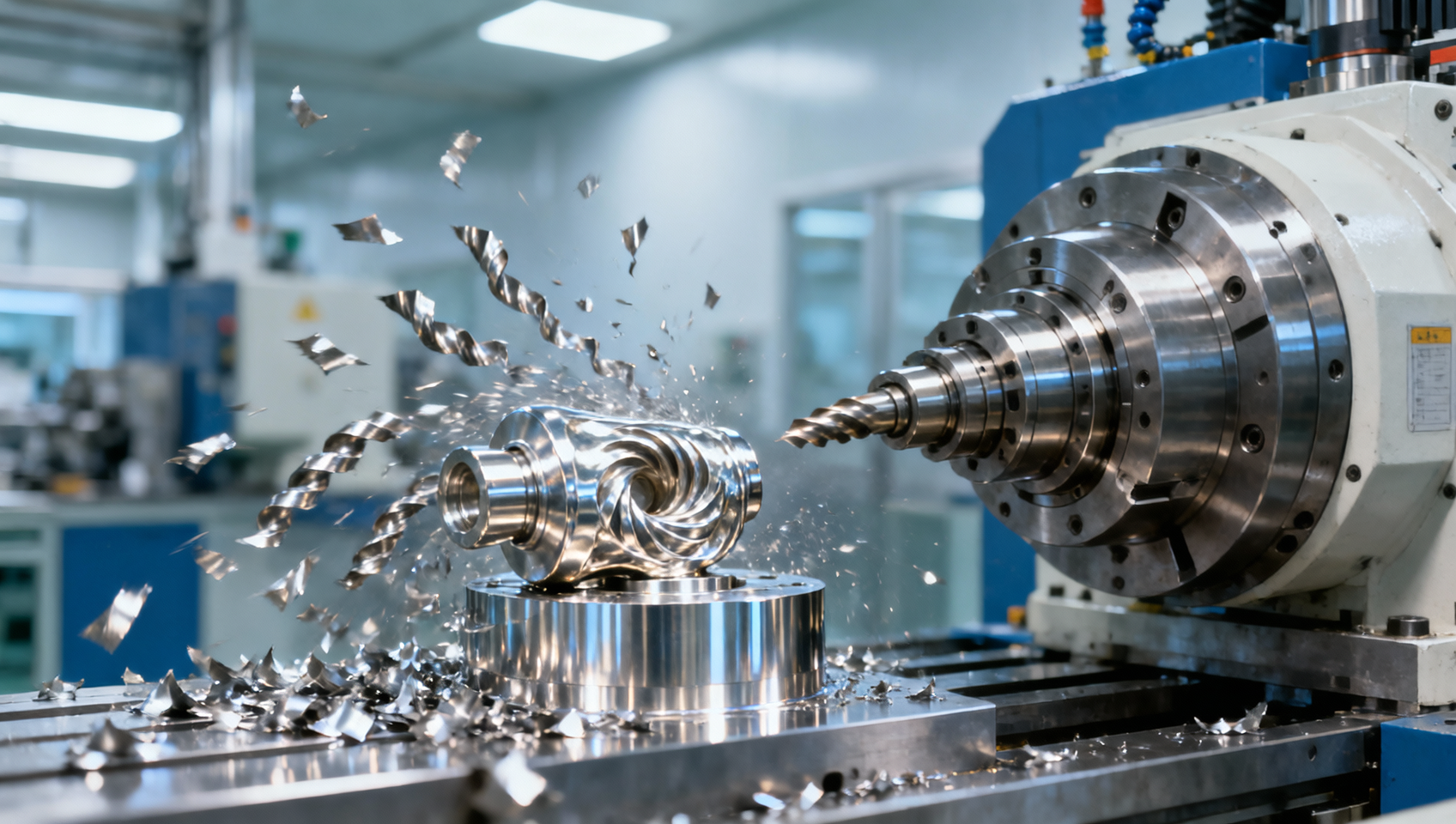
Southeast Asia’s metal machining landscape is evolving rapidly—new Regional Market Insights reveal a strategic pivot in CNC milling demand toward medical device suppliers. Driven by rising regulatory standards and localized production needs, industrial CNC systems, automated lathes, and vertical lathes are increasingly deployed for high-precision shaft parts and structural components. As Global Manufacturing embraces tighter tolerances and traceability, CNC metalworking, CNC cutting, and automated production lines gain traction across ASEAN’s medtech hubs. This shift underscores deeper integration of Industrial Automation, CNC programming, and smart factory practices—key themes for procurement professionals, operators, and enterprise decision-makers navigating the Machine Tool Market.
Why Medical Device Manufacturing Is Reshaping CNC Milling Demand in ASEAN
Medical device production in Southeast Asia is no longer limited to assembly or packaging—it now includes critical precision machining of implant-grade stainless steel (e.g., ASTM F138), titanium alloys (Ti-6Al-4V), and cobalt-chrome components. Regulatory alignment with ISO 13485 and MDR-compliant traceability requirements has pushed local OEMs and contract manufacturers to adopt CNC milling platforms capable of ±0.005 mm positional accuracy and surface roughness under Ra 0.4 µm.
Thailand, Malaysia, and Vietnam collectively account for over 62% of ASEAN’s certified Class II/III device manufacturing facilities—and their average annual capital expenditure on CNC metalworking equipment rose 18.3% YoY in 2023. Unlike automotive or electronics sectors where batch size drives automation, medtech demands low-volume, high-mix production with full lot-level documentation, requiring CNC systems with integrated DNC networks, real-time tool wear monitoring, and audit-ready G-code logging.
This trend reflects a broader regional strategy: reducing import dependency for orthopedic implants, surgical instruments, and diagnostic housings. For instance, Singapore-based MedTech Hub initiatives now mandate that 40% of critical component machining occur within ASEAN by 2026—a direct catalyst for CNC lathe and 5-axis machining center procurement.
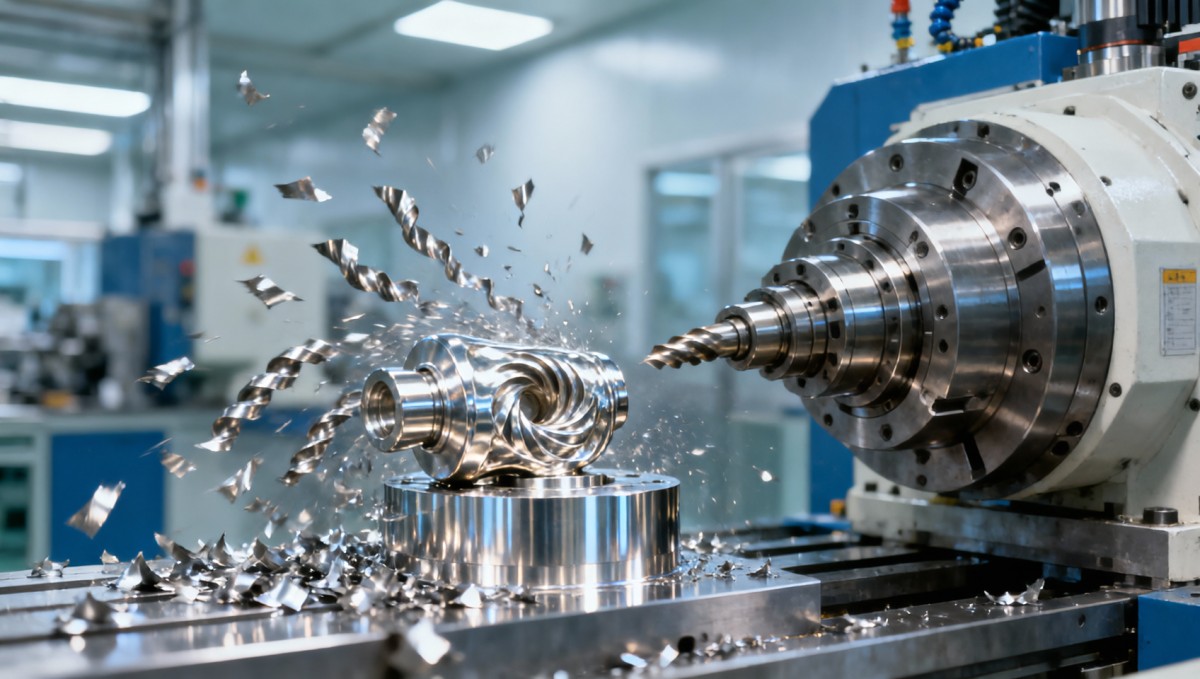
Key Technical Requirements for Medical-Grade CNC Milling Systems
Not all CNC milling platforms meet medtech-grade operational thresholds. Suppliers must verify system-level compliance—not just individual axis specs—with validated process capability (Cpk ≥ 1.33) across material families, coolant delivery consistency, and thermal stability under 8-hour continuous operation.
Critical parameters include spindle runout ≤ 3 µm at full RPM, repeatability < ±1.2 µm over 30 consecutive cycles, and vibration damping rated for 0.002 mm peak-to-peak displacement at 2 kHz resonance frequencies. Multi-axis machines used for spinal cage or hip stem machining also require synchronized B/C-axis positioning accuracy of ±5 arcseconds.
The table above highlights non-negotiable performance benchmarks—not marketing claims. Procurement teams should request third-party validation reports (e.g., ISO 230-2 test certificates) rather than rely solely on manufacturer datasheets. Systems failing to maintain tolerance consistency across ambient temperature swings of 10℃–35℃ risk non-conformance during FDA pre-submission audits.
Procurement Priorities: From Specifications to Service Readiness
For procurement professionals evaluating CNC milling solutions for medtech applications, technical specs are only one dimension. Equally critical are service-level commitments—including on-site calibration windows (< 72 hours), spare tool holder availability (< 5 business days), and CNC programming support for ISO 13485-compliant job setup documentation.
A recent ASEAN MedTech Procurement Survey found that 71% of buyers ranked “traceable machine maintenance logs” as more important than raw spindle power when selecting vendors. Likewise, 64% required CNC controllers with embedded cybersecurity features (e.g., IEC 62443-4-2 Level 1 certification) to prevent unauthorized G-code uploads.
Decision-makers must also assess total cost of ownership beyond CAPEX. A 5-axis machining center may cost 2.3× more upfront than a 3-axis alternative—but deliver 47% lower per-part labor cost for titanium cranial plates due to reduced handling, re-fixturing, and inspection steps.
These weighted criteria reflect real-world procurement behavior—not theoretical idealism. Buyers who skip verification against actual production workflows risk costly requalification cycles post-installation.
Implementation Roadmap: From Pilot to Full Integration
Deploying CNC milling infrastructure for medtech requires phased execution—not big-bang rollout. The proven implementation sequence spans four stages: (1) Material-specific feasibility testing (3–5 weeks), (2) Process validation with first-article inspection (2 weeks), (3) Operator certification & SOP development (1 week), and (4) Full-line integration with MES/ERP traceability (4–6 weeks).
Operators benefit most from vendor-led training covering not just G-code syntax but medtech-specific best practices—e.g., managing micro-tool breakage detection thresholds, validating coolant filtration integrity before each shift, and interpreting statistical process control (SPC) charts for burr formation on stainless bone screws.
Enterprise decision-makers should prioritize interoperability early: ensure CNC controllers support OPC UA connectivity for real-time feed rate, tool life, and cycle time data ingestion into existing quality management systems (QMS). Without this, achieving FDA 21 CFR Part 11 electronic record compliance becomes prohibitively complex.
Common Pitfalls to Avoid
- Assuming “medical-grade” labeling implies regulatory readiness—many machines lack documented design history files (DHF) required for ISO 13485 audits.
- Overlooking coolant compatibility: water-soluble emulsions used for aluminum housings can corrode titanium fixtures if not fully flushed between material runs.
- Neglecting fixture qualification: custom vacuum chucks for thin-walled diagnostic casings must be validated for repeatable clamping force (±2.5 N) across 500+ cycles.
Conclusion: Strategic Alignment Over Tactical Procurement
Southeast Asia’s pivot toward medical device–driven CNC milling demand signals a maturing regional manufacturing ecosystem—one where precision, compliance, and digital traceability converge. For information researchers, this means updated market segmentation models; for operators, it translates to higher-skilled CNC programming roles; for procurement professionals, it demands rigorous validation protocols; and for enterprise leaders, it represents a strategic opportunity to embed local supply chain resilience.
Success hinges not on acquiring the most powerful machine—but on deploying the right platform with verifiable process capability, service infrastructure aligned to ASEAN time zones, and software architecture built for medtech-grade auditability. With over 320 certified CNC suppliers now active across Thailand, Malaysia, and Vietnam, differentiation lies in implementation discipline—not spec sheet comparisons.
If your organization is evaluating CNC milling solutions for medical device production—or scaling existing capacity to meet ASEAN localization mandates—contact our team for a no-cost technical alignment review. We provide application-specific feasibility assessments, regional service network mapping, and ISO 13485-readiness gap analysis tailored to your facility’s workflow and compliance roadmap.
Recommended for You
![]() Iranian LNG Vessels Breach U.S. Strait Blockade; Shanghai Crude Surges 4%Manufacturing Market Research Center
Iranian LNG Vessels Breach U.S. Strait Blockade; Shanghai Crude Surges 4%Manufacturing Market Research Center![]() Pakistan Launches CNC Localization Tender for CPEC II Smart Manufacturing ParkGlobal Machine Tool Trade Research Center
Pakistan Launches CNC Localization Tender for CPEC II Smart Manufacturing ParkGlobal Machine Tool Trade Research Center![]() NVIDIA Joins $1T Club; AI-Driven CNC Digital Twin Gains Global TractionCNC Machining Technology Center
NVIDIA Joins $1T Club; AI-Driven CNC Digital Twin Gains Global TractionCNC Machining Technology Center![]() World's First 5-Axis Middle-Grade Wire EDM Machine Enters Mass ProductionMachine Tool Industry Editorial Team
World's First 5-Axis Middle-Grade Wire EDM Machine Enters Mass ProductionMachine Tool Industry Editorial Team![]() China’s CNC Machine Tool Export Prices Up 11.3% in Q1 2026Global Machine Tool Trade Research Center
China’s CNC Machine Tool Export Prices Up 11.3% in Q1 2026Global Machine Tool Trade Research Center![]() Saudi Energy Security Boosts CNC Import Efficiency in Middle EastGlobal Machine Tool Trade Research Center
Saudi Energy Security Boosts CNC Import Efficiency in Middle EastGlobal Machine Tool Trade Research Center


Aris Katos
Future of Carbide Coatings
15+ years in precision manufacturing systems. Specialized in high-speed milling and aerospace grade alloy processing.
▶
Pakistan Launches CNC Localization Tender for CPEC II Smart Manufacturing ParkGlobal Machine Tool Trade Research Center▶
5 Axis Machining Services in USA for Low-Volume Complex PartsGlobal Machine Tool Trade Research Center▶
Industrial CNC Import Trends Are Changing in Southeast AsiaGlobal Machine Tool Trade Research Center▶
Manufacturing Industry Orders Are Recovering UnevenlyGlobal Machine Tool Trade Research Center▶
What is changing first in Global Manufacturing this year?Global Machine Tool Trade Research Center
Mastering 5-Axis Workholding Strategies
Join our technical panel on Nov 15th to learn about reducing vibrations in thin-wall components.

Providing you with integrated sanding solutions
Before-sales and after-sales services
Comprehensive technical support