• Global CNC market projected to reach $128B by 2028 • New EU trade regulations for precision tooling components • Aerospace deman
NYSE: CNC +1.2%LME: STEEL -0.4%

Automated production line expansions are slowing in labor rich regions
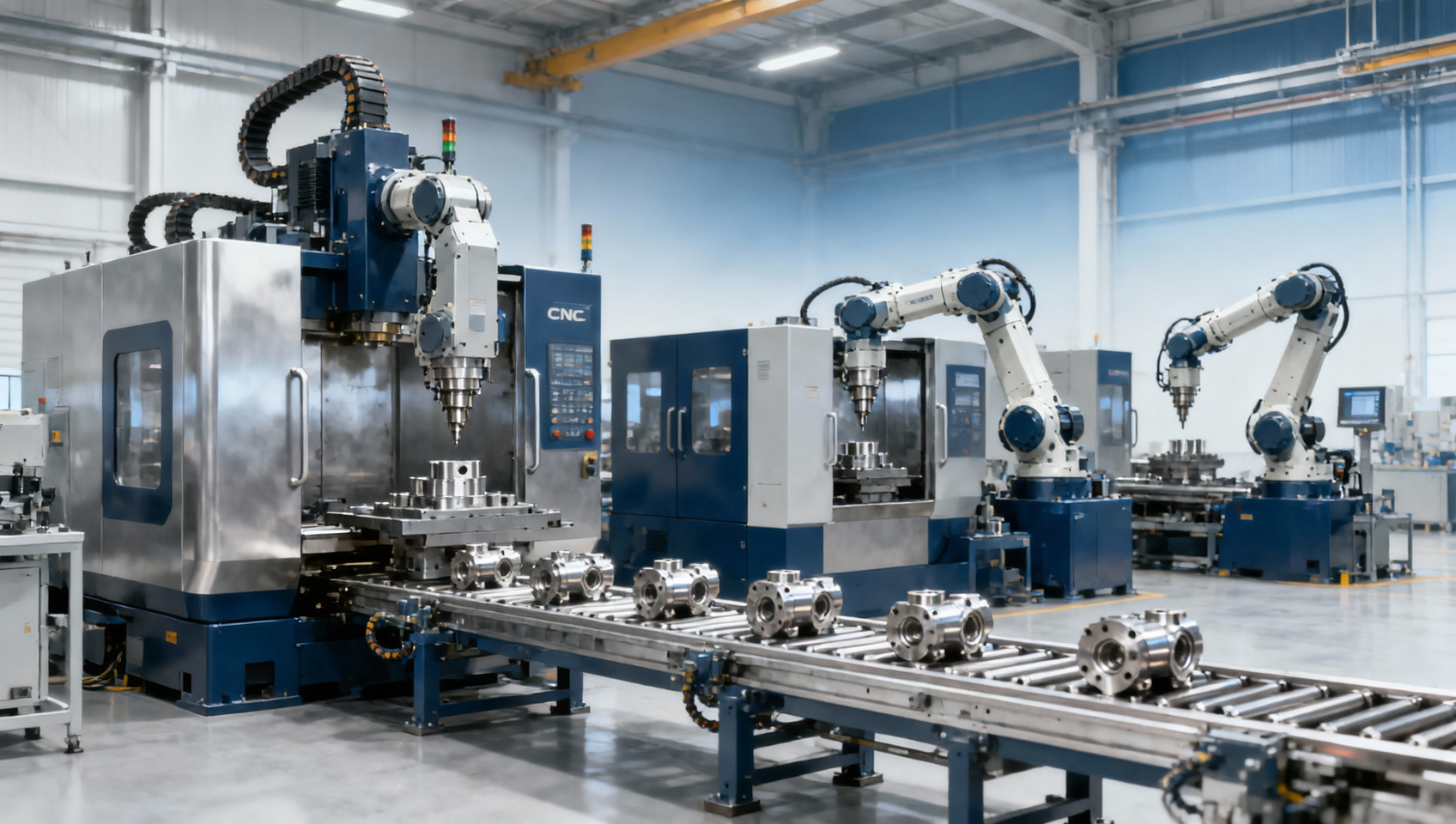
As labor-rich regions rethink cost structures and workforce advantages, automated production line expansion is losing momentum across parts of the Global Manufacturing landscape. For buyers, operators, and decision-makers in the Machine Tool Market, this shift is reshaping industrial CNC investment, CNC production planning, and the broader Manufacturing Industry—especially where metal machining, Industrial Automation, and Automated Production Line strategies once promised the fastest returns.
For many manufacturers, the core question is no longer whether automation matters, but where, when, and at what scale it still creates measurable value. Wage growth in some labor-rich markets, uneven demand cycles, financing pressure, and slower export orders are changing the economics behind large line expansions. As a result, CNC machine tools, robotic cells, and flexible production systems are increasingly being evaluated through a stricter lens: throughput stability, labor availability by skill level, and payback within 18–36 months.
This shift affects several groups at once. Researchers need a practical view of market direction. Machine operators need clarity on how line configurations may change. Procurement teams must compare modular upgrades against full-line investment. Business leaders need capital allocation strategies that balance resilience, precision, and cost control. In the CNC machining and precision manufacturing sector, understanding why expansion is slowing is now part of making better equipment, sourcing, and production decisions.
Why automated production line expansion is slowing in labor-rich regions
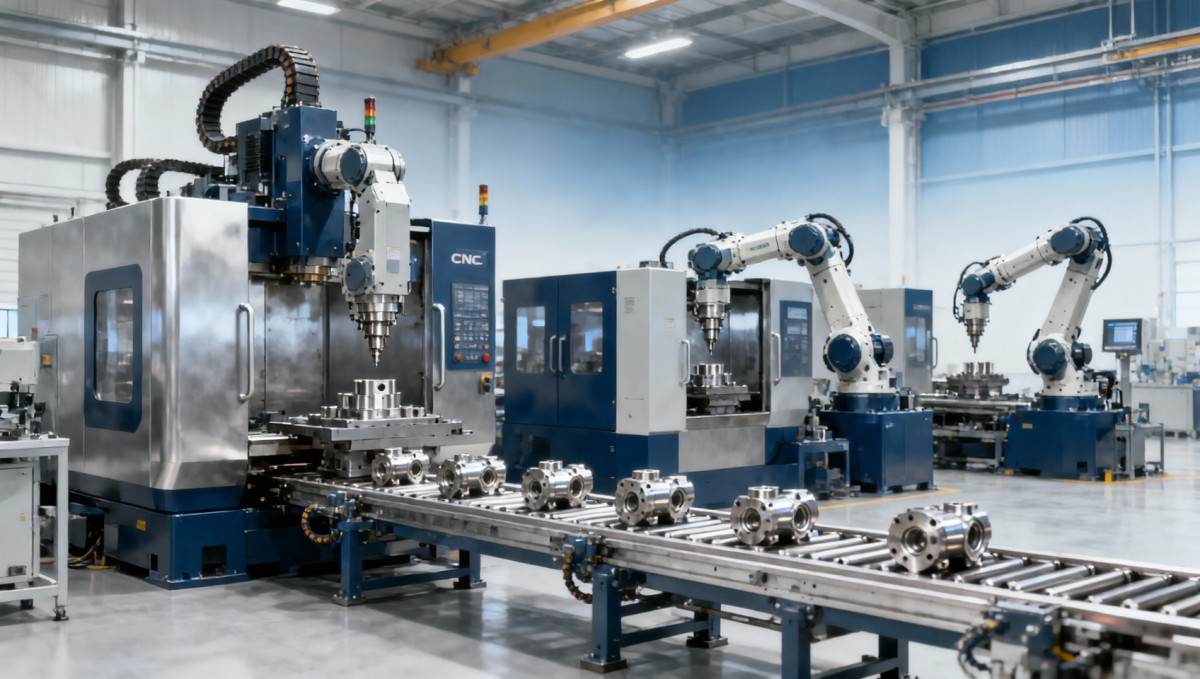
Automated production line expansion once appeared to be the default next step for factories scaling metal machining, component assembly, and high-volume CNC production. In labor-rich regions, the logic was straightforward: combine a large workforce with automated handling, industrial robots, and integrated machine tools to lift output by 20%–40% while reducing bottlenecks. That model is still relevant, but the rate of expansion has slowed because the conditions behind it have changed.
One major factor is the changing cost structure. Labor may still be available, but not always at the low, stable rates assumed in older automation models. At the same time, borrowing costs, energy volatility, and imported component prices have increased project sensitivity. A plant that previously targeted a 24-month payback may now face a 30–42 month recovery window if machine utilization drops below 70% or if customer orders fluctuate quarter to quarter.
Another issue is demand uncertainty. Automotive, electronics, energy equipment, and export manufacturing all remain important, yet order patterns have become less predictable. Full automated production line investment works best under stable product mixes and consistent volume. When factories face batch sizes that swing from 500 units to 5,000 units, or part designs that change every 3–6 months, highly fixed lines can create rigidity rather than efficiency.
In CNC environments, flexibility is increasingly valued over scale alone. A machining center with pallet automation, quick-change fixtures, and digital process monitoring may deliver better ROI than a larger dedicated line. For procurement and operations teams, this means comparing not just machine speed, but also changeover time, programming requirements, maintenance skill availability, and compatibility with existing ERP or MES systems.
Key forces behind the slowdown
- Capital discipline has tightened, with many firms requiring investment payback within 18–30 months instead of 36 months or longer.
- Mixed-product manufacturing is growing, making rigid transfer lines less attractive than flexible CNC cells.
- Skilled technicians for robotics integration, PLC support, and predictive maintenance remain harder to secure than general labor.
- Supply chain lead times for servo systems, controllers, and specialty components can still stretch to 8–20 weeks.
The slowdown does not mean automation is being abandoned. It means expansion decisions are becoming more selective. Instead of building fully new lines, many manufacturers are retrofitting 2–4 CNC stations, adding loading robots to specific process points, or installing in-line measurement only where scrap reduction can be proven. That shift matters for anyone buying machine tools, planning plant upgrades, or assessing capacity growth in a competitive manufacturing environment.
How the shift changes CNC investment and production planning
For CNC machine tool users and decision-makers, slower automated production line expansion does not reduce the importance of industrial automation. Instead, it changes the investment hierarchy. Spending is moving away from “expand everything at once” and toward “upgrade the highest-friction process first.” In practical terms, that means more focus on spindle utilization, unattended run time, fixture repeatability, and tool life control before greenlighting a full production line buildout.
In many precision manufacturing plants, the best gains now come from targeted automation around bottlenecks. A facility with six CNC lathes may find that automating material loading on two critical machines improves output more effectively than adding a full line conveyor. Likewise, introducing digital tool monitoring can cut unplanned stoppages by 10%–15% without the cost of a full robotic transfer system. This is especially relevant where labor is available but advanced maintenance talent is limited.
Production planning is also becoming more scenario-based. Managers are modeling at least three operating states: stable demand, mixed demand, and short-run demand. Under these conditions, flexible machining centers, modular automation islands, and standardized fixturing provide stronger resilience than highly specialized dedicated lines. The result is a broader use of staged capacity planning over 12, 24, and 36 months rather than a single large-scale expansion.
The comparison below illustrates how investment priorities are shifting in the machine tool market.
The key conclusion is not that one model replaces the others. Rather, factories are selecting different automation levels based on batch size, part complexity, and staffing conditions. In sectors such as aerospace components or energy equipment, where tolerance control and traceability remain critical, selective automation can often outperform larger expansion plans that are harder to load consistently.
What procurement teams should examine first
- Measure actual machine utilization over 8–12 weeks before approving new line capacity.
- Separate labor shortage problems from process imbalance problems; they are not the same issue.
- Check whether fixture standardization can reduce changeover time by 15–25% before adding robotics.
- Evaluate controller compatibility, spare parts lead time, and local service response within 24–72 hours.
For operators and production managers, this shift often improves day-to-day practicality. It can reduce the risk of being tied to oversized systems while making training, maintenance, and line balancing easier to manage. For business leaders, it supports a more disciplined manufacturing strategy in uncertain markets.
Decision criteria for buyers in the machine tool and automation market
When automated production line expansion slows, procurement becomes more analytical. Buyers are no longer comparing only cycle time or machine count. They are asking whether the selected CNC equipment, robot interface, measuring system, and software layer can support both current and next-stage production. In many B2B manufacturing purchases, the most important question is whether the system remains productive at 60%, 80%, and 100% load conditions.
This is particularly relevant in metal machining and precision manufacturing, where a poor investment decision can affect delivery, scrap rate, and labor utilization for years. A lower-priced machine may appear attractive, but if spindle stability, axis repeatability, or after-sales service are weak, downtime can erase the savings. Likewise, a highly advanced line may underperform if the plant cannot support programming, calibration, and preventive maintenance at the required level.
Buyers should compare not just the machine tool itself, but the broader operating package. That includes software integration, fixture ecosystem, tooling compatibility, consumable cost, remote diagnostics, and training depth. In many projects, these secondary factors influence real production economics more than the advertised maximum cutting speed.
Core evaluation framework
The following table can serve as a practical screening tool for procurement teams, plant engineers, and executives reviewing line expansion or upgrade options.
The practical lesson is that machine tool procurement should be tied to real production conditions, not theoretical best-case capacity. A CNC lathe, machining center, or robotic station should be validated against actual part types, actual staffing, and realistic order variability. This reduces the risk of overbuilding while keeping the door open for phased automation later.
Common buying mistakes
- Buying for peak volume only, without testing low-volume profitability.
- Ignoring training time; many advanced systems need 2–6 weeks for stable operator adoption.
- Focusing on machine price while underestimating tooling, fixturing, and software integration cost.
- Overlooking maintenance discipline, lubrication schedules, and calibration frequency.
For sourcing teams, disciplined comparison creates leverage. It helps separate essential automation from attractive but underused features. In the current environment, that distinction can protect both budget efficiency and delivery reliability.
Implementation strategies that work better than full-line expansion
The slowdown in automated production line expansion is pushing manufacturers toward phased implementation. This approach works well in labor-rich regions where the challenge is not a complete absence of workers, but a shortage of specific technical skills or inconsistent throughput on selected processes. Rather than replacing whole lines, companies are automating where cycle variation, scrap, or handling losses are most visible.
A common example is the partial automation of loading and unloading around CNC lathes, vertical machining centers, or inspection stations. If one operation creates 12% of total downtime and another causes 8% scrap through handling inconsistency, those points deserve attention before an enterprise invests in a fully linked line. In many plants, these targeted interventions produce faster operational improvement and lower implementation risk.
Phased implementation also supports workforce transition. Operators can be retrained on one robotic cell, one digital quality station, or one software dashboard at a time. This reduces disruption and helps plants build internal competence. It is often easier to stabilize a 3-step pilot over 6–10 weeks than to launch a full automated line that requires simultaneous changes to layout, staffing, process routing, and maintenance practices.
Recommended rollout sequence
- Map bottlenecks using actual cycle-time and downtime data over 4–8 weeks.
- Select one pilot area with clear ROI, such as machine tending, tool monitoring, or in-process gauging.
- Standardize fixturing, tooling, and work instructions before adding automation.
- Train operators, maintenance staff, and programmers in parallel rather than sequentially.
- Review pilot performance after 60–90 days before scaling to adjacent stations.
This method is especially useful in industries producing shafts, housings, discs, and structural parts with moderate design changes. It allows manufacturers to preserve labor flexibility while building more reliable CNC production capacity. In short, it is a better fit for uncertain demand than immediate full-line expansion.
Maintenance and service implications
Selective automation requires disciplined service planning. Plants should define preventive maintenance intervals, spare-part stocking rules, and response priorities before commissioning. For CNC and automation assets, weekly inspection, monthly lubrication review, and quarterly alignment or calibration checks are common baseline practices. Without this support, even a well-chosen automation upgrade can lose value through avoidable stoppages.
Service capability also matters in cross-border procurement. If replacement sensors, drives, or controller modules take 10–16 weeks to arrive, the real risk may outweigh the initial price advantage. This is why many buyers in the machine tool market are now asking for clearer support commitments, training packages, and spare parts planning during the quotation stage.
FAQ for researchers, operators, buyers, and decision-makers
Because automation decisions now require more precise justification, several practical questions continue to come up across the manufacturing industry. The answers below are useful for companies evaluating CNC machine tools, flexible production cells, and automated production line alternatives in labor-rich regions.
Is slower expansion a sign that automation demand is falling?
Not necessarily. In most cases, demand is shifting from large, fixed production line projects to modular and selective automation. Factories still need higher precision, traceability, and productivity, but they want lower risk and faster payback. That often means one robot per cell, one digital monitoring layer, or one upgraded machining center rather than a full linked line.
Which factories are still good candidates for full automated production lines?
Plants with stable demand, repeatable parts, and high annual volume remain strong candidates. If a product family runs with limited engineering changes, tight takt consistency, and demand visibility for 12 months or more, a full line can still make sense. This is common in mature automotive components, selected appliance parts, and certain standard industrial products.
What should operators expect when automation is introduced in phases?
Operators usually see more standardized work, closer tracking of machine status, and stronger emphasis on setup accuracy. Training often covers HMI use, alarm response, fixture checks, and basic recovery procedures. A realistic training period is often 1–3 weeks for daily operation, with longer development for programming or maintenance support roles.
What is a reasonable delivery timeline for CNC and automation upgrades?
It depends on complexity, but common ranges are 6–12 weeks for standard machine upgrades, 8–16 weeks for robotic cell integration, and 12–24 weeks for broader line-level projects. Buyers should confirm whether lead time includes tooling, fixturing, safety systems, software integration, acceptance testing, and on-site commissioning.
The current manufacturing environment rewards companies that combine precision equipment, realistic planning, and flexible automation strategy. Slower automated production line expansion in labor-rich regions is not a retreat from modernization. It is a move toward more selective, financially disciplined, and operationally adaptable investment across the CNC machine tool and precision manufacturing sector.
For information researchers, this means watching where spending is concentrating: modular CNC cells, digital process control, and targeted machine tending. For operators, it means learning systems that improve consistency without forcing unnecessary complexity. For procurement teams and business leaders, it means aligning machine tool purchases with actual product mix, workforce capability, and achievable ROI.
If you are evaluating CNC machines, automation upgrades, or production line planning for your manufacturing business, now is the right time to review your capacity model, service assumptions, and equipment roadmap. Contact us to discuss your application, request a tailored solution, or learn more about practical machine tool and automation strategies for today’s market.
Recommended for You
![]() Iranian LNG Vessels Breach U.S. Strait Blockade; Shanghai Crude Surges 4%Manufacturing Market Research Center
Iranian LNG Vessels Breach U.S. Strait Blockade; Shanghai Crude Surges 4%Manufacturing Market Research Center![]() Pakistan Launches CNC Localization Tender for CPEC II Smart Manufacturing ParkGlobal Machine Tool Trade Research Center
Pakistan Launches CNC Localization Tender for CPEC II Smart Manufacturing ParkGlobal Machine Tool Trade Research Center![]() NVIDIA Joins $1T Club; AI-Driven CNC Digital Twin Gains Global TractionCNC Machining Technology Center
NVIDIA Joins $1T Club; AI-Driven CNC Digital Twin Gains Global TractionCNC Machining Technology Center![]() World's First 5-Axis Middle-Grade Wire EDM Machine Enters Mass ProductionMachine Tool Industry Editorial Team
World's First 5-Axis Middle-Grade Wire EDM Machine Enters Mass ProductionMachine Tool Industry Editorial Team![]() China’s CNC Machine Tool Export Prices Up 11.3% in Q1 2026Global Machine Tool Trade Research Center
China’s CNC Machine Tool Export Prices Up 11.3% in Q1 2026Global Machine Tool Trade Research Center![]() Saudi Energy Security Boosts CNC Import Efficiency in Middle EastGlobal Machine Tool Trade Research Center
Saudi Energy Security Boosts CNC Import Efficiency in Middle EastGlobal Machine Tool Trade Research Center


Aris Katos
Future of Carbide Coatings
15+ years in precision manufacturing systems. Specialized in high-speed milling and aerospace grade alloy processing.
▶
Pakistan Launches CNC Localization Tender for CPEC II Smart Manufacturing ParkGlobal Machine Tool Trade Research Center▶
5 Axis Machining Services in USA for Low-Volume Complex PartsGlobal Machine Tool Trade Research Center▶
Industrial CNC Import Trends Are Changing in Southeast AsiaGlobal Machine Tool Trade Research Center▶
Manufacturing Industry Orders Are Recovering UnevenlyGlobal Machine Tool Trade Research Center▶
What is changing first in Global Manufacturing this year?Global Machine Tool Trade Research Center
Mastering 5-Axis Workholding Strategies
Join our technical panel on Nov 15th to learn about reducing vibrations in thin-wall components.

Providing you with integrated sanding solutions
Before-sales and after-sales services
Comprehensive technical support