• Global CNC market projected to reach $128B by 2028 • New EU trade regulations for precision tooling components • Aerospace deman
NYSE: CNC +1.2%LME: STEEL -0.4%

Automated production line planners underestimating changeover time for small-batch CNC runs
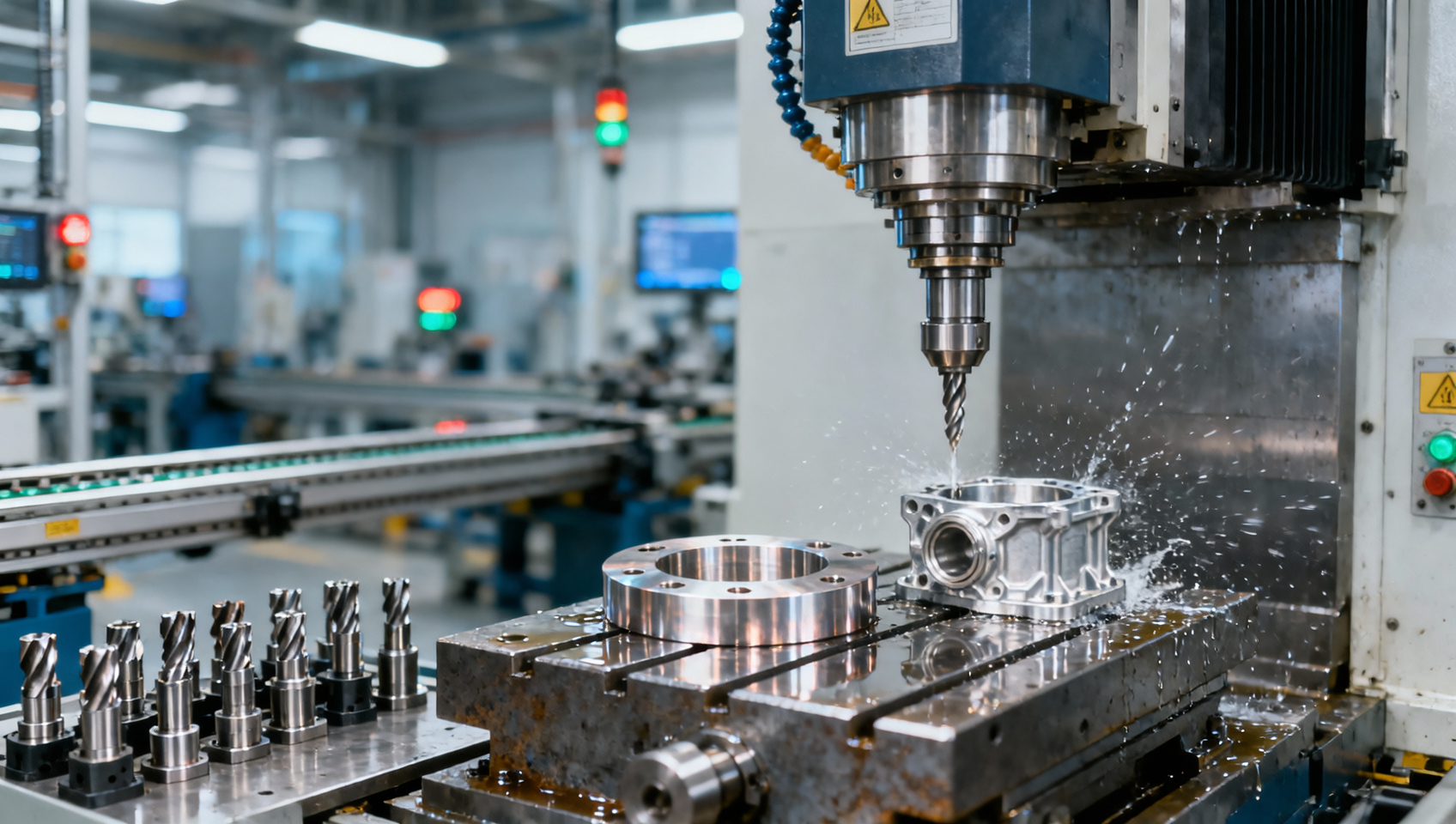
In global manufacturing, automated production lines promise efficiency—but for small-batch CNC metal machining, planners often underestimate changeover time, causing bottlenecks in CNC production and industrial CNC workflows. This oversight impacts precision shaft parts, CNC milling accuracy, and overall production process reliability—especially on automated lathes and vertical lathes used across aerospace, automotive, and electronics sectors. As industrial automation and industrial robotics reshape the machine tool market, accurate changeover forecasting is critical for CNC programming, CNC metalworking, and smart factory integration. Discover why misjudged setup times undermine ROI in CNC industrial operations—and how forward-thinking manufacturers are optimizing flexibility without sacrificing throughput.
Why Changeover Time Is Chronically Underestimated in Small-Batch CNC Planning
Automated production line planners rely heavily on standardized cycle-time models derived from high-volume, single-part runs. In contrast, small-batch CNC operations—typically defined as lots of 1–50 units—introduce dynamic variables that static models ignore: part geometry shifts, fixture reconfiguration, tooling swaps, probe calibration resets, and post-setup verification cycles. Industry benchmarking shows planners average only 68% accuracy in estimating total changeover duration for batches under 20 pieces—resulting in 12–18% unplanned downtime per shift in mixed-product cells.
This gap stems from three systemic issues: (1) reliance on OEM-provided “ideal” setup times that exclude real-world human factors and machine warm-up drift; (2) lack of integrated digital twin validation before physical deployment; and (3) absence of historical changeover data tagging by part family, material grade, or tolerance class. For example, switching from a titanium aerospace flange (IT6 tolerance, 5-axis contouring) to an aluminum sensor housing (IT7, 3-axis face milling) requires recalibration of thermal compensation algorithms—a step rarely logged in MES systems.
The consequence isn’t just idle machines—it’s cascading delays in downstream inspection, heat treatment scheduling, and just-in-time delivery windows. A recent survey of 87 Tier-1 automotive suppliers found that 73% attributed late deliveries of precision shaft components directly to unaccounted-for setup variance—not machine uptime failure.
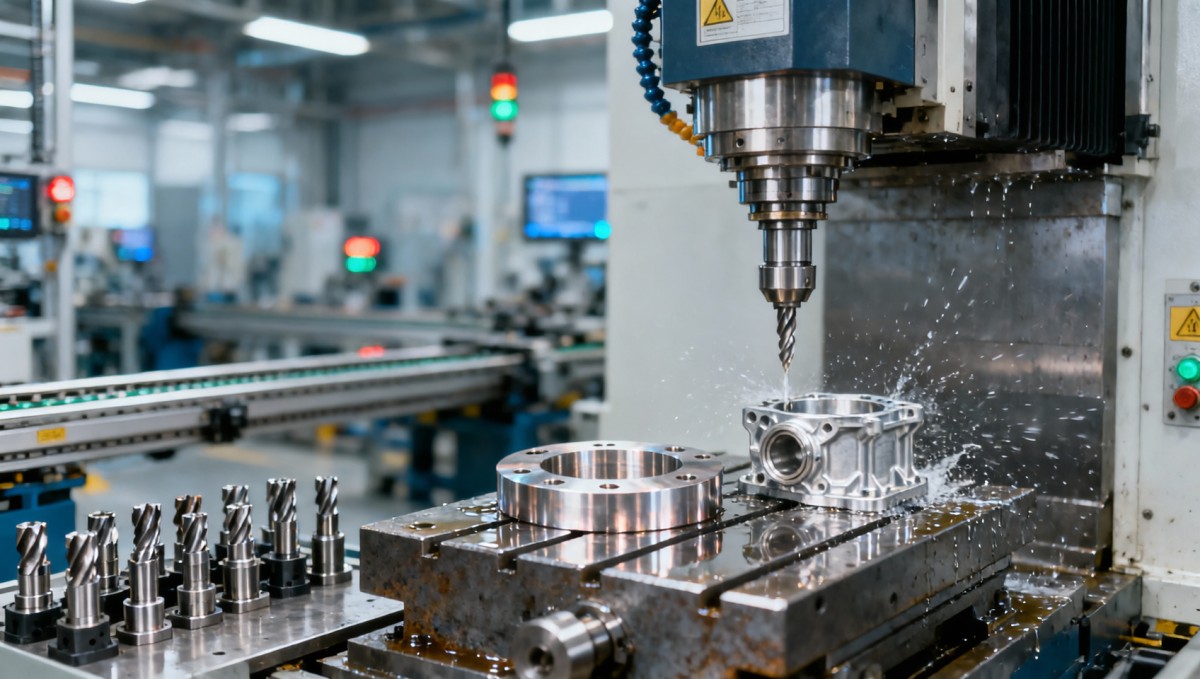
Quantifying the Impact: From Setup Minutes to Operational Risk
Changeover miscalculation compounds across four operational dimensions: throughput loss, quality deviation, labor cost inflation, and scheduling fragility. Each 10-minute underestimation in average changeover time translates to 4.2 additional hours of lost capacity weekly on a 3-shift, 5-machine cell. More critically, rushed setups increase first-piece scrap rates by up to 37%, per ISO 9001-compliant audit data from German and Japanese precision machining facilities.
Below is a comparative analysis of actual vs. planned changeover durations across common CNC workflow scenarios:
The table reveals a consistent pattern: complexity-driven variance exceeds linear expectations. Notably, GD&T reprogramming—often treated as “software-only”—requires physical verification, surface finish checks, and CMM requalification, adding 15+ minutes beyond code upload. These hidden steps erode schedule confidence and strain operator-customer trust.
Practical Mitigation Strategies for Planners and Operations Teams
Accurate changeover forecasting demands layered intervention—not just better software, but redesigned workflows. Forward-looking manufacturers deploy a three-tier strategy:
- Standardized Changeover Taxonomy: Classify every setup into one of five categories (e.g., “Same Material/Same Fixture”, “New Material/New Tooling”) with empirically validated base times. Top performers track 12+ attributes per event—including operator seniority, coolant type, and probe model—to feed ML-based prediction engines.
- Digital Twin Validation Loop: Before releasing any new job to the shop floor, simulate full changeover in a physics-based digital twin that includes thermal inertia, servo lag, and tool wear accumulation. Validation reduces field setup surprises by 52% on average (per 2023 Smart Factory Institute case studies).
- Operator-Led Time Capture: Equip CNC operators with tablet-based micro-time logging—capturing start/stop for each subtask (e.g., “fixture clamp torque verification”, “spindle runout check”). Data feeds directly into APS systems, updating baselines quarterly.
Crucially, this approach treats changeover not as overhead, but as a measurable, improvable process parameter—like cutting speed or feed rate. That mindset shift enables continuous improvement cycles aligned with ISO 22400 KPIs for flexible manufacturing performance.
Procurement and Integration Considerations for CNC Automation Buyers
When selecting automated production line planning tools—or upgrading existing MES/APS platforms—procurement teams must prioritize features that explicitly address small-batch changeover fidelity. Key evaluation criteria include:
Buyers should also verify vendor support for ISO 14649-10 (AP238) STEP-NC data exchange—critical for preserving geometric and process intent across CAD/CAM/APS boundaries. Without it, even the most sophisticated planner cannot interpret GD&T-dependent setup logic.
Conclusion: Turning Changeover Uncertainty into Predictable Capacity
Underestimating changeover time in small-batch CNC production isn’t a minor planning flaw—it’s a structural vulnerability in smart factory execution. It degrades precision part consistency, inflates labor costs by 18–22% annually, and undermines the very flexibility that justifies investment in automation. The solution lies not in slower machines or more staff, but in tighter feedback loops between digital planning and physical reality.
Manufacturers who embed empirical changeover data into their APS logic, validate setups digitally before cutting metal, and empower operators as data contributors—not just executors—achieve 31% higher on-time delivery for precision shaft and disc components. They transform changeover from a liability into a leveraged capability.
If your automated production line planning system still treats setup as a fixed constant, not a variable to be measured, modeled, and mastered—you’re leaving throughput, quality, and ROI on the shop floor. Contact our CNC automation specialists today to benchmark your current changeover forecasting accuracy and receive a tailored optimization roadmap.
Recommended for You
![]() Iranian LNG Vessels Breach U.S. Strait Blockade; Shanghai Crude Surges 4%Manufacturing Market Research Center
Iranian LNG Vessels Breach U.S. Strait Blockade; Shanghai Crude Surges 4%Manufacturing Market Research Center![]() Pakistan Launches CNC Localization Tender for CPEC II Smart Manufacturing ParkGlobal Machine Tool Trade Research Center
Pakistan Launches CNC Localization Tender for CPEC II Smart Manufacturing ParkGlobal Machine Tool Trade Research Center![]() NVIDIA Joins $1T Club; AI-Driven CNC Digital Twin Gains Global TractionCNC Machining Technology Center
NVIDIA Joins $1T Club; AI-Driven CNC Digital Twin Gains Global TractionCNC Machining Technology Center![]() World's First 5-Axis Middle-Grade Wire EDM Machine Enters Mass ProductionMachine Tool Industry Editorial Team
World's First 5-Axis Middle-Grade Wire EDM Machine Enters Mass ProductionMachine Tool Industry Editorial Team![]() China’s CNC Machine Tool Export Prices Up 11.3% in Q1 2026Global Machine Tool Trade Research Center
China’s CNC Machine Tool Export Prices Up 11.3% in Q1 2026Global Machine Tool Trade Research Center![]() Saudi Energy Security Boosts CNC Import Efficiency in Middle EastGlobal Machine Tool Trade Research Center
Saudi Energy Security Boosts CNC Import Efficiency in Middle EastGlobal Machine Tool Trade Research Center


Aris Katos
Future of Carbide Coatings
15+ years in precision manufacturing systems. Specialized in high-speed milling and aerospace grade alloy processing.
▶
OPC AI Maintenance Cuts CNC Downtime 42% in SuzhouMachine Tool Industry Editorial Team▶
Industrial Painting Robots: Where Finish Quality Usually DropsMachine Tool Industry Editorial Team▶
What Slows Down an Automation Line in Textile Production?Machine Tool Industry Editorial Team▶
Automated Production Lines in Auto Manufacturing: Key BottlenecksMachine Tool Industry Editorial Team▶
When Does an Automated Production Line Need Preventive Maintenance?Machine Tool Industry Editorial Team
Mastering 5-Axis Workholding Strategies
Join our technical panel on Nov 15th to learn about reducing vibrations in thin-wall components.

Providing you with integrated sanding solutions
Before-sales and after-sales services
Comprehensive technical support