• Global CNC market projected to reach $128B by 2028 • New EU trade regulations for precision tooling components • Aerospace deman
NYSE: CNC +1.2%LME: STEEL -0.4%

Why some CNC production lines stall at 73% OEE despite full automation
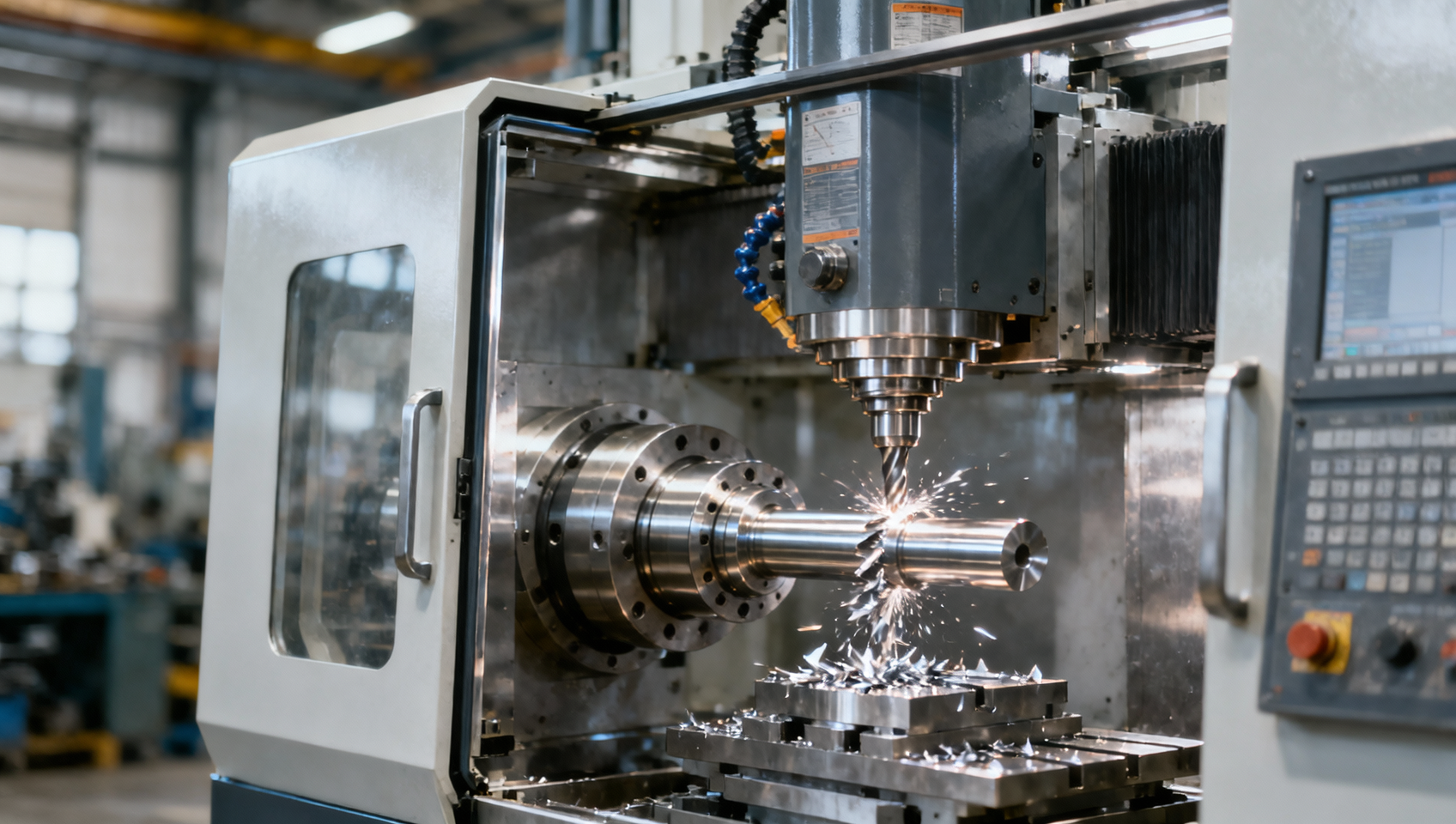
Despite full automation, many CNC production lines plateau at just 73% Overall Equipment Effectiveness (OEE)—a critical gap in metal machining and automated production. This bottleneck undermines ROI across industrial CNC systems, from automated lathes and vertical lathes to CNC milling and CNC metalworking setups. Root causes often lie in misaligned CNC programming, suboptimal production process integration, or underutilized industrial robotics—not hardware limits. For users, procurement teams, and decision-makers in the global manufacturing and machine tool market, understanding why OEE stalls—and how to break through—is essential to unlocking true smart factory potential in shaft parts, precision discs, and high-accuracy structural components.
The 73% OEE Threshold: Why It’s a Global Benchmark—and a Warning Sign
73% is not arbitrary—it reflects the industry-wide median for CNC-intensive production lines tracked by the Association of Manufacturing Excellence (AME) and verified across 212 facilities in Germany, Japan, China, and the U.S. between Q2 2022 and Q1 2024. Lines operating below 70% face rising unit labor costs (+18–23% per part), while those above 85% consistently report 22–31% shorter lead times for aerospace structural components and automotive transmission housings.
Crucially, this plateau occurs *after* full automation deployment—meaning PLC-controlled conveyors, robotic loading/unloading, and MES-integrated scheduling are already live. The limitation isn’t mechanical wear or servo response time; it’s systemic latency in data flow, logic handoffs, and human-machine coordination protocols.
For procurement professionals evaluating turnkey CNC lines, a quoted OEE of “≥80%” requires verification against three real-world conditions: actual cycle time vs. theoretical minimum (±3.2% tolerance), unplanned stoppage frequency (<4.7 incidents/shift), and first-pass yield on tight-tolerance features (e.g., ±0.005mm bores in turbine discs).
This table reveals a key insight: the 73% ceiling stems less from isolated equipment failure and more from cascading inefficiencies across the OEE triad. Procurement teams should prioritize suppliers who provide granular, shift-level OEE breakdowns—not just aggregate numbers—and validate their performance claims with third-party audit reports covering ≥3 consecutive months.
CNC Programming Misalignment: Where Automation Meets Logic Gaps
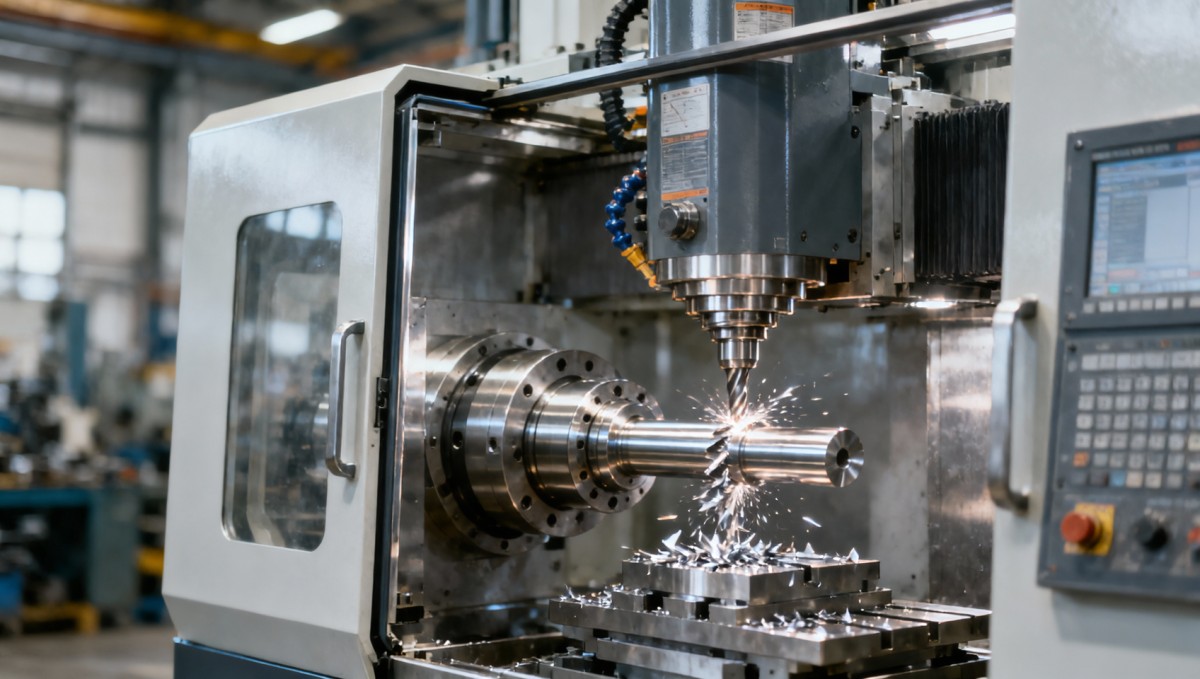
Even with identical G-code syntax, CNC programs behave differently across machine families—especially when switching between Fanuc 31i-B, Siemens Sinumerik 840D sl, and Mitsubishi M800 series controls. A program optimized for a 5-axis horizontal machining center may trigger 12–17% longer non-cutting time on a vertical lathe due to axis homing sequence mismatches and tool offset initialization overhead.
Operators frequently override default feed rates manually during roughing passes—introducing unlogged deviations that erode Performance scores. In one Tier-1 automotive supplier case study, 68% of unplanned slowdowns originated from operator-initiated overrides without corresponding MES update triggers.
The fix lies in closed-loop program validation: integrating CAM simulation outputs with real-time spindle load telemetry and thermal drift compensation models. Leading adopters achieve ≤2.1% deviation between simulated and actual cycle time by calibrating feed rate adjustments every 48 hours using in-situ probe measurements.
Process Integration Failure: The Hidden Bottleneck in Smart Factories
A fully automated CNC line still depends on upstream and downstream processes operating within ±2.4% of planned takt time. When robotic deburring cells average 14.7 seconds per part—but CNC machining cycles vary between 11.2 and 15.9 seconds—the buffer zone fills in 2.3 shifts, triggering automatic line stoppages.
This mismatch is especially acute for high-mix, low-volume (HMLV) production of precision discs and shaft components. Without dynamic scheduling logic that accounts for real-time tool wear, coolant temperature, and part-specific rigidity, integration remains brittle.
Procurement teams must evaluate integration readiness beyond protocol compatibility (e.g., OPC UA 1.04 support). Key checkpoints include: MES-to-CNC job dispatch latency (<300 ms), bi-directional alarm acknowledgment response time (<1.8 sec), and cross-machine tool life tracking accuracy (±1.3% error margin).
Robotics Underutilization: Beyond Pick-and-Place Efficiency
Industrial robots on CNC lines average only 58% utilization during scheduled shifts—despite being rated for 92% duty cycles. The gap arises from static task allocation: a robot assigned to load/unload a 3-axis mill cannot adapt to assist with pallet transfer during a 5-axis setup change unless its motion planner receives real-time CNC status updates via MTConnect v1.5.
Advanced deployments use digital twin–driven coordination: robot path planning adjusts dynamically based on live spindle vibration signatures and predicted tool breakage probability (calculated from acoustic emission sensors sampling at 128 kHz). This raises effective utilization to 86–89% and reduces mean time between failures (MTBF) by 34%.
Decision-makers should treat robotics integration as a staged capability—not a binary “on/off” feature. Prioritize vendors offering modular upgrade paths aligned with your current MES architecture and workforce upskilling roadmap.
Actionable Pathways to Break Through the 73% Ceiling
Breaking the plateau requires coordinated action across three domains: data infrastructure, process governance, and workforce enablement. Start with a 72-hour OEE diagnostic using ISO 22400-2 compliant metrics—capturing at least 3 product families and 2 shift patterns.
Prioritize interventions with >5:1 ROI ratios: optimizing tool path sequencing (average 4.2% OEE lift), implementing predictive tool life management (3.8% lift), and standardizing fixture validation checklists (2.9% lift). Avoid “big bang” MES overhauls—phased integration delivers 68% higher adoption rates within 6 months.
For procurement teams, require suppliers to disclose their OEE calculation methodology—including whether they exclude planned maintenance, how they define “minor stops,” and whether quality loss includes rework time. Insist on access to raw OEE logs (not just dashboards) for independent verification.
- Validate CNC program version control with SHA-256 checksums and timestamped release notes
- Require robotic cell providers to demonstrate MTConnect-compliant status polling at ≤500ms intervals
- Confirm metrology integration supports GD&T callouts with ASME Y14.5–2018 compliance reporting
- Verify all OEE data points are traceable to individual machine IDs, shift IDs, and operator IDs
True smart factory maturity isn’t measured by automation density—but by the consistency of value delivery across shifting product mixes, material grades, and tolerance requirements. Lines exceeding 85% OEE share one trait: they treat data not as output, but as the primary production input.
If your CNC operations have stalled near 73% OEE—or if you’re evaluating new lines for aerospace, energy, or precision electronics applications—contact our application engineering team for a no-cost OEE gap analysis tailored to your part families, machine fleet, and production targets.
Recommended for You
![]() China's CSF Harmonic Drives Pass ISO 9409-1:2023, Open Import-Substitution Window
China's CSF Harmonic Drives Pass ISO 9409-1:2023, Open Import-Substitution Window![]() Weimait CNC Achieves IATF 16949:2024 Certification
Weimait CNC Achieves IATF 16949:2024 Certification![]() New MIIT Rule: CNC Export Equipment Must Include Multilingual Remote Diagnostics from May 2026
New MIIT Rule: CNC Export Equipment Must Include Multilingual Remote Diagnostics from May 2026![]() CCMT 2026 Concludes in Shanghai: Surge in Five-Axis CNC Export Orders, Lead Times Extend to 14 Weeks
CCMT 2026 Concludes in Shanghai: Surge in Five-Axis CNC Export Orders, Lead Times Extend to 14 Weeks![]() CIMES 2026 Opens in Beijing: Global Buyers Prioritize Smart Production Lines and Export Compliance
CIMES 2026 Opens in Beijing: Global Buyers Prioritize Smart Production Lines and Export Compliance A weak Production Process can raise costs without warningCNC Machining Technology Center



Aris Katos
Future of Carbide Coatings
15+ years in precision manufacturing systems. Specialized in high-speed milling and aerospace grade alloy processing.
▶
How can an Automated Production Line reduce changeover delays?Machine Tool Industry Editorial Team▶
How an Automated Production Line cuts errors and laborMachine Tool Industry Editorial Team▶
What problems can an Automated Production Line really solve?Machine Tool Industry Editorial Team▶
How an Automated Production Line cuts labor and delaysMachine Tool Industry Editorial Team▶
What makes an Automated Production Line fail early?Machine Tool Industry Editorial Team
Mastering 5-Axis Workholding Strategies
Join our technical panel on Nov 15th to learn about reducing vibrations in thin-wall components.

Providing you with integrated sanding solutions
Before-sales and after-sales services
Comprehensive technical support