• Global CNC market projected to reach $128B by 2028 • New EU trade regulations for precision tooling components • Aerospace deman
NYSE: CNC +1.2%LME: STEEL -0.4%

Is an automated lathe worth it for mid-volume production?
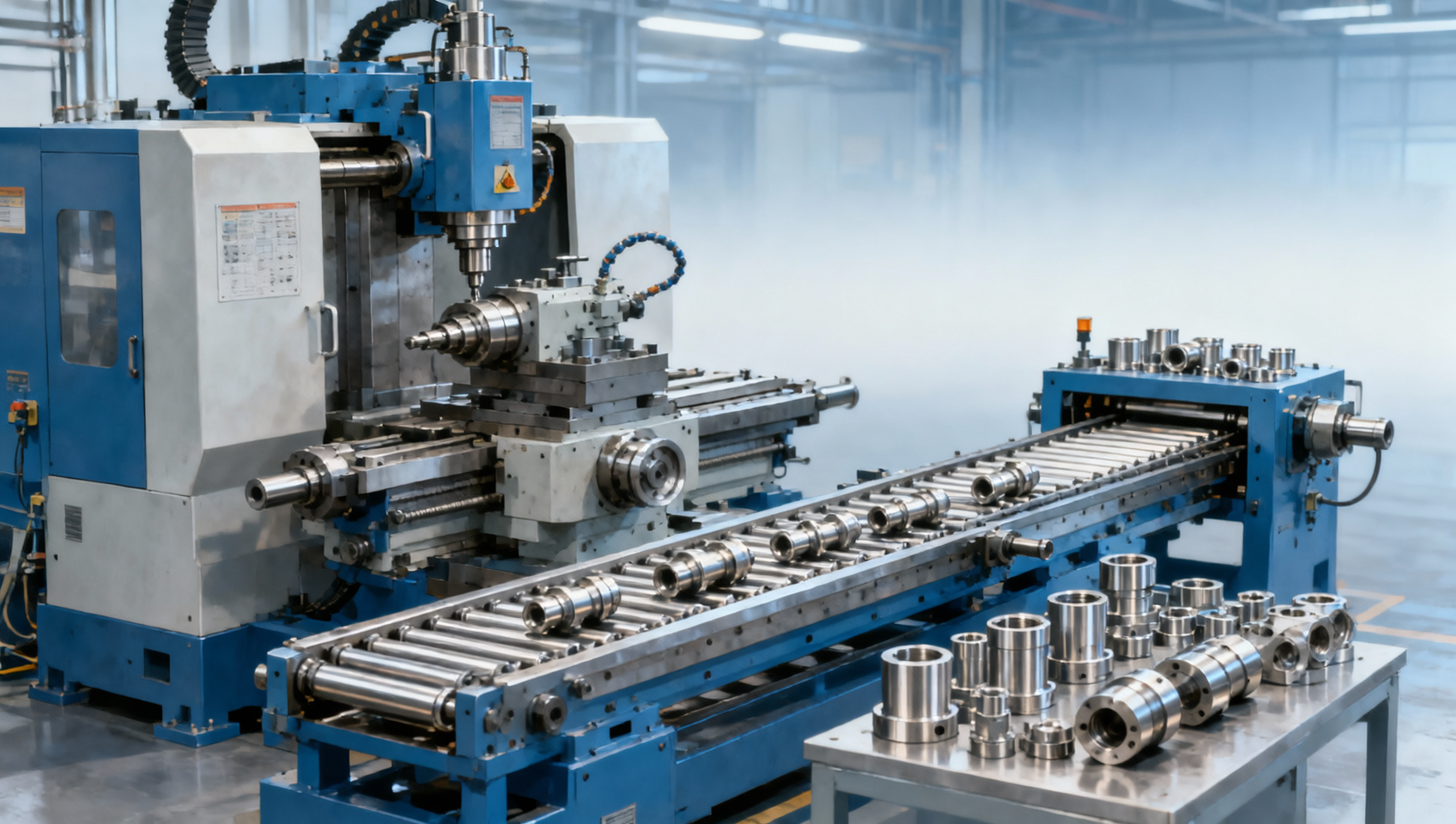
For mid-volume production, an automated lathe can bridge the gap between manual metal machining and fully integrated industrial CNC systems. It improves consistency, shortens cycle times, and supports automated production without the cost of a complete automated production line. For buyers, operators, and decision-makers in the Manufacturing Industry, the real question is whether an industrial lathe delivers enough flexibility, CNC production efficiency, and long-term value to justify the investment.
That question matters most in the production range where batch sizes are too high for manual turning to remain competitive, but not yet large enough to justify a dedicated transfer line or a fully robotic cell. In many factories, this means repeat jobs in the range of 500 to 20,000 parts per year, frequent part-family changes, and strict demands for dimensional repeatability, spindle uptime, and operator efficiency.
An automated lathe can be a practical answer in sectors such as automotive components, energy equipment, electronics hardware, fluid connectors, and industrial machinery. Still, the return depends on more than machine price alone. Setup time, bar feeding, tooling life, tolerances, staffing, maintenance discipline, and digital integration all affect whether the investment creates measurable value.
Where an automated lathe makes sense in mid-volume manufacturing
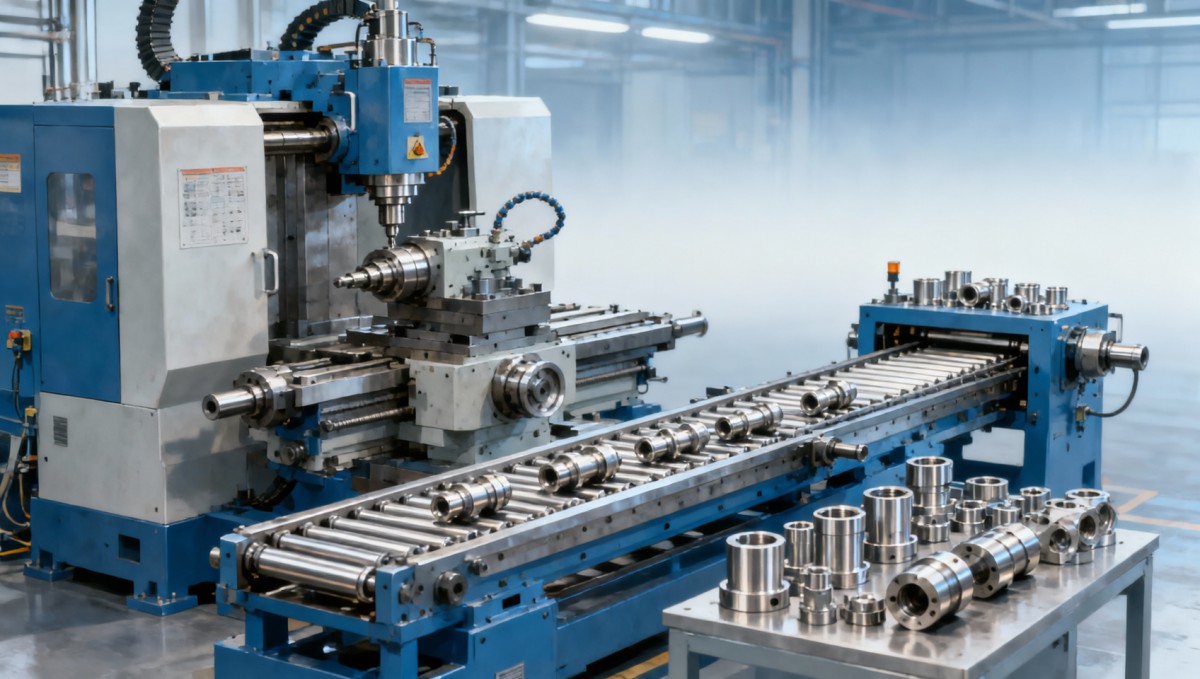
Mid-volume production usually sits in an operational gray zone. A shop may be producing 50 to 500 parts per shift, with tolerances from ±0.01 mm to ±0.05 mm, across several part families. In this range, manual lathes often struggle with labor dependency and variation, while highly specialized automated production lines can be too rigid or too expensive to justify.
An automated lathe is especially valuable when the workpiece is rotational, the process sequence is stable, and cycle time matters. Common examples include shafts, bushings, threaded fittings, valve components, sleeves, sensor housings, and precision discs. These parts usually require repeatable chucking, consistent feed control, and reduced idle handling between operations.
For operators, the benefit is not simply automation for its own sake. The machine reduces repetitive loading tasks, supports more stable process windows, and lowers the chance of dimensional drift caused by inconsistent manual practice. For purchasing teams, the key issue is whether the machine can maintain output over 2 or 3 shifts without excessive rework, overtime, or unplanned stoppage.
For plant managers, mid-volume production often requires balancing 4 goals at once: lower cost per part, stable lead times, manageable staffing, and enough flexibility for product mix changes. An automated lathe becomes more attractive when labor is difficult to hire, delivery windows are under 2 to 4 weeks, and repeatability directly affects downstream assembly quality.
Typical production signs that justify automation
- Cycle times are below 180 seconds, making manual loading a large share of total time.
- Monthly demand is stable for at least 6 to 12 months, even if exact order quantity fluctuates.
- Scrap or rework from operator variation exceeds 2% to 5% on repeat jobs.
- One operator must manage 2 or more machines to stay cost competitive.
- Finished parts require repeatable concentricity, surface finish, or thread quality.
The table below shows where automated lathes usually fit compared with manual turning and highly dedicated automated lines in a practical factory environment.
The practical takeaway is that an automated lathe is not a universal solution. It is most effective when production is repetitive enough to benefit from automation, but flexible enough to avoid locking the factory into a single dedicated line. That makes it highly relevant for growing manufacturers that need productivity without losing agility.
Cost, ROI, and the real economics behind the investment
The purchase price of an automated lathe is only the visible part of the decision. The stronger business case usually comes from reduced labor content, lower scrap, faster cycle times, and greater scheduling reliability. In many mid-volume machining environments, even a 10% to 20% cycle time improvement can create significant annual output gains when the machine runs 250 to 300 days per year.
A typical investment review should include at least 6 cost elements: machine acquisition, tooling package, bar feeder or part handling, setup and training, maintenance parts, and floor space or utility changes. Ignoring these items can lead to unrealistic payback assumptions. For example, a machine that appears affordable may require additional fixturing, coolant filtration, chip management, and power capacity upgrades.
Labor economics are often a decisive factor. If one automated lathe allows a single skilled operator to supervise 2 machines instead of 1, the effective labor cost per part can decline sharply. The effect becomes even more meaningful when the local market has shortages of experienced machinists, or when overtime costs rise during peak delivery periods.
Scrap reduction also matters more than many buyers expect. If a repeat turning job has a scrap rate of 3% on manual handling and automation lowers that to 1%, the savings compound across raw material, machine time, secondary inspection, and delivery risk. In sectors using alloy steel, stainless materials, or precision-finished stock, that 2-point difference can materially affect margin.
A practical ROI checklist
- Measure current cycle time, including loading, unloading, gauging, and stoppages.
- Estimate setup frequency per month and average changeover duration, such as 20, 45, or 90 minutes.
- Calculate scrap and rework costs by part family, not only by total monthly value.
- Model labor use for 1 shift, 2 shifts, and unattended periods where feasible.
- Include maintenance frequency, spare part lead time, and expected tooling consumption.
The comparison below illustrates how buyers should think about economics beyond simple machine price.
In many cases, a realistic payback target for mid-volume automation is between 18 and 36 months, depending on utilization, staffing, and part complexity. If a machine will run only occasional short batches, the economics weaken. If it supports recurring families of parts, stable shifts, and reduced labor pressure, the investment case becomes much stronger.
How to choose the right automated lathe for flexibility and output
Selecting the right automated lathe means matching machine capability to part mix rather than buying the most advanced configuration available. A machine with excessive complexity can raise setup time and maintenance burden, while an underspecified machine can create bottlenecks, poor finish, or unreliable dimensional control. Buyers should begin with 3 questions: what parts will run, how often will setups change, and what tolerance range must be maintained consistently?
For mid-volume work, spindle power, chuck size, maximum turning diameter, bar capacity, and turret configuration matter more than marketing language. If the shop regularly processes bars from 12 mm to 65 mm, or shafts up to 300 mm long, the machine must cover that working range without forcing costly secondary handling. Likewise, if the parts require drilling, threading, grooving, and light milling, a more capable turret can reduce extra operations.
Automation hardware should also be evaluated carefully. A bar feeder, parts catcher, conveyor, probing system, and chip evacuation setup can change the productivity profile dramatically. In some plants, the gain does not come from a faster spindle alone, but from 20 to 40 fewer seconds of non-cutting time per cycle. Over thousands of parts, that difference becomes a major capacity advantage.
Digital compatibility is another selection factor. Many manufacturers now expect machine connectivity for production monitoring, alarm tracking, and maintenance planning. Even if a factory is not yet running a full smart manufacturing system, the ability to capture run time, downtime, and tool life data can support better decisions over the next 3 to 5 years.
Core selection criteria
Machine-side priorities
- Work envelope suited to the actual part range, not only the largest part in the catalog.
- Repeatability aligned with the process target, such as holding ±0.01 mm where needed.
- Tool station capacity that supports complete machining in fewer setups.
- Chip removal and coolant control for materials such as stainless steel or alloy steel.
Production-side priorities
- Changeover time that fits the batch pattern, ideally under 30 to 60 minutes for repeat jobs.
- Operator interface that reduces training friction and setup errors.
- Support availability for spare parts, service response, and process troubleshooting.
- Expandability for feeders, robotic handling, gauging, or integration into a flexible cell.
The table below helps procurement and engineering teams map machine configuration to typical production needs.
A good selection process focuses on fit, not maximum specification. The best automated lathe for mid-volume manufacturing is the one that improves throughput and consistency across your actual part families without making changeovers, maintenance, or operator training unnecessarily difficult.
Implementation risks, operator realities, and maintenance requirements
Buying an automated lathe does not guarantee productivity by itself. Implementation quality often decides whether the machine becomes a profit center or an underused asset. The most common problems appear in the first 30 to 90 days, when tooling choices, feeding reliability, program optimization, and operator habits are still being stabilized.
One frequent mistake is underestimating setup discipline. In mid-volume production, a machine may switch between several part numbers each week. If offsets, tool life settings, workholding verification, and first-piece approval are not standardized, automation can amplify errors faster than manual production. A repeatable setup sheet and a defined start-up checklist are often more valuable than chasing marginal spindle speed gains.
Operator training is equally important. Automated machining still requires judgment in tool wear monitoring, chip behavior, coolant condition, and alarm response. A well-implemented cell usually includes at least 2 levels of training: daily operation for machine users and deeper setup or recovery training for technicians. Without that structure, downtime can increase even when the machine itself is technically capable.
Maintenance planning should be built into the purchase decision. Preventive tasks may include lubrication checks, feeder alignment, chuck or collet inspection, coolant filtration review, and sensor cleaning at daily, weekly, and monthly intervals. For plants running 2 shifts or more, spare wear components and a documented service contact path can shorten recovery time when stoppages occur.
Common implementation risks
- Choosing automation for unstable part demand, then failing to reach the planned utilization level.
- Ignoring bar quality, chip control, or material variation, which causes feeder and process interruptions.
- Relying on one expert operator without cross-training backup staff across 2 or 3 shifts.
- Skipping preventive maintenance until alarms or dimensional drift begin affecting delivery.
- Expecting unattended running before proving process stability for several consecutive batches.
A practical rollout approach
- Start with 1 to 3 repeat part families that already have stable demand and known tooling behavior.
- Validate cycle time, scrap rate, and setup repeatability over multiple production runs.
- Train operators on alarms, inspection points, and tool change timing before expanding output targets.
- Add data tracking for uptime, downtime cause, and scrap category after the first stable month.
When these fundamentals are managed well, an automated lathe can deliver consistent output without the overhead of a full automated production line. When they are ignored, even a strong machine platform may fail to achieve expected CNC production efficiency. The gap between success and disappointment is often operational discipline rather than machine hardware alone.
Frequently asked questions before purchasing an automated lathe
The final decision usually comes down to a few practical questions. Buyers want to know whether the machine will fit their volume profile, operators want to know how difficult it will be to run, and business leaders want to know how quickly it can support delivery reliability and margin improvement. The FAQ below addresses the most common concerns in mid-volume CNC turning projects.
How do I know if my production volume is high enough?
A useful threshold is when the same or similar turned parts repeat often enough that setup learning can be reused and machine utilization stays meaningful. For many shops, that means recurring batches from 100 to 2,000 pieces, repeated monthly or quarterly, or annual demand above roughly 500 to 20,000 parts for a family of components. If every order is completely different, flexibility may matter more than automation.
Is an automated lathe suitable for high-mix production?
It can be, provided the part mix shares enough process similarity. If several components use comparable raw stock sizes, turning strategies, and tool layouts, changeover can remain efficient. If every job requires different workholding, special tooling, and long prove-out time, the benefits shrink. In high-mix environments, setup time under 30 to 60 minutes becomes a critical performance indicator.
What should procurement focus on besides purchase price?
Look at total ownership cost over at least 3 years. That includes tooling, spare parts, service response, maintenance intervals, operator training, feeder reliability, and the availability of technical support. It is also important to ask how long critical replacement parts typically take to ship and whether remote diagnostics are available for faster troubleshooting.
Can one operator run more than one automated lathe?
In many repeat applications, yes, but only after the process is stable. If cycle times are predictable, alarms are infrequent, and part checks are standardized, one trained operator may supervise 2 machines or one machine plus secondary tasks. This should be validated carefully, because complex materials, unstable chips, or tight inspection frequency can reduce practical supervision capacity.
What is the biggest mistake companies make?
The biggest mistake is treating the machine as a stand-alone purchase instead of a process change. Successful automated lathe adoption requires matching the right parts, building setup discipline, training staff, planning maintenance, and monitoring output data. Companies that do this well usually see better consistency, stronger scheduling control, and more confidence in scaling production.
For mid-volume production, an automated lathe is often worth it when your factory needs more stable output, better labor efficiency, and repeatable precision without committing to a fully dedicated automated production line. The best results come when the machine is selected around real part families, realistic utilization, disciplined setup practice, and dependable service support.
If you are evaluating CNC machine tools, industrial lathe options, or automated production upgrades for turning operations, now is the right time to compare process requirements, expected payback, and implementation readiness. Contact us to discuss your application, get a tailored solution, and explore the right automation path for your production goals.
PREVIOUS ARTICLE
NEXT ARTICLE
Recommended for You
 Metal machining costs keep rising. Where is the waste?CNC Machining Technology Center
 What slows metal machining even when machines look busy?CNC Machining Technology Center
 Industrial CNC uptime drops for simple reasons too oftenMachine Tool Industry Editorial Team
 When does industrial CNC need an upgrade, not a repair?Machine Tool Industry Editorial Team
 CNC industrial demand is shifting toward smaller batch runsManufacturing Market Research Center
 Why CNC industrial projects miss deadlines after quotingCNC Machining Technology Center

Aris Katos
Future of Carbide Coatings
15+ years in precision manufacturing systems. Specialized in high-speed milling and aerospace grade alloy processing.
▶
Is an automated lathe worth it for mid-volume production?Machine Tool Industry Editorial Team▶
Automated production looks efficient, but where do delays start?Machine Tool Industry Editorial Team▶
Automated production works best after these bottlenecks are fixedMachine Tool Industry Editorial Team▶
Why an Automated Production Line still stalls after commissioningMachine Tool Industry Editorial Team▶
Industrial Automation projects fail when manual steps stay hiddenMachine Tool Industry Editorial Team
Mastering 5-Axis Workholding Strategies
Join our technical panel on Nov 15th to learn about reducing vibrations in thin-wall components.

Providing you with integrated sanding solutions
Before-sales and after-sales services
Comprehensive technical support