• Global CNC market projected to reach $128B by 2028 • New EU trade regulations for precision tooling components • Aerospace deman
NYSE: CNC +1.2%LME: STEEL -0.4%

Why an Automated Production Line still stalls after commissioning
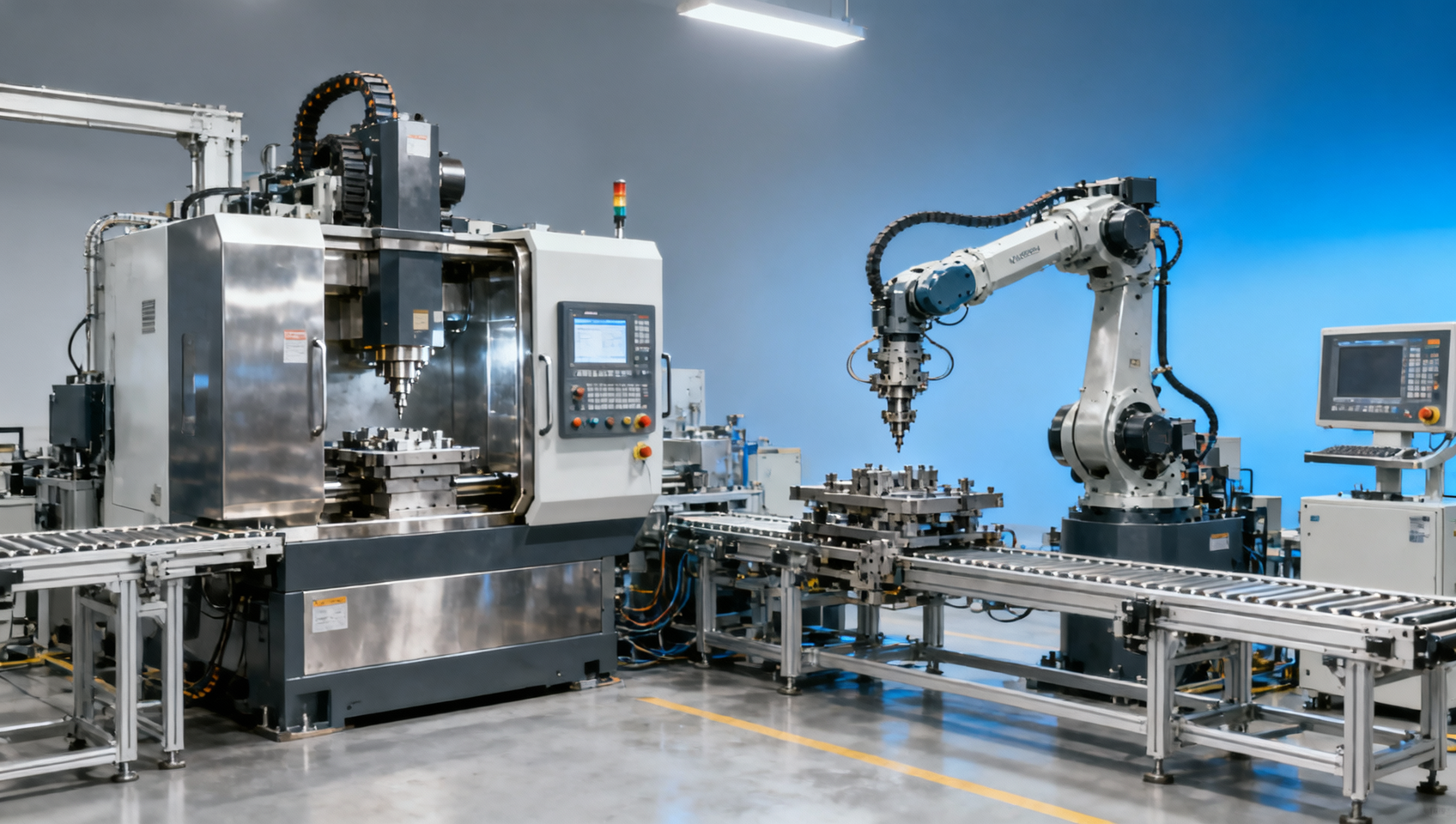
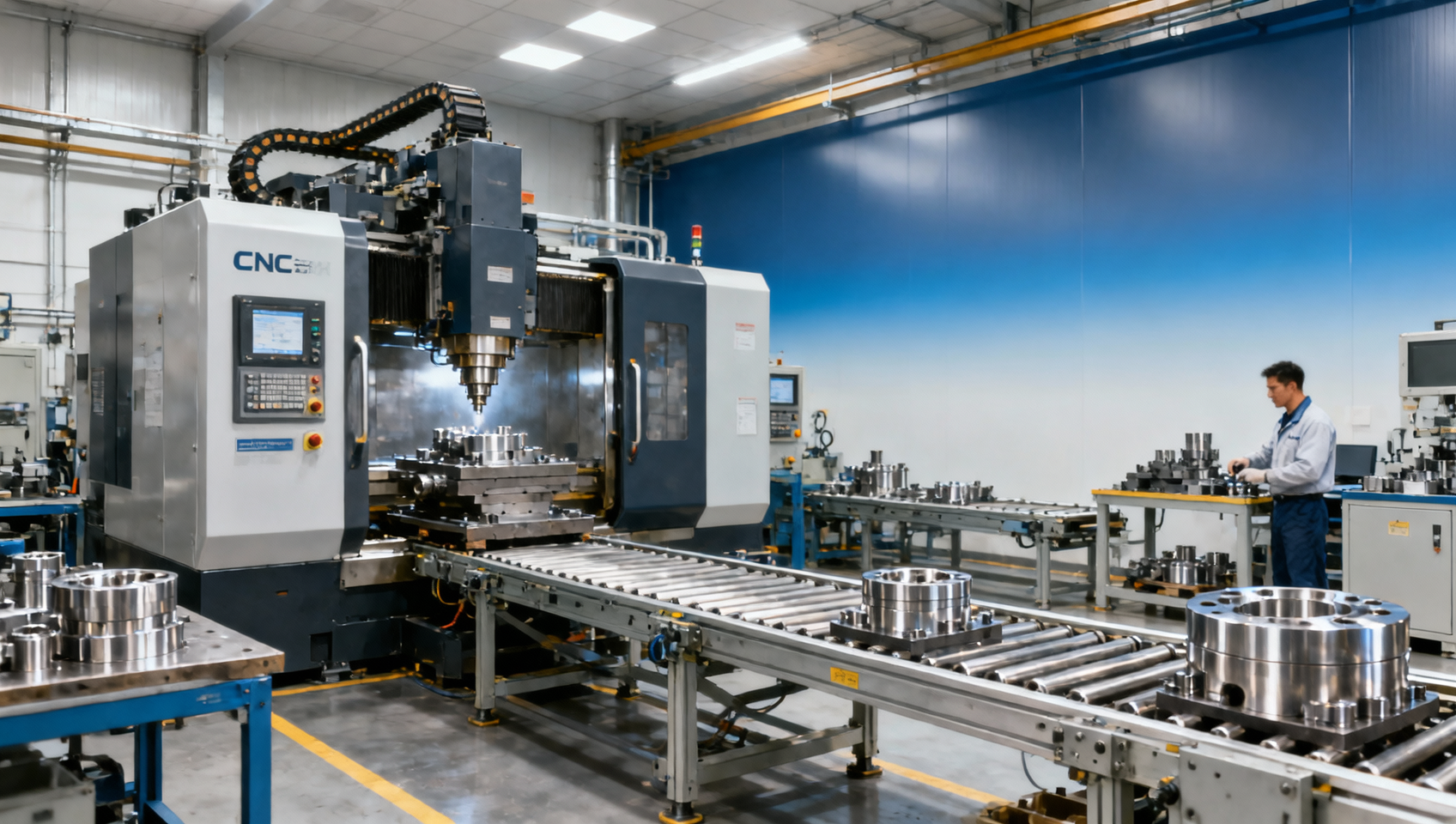
Even after commissioning, an Automated Production Line can still stall when Industrial Automation, CNC Programming, machine integration, or the Production Process are not fully aligned. In today’s Global Manufacturing environment, from metal machining and CNC milling to automated lathe and industrial CNC systems, hidden bottlenecks can reduce efficiency, quality, and output. This article explores why these issues persist and how manufacturers can restore stable CNC production.
For researchers, operators, procurement teams, and plant decision-makers, the problem is rarely a single machine failure. In many CNC production environments, the line passes commissioning tests, reaches the first batch target, and then starts losing rhythm within 2 to 8 weeks. Alarm frequency rises, cycle time drifts upward, and overall equipment effectiveness declines even though each device appears technically qualified on its own.
This gap between successful commissioning and stable mass production is common in automated machining, precision manufacturing, and flexible assembly. The root cause usually sits at the intersection of process design, machine loading, tooling stability, program logic, operator response, and maintenance discipline. Understanding these links is essential before investing in upgrades, spare parts, or a new line expansion.
Why a commissioned line can still lose stability in real production
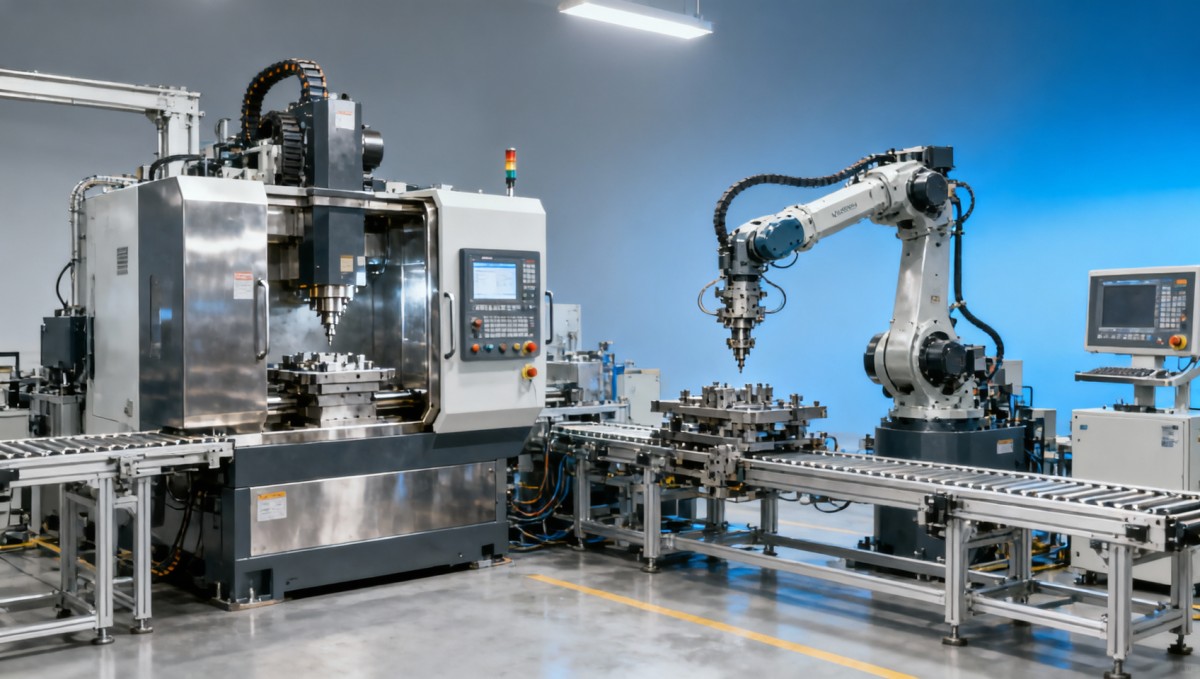
Commissioning typically proves that a production line can run, not that it can run consistently under changing orders, material variation, and continuous shift operation. A line may pass a 24-hour or 72-hour acceptance trial, yet struggle during 3-shift operation over 30 to 90 days. In CNC machining, this difference matters because thermal drift, tool wear, chip evacuation, and fixture repeatability become more visible only after sustained throughput.
Another common issue is that machine integration is verified at the signal level, while process integration is not fully validated. A robot may hand off parts correctly, a conveyor may index on time, and an automated lathe may receive the start command, but upstream burrs, inconsistent blank dimensions, or unstable clamping force can still trigger downstream stoppages. In practice, line-level stability depends on the slowest and least repeatable process node, not the most advanced machine on the line.
Production scheduling also changes the operating conditions after commissioning. During acceptance, the line often runs one part family with experienced engineers nearby. In commercial production, manufacturers may switch among 3 to 10 part variants, shorten batch sizes, and rely on standard shift personnel. That introduces more offsets, recipe changes, fixture swaps, and parameter risks, especially in multi-axis machining centers and mixed CNC milling cells.
The table below highlights the most frequent gaps between commissioning performance and long-run production behavior in automated production lines used for precision machining and industrial CNC applications.
The key takeaway is simple: a commissioned line is only the starting point. Stable automated production requires proof under normal variation, not only under ideal startup conditions. Plants that treat commissioning as the finish line often face recurring micro-stoppages, lower first-pass yield, and hidden cost escalation within the first quarter of operation.
Three signs the issue is systemic rather than random
- Short stops occur more than 5 to 10 times per shift, even when no major machine fault is recorded.
- Cycle time fluctuates by more than 8% to 12% between morning and night shifts.
- Quality defects appear at handoff points, fixture stations, or after tool life reaches 60% to 80% of its target.
The most common technical causes: process mismatch, programming gaps, and integration blind spots
In many automated production line failures, the first cause is process mismatch. A CNC machine tool may be selected for required spindle speed, axis travel, and precision class, yet the actual part process includes unstable stock allowance, difficult chip formation, or a clamping sequence that was never optimized for automation. This is especially common in metal machining lines where roughing and finishing are packed too closely into one takt window.
The second cause is incomplete CNC programming adaptation. A program that works well on a standalone machine may not be robust enough for an industrial CNC line that must handle automatic loading, probing, in-process gauging, and exception recovery. Missing safe positions, poor alarm branching logic, and weak retry routines can turn a small part placement variation into a full line stop. In high-volume applications, even a 12-second recovery loss repeated 40 times per shift becomes a major output gap.
The third cause is machine integration blind spots. Device-level communication may be in place, but command timing, handshake delays, and sensor thresholds are often set too narrowly. For example, if a part-present sensor has a detection tolerance of only 1 to 2 mm in an environment with oil mist and chip carryover, false negatives increase sharply. Similarly, robot gripping force that is adequate for dry components may fail when surfaces are coated with coolant residue.
Below is a practical breakdown of technical causes and the production symptoms they usually create in CNC milling, automated lathe, and flexible machining lines.
This table shows why solving stalls with only spare parts or software patches is rarely enough. When process engineering, tooling, sensors, and control logic are not reviewed together, the same line can keep stopping for different immediate reasons while the root cause remains unchanged.
Where procurement and engineering often underestimate risk
Procurement teams usually compare spindle power, axis count, and quoted takt time, but they may not ask whether the supplier validated part families across tolerance variation, coolant conditions, and shift-level maintenance capability. For a production line expected to run 16 to 24 hours per day, these factors are as important as machine specifications.
High-risk assumptions
- Assuming successful FAT or SAT means the line is ready for all future part variants.
- Assuming one fixed tool life value applies to every material lot and coolant condition.
- Assuming alarm handling can be learned informally without a documented escalation path.
Operational causes after startup: people, maintenance, and changeover discipline
Not all line stalls are technical design flaws. Many appear after startup because operating discipline changes once the project team leaves. A production line that requires 6 daily checks may receive only 2 or 3 during busy periods. Coolant concentration may drift outside the recommended range, lubrication intervals may stretch from every shift to every 3 shifts, and fixture cleaning may become inconsistent. In precision manufacturing, these small deviations accumulate quickly.
Operator training is another major factor. In automated CNC environments, operators do not only load parts; they interpret alarms, confirm safe restart conditions, check clamp cleanliness, verify tool counters, and respond to robot or sensor exceptions. If restart training is weak, a 3-minute micro-stop can become a 20-minute line interruption. Plants running multiple product families need standard work instructions for each changeover, not only a general machine manual.
Changeover discipline is especially important in lines that support medium-volume mixed production. When fixture replacement, offset loading, or probe calibration is rushed, the line may restart with hidden parameter errors. A typical warning sign is that the first 5 to 15 pieces after changeover have higher rejection or manual intervention rates than the steady-state run. That usually indicates process control gaps rather than isolated human mistakes.
A structured daily routine reduces these risks. The list below is widely applicable for CNC machine tools, automated lathes, robotic transfer cells, and flexible production lines in automotive, aerospace components, energy equipment, and electronics housings.
- Verify coolant concentration, air pressure, lubrication status, and chip conveyor condition at the start of every shift.
- Inspect 3 to 5 critical fixture surfaces and clamp points for chips, burrs, and wear before batch start.
- Review alarm history at least once every 24 hours to identify repeating stops shorter than 2 minutes.
- Confirm tool life counters and replacement thresholds before the line enters unattended or night-shift operation.
- Run a first-off validation after every changeover, including dimensions, surface quality, and robot placement confirmation.
When these routines are missing, management often sees only output loss. The deeper issue is that the line has no stable operating window. Once standard work, maintenance timing, and exception handling are fixed, many plants recover 5% to 15% throughput without replacing major equipment.
A practical maintenance threshold for stable output
For many automated production lines, preventive maintenance should be split into 3 levels: per shift checks, weekly inspections, and monthly accuracy verification. Critical items include backlash trend, tool magazine cleanliness, robot gripper wear, coolant filtration, and sensor contamination. If the line produces high-precision parts with tolerances around ±0.01 mm to ±0.05 mm, skipping monthly verification can quickly affect first-pass yield.
How to diagnose and recover a stalled automated production line
The fastest way to recover line stability is to avoid treating every stoppage as an isolated machine event. Instead, build a line-level diagnosis map using three categories: starvation, blockage, and quality-triggered interruption. Starvation means the next station waits for parts, blockage means the previous station cannot unload, and quality-triggered interruption means the line technically runs but stops due to reject accumulation, probe alarms, or manual inspection holds.
A useful first step is to collect 7 to 14 days of stop data and sort events by duration and frequency. In many machining lines, 70% or more of lost time comes from small repetitive events under 10 minutes rather than catastrophic breakdowns. That is why line recovery often depends less on major overhaul and more on eliminating recurring minor failures at one or two bottleneck stations.
During diagnosis, manufacturers should check whether actual cycle time differs from design takt time by more than 5%, whether tool replacement timing matches cutting reality, and whether handshakes between robot, PLC, and CNC controller include safe retries. It is also important to compare day shift and night shift performance. If output differs by 10% or more under the same order mix, training or standard operating discipline is likely involved.
The following workflow provides a practical recovery path for plants dealing with unstable CNC production after commissioning.
This method works because it links machine data, process behavior, and human response. In many cases, restoring stable CNC production is not about changing the entire line architecture. It is about tightening a few weak interfaces and making recovery predictable across all shifts.
When to escalate to supplier or integrator support
Escalation is justified when repeat stoppages involve PLC logic, robot path conflicts, spindle thermal behavior, probing repeatability, or unresolved communication faults. If the same stop class appears more than 3 times per week after internal correction attempts, the issue should be documented and reviewed jointly with the equipment supplier, line integrator, and production engineering team.
Selection and improvement priorities for buyers and decision-makers
For procurement managers and plant leaders, the lesson is clear: purchasing an automated production line is not only about initial capability but also about sustainable stability. Before approving a new line, expansion project, or retrofit, buyers should request evidence of process validation under realistic conditions, including mixed part production, changeover logic, maintenance requirements, and operator training scope. A lower quoted price can become expensive if the line loses 8% to 12% output every month.
It is also wise to evaluate support depth. A qualified supplier or integrator should explain how they handle CNC programming revisions, tooling optimization, line balancing, spare parts lead time, and remote troubleshooting response. In global manufacturing projects, service speed matters. Waiting 2 to 3 weeks for a control revision or a custom fixture correction can severely affect delivery commitments.
For existing lines, decision-makers should prioritize investments that directly remove bottlenecks. These may include better fixture repeatability, improved chip management, upgraded probing logic, alarm analytics, or structured training for the top 10 stop scenarios. Large capital replacement is justified only when the core process window is too narrow for the target part family or required capacity.
A disciplined supplier evaluation checklist helps reduce post-commissioning surprises in CNC machining, precision machine tool projects, and flexible automation cells.
- Ask for validation criteria beyond acceptance runtime, including part variation and changeover repeatability.
- Review expected preventive maintenance frequency, spare parts availability, and recommended critical stock list.
- Confirm whether training includes operators, maintenance staff, and process engineers, not only startup supervisors.
- Check how the line handles alarm recovery, retry logic, and safe restart after robot or sensor interruption.
- Require a defined post-launch support window, such as the first 30, 60, or 90 production days.
FAQ for companies facing repeated line stoppages
How long should a line be observed before it is considered stable?
A practical stability review usually needs at least 2 to 4 weeks of normal production, not only a short acceptance run. If the line supports multiple part numbers, the observation should include at least 2 complete changeover cycles and data from every shift.
Which KPI is more useful than output alone?
Track micro-stop frequency, first-pass yield, mean recovery time, and cycle time deviation. Output can hide instability if extra labor or overtime is used to compensate for stoppages.
Is it better to modify the program or change hardware first?
Start with data. If the issue is caused by timing, retries, offset handling, or restart logic, software changes may solve it quickly. If the root cause is poor clamping, unreliable sensing, thermal drift, or chip evacuation, hardware or process changes are usually required.
An Automated Production Line that stalls after commissioning is not unusual, but it should never be accepted as normal. In CNC machining and precision manufacturing, stable output depends on more than machine installation. It requires alignment among Industrial Automation, CNC Programming, process capability, maintenance routines, operator response, and supplier support.
If your line is facing recurring stoppages, rising alarm frequency, or unstable takt time, a structured review can reveal whether the bottleneck lies in tooling, integration, process logic, or daily operation. The sooner these issues are diagnosed, the lower the cost of scrap, rework, and lost capacity.
To evaluate a current CNC production line, compare retrofit options, or plan a more reliable automation project, contact us to get a tailored solution, discuss your production challenges, and explore more practical manufacturing improvement strategies.
Recommended for You
 What causes chatter in metal machining and how to stop itCNC Machining Technology Center
 Industrial CNC lead times are shifting in 2026Manufacturing Market Research Center
 When CNC industrial upgrades cut output instead of raising itMachine Tool Industry Editorial Team
 Automated lathe errors that often start with bar feedingMachine Tool Industry Editorial Team
 Why CNC metalworking scrap rates rise on thin wall partsCNC Machining Technology Center
 CNC cutting speed or finish quality: where losses beginCNC Machining Technology Center

Aris Katos
Future of Carbide Coatings
15+ years in precision manufacturing systems. Specialized in high-speed milling and aerospace grade alloy processing.
▶
Automated production works best after these bottlenecks are fixedMachine Tool Industry Editorial Team▶
Why an Automated Production Line still stalls after commissioningMachine Tool Industry Editorial Team▶
Industrial Automation projects fail when manual steps stay hiddenMachine Tool Industry Editorial Team▶
When does automated production line ROI break even — and what delays it most?Machine Tool Industry Editorial Team▶
Why some CNC production lines stall at 73% OEE despite full automationMachine Tool Industry Editorial Team
Mastering 5-Axis Workholding Strategies
Join our technical panel on Nov 15th to learn about reducing vibrations in thin-wall components.

Providing you with integrated sanding solutions
Before-sales and after-sales services
Comprehensive technical support