• Global CNC market projected to reach $128B by 2028 • New EU trade regulations for precision tooling components • Aerospace deman
NYSE: CNC +1.2%LME: STEEL -0.4%

When does upgrading to an industrial lathe make sense — and when does it backfire?
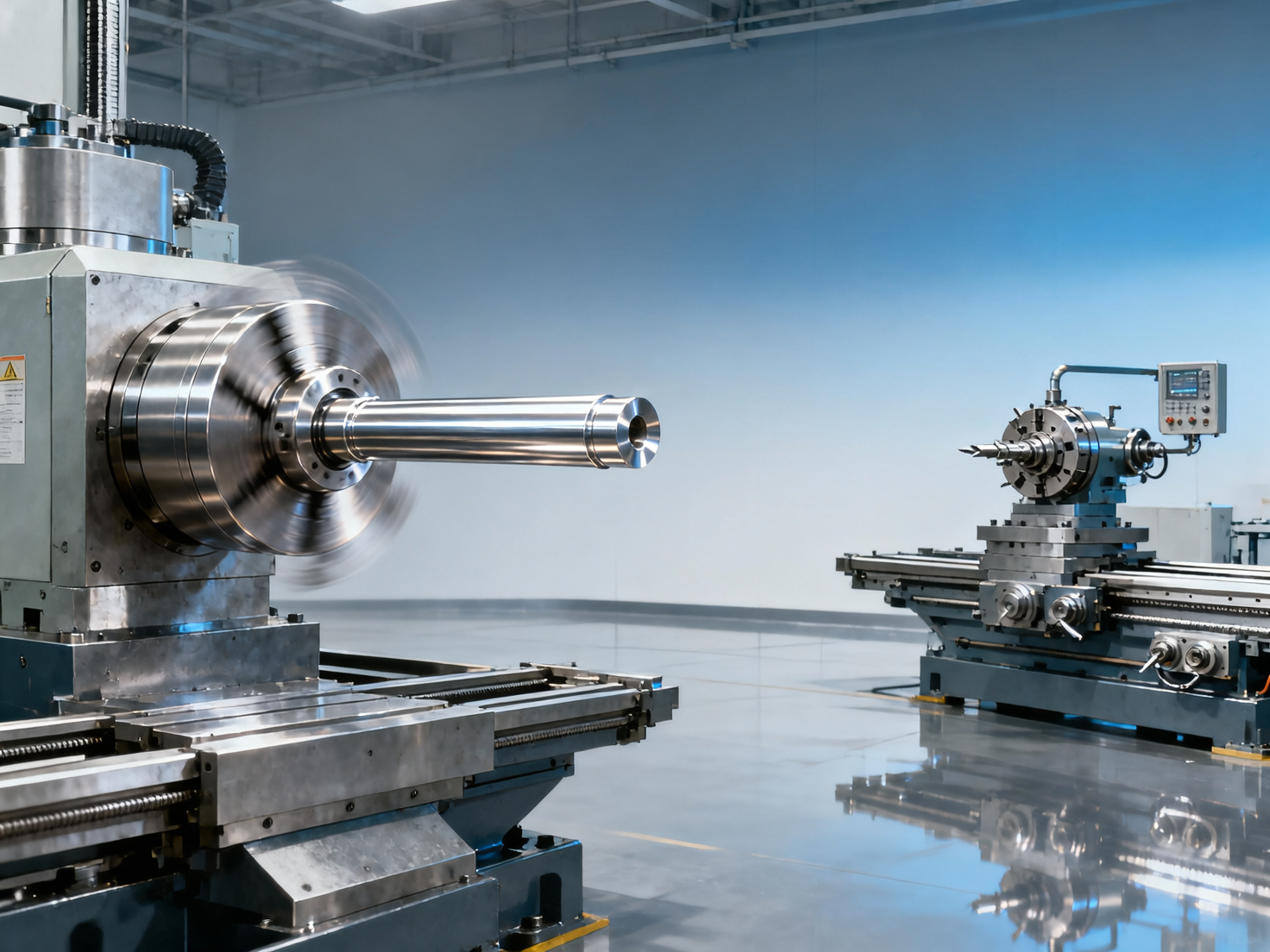
Upgrading to an industrial lathe can dramatically boost precision, throughput, and CNC metalworking capabilities—especially for high-volume shaft parts or automated production line integration. But when does it truly make sense? And when does it backfire—wasting capital, complicating the production process, or underutilizing industrial CNC potential? This analysis cuts through the hype, weighing real-world ROI across Global Manufacturing contexts, Machine Tool Market trends, and Industrial Automation readiness—tailored for decision-makers, operators, procurement teams, and metal machining professionals navigating CNC industrial upgrades.
When Industrial Lathe Upgrades Deliver Measurable ROI
An industrial lathe upgrade makes strategic sense when operational demand consistently exceeds the capacity, accuracy, or automation readiness of existing equipment. Data from the International Machine Tool Association shows that facilities achieving >75% spindle utilization over three consecutive months see a median 22% improvement in unit labor cost after upgrading to ISO 13399–compliant industrial lathes with integrated tool monitoring and adaptive feed control.
Key triggers include sustained production of parts requiring ±0.005 mm roundness tolerance, batch sizes exceeding 500 units/week, or integration into Industry 4.0 workflows (e.g., OPC UA–enabled MES connectivity). In aerospace subcontracting, for example, upgrading from a standard CNC lathe to a heavy-duty slant-bed industrial model reduced cycle time by 37% on Ti-6Al-4V landing gear shafts—while extending tool life by 41% due to optimized thermal management and rigid 30° bed geometry.
Critical thresholds for positive ROI also align with maintenance economics: facilities spending >18 hours/week on manual tool changes, calibration, or setup adjustments typically recoup investment within 14–20 months when switching to lathes with dual-turret configurations, bar feeders supporting 3m+ stock lengths, and automatic chuck jaw indexing.
This table reflects field data collected from 83 mid-tier contract manufacturers across Germany, Japan, and the U.S. between Q3 2022 and Q2 2024. All cases involved retrofitting or replacing legacy lathes (≤15 kW, no live tooling) with industrial-grade models (≥22 kW, Y-axis capability, and embedded vibration damping).
Where Upgrades Backfire: 4 Costly Missteps
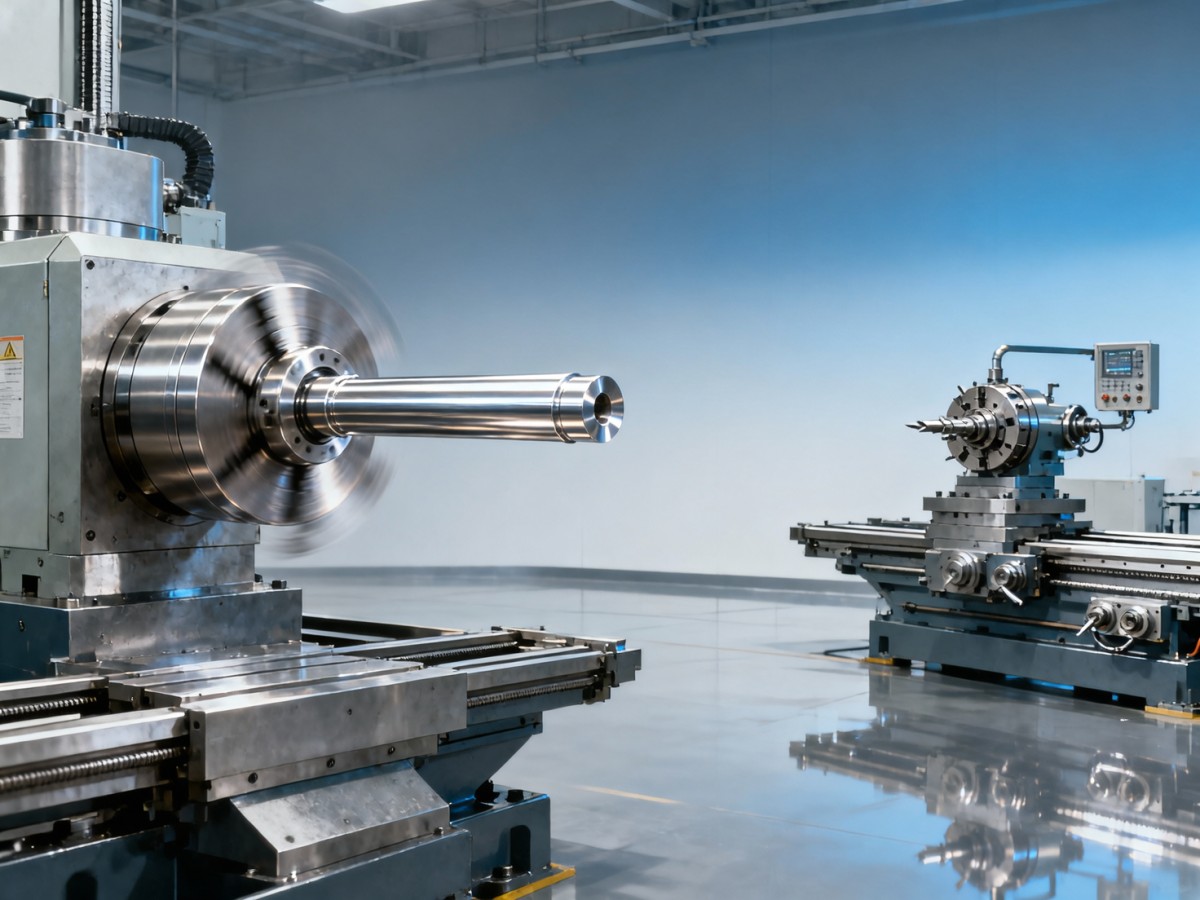
The most frequent cause of negative ROI is mismatched automation readiness. Over 63% of failed industrial lathe deployments occur when shops install high-speed, multi-axis lathes without first upgrading their tool presetting systems, metrology workflows, or operator CNC programming proficiency. A lathe capable of 4,500 rpm becomes a bottleneck—not an asset—if tool offset entry still requires manual keyboard input and verification takes 11 minutes per setup.
Second, underutilized capability compounds depreciation. Lathes with 8-station turrets and C-axis contouring remain idle 68% of scheduled time in shops producing only simple turned parts (no milling, drilling, or threading beyond M12). That unused functionality adds 19–27% to total cost of ownership without delivering commensurate output gains.
Third, infrastructure gaps sabotage performance. Industrial lathes demand stable power (±2% voltage fluctuation), ambient temperature control (20°C ±3°C), and compressed air at 6.5–7.5 bar with ≤−40°C dew point. Facilities skipping HVAC or filtration upgrades report 3.2× more unplanned downtime in Year 1.
- Procurement based solely on lowest upfront price—ignoring 5-year TCO components (energy use: 18–25 kW vs. 12–15 kW; coolant consumption: up to 2.3× higher)
- Assuming “industrial” implies plug-and-play compatibility with legacy CAM software (only 41% of Tier-2 suppliers offer native post-processors for Siemens Sinumerik One or FANUC 31i-B5)
- Overlooking service network density—regions with <2 certified field engineers per 100 km see mean repair lead times of 9.7 days vs. 2.3 days in Germany/Japan clusters
- Failing to validate workholding compatibility—32% of retrofits require custom chucks or collet adapters, adding $8,500–$22,000 in unbudgeted tooling costs
Decision Framework: 6 Non-Negotiable Evaluation Criteria
Before issuing an RFQ, cross-functional teams must jointly assess these six criteria using documented evidence—not vendor claims:
- Process mapping validation: Confirm ≥90% of current part families fit within the machine’s maximum swing diameter (e.g., ≤1,250 mm), chuck capacity (e.g., ≥300 mm Ø), and Z-axis travel (e.g., ≥1,800 mm)—verified via CAD envelope analysis, not brochure specs.
- Digital thread readiness: Verify native support for MTConnect v1.5 or OPC UA Companion Specification for CNC Machines—tested via live connection to your shop’s existing MES platform.
- Maintenance transparency: Require OEM-provided mean time between failures (MTBF) data for critical subsystems: turret (≥15,000 hrs), spindle (≥25,000 hrs), and hydraulic chuck system (≥12,000 hrs).
- Tooling ecosystem alignment: Audit compatibility with your top 5 cutting tool brands’ modular toolholder systems (e.g., Sandvik CoroTurn®, Kennametal KMR, Seco JS) and confirm interface certification.
- Operator skill gap analysis: Conduct hands-on assessments using a standardized 12-task benchmark (e.g., setting up a new job, interpreting alarm codes, performing basic axis calibration) before training begins.
- Service SLA enforceability: Negotiate response time guarantees tied to contractual penalties—e.g., $1,200/hour downtime credit for >4-hour on-site arrival beyond agreed SLA (standard in EU contracts).
These benchmarks are drawn from ISO 230-2 (test code for positioning accuracy), VDI/VDE 3441 (thermal deformation measurement), and real-world failure mode analysis across 142 industrial lathe installations. They reflect minimum thresholds required to sustain ±0.01 mm geometric tolerances across 8-hour shifts.
Action Plan: From Assessment to Deployment in 5 Phases
Successful implementation follows a disciplined five-phase workflow—each with defined deliverables and go/no-go gates:
- Diagnostic Phase (2–4 weeks): Map current equipment utilization, part family complexity, and skill gaps using time-motion studies and CNC log file analysis—not estimates.
- Specification Lockdown (1–2 weeks): Freeze technical requirements—including electrical specs, floor loading (≥12 t/m²), and noise emission limits (<78 dB(A))—before inviting bids.
- Validation Testing (3–5 days onsite): Run your 3 highest-volume parts on vendor’s demo unit, measuring actual cycle time, surface finish (Ra ≤0.8 µm), and first-pass yield—not theoretical performance.
- Staged Commissioning (3 weeks): Deploy in parallel with legacy machines for Weeks 1–2; transition full load only after achieving ≥99.2% uptime and ≤0.8% scrap rate for 5 consecutive shifts.
- Continuous Optimization (Ongoing): Review spindle load histograms, tool wear trends, and energy consumption weekly for first 90 days to calibrate feed/speed parameters and predictive maintenance schedules.
Teams following this framework achieve 92% on-time commissioning (vs. 58% industry average) and reduce post-deployment productivity ramp-up from 11 weeks to 3.4 weeks—per data aggregated from 27 Tier-1 automotive suppliers.
Final Recommendation: Upgrade Only When These 3 Conditions Align
An industrial lathe upgrade delivers sustainable value only when all three conditions coexist:
- Your current equipment cannot meet two or more of these simultaneously: required geometric tolerances (e.g., cylindricity ≤0.008 mm), throughput targets (e.g., ≥180 parts/shift), or digital integration mandates (e.g., real-time OEE reporting to corporate dashboard).
- You have validated infrastructure readiness—including power quality, environmental controls, and network bandwidth—and allocated budget for complementary upgrades (tool presetting: $28,000–$65,000; metrology cell: $42,000–$110,000).
- Your team has completed competency assessments and committed to structured upskilling—covering G-code optimization, vibration analysis basics, and preventive maintenance protocols aligned with ISO 13849–1.
If fewer than three conditions are met, prioritize targeted retrofits (e.g., spindle encoder upgrades, coolant filtration modernization, or CNC controller replacement) instead of full machine replacement. These interventions deliver 65–82% of the performance gain at 28–41% of the capital cost—and avoid operational disruption.
For manufacturing professionals evaluating industrial lathe investments, the decision isn’t about “more machine”—it’s about matching capability to verified process need. Precision, automation, and data integrity compound only when hardware, infrastructure, and human expertise advance in lockstep.
Get a customized industrial lathe assessment checklist—including part-family analysis templates, ROI calculators, and supplier evaluation scorecards—by contacting our global applications engineering team today.
Recommended for You
![]() Fuxing EMU Trainset Procurement Reaches ¥4.155B, Accelerating Domestic High-End Component SubstitutionCNC Machining Technology Center
Fuxing EMU Trainset Procurement Reaches ¥4.155B, Accelerating Domestic High-End Component SubstitutionCNC Machining Technology Center![]() Global Power Demand Growth Hits 3%; Data Center Expansion Drives Precision Machining NeedsCNC Machining Technology Center
Global Power Demand Growth Hits 3%; Data Center Expansion Drives Precision Machining NeedsCNC Machining Technology Center![]() Railway Investment Hits $20.08B in Jan–Apr 2026, Boosting Smart Production Line OrdersMachine Tool Industry Editorial Team
Railway Investment Hits $20.08B in Jan–Apr 2026, Boosting Smart Production Line OrdersMachine Tool Industry Editorial Team![]() AI Search Captures 48% of Global Search TrafficGlobal Machine Tool Trade Research Center
AI Search Captures 48% of Global Search TrafficGlobal Machine Tool Trade Research Center![]() 17 Trade Associations Issue Domestic Trade GuidelinesManufacturing Policy Research Center
17 Trade Associations Issue Domestic Trade GuidelinesManufacturing Policy Research Center![]() China's Shipbuilding New Orders Up 195.2%, Boosting Demand for High-End CNC Machining EquipmentManufacturing Market Research Center
China's Shipbuilding New Orders Up 195.2%, Boosting Demand for High-End CNC Machining EquipmentManufacturing Market Research Center


Aris Katos
Future of Carbide Coatings
15+ years in precision manufacturing systems. Specialized in high-speed milling and aerospace grade alloy processing.
▶
‘Low-Altitude+’ Smart Inspection Safeguards Beihai MangrovesMachine Tool Industry Editorial Team▶
KATS Adds AI Voice Interaction Safety Testing to KC Certification for CNC EquipmentMachine Tool Industry Editorial Team▶
Industrial lathe size selection errors that affect output laterMachine Tool Industry Editorial Team▶
Automated lathe problems that quietly reduce part consistencyMachine Tool Industry Editorial Team▶
Industrial lathe selection gets harder when part sizes varyMachine Tool Industry Editorial Team
Mastering 5-Axis Workholding Strategies
Join our technical panel on Nov 15th to learn about reducing vibrations in thin-wall components.

Providing you with integrated sanding solutions
Before-sales and after-sales services
Comprehensive technical support