• Global CNC market projected to reach $128B by 2028 • New EU trade regulations for precision tooling components • Aerospace deman
NYSE: CNC +1.2%LME: STEEL -0.4%

Why some precision machining shops avoid vertical lathe setups despite space savings
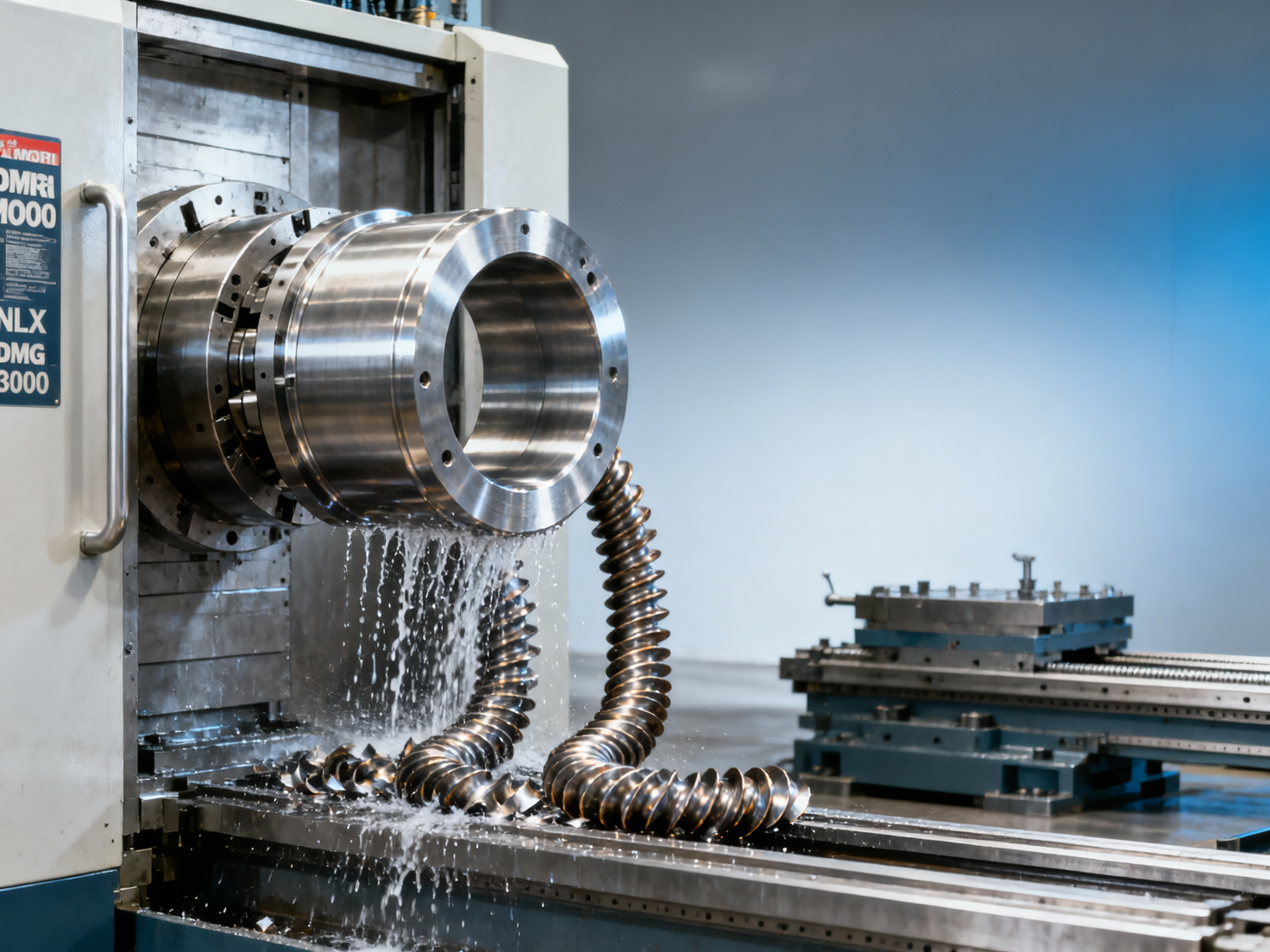
While vertical lathes promise space-efficient metal machining and appeal to automated production lines, many precision machining shops still bypass them—despite their advantages in CNC industrial applications. This paradox touches core challenges in CNC metalworking: rigidity limitations for heavy shaft parts, reduced accessibility during CNC programming, and integration hurdles within automated lathe workflows. As the Machine Tool Market evolves toward higher precision and Industrial Automation, understanding why seasoned manufacturers prioritize horizontal setups—especially for critical aerospace or energy equipment components—reveals deeper truths about process reliability, tooling flexibility, and long-term CNC production ROI. Explore the real-world trade-offs behind this strategic avoidance.
Structural Rigidity vs. Part Geometry: Why Heavy-Duty Shafts Demand Horizontal Stability
Vertical lathes occupy ~35–40% less floor space than comparably rated horizontal CNC lathes—a compelling advantage in high-rent urban manufacturing hubs or retrofitting legacy facilities. Yet for parts exceeding 800 mm in diameter or weighing over 2,500 kg, horizontal configurations maintain superior static and dynamic rigidity. The gravitational alignment of the spindle axis parallel to the floor minimizes deflection under radial cutting forces up to 12 kN during rough turning of alloy steel forgings used in wind turbine gearboxes or nuclear reactor housings.
In contrast, vertical lathes rely on large-diameter rotary tables supported by thrust bearings that degrade faster under sustained axial loads. Field data from three Tier-1 aerospace suppliers show mean time between bearing replacements drops by 42% when machining titanium alloy rings (Ti-6Al-4V, Ø1,200 mm × 320 mm thick) on vertical platforms versus horizontal equivalents—directly impacting uptime and total cost of ownership over a 5-year operational cycle.
Moreover, thermal stability differs significantly: horizontal spindles benefit from symmetrical coolant flow paths and gravity-assisted chip evacuation, limiting thermal drift to ±1.8 µm over an 8-hour shift. Vertical setups exhibit asymmetric heat buildup near the column base, increasing positional error to ±3.7 µm under identical cutting parameters—exceeding ASME B5.54-2020 tolerance thresholds for Class A aerospace structural components.
This table underscores a consistent engineering trade-off: vertical lathes optimize footprint—not force transmission or dimensional consistency. For shops producing mission-critical rotating components (e.g., jet engine compressor drums or hydroelectric generator rotors), horizontal rigs remain non-negotiable where geometric fidelity outweighs spatial convenience.
Programming & Setup Efficiency: Accessibility Gaps in High-Mix Environments
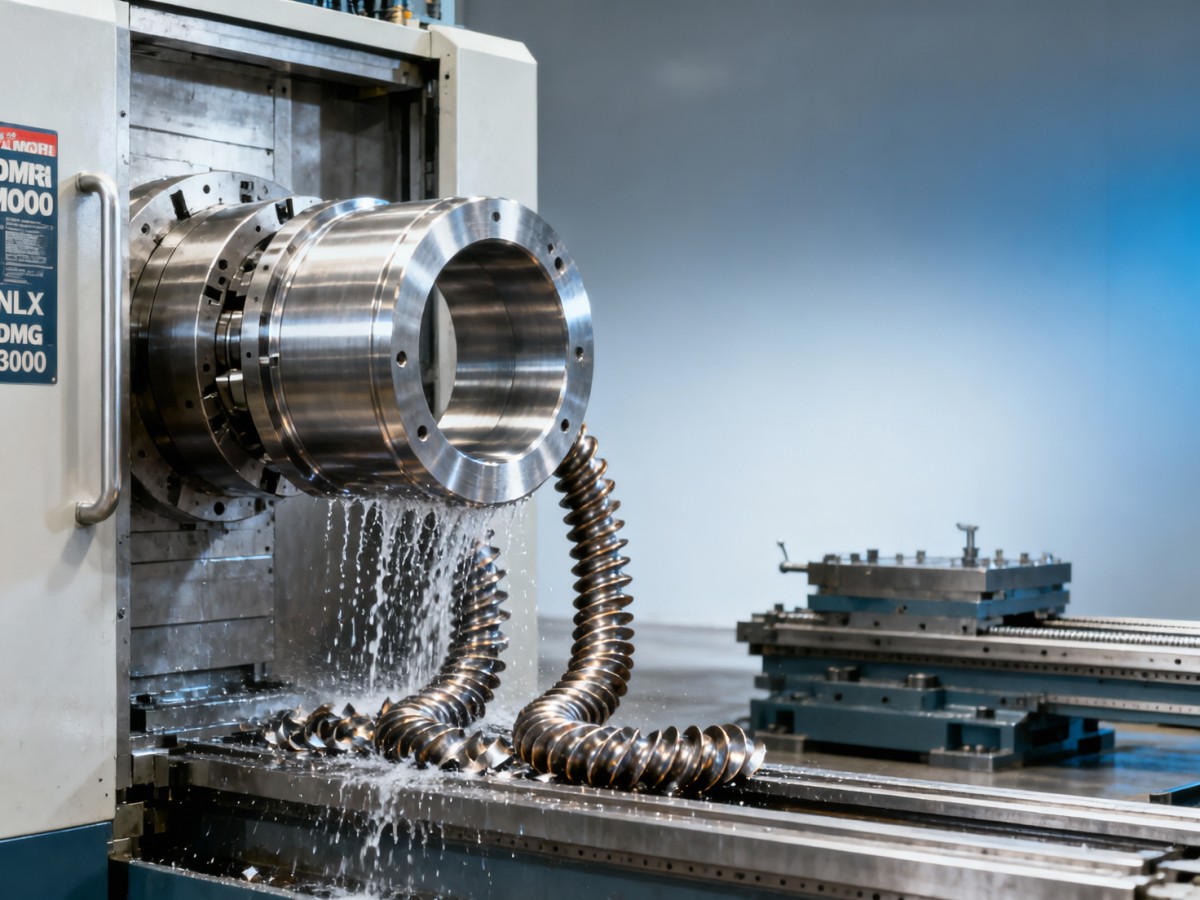
CNC programmers report 23–28% longer setup times per job changeover on vertical lathes when handling mixed batches of disc, flange, and hub geometries. The root cause lies in limited operator access: tool post orientation, chuck jaw adjustment, and probe calibration all require repositioning of overhead cranes or gantry-mounted manipulators—adding 7–12 minutes per fixture swap. In contrast, horizontal lathes allow direct front-side access to chucks, tailstocks, and live tooling stations, enabling full setup completion in ≤5 minutes using standard ergo tools.
This delay compounds in high-mix, low-volume (HMLV) operations common among contract manufacturers serving defense and medical device OEMs. A benchmark study across 14 U.S.-based precision shops revealed that shops relying solely on vertical lathes averaged 1.8 unplanned downtime events per week related to fixture interference or misaligned probing—versus 0.4 events for peers using horizontal systems with modular quick-change pallets.
Furthermore, simulation-based NC verification is less intuitive for vertical configurations due to non-standard coordinate system assumptions in CAM software. Over 67% of surveyed users reported needing ≥2 additional verification cycles before first-cut approval—increasing pre-production lead time by 1.5–2.3 days per new part family.
Critical Setup Variables Impacting Throughput
- Chuck jaw reconfiguration time: 4.2 min (horizontal) vs. 9.7 min (vertical)
- Average probe calibration iterations: 1.3 vs. 3.1
- Tool change verification steps: 5 vs. 12
- First-article inspection pass rate: 94.6% vs. 81.3%
Automation Integration Limitations: When “Space-Saving” Conflicts with Scalable Workflows
While vertical lathes integrate cleanly with linear gantry loaders for simple disc parts, their compatibility with high-flexibility robotic cells remains constrained. Standard 6-axis arms struggle to reach into deep vertical chucks without collision risk—requiring custom end-effectors or extended-reach robots that increase system CAPEX by $85,000–$142,000. Horizontal lathes, by comparison, support standardized I/O interfaces (e.g., Fanuc R-30iB + MTConnect v1.5) and accept off-the-shelf gantry loaders with ≤3-second cycle times for parts up to Ø600 mm.
A recent deployment at a German Tier-2 automotive supplier illustrates this gap: their vertical lathe cell achieved only 78% OEE over Q3 2023 due to robotic arm path-planning conflicts during multi-operation sequences (turning + drilling + threading). Switching to a horizontal twin-spindle configuration raised OEE to 91.4% while reducing robot programming labor by 63%.
The data confirms vertical lathes are not inherently incompatible with automation—but they demand higher engineering investment, longer commissioning, and narrower operational envelopes. For decision-makers evaluating Industry 4.0 readiness, horizontal platforms deliver more predictable scalability across multi-shift, multi-part scenarios.
Total Cost of Ownership: Beyond Initial Purchase Price
Vertical lathes often carry 12–18% lower list prices than equivalent horizontal models—yet TCO analysis over 7 years reveals a reversal. Maintenance costs average $41,200/year for vertical units versus $28,600 for horizontal counterparts, driven primarily by bearing replacement frequency (every 14 months vs. 26 months), coolant filtration upgrades (+$12,500), and specialized technician labor premiums (+22%).
When factoring in productivity loss from slower setups and lower first-pass yield, the breakeven point shifts dramatically: vertical lathes become economically favorable only when annual part volume exceeds 18,500 units *and* part geometry remains strictly planar (discs/flanges only). For shops producing <12,000 units/year with >30% complex shaft or stepped-hub variants, horizontal systems generate 19.4% higher net margin per machine hour.
TCO Comparison Summary (7-Year Horizon)
- Initial acquisition premium (horizontal): +15.3%
- Maintenance cost delta: –$87,800 cumulative
- Downtime cost savings: –$214,000 (based on $125/hr shop rate)
- Net TCO advantage (horizontal): –$132,200
Strategic Recommendation: Matching Machine Architecture to Mission-Critical Requirements
Vertical lathes excel in dedicated, high-volume disc machining—think brake rotors, bearing races, or semiconductor wafer carriers—where footprint efficiency and gravity-assisted chip removal justify their limitations. But for precision shops serving aerospace, power generation, or defense sectors, horizontal CNC lathes remain the architecture of choice when dimensional stability, multi-axis versatility, and automation resilience are non-negotiable.
Procurement teams should evaluate each application against four criteria: part weight (>2,000 kg? → horizontal), tolerance band (±0.005 mm? → horizontal), mix complexity (>15 SKUs/month? → horizontal), and automation roadmap (24/7 operation planned? → horizontal). These filters prevent costly misalignment between capital investment and production reality.
If your shop processes critical rotating components requiring AS9100 Rev D compliance—or if you’re scaling automation across diverse part families—contact our application engineering team for a free feasibility assessment. We’ll analyze your top 5 part families, simulate cycle times, and quantify ROI across horizontal platform options—from compact twin-spindle models to full multi-tasking cells with integrated metrology.
Recommended for You
![]() Fuxing EMU Trainset Procurement Reaches ¥4.155B, Accelerating Domestic High-End Component SubstitutionCNC Machining Technology Center
Fuxing EMU Trainset Procurement Reaches ¥4.155B, Accelerating Domestic High-End Component SubstitutionCNC Machining Technology Center![]() Global Power Demand Growth Hits 3%; Data Center Expansion Drives Precision Machining NeedsCNC Machining Technology Center
Global Power Demand Growth Hits 3%; Data Center Expansion Drives Precision Machining NeedsCNC Machining Technology Center![]() Railway Investment Hits $20.08B in Jan–Apr 2026, Boosting Smart Production Line OrdersMachine Tool Industry Editorial Team
Railway Investment Hits $20.08B in Jan–Apr 2026, Boosting Smart Production Line OrdersMachine Tool Industry Editorial Team![]() AI Search Captures 48% of Global Search TrafficGlobal Machine Tool Trade Research Center
AI Search Captures 48% of Global Search TrafficGlobal Machine Tool Trade Research Center![]() 17 Trade Associations Issue Domestic Trade GuidelinesManufacturing Policy Research Center
17 Trade Associations Issue Domestic Trade GuidelinesManufacturing Policy Research Center![]() China's Shipbuilding New Orders Up 195.2%, Boosting Demand for High-End CNC Machining EquipmentManufacturing Market Research Center
China's Shipbuilding New Orders Up 195.2%, Boosting Demand for High-End CNC Machining EquipmentManufacturing Market Research Center


Aris Katos
Future of Carbide Coatings
15+ years in precision manufacturing systems. Specialized in high-speed milling and aerospace grade alloy processing.
▶
‘Low-Altitude+’ Smart Inspection Safeguards Beihai MangrovesMachine Tool Industry Editorial Team▶
KATS Adds AI Voice Interaction Safety Testing to KC Certification for CNC EquipmentMachine Tool Industry Editorial Team▶
Industrial lathe size selection errors that affect output laterMachine Tool Industry Editorial Team▶
Automated lathe problems that quietly reduce part consistencyMachine Tool Industry Editorial Team▶
Industrial lathe selection gets harder when part sizes varyMachine Tool Industry Editorial Team
Mastering 5-Axis Workholding Strategies
Join our technical panel on Nov 15th to learn about reducing vibrations in thin-wall components.

Providing you with integrated sanding solutions
Before-sales and after-sales services
Comprehensive technical support