• Global CNC market projected to reach $128B by 2028 • New EU trade regulations for precision tooling components • Aerospace deman
NYSE: CNC +1.2%LME: STEEL -0.4%

CNC machine tool manufacturer: How vertical integration impacts custom engineering responsiveness
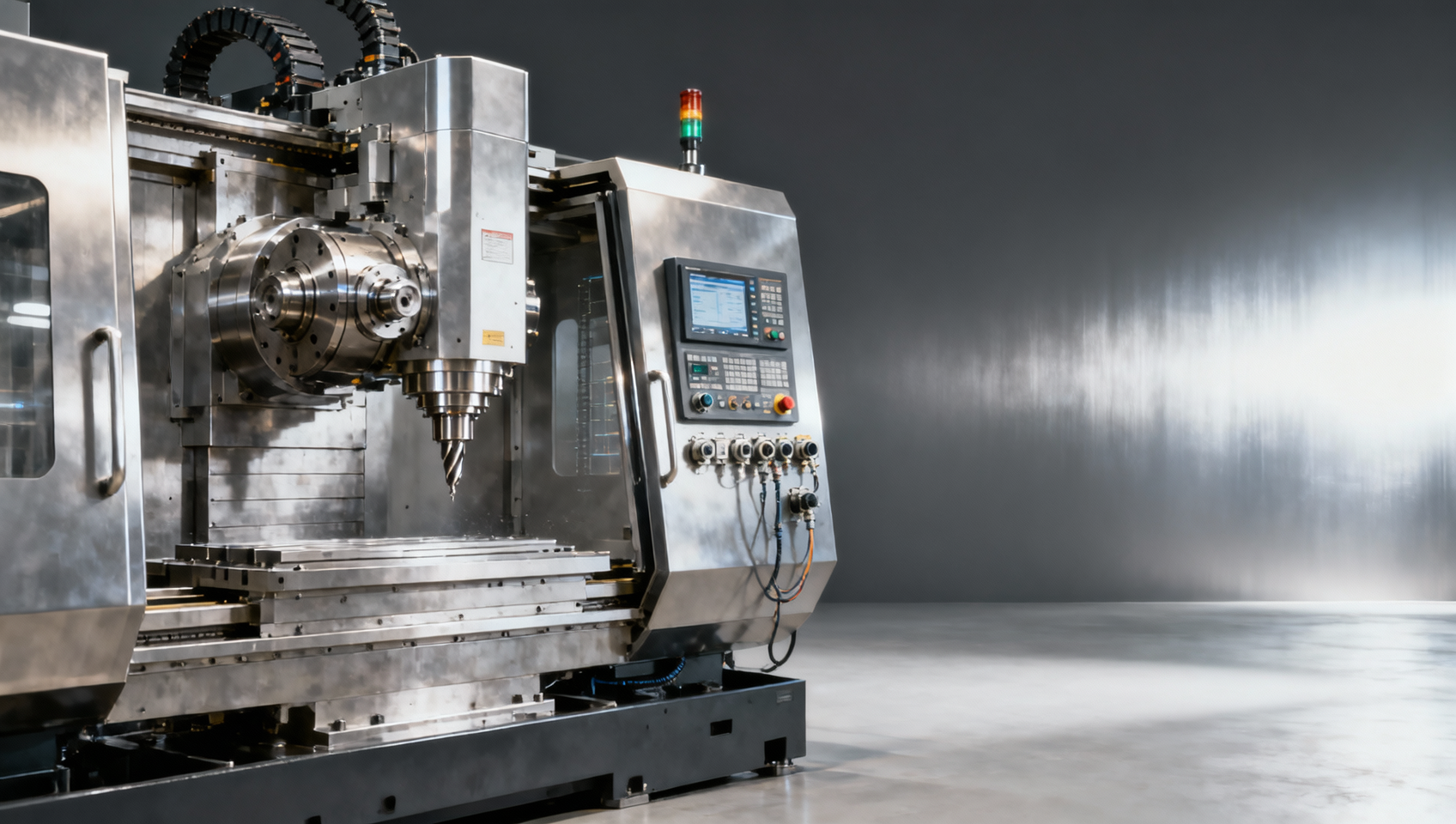
CNC Machine Tool Manufacturer: How Vertical Integration Impacts Custom Engineering Responsiveness
For CNC machine tool manufacturers, vertical integration isn’t just about cost control—it’s the strategic lever behind faster custom engineering responsiveness. Whether you’re a procurement professional sourcing a CNC manufacturing wholesaler, an engineer specifying high-precision CNC manufacturing for aerospace or medical devices, or a decision-maker evaluating a compact machine tool for space-saving CNC manufacturing, integrated design-to-production capabilities directly impact lead times, quality consistency, and adaptability to energy-saving CNC manufacturing or multi-axis CNC manufacturing demands. Discover how leading CNC machine tool manufacturer ecosystems enable quick setup CNC manufacturing, low maintenance CNC manufacturing, and agile support for automated production line troubleshooting and digital manufacturing technology deployment.
Why “Custom Engineering Responsiveness” Matters More Than Ever — And Why It’s Not Just About Speed
If you’re evaluating a CNC machine tool manufacturer — whether to source a 5-axis machining center for turbine blade prototyping, configure a turnkey automated production line for EV battery housings, or retrofit legacy equipment with Industry 4.0 connectivity — your real concern isn’t abstract “integration.” It’s this: Can they translate my unique functional, regulatory, or spatial constraints into a working solution — within my timeline, without costly rework, and with full traceability?
That’s “custom engineering responsiveness”: the measurable ability to absorb technical ambiguity (e.g., “We need ±1.5 µm repeatability on titanium alloy under thermal cycling”), rapidly iterate mechanical/electrical/software interfaces, and deliver validated hardware — not just drawings or quotes. And today, that capability is increasingly tied to how deeply a manufacturer controls its own critical subsystems: motion control firmware, spindle design, CNC kernel customization, metrology integration, and even bespoke HMI development.
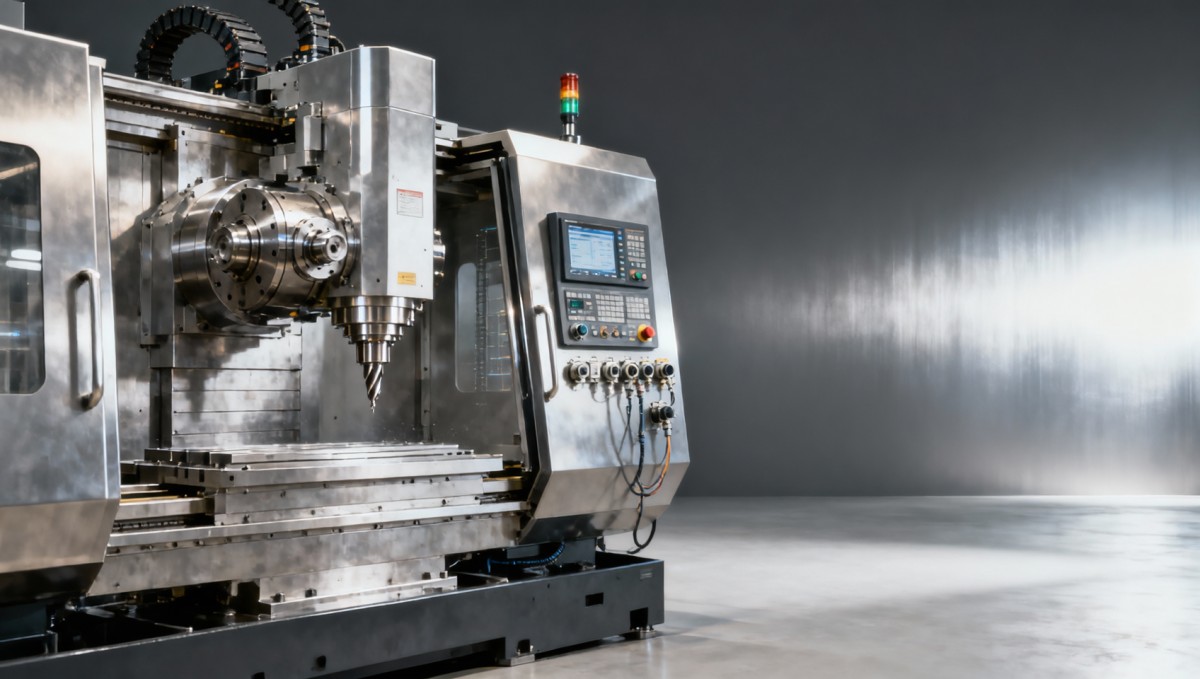
What Vertical Integration *Actually* Delivers — For Your Role
Vertical integration isn’t monolithic — and its value shifts dramatically depending on who’s reading:
- For procurement professionals: It means fewer Tier-2/Tier-3 supplier handoffs → shorter quote-to-delivery cycles (often 30–45% faster for non-standard configurations), single-point accountability for compliance (ISO 13849, IEC 61508), and transparent revision control across mechanical, electrical, and software BOMs.
- For engineers & operators: It enables factory-integrated calibration (e.g., laser interferometer-traceable axis compensation baked into the CNC kernel), pre-validated toolpath optimization for specific materials, and real-time diagnostics that correlate servo current spikes with thermal drift in the spindle housing — because the same team designed both.
- For decision-makers: It reduces total cost of ownership (TCO) not through lower sticker price, but by compressing ramp-up time (e.g., going from RFQ to first qualified part in <90 days vs. 6+ months), enabling seamless scalability (adding a second identical cell without requalification), and future-proofing via in-house firmware updates — not third-party lock-in.
Crucially, vertical integration doesn’t mean “doing everything in-house.” It means owning the interfaces — the data protocols, mechanical tolerancing standards, and validation workflows — that make cross-domain engineering predictable.
Where It Falls Short — And When You Should Look Beyond “Fully Integrated” Claims
Not all vertical integration is equally valuable. Beware of “checklist integration” — where a manufacturer owns casting, assembly, and branding, but licenses its CNC controller, outsources motion tuning, and uses off-the-shelf HMIs. That creates hidden handoff points: when your aerospace part fails final CMM verification, is the issue in the kinematic model (owned), the interpolation algorithm (licensed), or the thermal compensation logic (third-party)?
Ask these three questions before trusting integration claims:
- Who writes and validates the real-time motion control firmware? If it’s licensed from a separate automation vendor, responsiveness to custom path smoothing or jerk-limited acceleration profiles will be limited by external release cycles.
- Can they modify the CNC kernel to accept proprietary sensor inputs? (e.g., embedding strain gauge feedback from a custom fixture into feedrate override logic). True integration allows this; bolted-on systems rarely do.
- Is metrology data used *proactively* in production — not just for QA? Integrated shops feed CMM results back into compensation tables automatically; others require manual reprogramming — a major delay for high-mix, low-volume jobs.
If the answer to two or more is “no,” the integration likely won’t accelerate your custom engineering — it may even obscure root causes during troubleshooting.
How to Evaluate Responsiveness — Practical Signals, Not Marketing Slides
Forget glossy brochures. Here’s what to verify during due diligence:
- Request a live walkthrough of a recent custom project: Not the success story — ask for one that hit a technical snag (e.g., chatter in thin-wall aerospace ducting). How quickly was the root cause isolated? Was the fix implemented in firmware, mechanical redesign, or process parameter adjustment — and who owned each step?
- Review their change management log for a standard product: How many firmware revisions in the last 12 months included customer-requested features (not just bug fixes)? Frequent, targeted updates signal engineering agility.
- Test their support escalation path: Ask for direct contact with the motion control engineer — not just a service manager. Can they access live controller logs remotely and correlate them with mechanical sensor data in real time?
These aren’t theoretical checks. They reveal whether integration translates into operational responsiveness — or just supply chain consolidation.
Bottom Line: Integration Is a Means, Not the End
Vertical integration matters only insofar as it shortens the loop between your engineering requirement and a production-ready, validated machine. For procurement teams, it means predictable timelines and enforceable SLAs. For engineers, it means fewer interface-related surprises and deeper diagnostic visibility. For executives, it means de-risking capital-intensive automation investments — especially in regulated or high-precision sectors like medical device machining or satellite component production.
But integration without domain-specific engineering depth is empty. The strongest CNC machine tool manufacturers don’t just own more components — they own the context: how thermal expansion in a cast-iron bed affects volumetric accuracy over an 8-hour shift, how servo tuning interacts with custom hydraulic clamping pressure, or how digital twin fidelity depends on embedded encoder resolution — not just software licensing.
So when evaluating a CNC machine tool manufacturer, don’t ask “Are they vertically integrated?” Ask instead: “Where does responsibility for solving *my* custom engineering problem actually end — and can I speak directly to the person holding it?” That’s the only metric that predicts responsiveness.
NEXT ARTICLE
Recommended for You
 Heavy-duty Machining Center for mold making: Why coolant filtration standards evolve faster than OEM manualsMachine Tool Industry Editorial Team
 Quick-change Fixture Design for CNC turning: Why clamping force consistency drops after 200 cyclesCNC Machining Technology Center
 5 Axis Machining for impeller manufacturing: Why toolpath smoothing affects surface fatigue lifeCNC Machining Technology Center
 Lean Production Process implementation: Where value stream mapping fails to expose hidden machine downtimeManufacturing Market Research Center
 Modular Tooling System for flexible manufacturing: Why interface repeatability degrades faster than expectedMachine Tool Industry Editorial Team
 Industrial Automation control system for CNC machines: When cybersecurity updates disrupt scheduled maintenanceMachine Tool Industry Editorial Team

Aris Katos
Future of Carbide Coatings
15+ years in precision manufacturing systems. Specialized in high-speed milling and aerospace grade alloy processing.
▶
CNC machine tool manufacturer: How vertical integration impacts custom engineering responsivenessMachine Tool Industry Editorial Team▶
Machine tool factory: What internal quality gates separate prototype builds from volume productionMachine Tool Industry Editorial Team▶
CNC machine tool manufacturer warranty terms: What ‘24/7 remote support’ actually coversMachine Tool Industry Editorial Team▶
Machine tool factory scalability: Why adding one more cell rarely adds linear capacityMachine Tool Industry Editorial Team▶
CNC manufacturing manufacturer transparency: What ‘in-house grinding’ really means on spec sheetsMachine Tool Industry Editorial Team
Mastering 5-Axis Workholding Strategies
Join our technical panel on Nov 15th to learn about reducing vibrations in thin-wall components.

Providing you with integrated sanding solutions
Before-sales and after-sales services
Comprehensive technical support