• Global CNC market projected to reach $128B by 2028 • New EU trade regulations for precision tooling components • Aerospace deman
NYSE: CNC +1.2%LME: STEEL -0.4%

Machine tool factory: What internal quality gates separate prototype builds from volume production
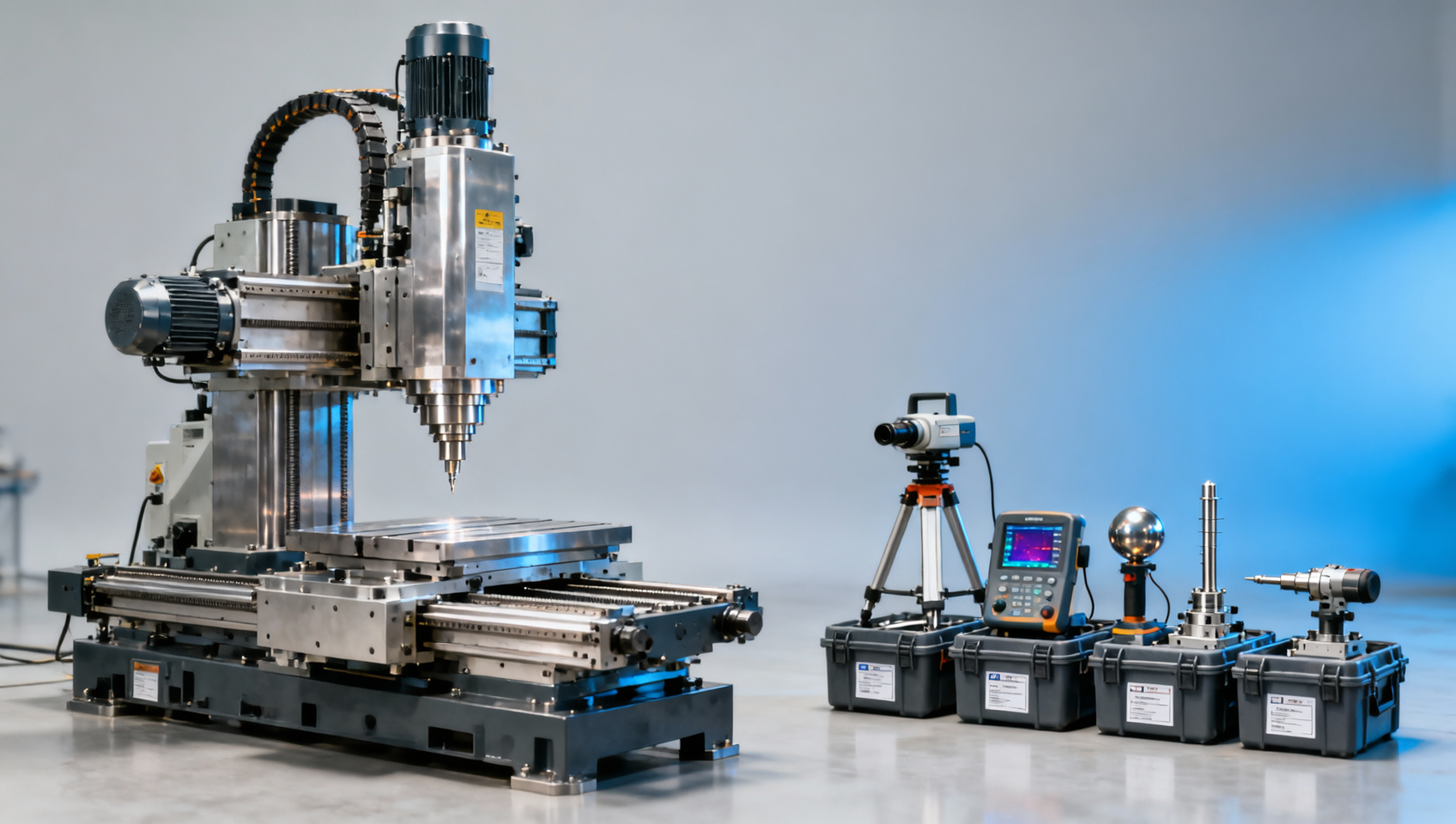
In a machine tool factory, rigorous internal quality gates ensure seamless transition from prototype builds to volume production—critical for precision CNC manufacturing, multi-axis CNC manufacturing, and CNC manufacturing for aerospace or medical devices. These checkpoints validate process stability, dimensional accuracy, low maintenance CNC manufacturing readiness, and automated CNC manufacturing integration—especially vital for compact machine tool deployments and energy-saving machine tool adoption. Whether you’re a procurement professional sourcing a CNC manufacturing wholesaler, an engineer evaluating a high-precision machine tool for mold making, or a decision-maker scaling automated production lines, understanding these gates drives cost-effective, quick-setup CNC manufacturing outcomes.
What Are Internal Quality Gates—and Why Do They Matter in CNC Machine Tool Production?
Internal quality gates are formal, stage-gated review points embedded within a machine tool manufacturer’s new product introduction (NPI) process. Unlike generic QA checks, they serve as go/no-go decision nodes that assess whether a prototype design, build, and test cycle has achieved sufficient maturity for scalable, repeatable production.
For CNC machine tool factories serving automotive, aerospace, and medical device OEMs, skipping or weakening these gates risks costly field failures—such as thermal drift beyond ±0.005 mm after 8 hours of continuous operation, or servo loop instability under 3-axis simultaneous load. Industry benchmarks show that manufacturers applying strict gate reviews reduce post-launch engineering change orders by 35–50% and cut ramp-up time from prototype to full-volume output by 2–4 weeks.
These gates are not static checklists. Leading factories align them with international standards—including ISO 9001:2015 Clause 8.3 (Design and Development), IATF 16949 Section 8.3.4 (Verification and Validation), and AS9100 Rev D for aerospace—ensuring traceability, data-driven decisions, and audit-ready documentation at every stage.
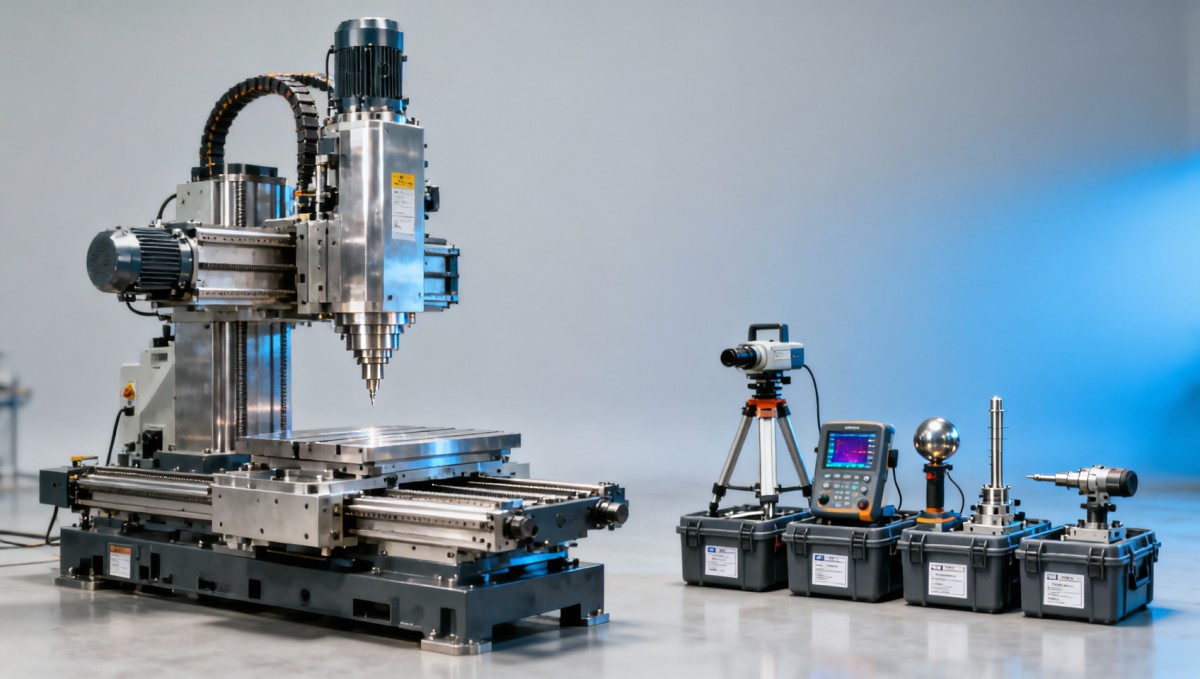
The 5 Core Internal Quality Gates Between Prototype and Volume Production
A robust CNC machine tool factory applies five sequential quality gates—each requiring documented evidence, cross-functional sign-off, and objective pass/fail criteria. These gates span mechanical, electrical, software, and systems integration domains, reflecting the complexity of modern multi-axis machining centers and automated production line interfaces.
- Design Freeze Gate: Finalized mechanical drawings, GD&T annotations, and material specs approved against functional requirements (e.g., spindle runout ≤ 0.003 mm at 12,000 rpm).
- Build Readiness Gate: Verification of supply chain readiness—including lead times for castings (<12 weeks), linear guides (≤8 weeks), and CNC controllers (≥6 weeks)—and first-article inspection reports for all Class A components.
- Functional Validation Gate: 72-hour continuous operation test under nominal load, measuring thermal growth (max ΔT ≤ 8℃), repeatability (±0.002 mm over 100 cycles), and NC program execution fidelity across 3 standard workpieces.
- Process Capability Gate: Statistical analysis (Cpk ≥ 1.33) on 5 key assembly parameters—including ball screw preloading torque, axis squareness (≤0.01 mm/m), and coolant flow consistency (±5% of rated 40 L/min).
- Production Launch Gate: Successful completion of 3 consecutive pilot batches (minimum 5 units each), with zero critical nonconformities and ≤2 minor issues per batch.
How Gate Timing Aligns With Real-World Delivery Cycles
Timing is tightly coupled to risk exposure. Early gates occur during engineering development (typically Weeks 1–8), while later gates—especially Process Capability and Production Launch—require physical hardware and are scheduled between Weeks 12–20. Delaying any gate past its planned window increases NPI schedule variance by up to 40%, per industry benchmarking from the German Machine Tool Builders’ Association (VDW).
Key Evaluation Criteria Used at Each Gate (for Procurement & Engineering Teams)
Procurement professionals and plant engineers must verify that supplier quality gates match their own operational thresholds—not just contractual promises. The table below outlines six objective evaluation dimensions applied across all five gates, with typical pass thresholds used by Tier-1 CNC machine tool suppliers in Germany, Japan, and China.
This comparative framework helps procurement teams move beyond “certified” claims to evaluate actual performance readiness. For example, a supplier meeting only prototype-level thermal stability may be suitable for R&D labs—but unsuitable for high-mix, low-volume aerospace part production where thermal compensation algorithms require sub-0.003 mm drift predictability.
Why Many Buyers Overlook Gate Documentation—And What to Request Instead
A common procurement oversight is accepting verbal confirmation or summary reports instead of auditable gate evidence. Without traceable records, buyers cannot verify whether critical tests were performed—or whether deviations were waived without technical justification.
When evaluating a CNC machine tool supplier, request the following three artifacts per gate—before placing a PO:
- Gate review minutes signed by Mechanical, Electrical, Software, and Quality leads;
- Raw test data logs (e.g., laser interferometer outputs, thermal imaging timestamps, servo current waveforms);
- Nonconformance register showing root cause, containment action, and verification of closure (if any issues occurred).
Suppliers who provide these documents typically achieve >95% on-time delivery for first production lots—versus <70% for those relying on informal approvals. This directly impacts your ability to meet launch deadlines for automated production lines or smart factory rollouts.
Why Partner With a Factory That Treats Quality Gates as Strategic Leverage
Leading CNC machine tool manufacturers don’t treat quality gates as bureaucratic hurdles—they embed them into digital twin workflows, linking metrology data, PLC logs, and ERP BOM status in real time. This enables predictive gate readiness alerts, dynamic rescheduling of validation tests, and automated compliance reporting for ISO, IATF, or AS9100 audits.
We support global procurement teams and engineering decision-makers with full gate transparency: live access to gate dashboards, downloadable validation reports, and joint review sessions aligned to your specific application—whether you’re deploying compact 5-axis machines for medical implant machining or energy-efficient gantry systems for EV battery plate production.
Contact us to request gate-specific documentation templates, discuss your upcoming prototype-to-volume timeline, or arrange a technical review of your current supplier’s gate evidence package—including dimensional repeatability data, thermal test logs, and software integration validation reports.
Recommended for You
 Heavy-duty Machining Center for mold making: Why coolant filtration standards evolve faster than OEM manualsMachine Tool Industry Editorial Team
 Quick-change Fixture Design for CNC turning: Why clamping force consistency drops after 200 cyclesCNC Machining Technology Center
 5 Axis Machining for impeller manufacturing: Why toolpath smoothing affects surface fatigue lifeCNC Machining Technology Center
 Lean Production Process implementation: Where value stream mapping fails to expose hidden machine downtimeManufacturing Market Research Center
 Modular Tooling System for flexible manufacturing: Why interface repeatability degrades faster than expectedMachine Tool Industry Editorial Team
 Industrial Automation control system for CNC machines: When cybersecurity updates disrupt scheduled maintenanceMachine Tool Industry Editorial Team


Aris Katos
Future of Carbide Coatings
15+ years in precision manufacturing systems. Specialized in high-speed milling and aerospace grade alloy processing.
▶
CNC machine tool manufacturer: How vertical integration impacts custom engineering responsivenessMachine Tool Industry Editorial Team▶
Machine tool factory: What internal quality gates separate prototype builds from volume productionMachine Tool Industry Editorial Team▶
CNC machine tool manufacturer warranty terms: What ‘24/7 remote support’ actually coversMachine Tool Industry Editorial Team▶
Machine tool factory scalability: Why adding one more cell rarely adds linear capacityMachine Tool Industry Editorial Team▶
CNC manufacturing manufacturer transparency: What ‘in-house grinding’ really means on spec sheetsMachine Tool Industry Editorial Team
Mastering 5-Axis Workholding Strategies
Join our technical panel on Nov 15th to learn about reducing vibrations in thin-wall components.

Providing you with integrated sanding solutions
Before-sales and after-sales services
Comprehensive technical support