• Global CNC market projected to reach $128B by 2028 • New EU trade regulations for precision tooling components • Aerospace deman
NYSE: CNC +1.2%LME: STEEL -0.4%

What Sets a CNC Machine Tool Manufacturer Apart in 2026
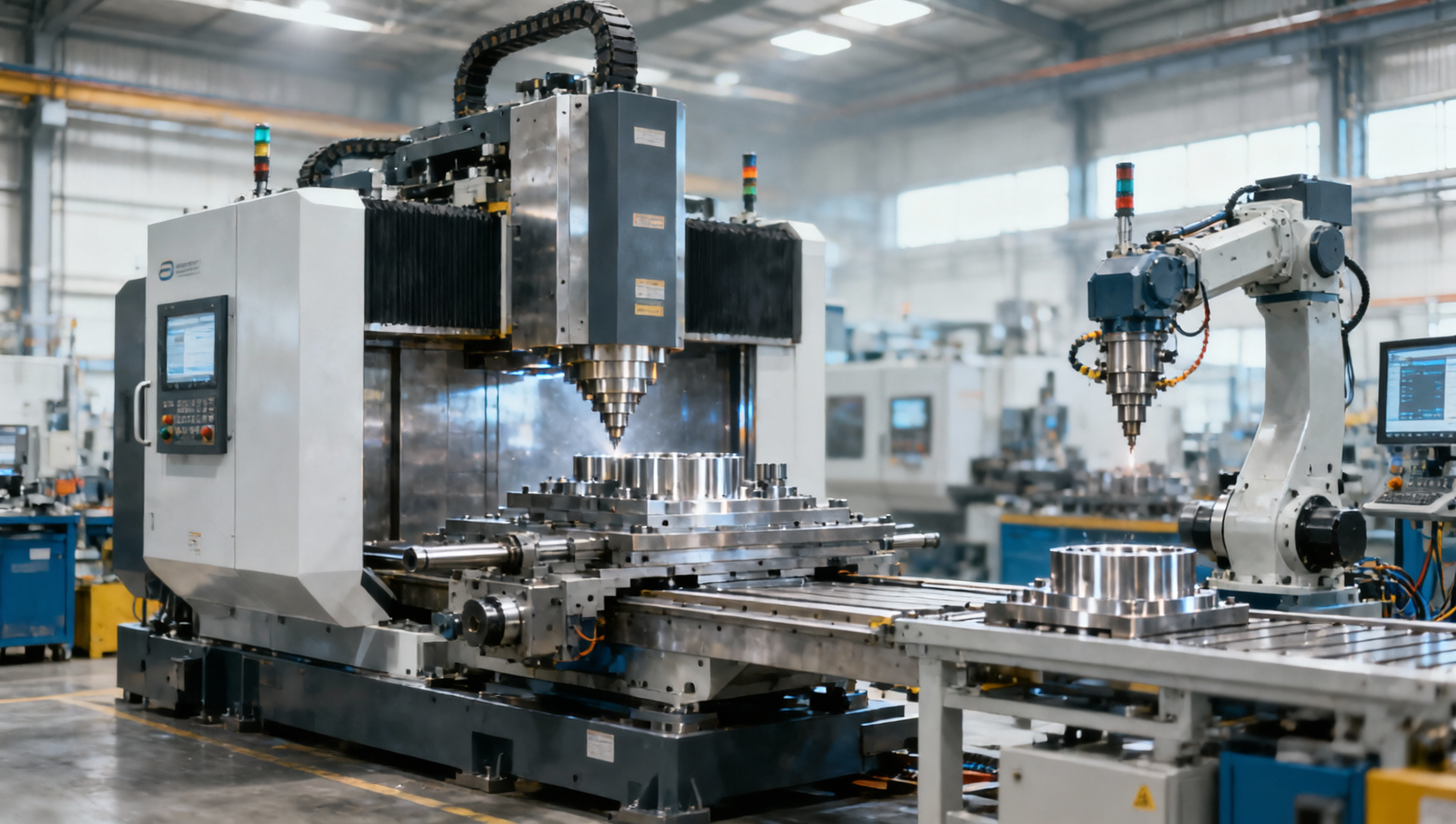
In 2026, a leading CNC machine tool manufacturer stands out by combining high precision CNC manufacturing, automated CNC manufacturing, and Digital Manufacturing Technology for smart factory integration. Buyers and operators now expect more than a machine tool factory—they seek a cost-effective CNC manufacturing supplier that delivers multi-axis machine tool performance, low maintenance CNC manufacturing, and reliable solutions for aerospace, automotive, electronics, and energy equipment.
That shift changes how the market evaluates a CNC machine tool manufacturer. Product accuracy still matters, but purchasing teams also compare digital compatibility, service response times, automation readiness, and lifecycle operating cost over 3–7 years. Operators focus on usability, maintenance intervals, and process stability. Decision-makers look for scalable production, manageable risk, and a partner that can support expansion across multiple sites or export markets.
In practical terms, the best manufacturers in 2026 are not only machine builders. They are process enablers, automation integrators, and long-term industrial partners. The sections below explain what separates a strong supplier from a standard machine vendor, which criteria matter most during evaluation, and how buyers can reduce technical and commercial risk before placing an order.
Precision, Process Stability, and Real Production Capability
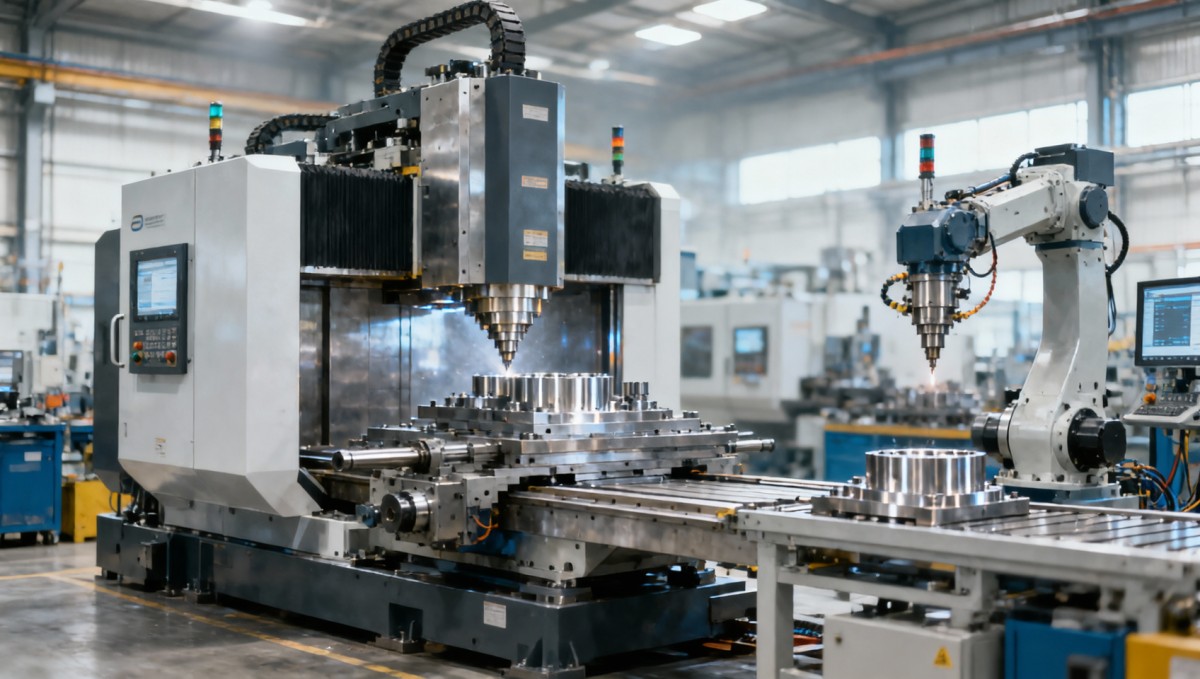
A CNC machine tool manufacturer earns market trust first through measurable machining capability. In 2026, users expect repeatability, thermal stability, and sustained accuracy under continuous production rather than only acceptable results during a short factory demo. For many applications, practical tolerance targets may range from ±0.005 mm to ±0.02 mm depending on component size, material, and machine class.
This is especially important in aerospace structures, EV drivetrain parts, precision electronic housings, and energy equipment components. A machine that performs well for 2 hours but drifts after 8–10 hours of production can create scrap, rework, and missed delivery commitments. Strong manufacturers design around spindle heat, vibration control, casting rigidity, and axis response under real cutting loads.
High-end performance also depends on how the machine interacts with tools, fixtures, coolant systems, and part handling. A good CNC machine tool manufacturer can discuss not just spindle speed or travel range, but also fixture repeatability, tool life balance, chip evacuation, and cycle consistency across batches of 100, 1,000, or 10,000 parts.
Why static specifications are no longer enough
Traditional brochures often emphasize spindle power, rapid traverse, and machine dimensions. Those details remain useful, but they do not fully show long-run production reliability. Buyers should ask how accuracy changes after warm-up, what compensation methods are used, and whether the machine can maintain process capability during 2-shift or 3-shift operation.
A more complete review includes dynamic cutting performance, ball bar results, thermal compensation strategy, and sample part consistency. If a supplier cannot explain these points clearly, the machine may still be suitable for general work, but it may not fit high-mix precision manufacturing or automated production cells.
Key production indicators to verify
- Positioning and repeatability values across X, Y, Z, and rotary axes where applicable.
- Spindle runout, thermal control approach, and warm-up requirements, often 15–30 minutes before stable operation.
- Cycle time consistency over sample runs of 20–50 parts rather than a single showcase part.
- Surface finish range on target materials such as aluminum, stainless steel, titanium alloys, or hardened steel.
- Tool change reliability and chip removal performance during unattended machining windows of 2–6 hours.
The table below shows how buyers can compare machine capability beyond basic nameplate specifications.
The main takeaway is simple: a capable CNC machine tool manufacturer does not hide behind general performance claims. It can explain how the machine behaves over time, under load, and across multiple part types. That level of transparency is a strong sign of engineering maturity and lower production risk.
Automation Readiness and Digital Manufacturing Integration
By 2026, a machine tool factory that cannot support automated CNC manufacturing and digital workflow integration will struggle in competitive sectors. Labor constraints, shorter lead times, and traceability demands push manufacturers toward robot loading, pallet systems, tool monitoring, and software connectivity. Buyers no longer evaluate a machine as a standalone asset; they evaluate its place inside a smart production system.
A differentiated CNC machine tool manufacturer usually offers compatibility with common shop-floor communication protocols, production monitoring platforms, and basic data collection for spindle status, alarms, cycle counts, and utilization. Even a mid-sized supplier should be prepared to support machine data export, remote diagnostics, and integration with MES or ERP-linked workflows where required.
For operators, digital integration should simplify work instead of adding complexity. A well-designed interface reduces setup errors, shortens training from perhaps 3 weeks to 7–10 days for experienced users, and supports standard operating procedures across shifts. For management, visibility into OEE, downtime causes, and preventive maintenance timing can directly improve planning.
What automation-ready really means
Automation-ready does not always mean a fully robotic line from day one. In many plants, the smarter path is staged deployment. Phase 1 may include automatic tool measurement and basic in-machine probing. Phase 2 may add bar feeders, pallet changers, or robot tending. Phase 3 may connect multiple machines into a flexible cell with centralized monitoring.
The right supplier should support that phased model. This avoids overinvestment while preserving upgrade potential for the next 12–36 months. It also helps buyers align capital spending with actual order volume and staffing conditions.
Typical digital and automation features buyers compare
- Data visibility: machine status, alarm history, part count, and cycle time reporting.
- Setup reduction: probing, preset libraries, tool management, and program verification functions.
- Unattended capability: chip conveyor reliability, coolant stability, tool breakage detection, and pallet or loading support.
- Integration flexibility: interface readiness for robots, conveyors, AGVs, or higher-level production software.
The comparison below helps distinguish between basic digital support and stronger smart factory readiness.
Manufacturers that design for modular automation create better long-term value. They let buyers begin with a practical machine investment and expand toward a digitally managed production environment without replacing core equipment after only 2–3 years.
Service, Maintenance, and Lifecycle Cost Control
A cost-effective CNC manufacturing supplier is not necessarily the one with the lowest purchase price. In many facilities, downtime costs, maintenance labor, emergency parts sourcing, and unstable process output exceed the initial price gap within 12–24 months. That is why service infrastructure is one of the clearest ways a CNC machine tool manufacturer stands apart.
Low maintenance CNC manufacturing starts with machine design. Accessible lubrication points, protected guideways, stable electrical layout, and easy replacement of wear components can significantly reduce service time. For operators and maintenance teams, the difference between a 40-minute routine inspection and a 3-hour disassembly task affects uptime every week.
Support quality also includes documentation, training, spare part planning, and response discipline. Buyers should ask practical questions: Is remote troubleshooting available within 24 hours? Are critical parts typically stocked regionally? Is preventive maintenance guidance clear enough for in-house technicians? The answers matter more than general promises of “excellent service.”
How to evaluate lifecycle support before purchase
A reliable supplier usually provides a defined support model covering installation, commissioning, operator training, maintenance schedules, and escalation paths. For example, commissioning may take 2–5 days for a standard CNC lathe and 5–10 days for a more complex multi-axis machining center with automation options. Structured planning reduces startup delays.
Buyers should also estimate total ownership cost over at least 3 years. This review should include tooling compatibility, expected preventive maintenance intervals, consumables, operator skill requirements, and likely spare part replacement categories. A cheaper machine with frequent stoppages can become the more expensive option very quickly.
Practical service checkpoints
- Installation and acceptance plan with defined mechanical, electrical, and process checkpoints.
- Training scope for operators, programmers, and maintenance staff, typically 2–3 user groups.
- Recommended preventive maintenance cycle such as daily, weekly, monthly, and quarterly tasks.
- Parts support model for spindles, drives, sensors, lubrication units, and control system components.
- Remote and on-site response process, including target first response windows and issue escalation.
The table below highlights how maintenance-friendly design affects operating performance.
In short, service capability is not a secondary issue. It directly affects output, maintenance cost, and planning reliability. A manufacturer that supports stable operation after delivery often creates more value than one that only performs well during the sales process.
Application Fit, Procurement Strategy, and Common Buying Mistakes
A CNC machine tool manufacturer should be judged by how well its solutions fit the buyer’s parts, batch sizes, material mix, and expansion plan. Aerospace buyers often need multi-axis machine tool flexibility and traceable process control. Automotive plants may prioritize cycle time, automation compatibility, and line balancing. Electronics and precision component suppliers often focus on thermal stability, clean chip management, and fine surface quality.
This means there is no universal “best machine.” The right purchase depends on production realities such as lot size, part families, setup frequency, fixture strategy, and labor profile. A strong supplier can map machine configuration to these conditions instead of pushing one standard platform into every use case.
Procurement teams should build an evaluation process that combines technical review, commercial review, and implementation review. In many cases, 4 decision pillars are enough: machining capability, digital readiness, lifecycle support, and delivery risk. That framework makes cross-functional comparison easier for engineering, operations, purchasing, and senior management.
A practical supplier selection approach
Shortlisting should begin with application matching rather than price ranking. Ask suppliers to review 3–5 representative parts, expected monthly volume, material specifications, and quality targets. This usually reveals whether the machine configuration is realistic or whether hidden limitations may appear after installation.
It is also wise to compare lead time and readiness assumptions. Standard machine delivery may range from 8–16 weeks depending on region and configuration, while customized automation cells can require 16–28 weeks or more. A shorter quoted lead time is only valuable if commissioning and process validation are also realistic.
Common mistakes buyers should avoid
- Choosing only on purchase price without estimating downtime, maintenance, and operator efficiency over 3 years.
- Ignoring tooling, fixturing, and chip handling even though these can strongly affect cycle time and quality.
- Buying advanced multi-axis capability without matching it to available programming and operator skill.
- Assuming digital integration can be added later without checking interface readiness during the initial purchase.
- Skipping sample part validation and relying only on catalog specifications or showroom impressions.
FAQ for buyers and production teams
How do I know whether a multi-axis machine is necessary?
If your parts require multiple setups, angled features, compound contours, or high positional consistency across faces, a 4-axis or 5-axis machine may reduce setup time and fixture complexity. If most parts are simple rotational or prismatic components, a 2-axis lathe or 3-axis machining center may still be the better cost-performance option.
What delivery timeline should buyers consider realistic?
For standard machines, planning 2–4 months is often reasonable. For customized systems with probing, robot loading, or production line integration, 4–7 months may be more realistic. Buyers should also reserve time for installation, training, and process verification before full production release.
Which metrics matter most during acceptance?
At minimum, verify geometric accuracy, sample part results, cycle time, alarm stability, tool change behavior, and basic maintenance access. If the project includes automation, also test unattended runtime, part handling consistency, and recovery procedures after interruptions.
In 2026, what sets a CNC machine tool manufacturer apart is the ability to deliver more than equipment. The strongest suppliers combine precision engineering, automation readiness, digital manufacturing support, practical maintenance design, and application-based guidance for real production goals. That combination matters to researchers comparing technologies, operators managing uptime, buyers balancing cost and risk, and business leaders planning long-term capacity.
If you are evaluating CNC lathes, machining centers, or multi-axis manufacturing solutions for aerospace, automotive, electronics, or energy equipment, a structured review will help you choose with more confidence. Focus on measurable capability, integration potential, service strength, and total lifecycle value. To discuss a suitable configuration, get a customized solution, or explore more manufacturing options, contact us and start your evaluation with clear technical and commercial priorities.
NEXT ARTICLE
Recommended for You
 How to Choose a Heavy-Duty Machining Center for Mold MakingMachine Tool Industry Editorial Team
 How Quick-Change Fixture Design Cuts CNC Turning Setup TimeCNC Machining Technology Center
 Why 5 Axis Machining Is Ideal for Impeller ManufacturingCNC Machining Technology Center
 How to Start Lean Production Without Disrupting OutputManufacturing Market Research Center
 When a Modular Tooling System Improves Flexible ManufacturingMachine Tool Industry Editorial Team
 How CNC Machine Control Systems Improve Automation StabilityMachine Tool Industry Editorial Team

Aris Katos
Future of Carbide Coatings
15+ years in precision manufacturing systems. Specialized in high-speed milling and aerospace grade alloy processing.
▶
What Sets a CNC Machine Tool Manufacturer Apart in 2026Machine Tool Industry Editorial Team▶
CNC machine tool manufacturer: How vertical integration impacts custom engineering responsivenessMachine Tool Industry Editorial Team▶
Machine tool factory: What internal quality gates separate prototype builds from volume productionMachine Tool Industry Editorial Team▶
CNC manufacturing manufacturer vs. integrator: Where does true process ownership lie?Machine Tool Industry Editorial Team▶
CNC machine tool manufacturer warranty terms: What ‘24/7 remote support’ actually coversMachine Tool Industry Editorial Team
Mastering 5-Axis Workholding Strategies
Join our technical panel on Nov 15th to learn about reducing vibrations in thin-wall components.

Providing you with integrated sanding solutions
Before-sales and after-sales services
Comprehensive technical support