• Global CNC market projected to reach $128B by 2028 • New EU trade regulations for precision tooling components • Aerospace deman
NYSE: CNC +1.2%LME: STEEL -0.4%

CNC Metal Cutting Quality Drops Often Start With Clamping
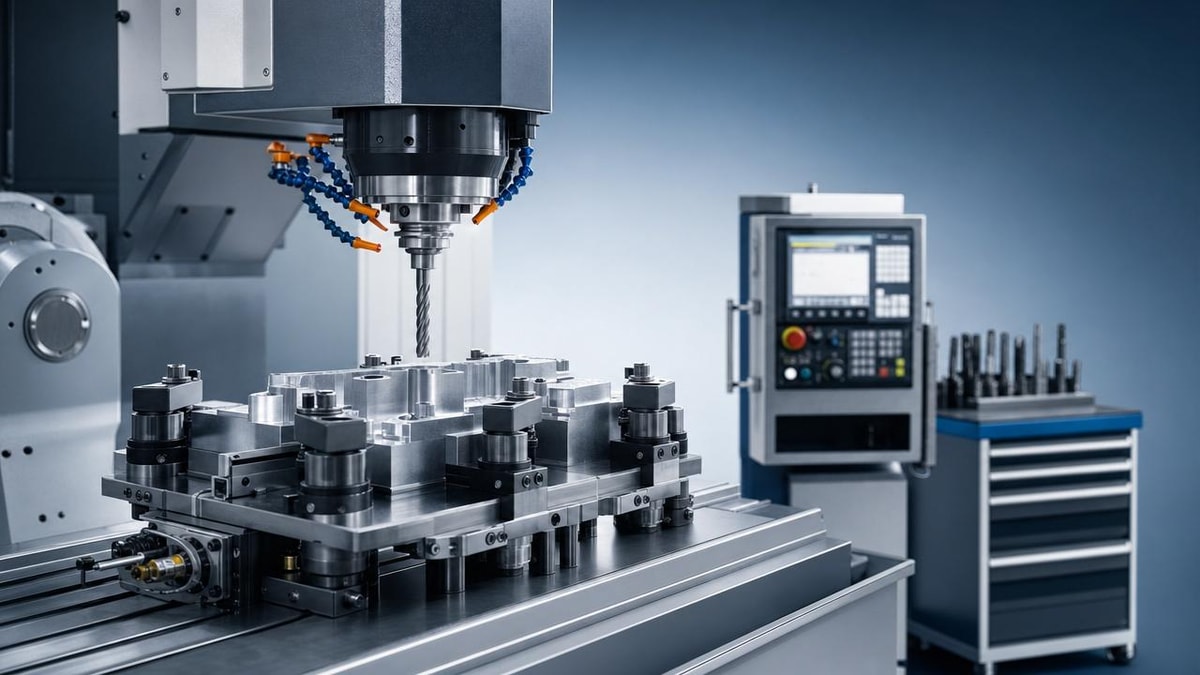
When CNC metal cutting quality begins to decline, the root cause is often not the toolpath or spindle but the clamping setup. For quality control and safety managers, unstable fixturing can trigger dimensional errors, poor surface finish, vibration, and hidden production risks. Understanding how clamping affects machining consistency is the first step toward reducing defects and improving shop-floor reliability.
Why clamping deserves early attention in CNC metal cutting
In modern manufacturing, CNC metal cutting is expected to deliver repeatable accuracy across automotive parts, aerospace components, energy equipment, and precision electronics. Yet many quality investigations still begin too late, after scrap rates rise or customer complaints appear. In practice, clamping is one of the earliest and most influential variables in the machining chain because it directly affects how the workpiece reacts to cutting force, heat, and vibration.
A part can have the correct program, a sharp tool, and a capable machine, but if it is held unevenly or too weakly, the entire CNC metal cutting process becomes unstable. The result may be subtle at first: slight dimensional drift, inconsistent flatness, burr formation, chatter marks, or tool wear that seems premature. For quality control personnel, these symptoms often appear as unrelated defects. For safety managers, they may signal a broader loss of process control that can expose operators, tooling, and machines to unnecessary risk.
What clamping means in this context
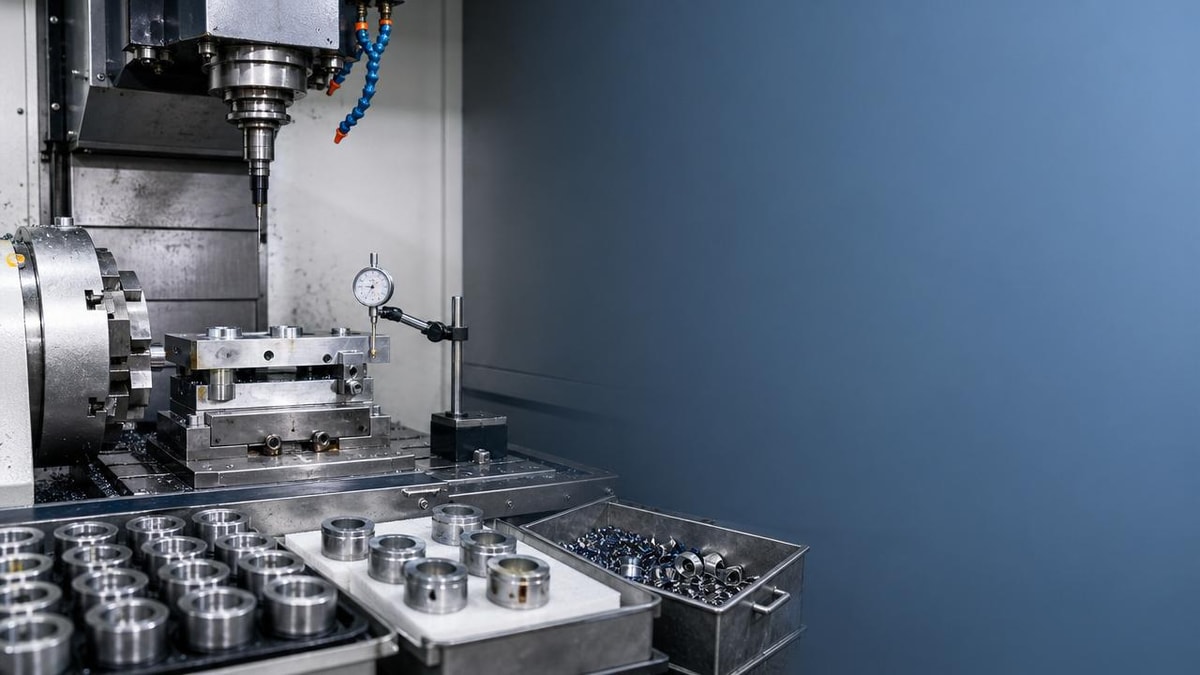
Clamping is more than simply securing a workpiece so it does not move. In CNC metal cutting, proper clamping means locating the part accurately, supporting it against expected cutting loads, controlling deformation, and maintaining consistent positioning through the full cycle. A good fixture creates a stable relationship among the machine, tool, and workpiece. A poor one introduces variation before the spindle even starts.
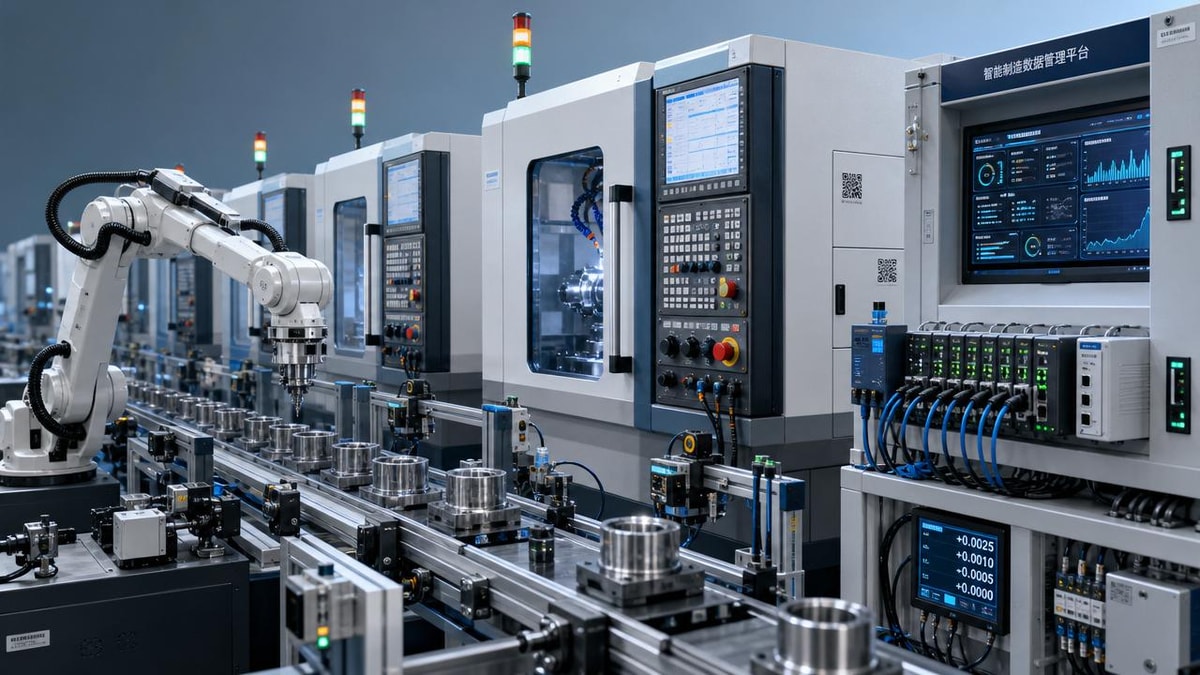
This is especially important as the machine tool industry advances toward higher precision, automation, and digital integration. Multi-axis machining centers, CNC lathes, and flexible production lines can achieve excellent throughput, but their performance depends on robust upstream conditions. Clamping remains a mechanical foundation beneath digital control. Even the best smart manufacturing system cannot fully compensate for a physically unstable part.
Why the issue is growing across the manufacturing sector
The global CNC and precision manufacturing industry is moving toward tighter tolerances, lighter materials, more complex geometries, and shorter production cycles. These trends increase sensitivity to fixture design and setup discipline. Thin-wall parts deform more easily. High-speed CNC metal cutting produces stronger dynamic forces. Automated loading systems require repeatable location. Multi-process lines demand consistent datum transfer from one station to the next.
At the same time, many factories are under pressure to reduce setup time, increase machine utilization, and run mixed production. That environment can encourage temporary clamping adjustments, worn support points, or undocumented fixture changes. For quality and safety teams, this means clamping should not be treated as a setup detail owned only by operators. It is a process control issue with direct impact on product conformity, traceability, and incident prevention.
How poor clamping affects quality outcomes
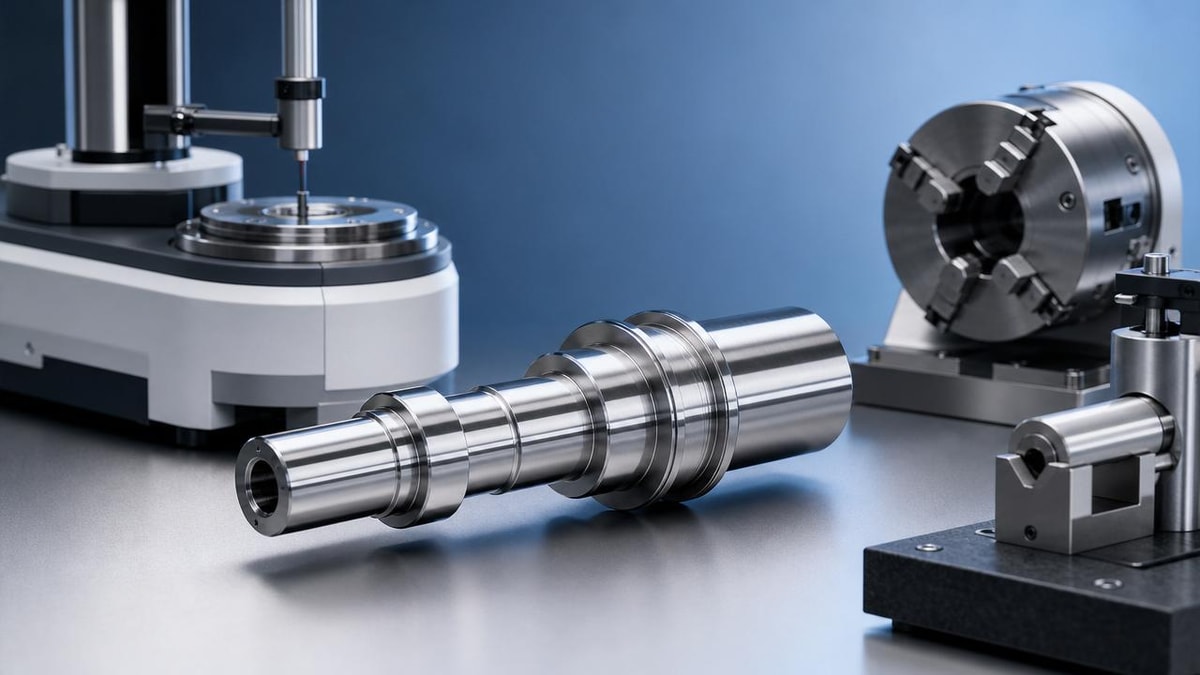
The effects of weak or inconsistent fixturing in CNC metal cutting usually appear in several linked forms. First is dimensional instability. If the part shifts slightly under cutting load, hole positions, slot widths, step heights, or concentricity can move out of tolerance. Second is form error. Uneven support can cause bowing, taper, or loss of flatness, especially on long shafts, thin plates, and large discs.
Third is surface quality loss. Vibration at the clamp-workpiece interface can create chatter, tearing, irregular feed marks, and edge burrs. Fourth is tool-life inconsistency. When the workpiece does not remain stable, cutting loads fluctuate, leading to edge chipping or uneven wear. Finally, there is hidden process variation: a setup may pass first-article inspection but fail later in the batch as heat buildup, clamp relaxation, or repeated loading changes the holding condition.
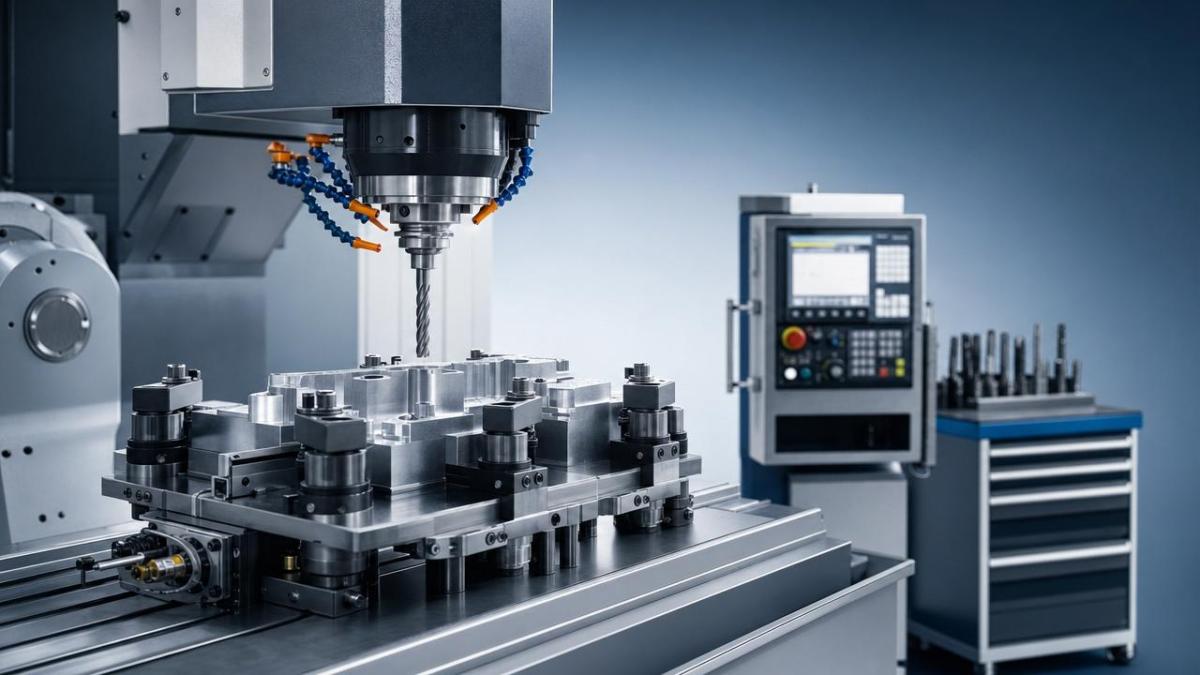
Main risk signals quality and safety teams should watch
In many plants, recurring CNC metal cutting problems are misclassified as tool, program, or material issues because fixture-related signals are not monitored systematically. The following overview helps teams connect symptoms to likely clamping concerns.
Typical part categories where clamping drives CNC metal cutting results
Not all parts respond to clamping in the same way. Quality control and safety managers should classify risk by geometry, wall thickness, datum strategy, and cutting load. This makes inspection planning and process review more effective.
Business value of improving clamping control
For manufacturers using CNC metal cutting at scale, better clamping control is not only a technical improvement. It is a business reliability strategy. Stable fixturing reduces scrap, supports Cp and Cpk performance, improves first-pass yield, and lowers inspection burden caused by unpredictable variation. It also helps maintain stable cutting conditions, which can improve tool consumption planning and machine availability.
From a safety perspective, reliable clamping reduces the chance of part movement, sudden ejection, abnormal vibration, and emergency stoppage. This matters even more in automated cells and flexible production lines where fewer people are present during machining and process deviations can continue longer before being detected. In such environments, fixture condition becomes part of operational risk management, not just setup technique.
Practical review points for quality control personnel
Quality teams evaluating CNC metal cutting performance should include clamping checks in routine process audits and nonconformance analysis. A useful starting point is to compare defect patterns with fixture contact points, clamp sequence, and support surfaces. If the same feature fails repeatedly, the issue may be linked to how cutting force passes through the part rather than to dimensional programming alone.
It is also important to verify whether fixture components wear over time. Pads, jaws, locators, pins, and hydraulic or pneumatic elements can gradually lose repeatability. Another practical step is to review setup instructions: if clamp positions or torque values are not standardized, variation between shifts becomes almost unavoidable. Process capability studies should be tied to a clearly defined fixture state, otherwise measurement data can hide the real source of instability.
Practical review points for safety managers
Safety managers should view CNC metal cutting clamping as part of machine safeguarding and safe operating condition verification. A fixture that allows unstable loading, difficult manual handling, or informal adjustments can create avoidable hazards. Examples include pinch points during clamping, unsecured temporary supports, excessive force needed to seat a part, and repeated operator reach-in to correct movement.
Routine safety walks can include checks for damaged clamps, leaking hydraulic lines, worn locating surfaces, and signs of abnormal vibration. Near-miss reports should also be reviewed for clues related to part retention or setup instability. In many cases, a safety event is preceded by smaller warnings such as noise changes, inconsistent chip flow, or repeated cycle interruptions. Treating these as process signals can prevent both defects and incidents.
Implementation priorities for a more stable machining process
Companies do not always need a complete fixture redesign to improve CNC metal cutting consistency. Often, the first gains come from better discipline and visibility. Start by identifying parts with the highest defect cost or the strongest vibration history. Then review fixture design intent, actual shop-floor use, and inspection data together. Cross-functional discussion between manufacturing engineers, operators, quality staff, and safety personnel usually reveals mismatch points quickly.
Next, standardize clamp force, loading sequence, locator maintenance, and setup verification. Where possible, use simple visual controls so abnormal fixture condition is easy to spot. For complex parts, consider trial cuts that compare distortion before and after unclamping. In higher-volume environments, fixture health can be added to preventive maintenance plans and digital traceability records, aligning with the broader move toward smart manufacturing and data-driven quality assurance.
Conclusion
In CNC metal cutting, quality loss rarely appears without mechanical cause. Clamping is one of the most common starting points because it governs stability before cutting, during cutting, and even after the part is released. For quality control and safety managers, recognizing this connection leads to faster root-cause analysis, stronger process capability, and safer production conditions.
As precision manufacturing continues to evolve across automotive, aerospace, energy, and electronics applications, the value of stable fixturing will only increase. If your operation is seeing recurring variation, surface defects, or unexplained tool behavior in CNC metal cutting, reviewing the clamping setup early is often the most practical and cost-effective next step.
NEXT ARTICLE
Recommended for You
 Industrial Machining Equipment Lead Times Are Changing AgainManufacturing Market Research Center
 Where Industrial Robotics Adds Value Beyond Simple Labor SavingsMachine Tool Industry Editorial Team
 Shaft Parts Machining Problems That Show Up After Final InspectionCNC Machining Technology Center
 Production Process Variations That Quietly Raise Scrap RatesCNC Machining Technology Center
 Industrial Automation Projects Fail When Data Is Added Too LateCNC Machining Technology Center
 CNC Metal Cutting Quality Drops Often Start With ClampingMachine Tool Industry Editorial Team

Aris Katos
Future of Carbide Coatings
15+ years in precision manufacturing systems. Specialized in high-speed milling and aerospace grade alloy processing.
▶
CNC Metal Cutting Quality Drops Often Start With ClampingMachine Tool Industry Editorial Team▶
KATS Updates KS B 0030:2026 — XRF Mandatory for CNC Tool Coating ThicknessMachine Tool Industry Editorial Team▶
Industrial turning costs rise fast with poor tool choiceMachine Tool Industry Editorial Team▶
New Hazardous Chemicals Safety Law Takes Effect May 1, 2026Machine Tool Industry Editorial Team▶
When a Modular Tooling System Improves Flexible ManufacturingMachine Tool Industry Editorial Team
Mastering 5-Axis Workholding Strategies
Join our technical panel on Nov 15th to learn about reducing vibrations in thin-wall components.

Providing you with integrated sanding solutions
Before-sales and after-sales services
Comprehensive technical support