• Global CNC market projected to reach $128B by 2028 • New EU trade regulations for precision tooling components • Aerospace deman
NYSE: CNC +1.2%LME: STEEL -0.4%

Where Industrial Robotics Adds Value Beyond Simple Labor Savings
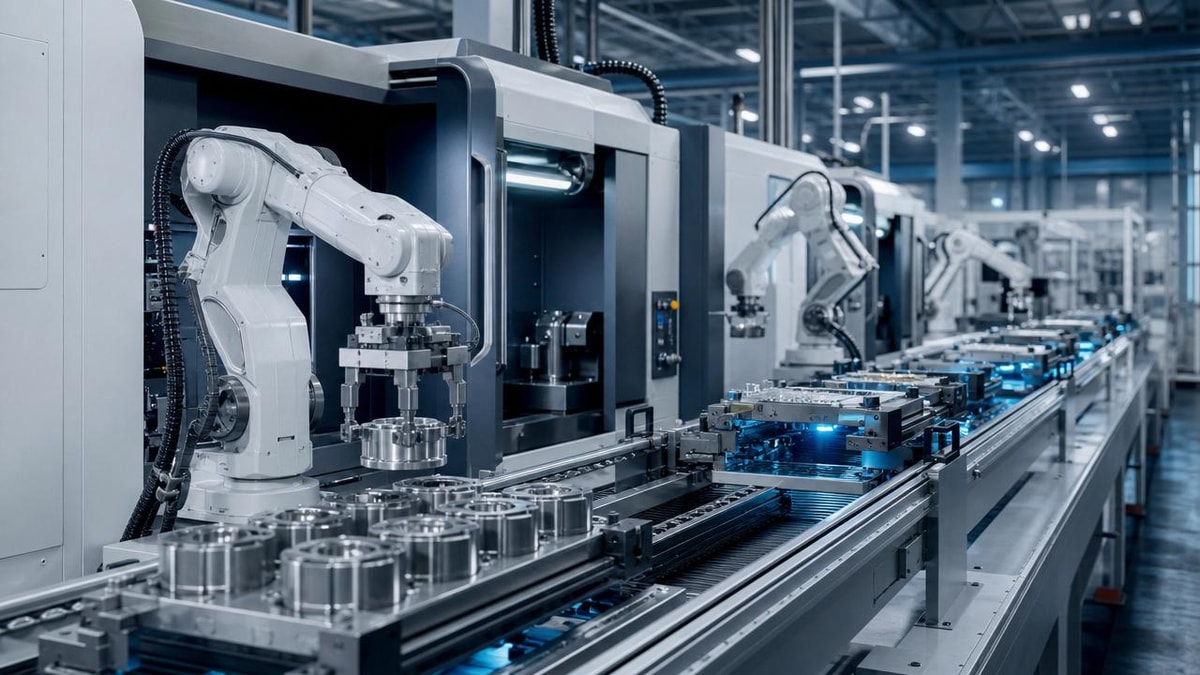
Industrial Robotics delivers value far beyond reducing labor costs. For decision-makers in CNC machining and precision manufacturing, the real business case is usually found in higher process stability, better machine utilization, improved quality assurance, safer operations, and the ability to respond faster to changing product mix and customer demand. In practice, robots often create the strongest returns where production complexity, consistency requirements, and throughput pressure are high.
For leaders evaluating automation, the key question is not simply “How many operators can a robot replace?” It is “Where can robotics improve the economics and resilience of the entire production system?” In CNC environments, that broader view matters because profitability depends on uptime, precision, repeatability, scheduling flexibility, and the ability to scale without losing control.
Why the real value of Industrial Robotics starts after the labor calculation
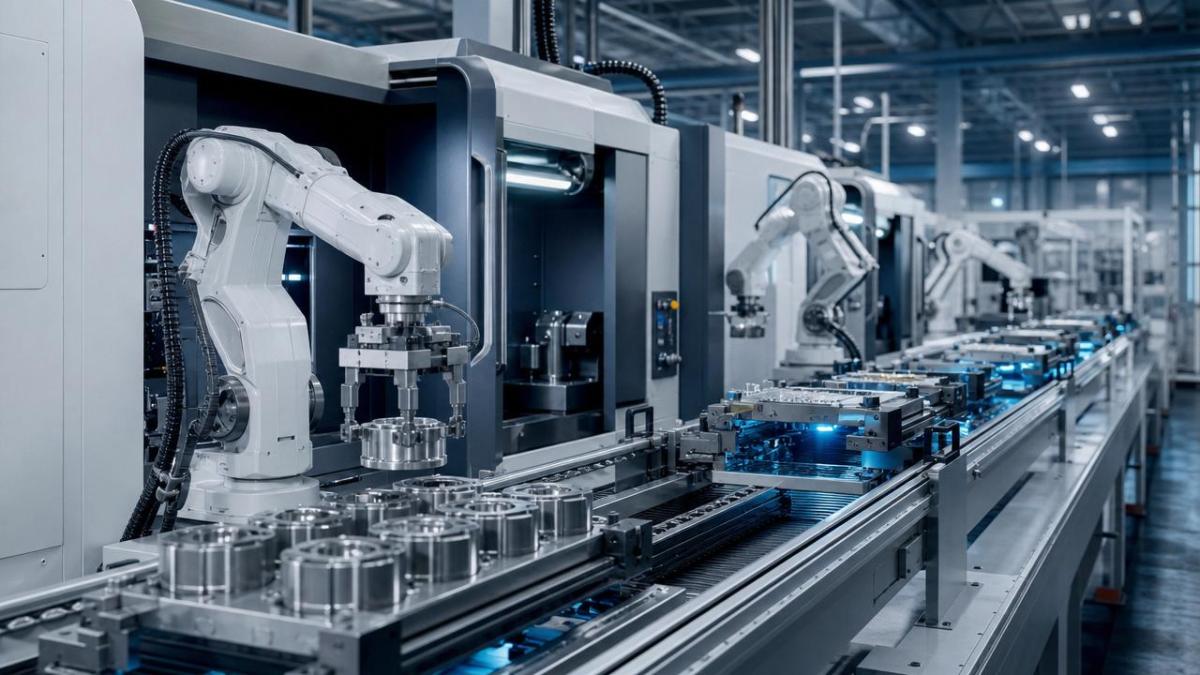
When companies first assess Industrial Robotics, labor savings are often the most visible metric. It is easy to model reduced manual loading, unloading, palletizing, tending, or part transfer. But for enterprise decision-makers, labor is only one line in a much larger operational equation. The more strategic value comes from how robotics changes the performance of the process itself.
In CNC machining and precision manufacturing, a robot can feed machines with consistent timing, reduce idle gaps between cycles, handle parts with repeatable motion, and support around-the-clock operation. Those gains often improve spindle utilization, reduce bottlenecks, and make output more predictable. For many plants, the impact on asset productivity can outweigh the labor reduction alone.
This is especially true in high-mix or precision-driven industries such as automotive components, aerospace parts, energy equipment, and electronics. In those sectors, one defective batch, one delayed order, or one unstable production cell can cost far more than a few direct labor hours. Industrial Robotics creates value by reducing those hidden costs.
How robots improve throughput without sacrificing precision
Decision-makers often worry that more automation may increase speed but create new quality risks. In mature applications, the opposite is often true. Robots help maintain stable takt times, eliminate inconsistent manual handling, and reduce variation caused by operator fatigue, shift changes, or skill differences.
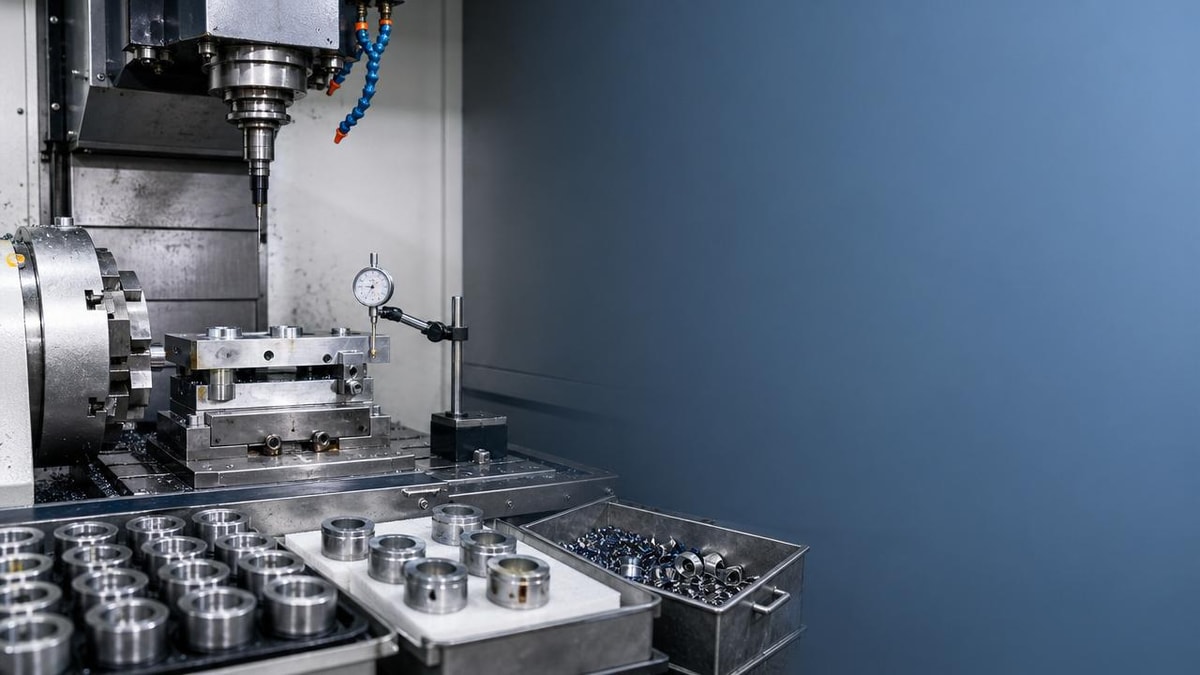
In CNC machine tending, for example, a robot can load raw material and unload finished parts with consistent positioning cycle after cycle. This consistency supports smoother machine operation and minimizes delays between part changes. Over time, even small reductions in non-cutting time can significantly increase total output, especially on expensive machine tools where every minute of idle time matters.
Robotics also supports unattended or lightly attended production during nights and weekends. That does not automatically mean “lights-out” manufacturing everywhere, but it does allow plants to extend productive hours without a proportional increase in staffing complexity. For businesses facing capacity constraints, this can delay or reduce the need for additional capital investment in new machine tools.
The result is not simply faster production. It is more usable production capacity from existing assets, which is often one of the strongest financial arguments for Industrial Robotics in modern machine shops and precision manufacturing facilities.
Where Industrial Robotics strengthens quality control and process consistency
For many manufacturing executives, quality performance is a more important automation driver than wage reduction. Precision industries compete on tolerance control, repeatability, traceability, and customer confidence. Robots contribute to all four when integrated correctly into the process.
Manual handling can introduce part damage, orientation errors, contamination, inconsistent clamping preparation, and variability in downstream inspection or assembly steps. Industrial Robotics helps standardize these actions. A robot does not become distracted, rush at the end of a shift, or vary technique across operators. That repeatability is valuable in high-accuracy production environments.
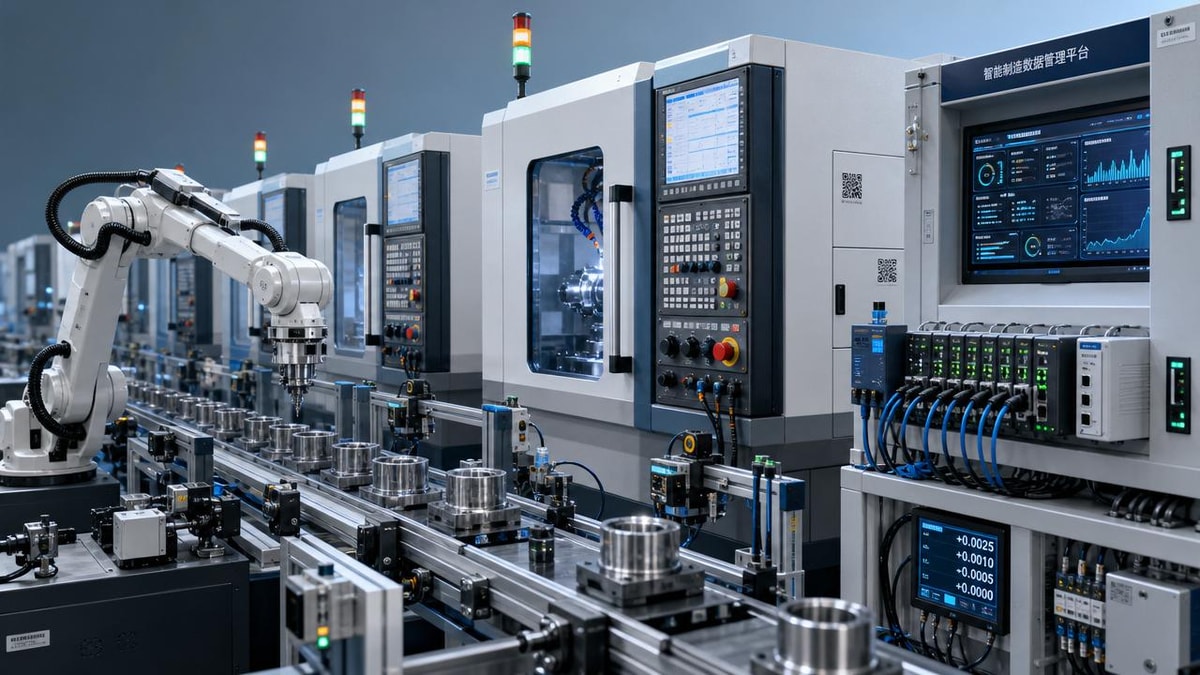
Robots can also work alongside machine vision, in-process gauging, barcode or RFID tracking, and automated rejection systems. This turns a simple handling function into a quality-control node. Instead of only moving parts, the robotic cell can confirm orientation, trigger inspection, separate nonconforming workpieces, and maintain a traceable digital record.
For decision-makers, this matters because quality failures are expensive in multiple ways: scrap, rework, warranty exposure, delivery delays, customer dissatisfaction, and damage to brand trust. If robotics reduces process variation and improves defect containment, the commercial value can be substantial even before labor benefits are counted.
Why flexibility matters as much as efficiency in modern manufacturing
One reason Industrial Robotics has become more attractive across the CNC and machine tool sector is that manufacturers no longer compete only on volume. They also compete on responsiveness. Customers ask for shorter lead times, smaller batches, more product variants, and tighter delivery commitments. That environment rewards flexible automation.
Traditional hard automation can deliver excellent performance in stable, high-volume production, but it may be less adaptable when part families change frequently. Robots offer a more flexible platform. With the right grippers, fixtures, software, and cell design, a single robotic system may support multiple SKUs, part geometries, or machine interfaces.
This flexibility is increasingly important in mixed production environments where a plant must balance large repeat orders with short-run custom work. Industrial Robotics can help standardize material flow across different machine types, support rapid changeovers, and reduce the disruption caused by shifting schedules.
For business leaders, flexibility is not a technical luxury. It is a hedge against demand volatility and market uncertainty. A robotic system that can be reprogrammed or redeployed has more strategic value than a narrowly optimized solution that only performs well under one stable demand pattern.
How robotics supports safer operations and a more sustainable workforce model
Labor challenges in manufacturing are not only about wage rates. They also involve recruitment, retention, training, ergonomics, and workplace safety. In many regions, manufacturers struggle to hire enough operators for repetitive, physically demanding, or undesirable shifts. Industrial Robotics can reduce dependence on exactly those hard-to-fill roles.
In CNC and precision manufacturing, robots are particularly effective in tasks involving repetitive loading, sharp-edged parts, hot surfaces, heavy blanks, coolant exposure, or awkward movements. Reducing manual exposure in these areas can lower injury risk and improve overall workstation design.
For executives, this creates value in several ways: fewer lost-time incidents, reduced turnover in difficult roles, lower training pressure for repetitive tasks, and better deployment of skilled workers to programming, setup, quality, maintenance, and process improvement. In other words, robotics can help companies use scarce human talent where it creates the most value.
This workforce dimension is often underestimated. A robot is not only a substitute for manual effort. It can also be a force multiplier for a smaller, more skilled team, allowing experienced employees to oversee more machines and more output with better control.
What decision-makers should measure when evaluating ROI
If the business case is built only on labor replacement, companies may undervalue good automation opportunities or approve the wrong projects. A stronger evaluation framework looks at total operational impact. For Industrial Robotics, the most relevant metrics usually include machine uptime, cycle stability, scrap reduction, rework reduction, throughput increase, changeover time, safety performance, and schedule reliability.
In CNC applications, leaders should also measure spindle utilization, queue time between operations, part handling consistency, and the percentage of production that can continue during unattended periods. These factors often reveal where robotics creates financial return that is not obvious in a simple headcount model.
Another important measure is risk reduction. If a plant depends heavily on a small number of operators for critical repetitive tasks, that dependency can create capacity instability. Robotics reduces the likelihood that absenteeism, turnover, or skill shortages will interrupt output. That resilience has real economic value, particularly for suppliers working under strict contractual delivery terms.
Decision-makers should also compare the robotics investment against alternatives. Sometimes the question is not whether to automate, but whether to add labor, add shifts, buy another machine, outsource production, or redesign the process. Industrial Robotics often performs best when evaluated as part of the full capacity strategy rather than as an isolated equipment purchase.
Where Industrial Robotics fits best in CNC and precision manufacturing
Not every process needs a robot, and not every automation project will succeed. The strongest use cases typically share several characteristics: repetitive handling, predictable part flow, quality sensitivity, capacity pressure, ergonomic risk, or the need for extended operating hours. CNC machine tending, bin picking, part transfer, deburring support, palletizing, and automated loading into inspection or assembly steps are common examples.
Robotics is also highly relevant where expensive machine tools are underutilized because people cannot keep pace with the ideal machine schedule. If a machining center, lathe, or multi-axis system spends too much time waiting for loading, unloading, or staging, the problem may not be machine capability. It may be the surrounding workflow. In these situations, a robot can unlock value from assets the company already owns.
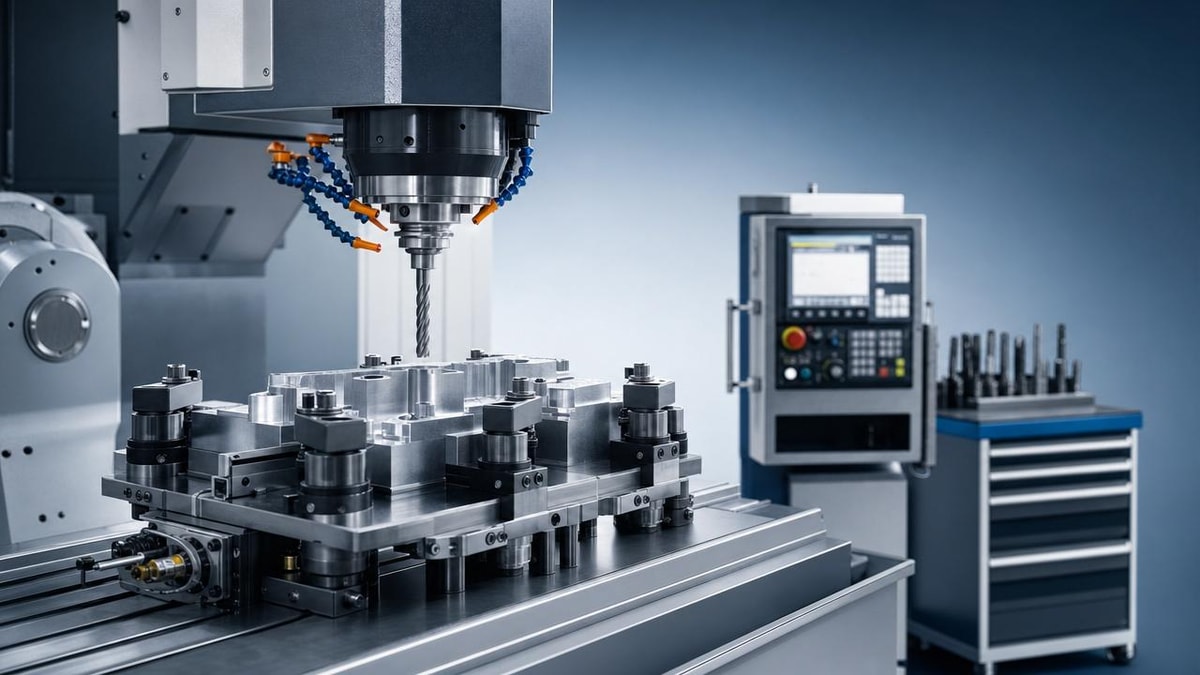
For high-precision manufacturers, robotics can be especially effective when paired with standardized fixtures, digital work instructions, tool monitoring, in-cell inspection, and production data systems. The more structured the surrounding process, the more consistently the robot can deliver measurable gains.
Common concerns that slow adoption and how to think about them
Many decision-makers hesitate because they associate Industrial Robotics with high upfront cost, integration complexity, long payback periods, or fear of inflexibility. These concerns are valid, but they should be assessed in context. The right question is not whether robotics has cost or complexity, but whether the expected gains in productivity, quality, resilience, and capacity justify that investment in the target application.
Another common concern is that a robotic cell may become underused if product demand changes. This risk can be reduced through modular cell design, standardized interfaces, flexible grippers, and selecting applications where families of parts share enough common handling logic. In many cases, the integration strategy matters as much as the robot itself.
There is also concern about disruption during implementation. That is why successful companies usually start with processes that have clear constraints, measurable losses, and manageable technical scope. A well-chosen first deployment can create internal confidence, operational learning, and a realistic baseline for scaling future automation.
A practical decision framework for leaders
For enterprise leaders in manufacturing, a practical approach begins with identifying where operational losses are concentrated. Look for cells with expensive machine idle time, unstable output, repetitive quality issues, safety concerns, or persistent staffing difficulty. Those are often better robotics candidates than areas with low complexity but little real business impact.
Next, define the value in business terms. Will the robotic system increase available capacity, reduce quality cost, improve delivery performance, support new business, or lower operational risk? If the answer is yes, quantify each effect as much as possible. This creates a stronger investment case than labor savings alone.
Then assess process readiness. Robotics works best when upstream and downstream steps are sufficiently standardized. If part presentation, fixturing, tooling, or cycle variability is uncontrolled, those issues may need to be solved first. In many plants, the automation project succeeds because it forces better process discipline across the cell.
Finally, think beyond the first installation. The most valuable robotics programs are not one-off purchases. They become repeatable capabilities: standard cell architectures, integration know-how, internal training, maintenance routines, and digital connectivity that can be extended across multiple production lines and sites.
Conclusion: the strongest case for Industrial Robotics is strategic, not just financial
Industrial Robotics adds value far beyond simple labor savings because it improves the way production systems perform. In CNC machining and precision manufacturing, that means more consistent throughput, stronger quality control, better machine utilization, safer operations, and greater flexibility in responding to customer demand. These benefits are often more important than direct wage reduction.
For decision-makers, the best automation investments are usually found where robotics solves a meaningful operational constraint, not where it merely replaces a repetitive task. When evaluated through the lens of capacity, quality, resilience, and scalability, Industrial Robotics becomes a strategic tool for building a more competitive manufacturing operation.
In a market shaped by tighter tolerances, shorter lead times, workforce pressure, and digital transformation, companies that understand this broader value will make better investment decisions. The question is no longer whether robots can save labor. It is where they can create the most business value across the entire production system.
PREVIOUS ARTICLE
NEXT ARTICLE
Recommended for You
 Industrial Machining Equipment Lead Times Are Changing AgainManufacturing Market Research Center
 Where Industrial Robotics Adds Value Beyond Simple Labor SavingsMachine Tool Industry Editorial Team
 Shaft Parts Machining Problems That Show Up After Final InspectionCNC Machining Technology Center
 Production Process Variations That Quietly Raise Scrap RatesCNC Machining Technology Center
 Industrial Automation Projects Fail When Data Is Added Too LateCNC Machining Technology Center
 CNC Metal Cutting Quality Drops Often Start With ClampingMachine Tool Industry Editorial Team

Aris Katos
Future of Carbide Coatings
15+ years in precision manufacturing systems. Specialized in high-speed milling and aerospace grade alloy processing.
▶
Where Industrial Robotics Adds Value Beyond Simple Labor SavingsMachine Tool Industry Editorial Team▶
Automated Production Line Issues That Appear Only After Scale-UpMachine Tool Industry Editorial Team▶
Is Space-Saving CNC Manufacturing Worth the Layout Trade-Off?Machine Tool Industry Editorial Team▶
How Automated Production Changes Defect Control on the LineMachine Tool Industry Editorial Team▶
Automated Production Line gaps that appear between design and launchMachine Tool Industry Editorial Team
Mastering 5-Axis Workholding Strategies
Join our technical panel on Nov 15th to learn about reducing vibrations in thin-wall components.

Providing you with integrated sanding solutions
Before-sales and after-sales services
Comprehensive technical support