• Global CNC market projected to reach $128B by 2028 • New EU trade regulations for precision tooling components • Aerospace deman
NYSE: CNC +1.2%LME: STEEL -0.4%

Shaft Parts Machining Problems That Show Up After Final Inspection
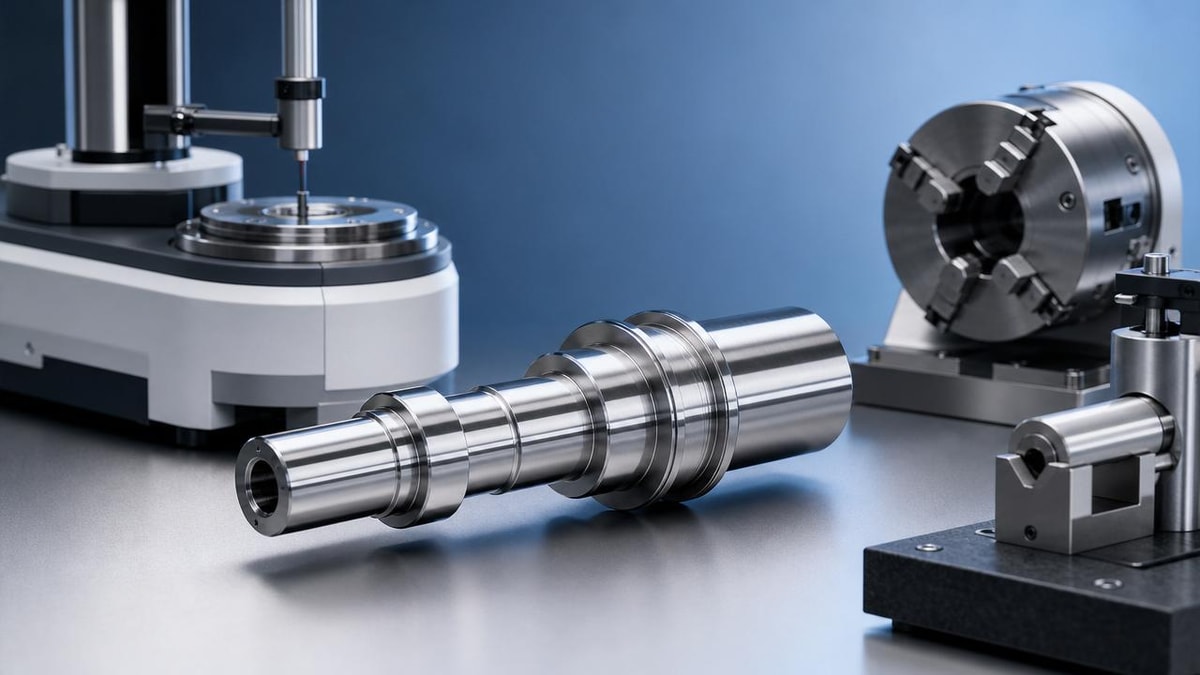
Even when dimensions appear compliant at final inspection, Shaft Parts can still develop hidden issues that affect fit, rotation, fatigue life, and assembly stability in real applications. For technical evaluators, understanding why these machining problems emerge late is essential to judging true process capability, supplier reliability, and the long-term performance risks behind seemingly qualified components.
In CNC turning, grinding, heat treatment, and finishing workflows, a shaft may pass diameter, length, and runout checks on the inspection table yet fail after transport, press-fit assembly, dynamic loading, or thermal cycling. This gap between inspection acceptance and field performance is one of the most important evaluation points in modern precision manufacturing.
For buyers, supplier auditors, and technical assessment teams in automotive, aerospace, energy equipment, and industrial automation, the issue is not only whether Shaft Parts meet drawing tolerances on one day, but whether the full process can repeatedly control geometry, material condition, surface integrity, and assembly behavior over 1,000, 10,000, or even 100,000 production cycles.
Why Shaft Parts Can Pass Final Inspection but Still Fail Later
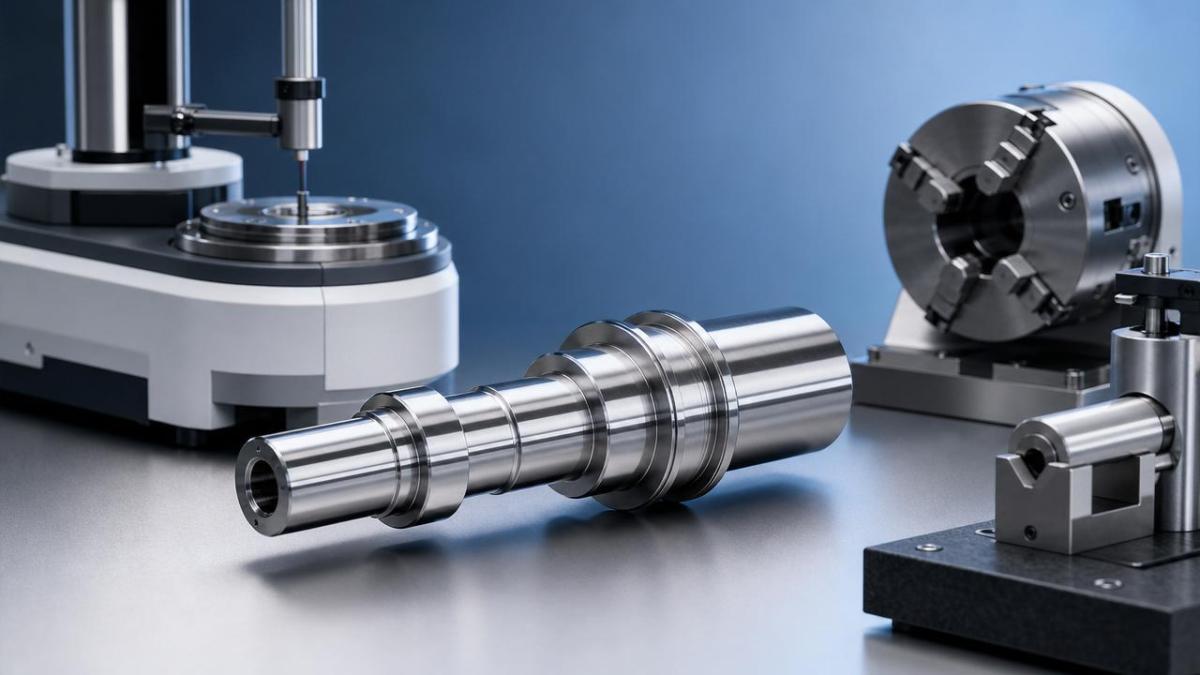
Late-appearing machining problems usually come from conditions that are not fully revealed by routine final inspection. A typical final check may confirm 6 to 12 dimensional items, but real operating performance depends on a wider set of variables, including residual stress, micro-burrs, datum inconsistency, surface peaks, coating thickness variation, and distortion after temperature change.
In many CNC machine tool environments, final inspection is still heavily focused on static geometry. However, Shaft Parts are dynamic components. They rotate, transmit torque, locate bearings, support seals, and interface with gears, pulleys, couplings, or housings. A shaft that is acceptable at 20°C in a metrology room may behave differently after 2 to 4 hours of running under load or after a secondary process such as induction hardening, chrome plating, or grinding.
Hidden problems often missed by dimensional acceptance
The first category is shape error hidden within tolerance bands. For example, a journal diameter may be within ±0.01 mm, but lobing, taper, or waviness can still create unstable contact. This becomes visible only when the bearing is mounted and rotating speed reaches 1,500 to 3,000 rpm, where vibration, noise, or uneven heat generation begins to appear.
The second category is surface integrity. Surface roughness values such as Ra 0.4 to 1.6 μm do not always tell the full story. Smearing, torn metal, burn marks from grinding, and directional tool marks can reduce oil film retention and accelerate wear. In shaft applications, this may shorten service life by months even when initial assembly feels normal.
The third category is residual stress and delayed deformation. After rough turning, heat treatment, semi-finishing, and final grinding, internal stress may remain unbalanced. Once Shaft Parts are unclamped, stored for 24 to 72 hours, or exposed to transport vibration, straightness can drift beyond functional limits without any obvious visual defect.
Why standard inspection plans may not capture these risks
- Sampling plans may check only 3 to 5 dimensions instead of full functional geometry.
- Measurement may be done in one clamping orientation, missing bending recovery after release.
- Surface checks may rely on Ra only, without evaluating lay direction or thermal damage.
- Roundness, cylindricity, and concentricity may be assumed from diameter results instead of measured directly.
- Assembly simulation is often skipped for low- to medium-volume orders under tight lead times of 7 to 15 days.
For technical evaluators, this means supplier capability should be reviewed as a process chain, not as a final checkpoint. The real question is whether the manufacturer can maintain part stability from raw material preparation through CNC machining, in-process verification, finishing, cleaning, packaging, and delivery.
The Most Common Post-Inspection Machining Problems in Shaft Parts
The following issues are among the most frequent reasons why Shaft Parts show trouble after they have already been accepted. They are especially relevant in precision machine tool supply chains where tolerance windows are narrow and downstream assembly is sensitive to small variations.
1. Straightness drift after unclamping or transport
Long and slender shafts with a length-to-diameter ratio above 10:1 are particularly vulnerable. During turning or grinding, workholding force can temporarily suppress deflection. Once the part is released, it may recover into a slightly bent shape. A straightness deviation of 0.02 to 0.05 mm over 300 mm can be enough to affect seal wear, bearing preload, or coupling alignment.
2. Diameter compliance with poor roundness or cylindricity
A shaft journal can meet size tolerance but still produce local high spots. This often comes from tool wear, machine spindle condition, vibration, or grinding wheel imbalance. In assembly, press-fit force may become inconsistent, and in operation, contact stress becomes concentrated in a limited area rather than distributed evenly.
3. Burrs and edge condition affecting assembly
Micro-burrs at shoulders, keyways, oil grooves, circlip grooves, or cross-holes are a major late-stage risk. They may be smaller than 0.05 mm, yet enough to scratch mating bores, damage seals, trap debris, or alter insertion force. This is common when deburring is manual, inconsistent, or not controlled with defined acceptance criteria.
To make these risks easier to compare during supplier review, the table below links common hidden defects with their likely process origin and field impact.
The key takeaway is that late-appearing defects in Shaft Parts are usually process-generated rather than random. That makes them highly relevant for capability assessment, because a supplier that cannot control these mechanisms may continue shipping parts that look acceptable but create repeat field issues.
4. Concentricity loss between multiple functional diameters
Shafts often have stepped journals, threaded ends, splines, seal seats, and bearing locations. If different features are machined using inconsistent datums or too many reclamping operations, concentricity can degrade even while individual dimensions remain in tolerance. A 0.01 to 0.03 mm offset may be enough to create noise in high-speed drive systems.
5. Surface roughness is acceptable, but the profile is functionally wrong
Technical evaluation should look beyond the roughness number. Two shaft surfaces can both read Ra 0.8 μm, yet one may have plateaued, stable contact behavior while the other contains sharp peaks that damage mating components during the first 100 cycles. This matters greatly in hydraulic, sealing, and bearing interfaces.
6. Thread and shoulder transitions creating stress concentration
Failure often begins not at the main shaft diameter but at fillets, undercuts, relief grooves, or thread runouts. If tool path blending is poor or edge radii are inconsistent, fatigue cracks can form after repeated torsional or bending load. These issues may not show up during dimensional inspection but become critical in service after 10,000 to 50,000 cycles.
What Technical Evaluators Should Check Beyond the Final Report
A supplier’s inspection report is useful, but not sufficient. In B2B sourcing for CNC-machined Shaft Parts, evaluators should review at least 4 layers: process control, machine capability, metrology coverage, and post-machining handling. This broader view gives a more realistic picture of long-term quality stability.
Audit the process route, not only the final dimensions
Start by mapping the full route: raw material receipt, cutting, rough turning, heat treatment if required, semi-finishing, grinding, deburring, washing, inspection, rust prevention, and packaging. If a supplier cannot clearly define these 8 to 10 steps, late-stage inconsistency becomes more likely, especially for medium-precision to high-precision Shaft Parts.
Critical questions during technical assessment
- How many reclamping operations are used from blank to final part?
- Is stress relief or stabilization applied for long shafts or hardened materials?
- What is the normal tool life control interval, such as every 80, 150, or 300 pieces?
- Are roundness, cylindricity, and concentricity measured directly or inferred indirectly?
- How are burr standards defined for grooves, shoulders, threads, and cross-holes?
- What packing method prevents bending, impact, and corrosion during 7 to 30 days of transit?
These questions often reveal more than a pass/fail inspection sheet. For example, two suppliers may both hold ±0.01 mm on diameter, but one may achieve it with stable in-process compensation and controlled tool change, while another relies on operator correction after drift appears. The first process is usually more repeatable under scale.
The next table shows a practical checklist technical evaluators can apply when comparing CNC machining suppliers for Shaft Parts.
This checklist is valuable because many late-stage issues are introduced after machining is finished. A shaft can leave the grinder in good condition and still become nonconforming due to poor rack storage, insufficient corrosion protection, or unsupported packaging over long-distance export transport.
Review capability for functional validation
When the application is critical, request evidence beyond dimensional reports. Functional validation may include fit trials, rotating tests, contact pattern checks, or concentricity studies against mating components. Even a short verification run of 30 to 60 minutes can expose vibration or temperature behavior that static inspection cannot detect.
Separate cosmetic acceptance from performance acceptance
Not every visual mark is a functional defect, and not every visually clean shaft is safe. Technical evaluators should prioritize defects that alter load path, contact area, lubrication, balance, or stress concentration. This helps focus supplier discussions on actual operating risk rather than on appearance alone.
How Suppliers Can Reduce Late-Emerging Shaft Parts Problems
From a manufacturing perspective, prevention is far more efficient than final sorting. Once hidden defects are already present in Shaft Parts, additional inspection can only detect some of them; it cannot restore process stability. The strongest suppliers build prevention into machining strategy, fixture design, in-process control, and finishing standards.
Use process design matched to shaft geometry
Long, thin shafts need tailstock support, steady rests, or optimized cutting parameters to control deflection. Stepped shafts need datum discipline to maintain concentricity across multiple diameters. Hardened shafts may need stock allowance planning to balance distortion after heat treatment and preserve enough material for final grinding.
Control heat, stress, and stock removal sequence
A common best practice is to avoid aggressive final stock removal on one side only. Balanced machining and appropriate stress relief reduce drift. For demanding Shaft Parts, suppliers often allow a stabilization interval of 12 to 24 hours between major operations, especially when material hardness, wall transitions, or length increase distortion sensitivity.
Practical prevention actions
- Define functional datums early and keep reclamping to the minimum necessary.
- Monitor tool wear before dimensional drift appears, not after rejection begins.
- Include edge-break standards such as 0.2 × 45° or equivalent burr-free criteria where required.
- Use direct checks for roundness, straightness, and concentricity on critical journals.
- Separate cosmetic polishing from functional surface generation.
- Package long shafts with support spacing suitable for part length and mass.
For technical buyers, suppliers that can explain these controls clearly are usually easier to trust than those that only provide a final pass report. In precision manufacturing, transparency in process control often predicts delivery reliability better than verbal quality claims.
Decision Guidance for Evaluators and Procurement Teams
When sourcing Shaft Parts globally, the best decision is rarely based on unit price alone. A shaft that is 5% cheaper but causes assembly delays, bearing failure, or repeat inspection can create a much higher total cost within one production quarter. Evaluators should therefore compare suppliers using technical risk, process maturity, response speed, and traceability together.
Signs of a stronger shaft machining partner
Look for a supplier that discusses function, not only print dimensions. Stronger partners ask about rotating speed, mating fit class, surface role, loading pattern, heat treatment condition, and packaging route. They are also more likely to identify risk points before mass production, reducing the chance that hidden problems appear after acceptance.
When to request deeper review
A deeper review is recommended when Shaft Parts are used in high-speed systems above 2,000 rpm, when shaft length exceeds 400 mm, when multiple bearing seats require tight coaxial control, or when failure consequences are high. In such cases, a pre-production capability review and first-batch functional validation can prevent expensive downstream disruption.
Shaft Parts that pass final inspection are not automatically low risk. What matters is whether the manufacturing system can control shape, stress, surface condition, and handling across the full lifecycle of the part. For technical evaluators, this broader view improves supplier selection, lowers field failure exposure, and supports more stable procurement decisions in CNC machining and precision manufacturing.
If you are assessing suppliers, comparing machining capability, or planning a new shaft component program, now is the right time to review the process behind the report. Contact us to discuss your application, request a customized evaluation checklist, or learn more solutions for reliable Shaft Parts sourcing and production.
PREVIOUS ARTICLE
NEXT ARTICLE
Recommended for You
 Industrial Machining Equipment Lead Times Are Changing AgainManufacturing Market Research Center
 Where Industrial Robotics Adds Value Beyond Simple Labor SavingsMachine Tool Industry Editorial Team
 Shaft Parts Machining Problems That Show Up After Final InspectionCNC Machining Technology Center
 Production Process Variations That Quietly Raise Scrap RatesCNC Machining Technology Center
 Industrial Automation Projects Fail When Data Is Added Too LateCNC Machining Technology Center
 CNC Metal Cutting Quality Drops Often Start With ClampingMachine Tool Industry Editorial Team



Aris Katos
Future of Carbide Coatings
15+ years in precision manufacturing systems. Specialized in high-speed milling and aerospace grade alloy processing.
▶
Shaft Parts Machining Problems That Show Up After Final InspectionCNC Machining Technology Center▶
Metal Machining Bottlenecks That Slow Delivery More Than CapacityCNC Machining Technology Center▶
What Affects Surface Finish Most in CNC Metalworking?CNC Machining Technology Center▶
Shaft Parts machining problems that show up only after assemblyCNC Machining Technology Center▶
Industrial turning costs more than expected when chip control is ignoredCNC Machining Technology Center
Mastering 5-Axis Workholding Strategies
Join our technical panel on Nov 15th to learn about reducing vibrations in thin-wall components.

Providing you with integrated sanding solutions
Before-sales and after-sales services
Comprehensive technical support