• Global CNC market projected to reach $128B by 2028 • New EU trade regulations for precision tooling components • Aerospace deman
NYSE: CNC +1.2%LME: STEEL -0.4%

Used metal lathe or new one? The cost gap is not always real
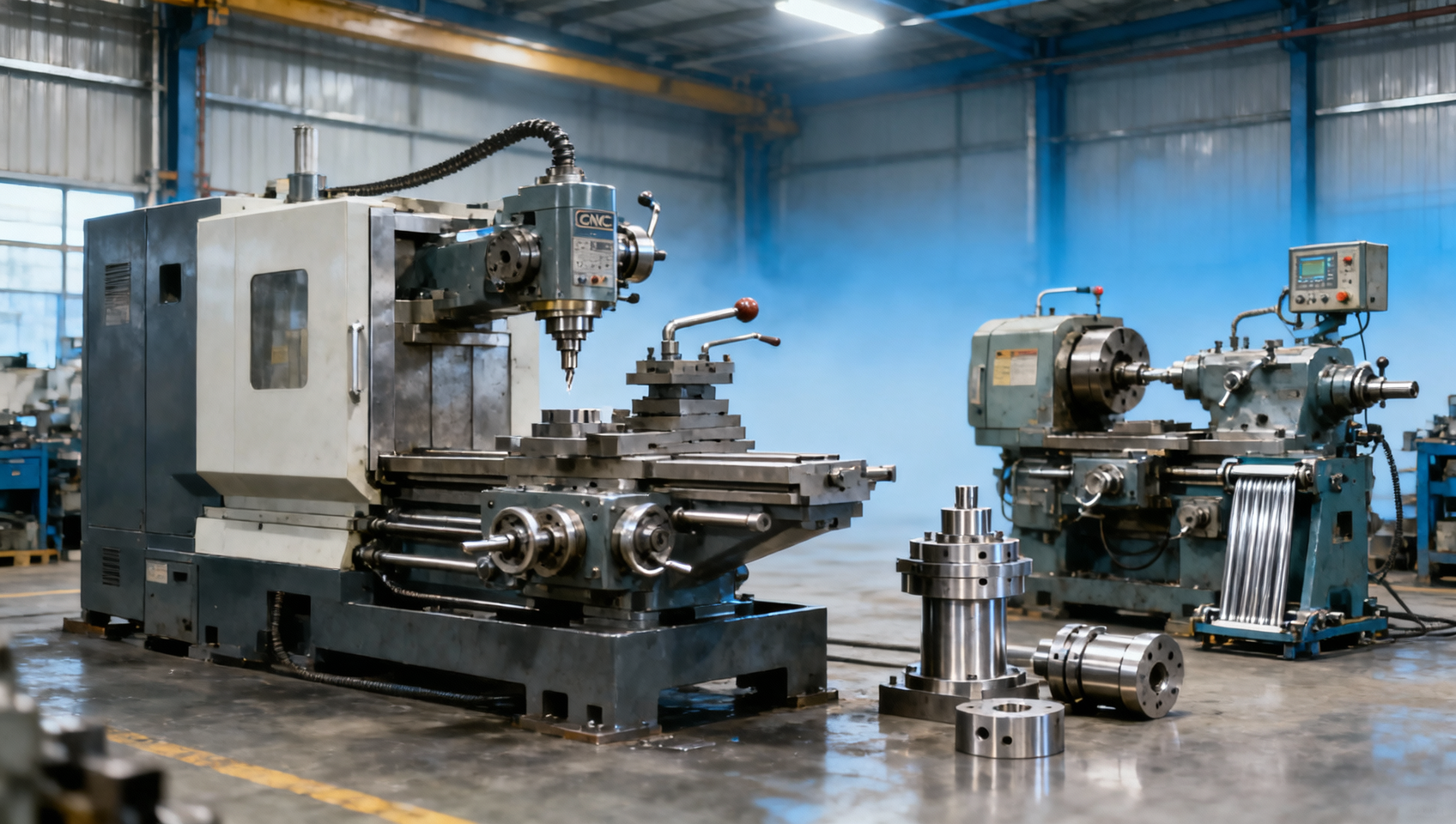
Choosing between a used metal lathe and a new one is not as simple as comparing price tags. In metal machining, real cost depends on uptime, CNC production efficiency, maintenance, tooling compatibility, and the wider production process. For buyers, operators, and decision-makers in the Manufacturing Industry, understanding how an industrial lathe fits into automated production can reveal why the cost gap is not always real.
In many workshops, the first comparison starts with purchase price alone. A used metal lathe may appear to save 30% to 60% upfront, while a new machine requires a larger capital budget. However, once production scheduling, spare parts availability, machine accuracy retention, operator training, and integration with existing CNC systems are added into the equation, the apparent savings can narrow quickly.
This matters across automotive parts, aerospace subcontracting, energy equipment, electronics hardware, and general precision manufacturing. Whether a company runs 1 shift or 3 shifts, the wrong choice can create hidden costs in setup time, scrap rate, unplanned downtime, and delayed delivery. For procurement teams and plant managers, the better question is not “used or new,” but “which option delivers lower total manufacturing cost over the next 3 to 7 years?”
Why the Price Gap Often Misleads Buyers
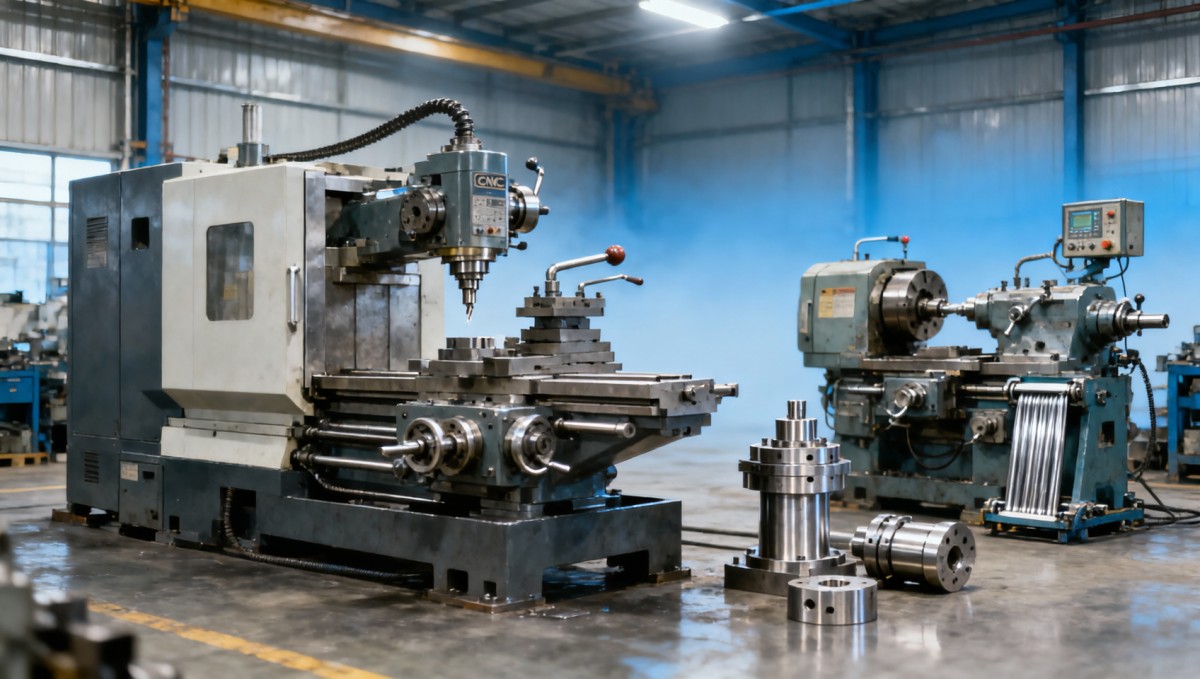
A used industrial lathe usually looks attractive because the invoice is smaller on day 1. Yet metalworking operations rarely live on day 1 economics. Real financial impact is measured across machine uptime, cycle stability, part consistency, maintenance intervals, and how well the lathe supports the current production mix. In medium-volume machining, even 2 to 4 hours of unplanned downtime per month can offset a large share of the initial purchase difference.
Older machines may also carry hidden costs related to spindle wear, guideway condition, backlash, hydraulic leaks, or obsolete control systems. A machine that still powers on and cuts material is not automatically cost-effective. If repeatability drifts beyond the tolerance needed for shafts, discs, or threaded components, operators may spend extra time on manual adjustment, inspection, and rework. That slows output and reduces the value of every scheduled production hour.
New metal lathes, especially CNC models, often deliver stronger process stability from the start. They may include automatic lubrication, modern HMI controls, tool offset management, and easier connection to digital production systems. These features do not simply improve convenience. They can reduce setup time by 10% to 25%, shorten operator learning cycles, and support more predictable planning in factories where multiple machines share tooling, fixtures, and quality control resources.
The key issue is total cost of ownership. A lathe used for 5 days per week, 8 to 16 hours per day, creates value only when it stays productive. If the machine costs less but causes more stoppages, more scrap, or slower throughput, the “cheap” option may become the expensive one within 12 to 24 months.
Four hidden cost drivers that buyers often underestimate
- Downtime cost: a machine stopped for repair can disrupt not just one job, but an entire downstream assembly or delivery schedule.
- Tolerance drift: if dimensional repeatability weakens, inspection frequency rises and scrap can increase from a normal 1%–2% level to 3%–5% or more.
- Tooling mismatch: older turrets, spindle noses, or control systems may not work efficiently with current holders, inserts, probes, or automation devices.
- Support delay: replacement boards, drives, pumps, or encoders for older machines may require 2–6 weeks to source, especially in cross-border procurement.
Used vs New Metal Lathe: A Practical Cost Comparison
To make a fair decision, procurement teams should compare more than list price. The table below shows how cost factors differ in typical manufacturing use cases. The values are not fixed market prices, but they reflect common operating patterns seen in CNC machining and precision production environments.
The most important takeaway is that low entry cost does not equal low production cost. If a used machine requires frequent alignment, component replacement, or manual intervention, it can lose its pricing advantage quickly. On the other hand, if the used lathe has verified history, low operating hours, and good service records, it can be a strong fit for secondary capacity, prototyping, or low-volume work.
When used equipment makes economic sense
Used lathes can be a practical choice in at least 3 scenarios. First, they fit shops with irregular production demand, where machine utilization may stay below 40% to 50%. Second, they can support roughing operations or non-critical parts with wider tolerances. Third, they are often suitable when the business needs capacity fast but is not yet ready for a larger automation upgrade.
When new equipment is usually worth the premium
A new CNC lathe becomes easier to justify when production runs exceed 2 shifts, part tolerances are tight, or delivery penalties are significant. It is also the stronger option when a factory wants to standardize controls, reduce operator dependency, and connect turning operations with upstream ERP, MES, or in-line inspection systems. In these environments, process consistency often matters more than the purchase discount.
How Production Requirements Change the Best Choice
The same machine can be a smart investment in one plant and a poor fit in another. The right decision depends on material type, batch size, tolerance demand, fixture reuse, and how the lathe connects to the wider manufacturing flow. A workshop producing simple carbon steel bushings in batches of 50 has very different needs from a supplier machining stainless shafts in lots of 2,000 with strict concentricity control.
Production intensity is one of the clearest dividing lines. If the lathe is expected to run 20 to 30 hours per week, a well-inspected used machine may be acceptable. If it must run 60 to 100 hours per week in a multi-shift environment, every reliability issue becomes more expensive. Even a small downtime event can affect labor planning, tool presetting, inspection schedules, and outbound shipment commitments.
Process compatibility also matters. In modern CNC production, lathes often work alongside machining centers, robots, bar feeders, conveyors, automatic unloading systems, and digital quality records. A machine that cannot communicate efficiently with these systems may create a bottleneck. In smart manufacturing settings, the cost of poor integration can exceed the savings from buying used equipment.
Operators should not be overlooked either. A familiar older machine may seem easier to keep, but it can also depend heavily on experienced personnel who know its behavior. Newer machines usually reduce dependence on tribal knowledge by providing clearer alarms, more stable servo control, and more consistent setup procedures. That becomes important when staff turnover, cross-training, or expansion is part of the business plan.
Production scenarios and matching equipment logic
The table below outlines how different shop conditions can shift the balance between a used metal lathe and a new one.
This comparison shows why “best value” is always context-based. The lower-cost choice only remains lower-cost if it matches the production model, quality requirement, and maintenance resources of the facility. Procurement should therefore assess the machine inside the full workflow, not as an isolated asset.
A simple 5-point decision screen
- Define annual spindle hours: under 1,000 hours, 1,000–2,500 hours, or above 2,500 hours.
- Confirm tolerance range: general machining, medium precision, or high-precision repeat work.
- Check automation needs: manual loading, bar feeding, robot loading, or networked cell integration.
- Estimate downtime tolerance: can production absorb a 1-day stop, or does every hour matter?
- Review service access: local technicians in 24–72 hours, or slow support with imported parts.
Inspection, Maintenance, and Risk Control Before You Buy
For used machine tools, inspection quality is often the difference between value and liability. A visual review is not enough. Buyers should test spindle condition, axis movement, lubrication response, turret indexing, electrical cabinet status, and basic machining performance under load. If possible, run a trial cut on representative material and measure dimensional repeatability across at least 5 to 10 sample parts.
Maintenance planning must begin before purchase, not after installation. A used lathe may require immediate replacement of belts, seals, hoses, filters, coolant lines, wipers, or bearings. These are not always expensive items, but the labor and stoppage time can add up. In some cases, refurbishment after delivery can take 7 to 21 days before the machine is ready for stable production.
For new equipment, the risk profile shifts rather than disappears. The machine may be more reliable, but buyers still need to verify commissioning scope, training time, software options, tooling interfaces, and acceptance conditions. A machine that is new but poorly matched to the shop’s fixtures, power supply, floor layout, or operator skill level can still become a costly project.
Good procurement practice is to assign a cross-functional review team. In many factories, the strongest decisions are made when purchasing, production, maintenance, and quality personnel evaluate the machine together. That reduces the chance of buying a lathe that satisfies budget goals but fails on daily operational demands.
Checklist for used metal lathe evaluation
- Machine age and rebuild history: older than 10–15 years is not a problem by itself, but documentation matters.
- Control system support: confirm whether boards, drives, displays, and software backups are still obtainable.
- Spindle and axis performance: check vibration, thermal behavior, backlash, and repeat positioning consistency.
- Tooling and chuck compatibility: verify taper, turret station format, chuck size, and hydraulic or pneumatic interfaces.
- Installation readiness: confirm footprint, foundation, voltage, air supply, and coolant system requirements.
- Service plan: define who will respond within 24, 48, or 72 hours if a key component fails.
Common buying mistakes
One common mistake is assuming that a refurbished appearance means restored performance. Another is ignoring the cost of software limitations or retrofit work needed to connect the lathe with current automation or inspection systems. A third mistake is failing to calculate operator time lost to unstable setup or frequent manual correction. These costs rarely show on the quotation, but they show up on the shop floor very quickly.
FAQ and Final Buying Guidance for Manufacturing Teams
Many buyers search for a simple answer, but the best choice depends on workload, precision, support access, and long-term production strategy. The questions below reflect the issues most often raised by researchers, operators, procurement staff, and management teams comparing used and new metal lathes.
How much lower should a used metal lathe be to justify the risk?
There is no universal threshold, but many buyers look for at least a 30% to 40% discount compared with a comparable new machine after including inspection, transport, installation, and expected first-year maintenance. If the gap drops below that level, and the production demand is high, a new machine often becomes the safer financial decision.
Is a used CNC lathe suitable for precision manufacturing?
Yes, but only when machine condition is verified and process requirements are realistic. For moderate tolerances and lower-volume jobs, a used CNC lathe can perform well. For repeat production with tight consistency requirements, especially in 2-shift or 3-shift environments, the risk of drift, stoppage, or support delay must be evaluated carefully.
What should procurement ask before approving either option?
Procurement should ask 4 direct questions: What is the expected annual utilization? What tolerance and surface finish range is required? How fast can service support arrive? How easily can the lathe work with current tooling, fixtures, and automation plans? These questions reveal whether the machine supports business objectives or simply meets a purchase budget.
How long is the typical delivery and ramp-up period?
A used machine can sometimes be delivered in 1 to 3 weeks, but refurbishment and commissioning may extend the ramp-up. New machines often require a longer lead time, commonly several weeks to a few months depending on configuration, yet startup is usually smoother if training, tooling, and acceptance planning are prepared in advance.
The real decision is not whether used or new is better in theory. It is whether the chosen metal lathe supports the production target, quality level, and automation path of the factory. In practical manufacturing terms, the lowest quote is only valuable when it also protects uptime, part quality, and delivery reliability.
If you are comparing machines for turning applications, CNC production expansion, or precision manufacturing upgrades, evaluate the full lifecycle cost before making a purchase. For tailored guidance on equipment selection, process matching, and manufacturing fit, contact us today to get a customized solution, discuss machine details, and explore more practical options for your production line.
PREVIOUS ARTICLE
Recommended for You
 Metal machining costs keep rising. Where is the waste?CNC Machining Technology Center
 What slows metal machining even when machines look busy?CNC Machining Technology Center
 Industrial CNC uptime drops for simple reasons too oftenMachine Tool Industry Editorial Team
 When does industrial CNC need an upgrade, not a repair?Machine Tool Industry Editorial Team
 CNC industrial demand is shifting toward smaller batch runsManufacturing Market Research Center
 Why CNC industrial projects miss deadlines after quotingCNC Machining Technology Center

Aris Katos
Future of Carbide Coatings
15+ years in precision manufacturing systems. Specialized in high-speed milling and aerospace grade alloy processing.
▶
CNC industrial demand is shifting toward smaller batch runsManufacturing Market Research Center▶
Used metal lathe or new one? The cost gap is not always realManufacturing Market Research Center▶
Why the Machine Tool Market is watching replacement demand againManufacturing Market Research Center▶
Industrial CNC lead times are shifting in 2026Manufacturing Market Research Center▶
CNC industrial demand is moving toward flexible cell layoutsManufacturing Market Research Center
Mastering 5-Axis Workholding Strategies
Join our technical panel on Nov 15th to learn about reducing vibrations in thin-wall components.

Providing you with integrated sanding solutions
Before-sales and after-sales services
Comprehensive technical support