• Global CNC market projected to reach $128B by 2028 • New EU trade regulations for precision tooling components • Aerospace deman
NYSE: CNC +1.2%LME: STEEL -0.4%

Industrial CNC lead times are shifting in 2026
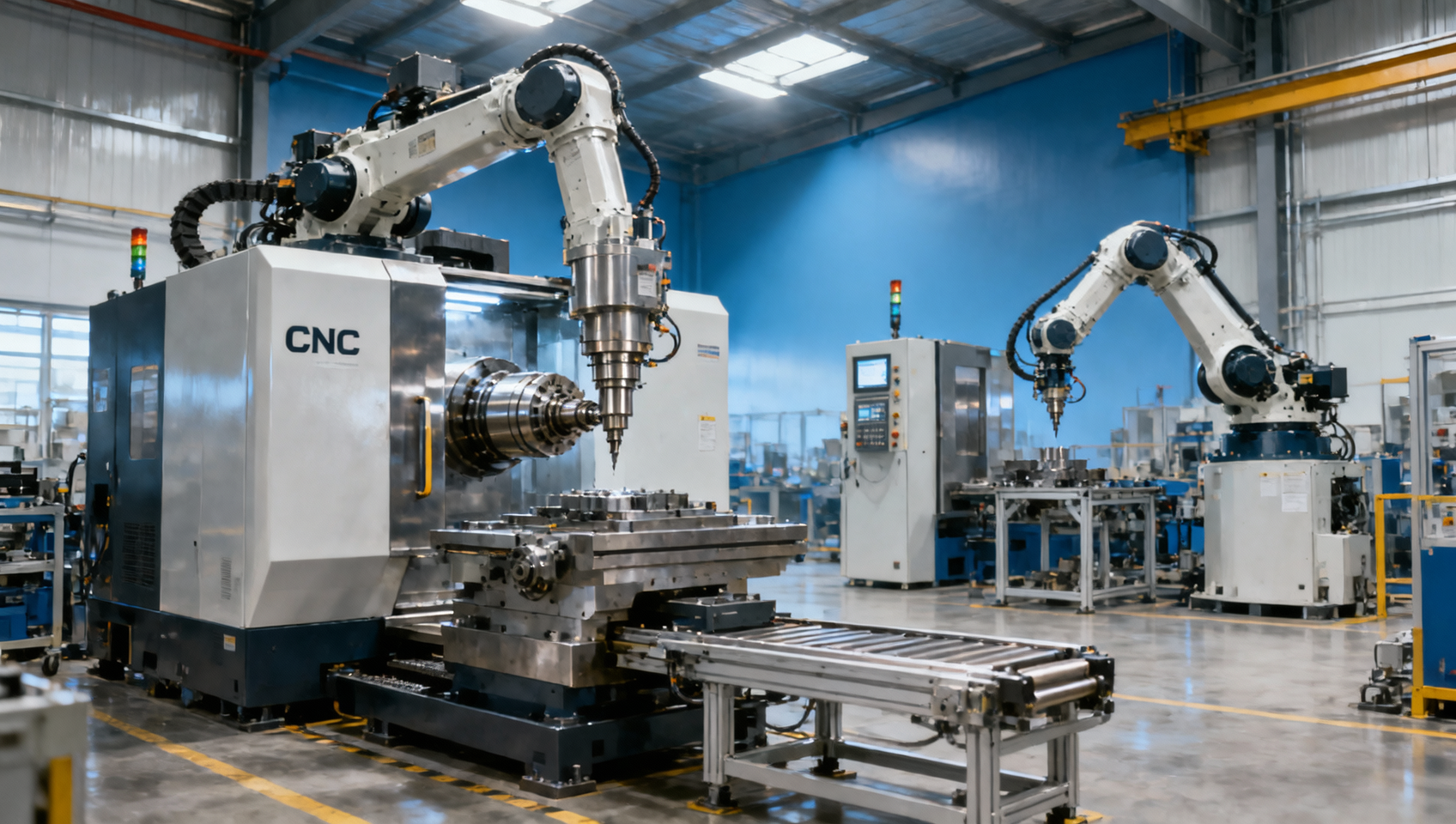
Industrial CNC lead times are shifting in 2026, reshaping how buyers, operators, and decision-makers plan metal machining, CNC milling, and automated production. As the Machine Tool Market adapts to Industrial Automation, CNC production, and Global Manufacturing pressures, understanding changes in CNC metalworking, automated lathe capacity, and production process timing is becoming essential for smarter sourcing and faster response.
For procurement teams, the issue is no longer just unit price. A 2-week slip in spindle delivery, a 10-day delay in control system integration, or a 30-day backlog in casting supply can change project ROI, launch timing, and factory utilization. For operators and plant managers, lead time volatility also affects tool planning, training windows, fixture preparation, and preventive maintenance schedules.
In 2026, CNC lead times are not moving in one direction. Some standard 3-axis machining centers are becoming faster to source, while multi-axis systems, automated turning cells, and highly customized production lines often require longer planning and acceptance periods. The practical question is how to read these shifts correctly and turn them into better sourcing, scheduling, and capacity decisions.
Why industrial CNC lead times are changing in 2026
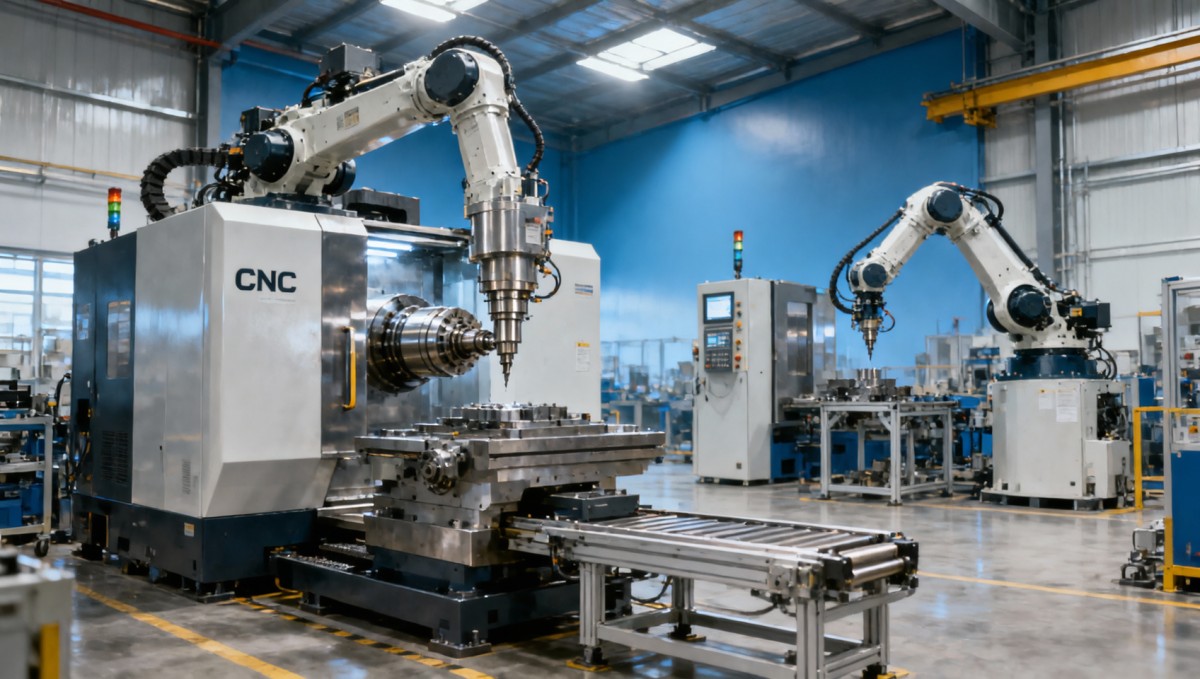
Lead time changes in the CNC machine tool industry are being driven by a mix of supply-side and demand-side factors. On the supply side, machine builders are still balancing castings, servo systems, linear guides, electrical components, and software integration resources. On the demand side, more factories are upgrading from isolated machines to connected CNC production cells, which increases engineering complexity and extends quotation-to-delivery timelines.
A standard CNC lathe may still be delivered in 6–12 weeks under stable conditions, but a 5-axis machining center with probing, pallet automation, and digital monitoring can often move into a 14–28 week range. For flexible production lines or automated loading systems, the timeline may stretch further because machine delivery is only one part of the total project schedule. Electrical integration, safety review, FAT planning, and installation readiness can each add 1–3 weeks.
Another change in 2026 is the wider difference between “catalog lead time” and “real operational lead time.” A supplier may quote 10 weeks for the machine itself, but the actual usable date may become 14 or 16 weeks once tooling approval, fixture design, coolant setup, training, and site acceptance are included. This gap matters most in aerospace, automotive, energy equipment, and electronics production, where process stability and documentation are part of the handover standard.
Key drivers behind the timing shift
Several recurring factors explain why industrial CNC lead times are shifting rather than simply rising or falling:
- More buyers are requesting automation bundles, including robot loading, chip handling, and in-process measurement.
- Control system customization, post-processor tuning, and software compatibility checks now take longer than in many traditional stand-alone machine purchases.
- Critical components such as precision bearings, spindles, and drive modules may have shorter supply windows in one quarter and tighter availability in the next.
- Regional manufacturing shifts are redistributing capacity among China, Germany, Japan, South Korea, and emerging assembly locations.
The result is a market where standardization can reduce lead time by 15%–25%, but customization can expand it by 20%–40%. Buyers who treat every CNC purchase as a simple equipment order may underestimate the planning effort required.
Typical lead-time ranges by machine type
The ranges below are not fixed market statistics, but they reflect common planning intervals used in industrial sourcing discussions and project forecasting.
The key takeaway is that machine lead time and production readiness are no longer the same metric. In many CNC production projects, readiness planning should begin 4–8 weeks before physical delivery, especially when fixtures, coolant systems, and operator training are involved.
How buyers and plant teams should evaluate lead time risk
A shorter quoted lead time is useful only if it aligns with the real production process. Buyers should separate commercial timing from technical timing. A machine can ship on schedule and still miss the required launch date if fixture trials fail, software communication is incomplete, or sample part capability is not achieved within tolerance. In high-precision applications, even a ±0.01 mm target may require multiple validation loops before approval.
For procurement personnel, lead time assessment should include at least 4 layers: base machine availability, option-package availability, integration readiness, and commissioning support. For operators, the practical issue is whether the incoming CNC system matches current tool libraries, program structure, material flow, and maintenance capability. For decision-makers, the bigger risk is hidden idle time between delivery and full-rate production.
An effective sourcing review should ask not only “When can you ship?” but also “When can we cut approved parts at target cycle time?” That distinction can change supplier ranking, especially for automated lathe lines and multi-machine cells where one delayed subsystem can hold back the entire installation.
A practical lead time evaluation checklist
The checklist below helps buyers compare quotations more realistically across suppliers and regions.
This comparison framework shows that a supplier with a 12-week quoted lead time may be less attractive than one offering 14 weeks if the second supplier has stronger application support, clearer FAT milestones, and faster startup response. Total productive availability often matters more than nominal shipping speed.
Questions that reduce uncertainty early
- Which 3 components are most likely to affect delivery by more than 7 days?
- Is the quoted schedule based on stocked standard configuration or custom assembly?
- How many days are planned for FAT, SAT, and operator training?
- What is the expected time from delivery to first approved batch of parts?
These questions help prevent a common mistake in CNC sourcing: focusing on transport and assembly while underestimating process qualification. In practice, approval timing is where many hidden delays appear.
Lead time strategies for standard machines, custom systems, and automated lines
Not every CNC purchase should be managed in the same way. Standard machines, semi-custom workstations, and fully automated production lines each require a different lead time strategy. Buyers who apply the wrong model may either overpay for speed or underprepare for integration. In 2026, the best results usually come from matching sourcing method to process complexity.
For standard CNC milling and turning equipment, the priority is specification discipline. Every added option can change availability. A machine with a 24-tool magazine may ship faster than a similar unit with a 40-tool magazine, high-pressure through-spindle coolant, and integrated probing. If the process does not truly need every upgrade at launch, phased implementation can cut 2–6 weeks from the initial timeline.
For custom cells and flexible production lines, the priority shifts from component availability to coordination. Here, the longest item is often not the machine body but the engineering chain: interface review, layout confirmation, safety logic, gripper design, and data communication. In these projects, a realistic master schedule should include at least 5 stages and named approval points.
Recommended planning model by project type
The table below outlines how different CNC investment types should be managed to reduce schedule risk and improve production readiness.
The common theme is that complexity must be made visible. A supplier quote alone is not a project plan. The more automated the system becomes, the more important the milestone structure becomes.
Five-stage implementation path
- Define process scope, materials, tolerance band, and target output per shift.
- Lock the machine configuration, control platform, and automation interface list.
- Approve fixtures, tools, utility requirements, and part verification method.
- Run FAT with documented checkpoints on motion, safety, and sample machining.
- Complete SAT, training, and ramp-up tracking for the first 30 days of production.
When this structure is used, teams can identify whether the risk is in manufacturing, logistics, engineering, or startup. That makes schedule recovery much easier than waiting until delivery week to solve unresolved technical questions.
Common mistakes that extend CNC production lead times
One of the most common errors in machine tool purchasing is over-customization too early in the process. Buyers sometimes request uncommon spindle tapers, nonstandard voltage layouts, custom guarding, special documentation packages, and future automation interfaces all in the first purchase phase. Each item may look small, but together they can push a workable 10-week schedule into a 16-week or 20-week timeline.
Another problem is treating the CNC machine as separate from the production process. Operators may discover after delivery that the selected machine does not match current fixture heights, forklift access, chip disposal routes, or program transfer method. These are not machine defects, but they create delays that feel like supplier delays. In practice, 5–10 overlooked site details can block startup faster than one major technical issue.
A third mistake is weak internal coordination. Procurement, production, maintenance, and automation teams often review different parts of the project at different times. If approval is not synchronized, the supplier may wait for answers on coolant pressure, foundation drawings, or communication protocol. Every paused decision can add several days, and across 6–8 approval points the cumulative effect becomes significant.
High-impact delay sources to control
- Late sample parts or incomplete drawings, which slow fixture and process validation.
- Utility mismatch, such as air pressure, power supply, coolant capacity, or floor loading.
- Unclear acceptance criteria for dimensional accuracy, surface finish, and cycle time.
- Insufficient spare parts planning for startup, especially wear items and sensors.
- Training scheduled after installation instead of before or during commissioning.
These issues are preventable. In many factories, a pre-delivery review held 3–4 weeks before shipment can remove most startup blockers. That review should include maintenance, process engineering, operators, and the supplier’s service contact, not only purchasing staff.
FAQ for 2026 lead time planning
How long should buyers reserve for commissioning? For a standard stand-alone machine, 3–7 days may be enough if utilities and programs are ready. For automated CNC cells, 2–4 weeks is often a safer planning buffer.
Is a shorter lead time always better? Not necessarily. If the supplier cannot support FAT, application tuning, or rapid spare parts response, the shorter shipment window may still lead to slower production launch.
Which buyers are most affected by lead time shifts? High-mix manufacturers, export-oriented plants, and factories adding automation usually feel the greatest impact because they rely on tight delivery windows and stable ramp-up timing.
What is the best way to reduce schedule risk? Freeze critical specifications early, confirm sample part requirements, and track delivery using milestone dates rather than a single promised shipping week.
What decision-makers should do next in a shifting machine tool market
In 2026, industrial CNC lead times should be treated as a planning variable, not just a supplier promise. Decision-makers need a sourcing model that combines machine availability, process readiness, installation logic, and service response. This is especially important for companies investing in CNC metalworking, automated production, and digital manufacturing workflows at the same time.
The strongest purchasing position comes from preparation. When RFQs include target tolerances, annual volume ranges, preferred control platforms, utility conditions, and startup expectations, suppliers can respond with more accurate delivery plans. This reduces the chance of attractive but unrealistic quotations. It also improves internal budgeting because timeline risk becomes visible earlier.
For operators and plant teams, the next step is to connect lead time planning with real shop-floor execution. Tooling lists, maintenance spares, training slots, and acceptance criteria should be prepared before the machine arrives. For procurement teams, supplier comparison should include engineering and service capability, not only equipment price and nominal delivery week.
Industrial CNC lead times are shifting, but that shift can be managed. Companies that plan in stages, validate technical readiness, and align machine purchases with production process needs will be in a stronger position to control cost, protect delivery commitments, and improve equipment utilization. If you are evaluating CNC machines, automated lathe solutions, or flexible production lines for 2026, now is the right time to review your schedule assumptions, compare lead time risk across suppliers, and get a tailored sourcing plan. Contact us to discuss your application, request a customized solution, or learn more about practical machine tool strategies for faster and more reliable deployment.
PREVIOUS ARTICLE
NEXT ARTICLE
Recommended for You
 What causes chatter in metal machining and how to stop itCNC Machining Technology Center
 Industrial CNC lead times are shifting in 2026Manufacturing Market Research Center
 When CNC industrial upgrades cut output instead of raising itMachine Tool Industry Editorial Team
 Automated lathe errors that often start with bar feedingMachine Tool Industry Editorial Team
 Why CNC metalworking scrap rates rise on thin wall partsCNC Machining Technology Center
 CNC cutting speed or finish quality: where losses beginCNC Machining Technology Center



Aris Katos
Future of Carbide Coatings
15+ years in precision manufacturing systems. Specialized in high-speed milling and aerospace grade alloy processing.
▶
Industrial CNC lead times are shifting in 2026Manufacturing Market Research Center▶
CNC industrial demand is moving toward flexible cell layoutsManufacturing Market Research Center▶
Is industrial CNC programming still bottlenecked by post-processor compatibility?Manufacturing Market Research Center▶
Machine Tool Market data reveals unexpected demand shift toward compact CNC lathesManufacturing Market Research Center▶
Cost-effective CNC manufacturing: How batch size shifts the break-even point for automationManufacturing Market Research Center
Mastering 5-Axis Workholding Strategies
Join our technical panel on Nov 15th to learn about reducing vibrations in thin-wall components.

Providing you with integrated sanding solutions
Before-sales and after-sales services
Comprehensive technical support