• Global CNC market projected to reach $128B by 2028 • New EU trade regulations for precision tooling components • Aerospace deman
NYSE: CNC +1.2%LME: STEEL -0.4%

CNC industrial demand is moving toward flexible cell layouts
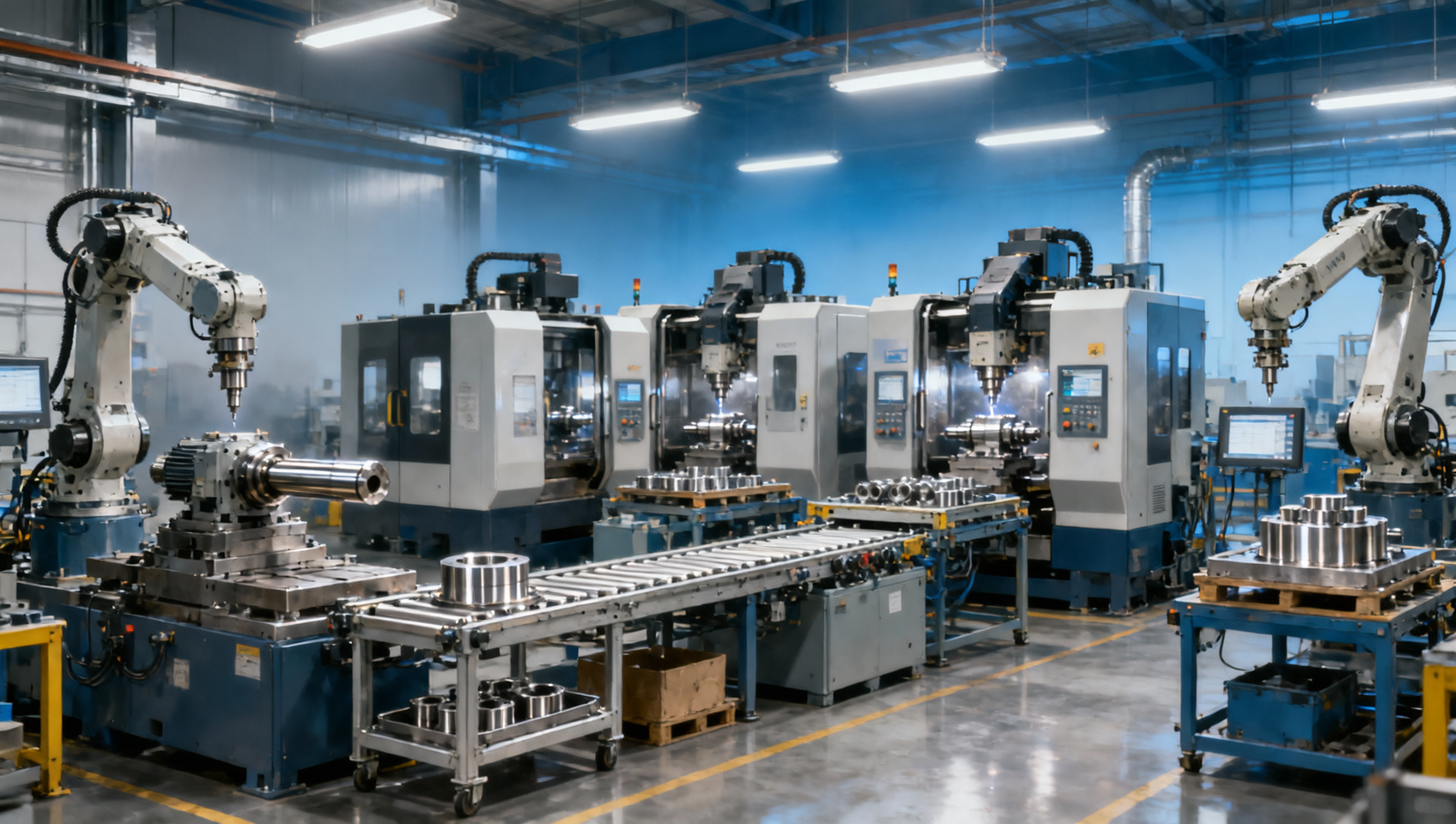
As Global Manufacturing shifts toward flexible cell layouts, the Manufacturing Industry is rethinking how industrial CNC, CNC milling, and automated production lines support faster, more adaptive workflows. From metal machining and CNC cutting to industrial robotics and the Production Process for Shaft Parts, this transition is reshaping the Machine Tool Market and helping buyers, operators, and decision-makers improve efficiency, precision, and scalability.
For manufacturers, this is no longer a niche layout discussion. Flexible CNC cells are becoming a practical answer to rising product variation, shorter order cycles, labor constraints, and stricter quality targets. Whether a plant produces shaft parts, precision discs, structural components, or mixed-batch metal parts, the ability to switch setups in 10–30 minutes instead of several hours can directly affect throughput, cost control, and delivery reliability.
This shift matters to multiple audiences. Operators want easier workflows and more stable process control. Procurement teams need equipment that balances investment, uptime, and expansion potential. Decision-makers are looking for production systems that can scale from 1 cell to 3–5 linked units without rebuilding the entire workshop. In that context, flexible cell layouts are emerging as a strategic model for modern CNC manufacturing.
Why flexible CNC cell layouts are gaining momentum
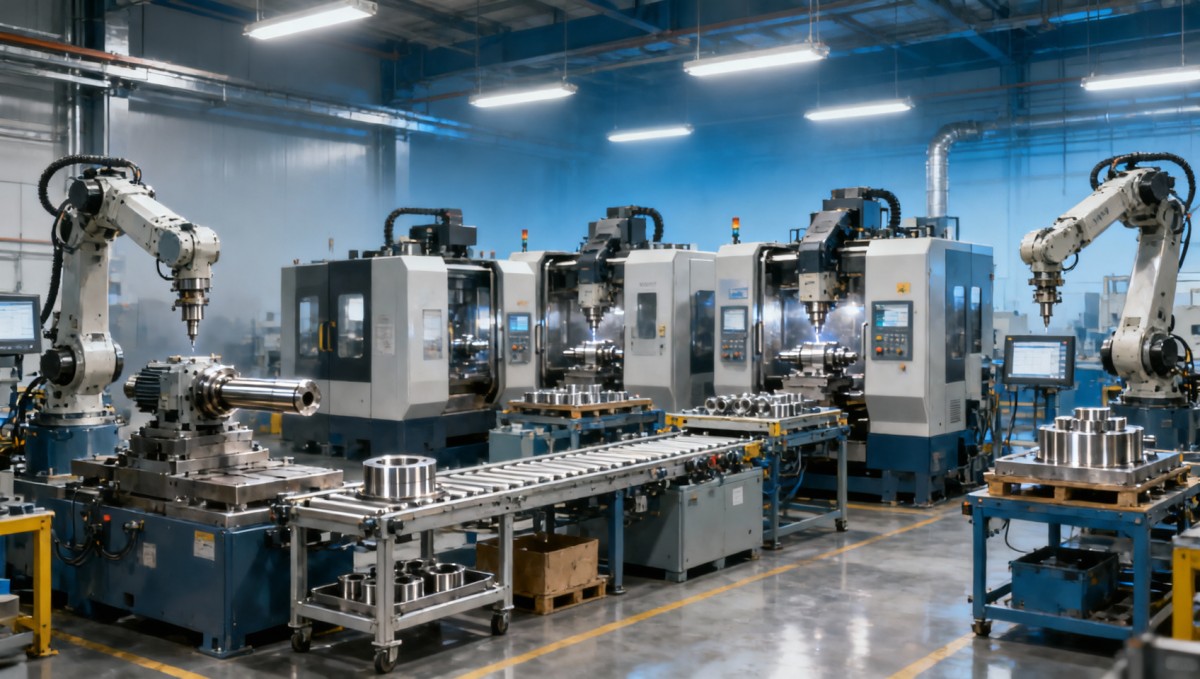
Traditional line-based production works well when output is stable, product families are narrow, and changeovers are infrequent. However, many CNC workshops now face mixed orders, fluctuating batch sizes, and tighter lead times. A conventional linear arrangement can create bottlenecks when one machine goes down or when one process stage runs 15%–25% slower than the rest of the line.
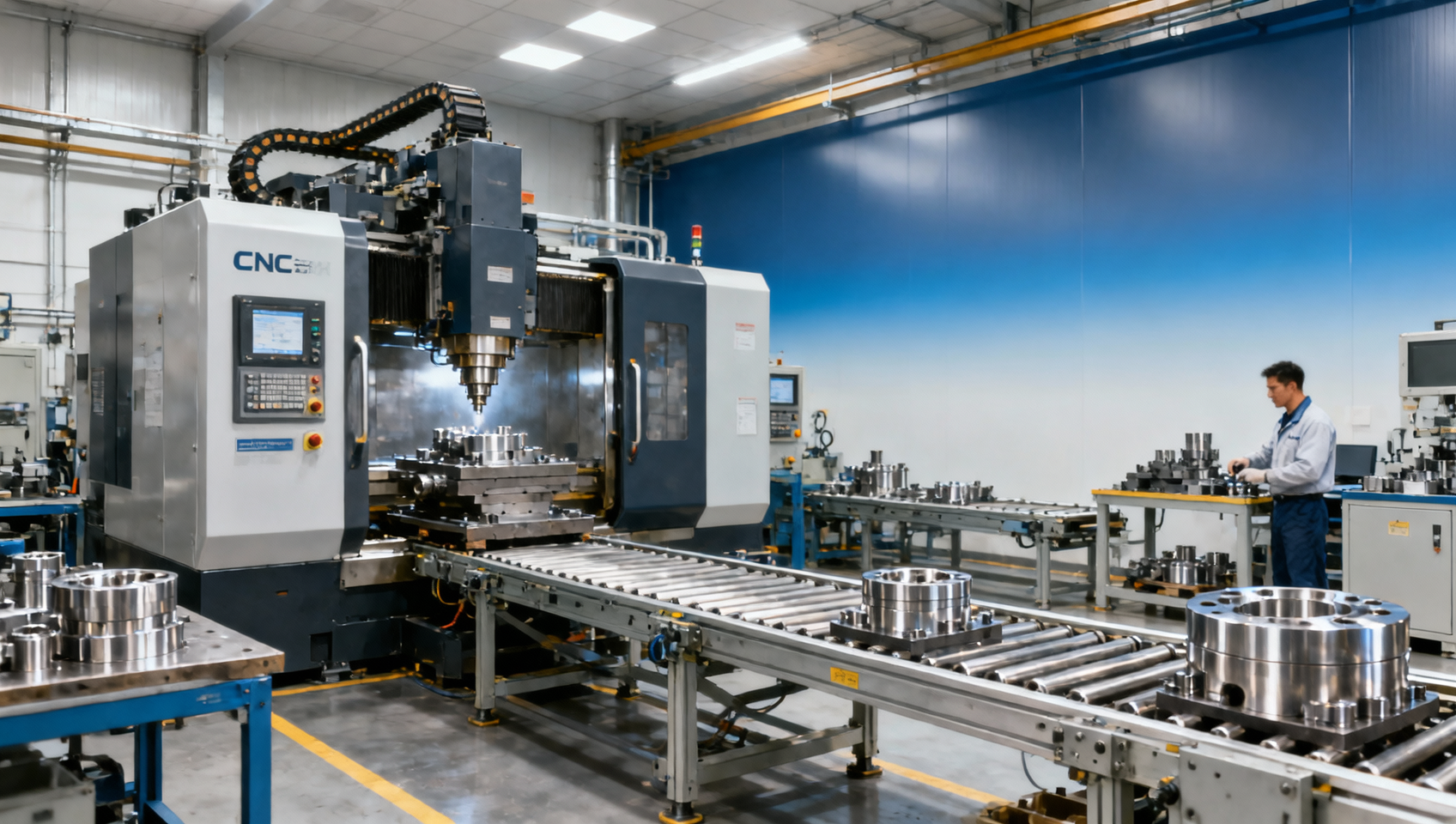
Flexible cell layouts address this by grouping CNC lathes, machining centers, tooling stations, inspection points, and robotic handling into modular production units. Instead of relying on a rigid sequence, cells are designed to adapt to part variety, process differences, and scheduling changes. This is especially valuable in automotive supply, aerospace subcontracting, energy equipment machining, and electronics component production, where batch sizes may range from 20 pieces to 2,000 pieces per order.
Another driver is floor-space efficiency. In many factories, a linear machine arrangement increases internal transport distance by 20–40 meters per cycle for operators or material handlers. A cell-based setup can shorten movement paths, reduce waiting time between machining and inspection, and improve coordination between operators, robots, and quality staff. Even a 5%–10% reduction in non-cutting time can create meaningful gains in spindle utilization.
Digital manufacturing is also accelerating adoption. CNC cells are easier to connect to MES platforms, tool management systems, and machine monitoring dashboards when each unit has clear process boundaries. Instead of digitizing a large and rigid line all at once, a manufacturer can upgrade 1 cell, validate performance over 4–8 weeks, and then replicate the model across similar part families.
Key operational pressures behind the shift
- Higher product mix, with 3–10 part variants sharing similar machine platforms but requiring different fixtures, tools, and programs.
- Shorter customer lead times, often moving from 4–6 weeks to 2–3 weeks for repeat orders.
- Labor shortages that increase the value of robotic loading, pallet systems, and simplified operator intervention.
- Quality requirements such as tighter repeatability, in-process inspection, and more traceable process data.
Comparison of rigid lines and flexible cells
The table below highlights typical differences between traditional line layouts and flexible CNC cell configurations in mixed-production environments.
The key conclusion is not that traditional lines are obsolete. Rather, flexible cells give manufacturers a more resilient option when product complexity, demand variability, and digital integration requirements continue to increase.
What defines an effective flexible CNC cell
A flexible cell is more than a few machines placed close together. It is a coordinated production unit built around process flow, tool access, material handling, and inspection logic. In most cases, a practical cell includes 2–4 CNC machines, 1 loading solution such as a robot or gantry, 1 tooling and fixture management point, and 1 quality verification stage. The design must support both machine utilization and fast intervention when process deviations appear.
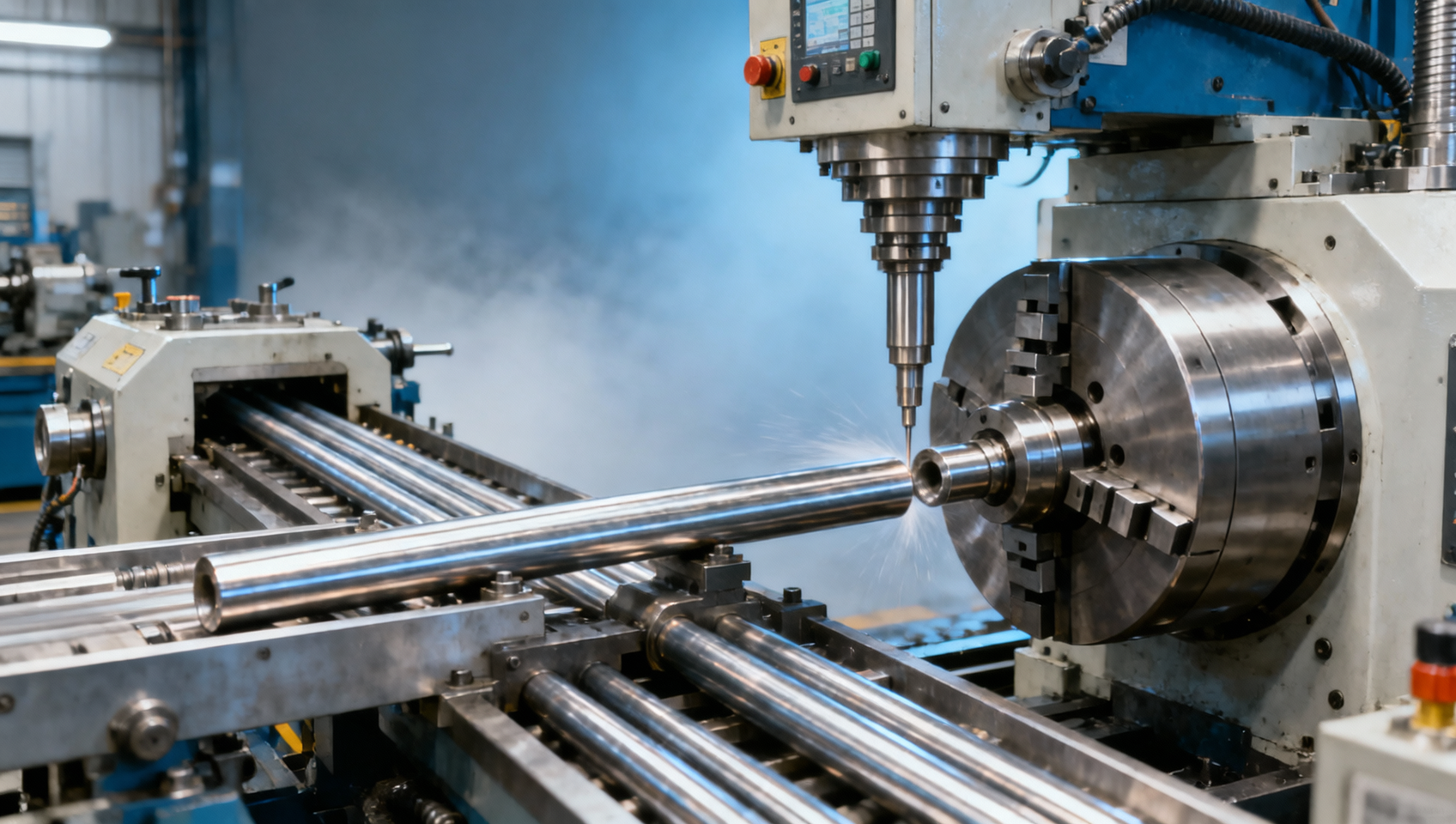
For shaft parts and rotational components, a common cell format combines CNC lathes, secondary milling or drilling capability, automatic part transfer, and in-process gauging. For prismatic or structural parts, the cell may center on vertical or horizontal machining centers with pallet handling and tool life monitoring. In both cases, the goal is to reduce idle time and make setup changes predictable rather than disruptive.
Tooling strategy is especially important. A cell that runs 6 part numbers with 80% shared tooling can be significantly easier to manage than a cell where every job requires full replacement of holders, inserts, and fixtures. Buyers should evaluate standardization levels, expected tool magazine capacity, and presetting procedures before finalizing equipment selection. In many shops, reducing manual tool search and adjustment time by even 15 minutes per shift improves scheduling stability.
Automation should also match production reality. A robot that handles 5 kg to 25 kg parts with cycle consistency may be sufficient for medium-batch machining, while high-mix environments may benefit more from pallet pools, quick-change clamping, and vision-assisted loading. The right answer depends on part geometry, material flow, shift model, and expected future product changes over the next 2–5 years.
Core design elements
Machine pairing and process balance
Cycle times inside a cell should be balanced within a workable range. If one operation takes 90 seconds and the next takes 210 seconds, the cell will require buffering, parallel capacity, or process redesign. A variance below 20% is often easier to control than larger imbalances.
Fixture and changeover architecture
Quick-change fixtures, modular jaws, and zero-point clamping systems can reduce setup time from 45–60 minutes to 10–20 minutes in suitable applications. That makes small and medium batches far more economical.
Data and quality visibility
Cell-level dashboards should track spindle status, alarm frequency, tool life thresholds, and first-pass quality indicators. Without this visibility, a flexible layout may look modern but still suffer from hidden downtime and inconsistent output.
Typical cell configurations by production need
The following table outlines practical cell structures used across precision machining and CNC production environments.
An effective cell is therefore defined by process coordination, not by equipment quantity alone. The best-performing layouts align machine capacity, handling method, quality control, and future expansion in one operational logic.
How buyers and decision-makers should evaluate flexible cell investments
Procurement decisions for CNC cells should begin with production data rather than equipment catalogs. A buyer should first identify 3 practical baselines: annual part mix, current setup frequency, and the target utilization window for each machine. For example, if a plant runs more than 8 setup changes per week and processes 5 or more recurring part families, a flexible layout often deserves serious evaluation.
Capital cost is important, but it should not be the only metric. A lower-price machine package may create higher costs later if fixture compatibility is poor, tool capacity is limited, or integration with robots and software requires extensive custom engineering. Procurement teams should compare total operating impact over 24–36 months, including labor allocation, downtime exposure, spare parts planning, and expected training time.
Decision-makers should also examine scalability. If one cell performs well, can the same control logic, tooling concept, and material flow be replicated in a second or third cell? Standardized expansion is often more valuable than a highly customized first installation. In many cases, phased deployment reduces risk: start with 1 pilot cell, verify quality and output over 60–90 days, then expand based on proven bottlenecks.
Supplier support is another critical factor. Flexible manufacturing depends on reliable commissioning, training, and post-installation optimization. Buyers should ask clear questions about response time, spare part availability, programming support, and preventive maintenance intervals. A support delay of 72 hours may be manageable for a standalone machine, but it can disrupt an entire cell if automation and upstream scheduling depend on it.
A practical evaluation checklist
- Map the top 10 part numbers by volume, margin, and process complexity.
- Measure current setup time, queue time, and internal transport distance.
- Check whether 60%–80% of recurring jobs can share fixtures, jaws, pallets, or tooling logic.
- Estimate operator-to-machine ratio under 1-shift and 2-shift conditions.
- Review service support, training scope, and integration capability before order release.
Procurement criteria table
The table below can help purchasing teams and management compare suppliers and technical proposals in a more structured way.
A disciplined comparison process often reveals that the best investment is the one that improves adaptability and serviceability, not simply the one with the lowest purchase price.
Implementation risks, operator concerns, and common mistakes
Flexible CNC cells can deliver strong results, but implementation mistakes are common. One of the biggest risks is over-automation. Some factories add robots and conveyors before stabilizing machining processes, tool life, or fixture repeatability. When the base process is inconsistent, automation only makes the problems move faster. A good rule is to validate process capability first, then automate transfer and scheduling functions.
Another mistake is ignoring operator workflow. A cell may look efficient on paper, yet fail in daily use if access to tooling, chip removal, coolant maintenance, or inspection is awkward. Operators should be involved early, especially when designing loading height, alarm handling, and routine maintenance points. Saving 2 square meters of floor space is not worth it if basic service tasks become difficult.
Training is frequently underestimated. Even when controls are familiar, cell-based production requires different habits: managing multiple machines, responding to robot status, verifying shared tooling, and reading more process data. Most teams need structured training across 2–4 stages, including startup, trial production, optimization, and independent operation. Without this, utilization improvements may remain below expectations for several months.
There is also a layout planning risk. If raw material input, finished-part output, and inspection flow are not aligned, the cell can develop hidden congestion. What should be a compact and adaptive production unit becomes a crowded zone with frequent manual intervention. Material flow diagrams, safety review, and service access should be checked before installation, not after commissioning.
Common mistakes to avoid
- Selecting machines based on peak capacity only, without considering mixed-part changeover frequency.
- Adding robotics before confirming fixture stability and chip evacuation reliability.
- Failing to define who owns cell-level data review, alarm response, and quality escalation.
- Treating commissioning as a 3-day event instead of a 4–8 week ramp-up process.
FAQ for planning and operation
How do we know whether a flexible CNC cell fits our factory?
It is usually a strong fit when production includes repeated changeovers, several related part families, and a need for faster response to order changes. If the workshop handles only one stable product at very high volume, a dedicated line may still be more efficient.
What is a realistic implementation timeline?
A practical timeline often includes 2–4 weeks for process review and layout planning, 6–12 weeks for equipment preparation depending on scope, and another 4–8 weeks for commissioning and optimization. More complex automation may require longer integration time.
What should operators monitor every shift?
Daily checks should include tool wear status, robot or pallet transfer consistency, first-piece verification, coolant and chip management, and alarm history. A short review at the start and end of each shift often prevents small disruptions from turning into lost production hours.
Which KPI matters most during the first 90 days?
Many factories focus first on changeover stability, first-pass yield, and machine utilization. These indicators provide a balanced view of whether the cell is truly improving flexibility rather than simply increasing complexity.
What the next phase of the machine tool market will look like
The move toward flexible cell layouts reflects a broader evolution in the machine tool market. Buyers are no longer evaluating CNC machines as isolated assets. They are increasingly purchasing production capability: a combination of machining accuracy, automation readiness, digital visibility, and scalable workflow design. This is especially relevant in global manufacturing regions where labor cost, energy management, and delivery pressure all influence equipment strategy.
In the next 3–5 years, more manufacturers are likely to adopt modular CNC cells that can be expanded in stages. This approach helps companies respond to uncertain demand without locking themselves into oversized line investments. It also supports more localized manufacturing, where production sites need to handle diverse orders with shorter transport and replenishment cycles.
Technology convergence will further strengthen this trend. CNC milling, turning, robotic loading, in-process measurement, and software-based scheduling are becoming easier to integrate at cell level. As a result, even medium-sized factories can build smarter machining units without needing a full factory overhaul in the first phase. The practical advantage is lower implementation risk and clearer return visibility at each expansion step.
For operators, buyers, and executives alike, the message is clear: flexibility is not only about layout. It is about building a production system that can absorb change while protecting precision, uptime, and delivery performance. Manufacturers that plan around adaptable cells, standardization, and serviceable automation will be better positioned for the next generation of precision manufacturing.
If your business is evaluating CNC machines, automation options, or workshop layout upgrades, now is the right time to compare flexible cell strategies against current production limits. To discuss application-specific requirements, get a tailored solution, or explore more machine tool and precision manufacturing insights, contact us and learn more about practical solutions for scalable CNC production.
Recommended for You
 What causes chatter in metal machining and how to stop itCNC Machining Technology Center
 Industrial CNC lead times are shifting in 2026Manufacturing Market Research Center
 When CNC industrial upgrades cut output instead of raising itMachine Tool Industry Editorial Team
 Automated lathe errors that often start with bar feedingMachine Tool Industry Editorial Team
 Why CNC metalworking scrap rates rise on thin wall partsCNC Machining Technology Center
 CNC cutting speed or finish quality: where losses beginCNC Machining Technology Center

Aris Katos
Future of Carbide Coatings
15+ years in precision manufacturing systems. Specialized in high-speed milling and aerospace grade alloy processing.
▶
Industrial CNC lead times are shifting in 2026Manufacturing Market Research Center▶
CNC industrial demand is moving toward flexible cell layoutsManufacturing Market Research Center▶
Is industrial CNC programming still bottlenecked by post-processor compatibility?Manufacturing Market Research Center▶
Machine Tool Market data reveals unexpected demand shift toward compact CNC lathesManufacturing Market Research Center▶
Cost-effective CNC manufacturing: How batch size shifts the break-even point for automationManufacturing Market Research Center
Mastering 5-Axis Workholding Strategies
Join our technical panel on Nov 15th to learn about reducing vibrations in thin-wall components.

Providing you with integrated sanding solutions
Before-sales and after-sales services
Comprehensive technical support