• Global CNC market projected to reach $128B by 2028 • New EU trade regulations for precision tooling components • Aerospace deman
NYSE: CNC +1.2%LME: STEEL -0.4%

Why the Machine Tool Market is watching replacement demand again
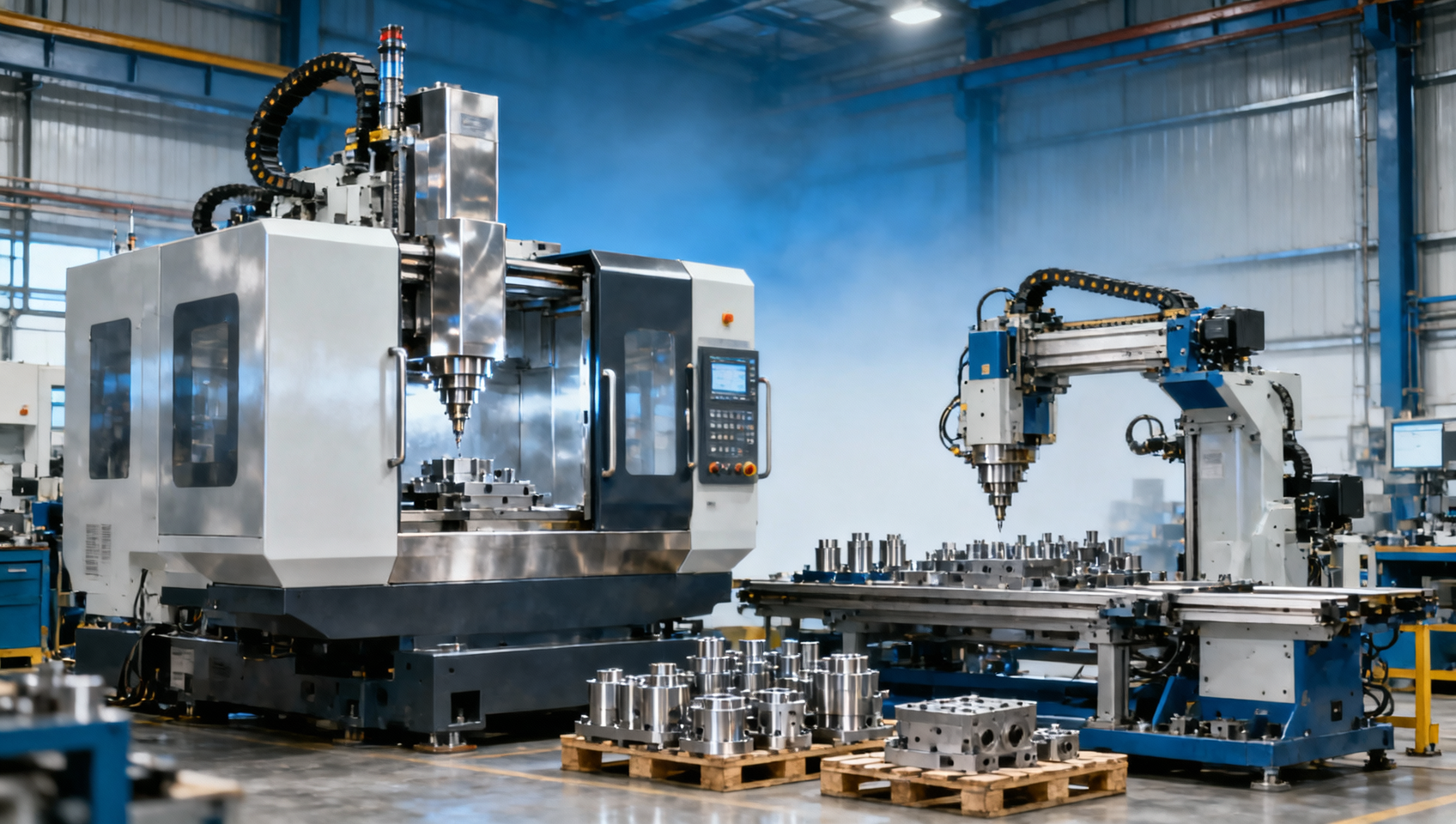
Why is the Machine Tool Market turning its attention to replacement demand again? As Global Manufacturing faces tighter efficiency targets, aging equipment, and faster Industrial Automation upgrades, buyers are reassessing metal machining capacity, industrial CNC systems, and automated production lines. For manufacturers, procurement teams, and operators, replacement is no longer just maintenance—it is a strategic move shaping CNC production, productivity, and long-term competitiveness.
That shift matters across the entire CNC machine tool industry. From automotive and aerospace to energy equipment and electronics, plants are under pressure to deliver shorter cycle times, tighter tolerances, and more stable output without allowing labor, downtime, and scrap costs to rise. In many workshops, the question is no longer whether legacy equipment still runs, but whether it can still support the next 3 to 5 years of production requirements.
Replacement demand is therefore re-emerging as a major market signal. It reflects not only wear and tear, but also a wider change in manufacturing strategy: digital integration, multi-axis capability, automation compatibility, and energy efficiency are now central buying criteria. For information researchers, machine operators, procurement specialists, and business decision-makers, understanding this replacement cycle is essential for making better technical and commercial decisions.
Why replacement demand is back on the agenda
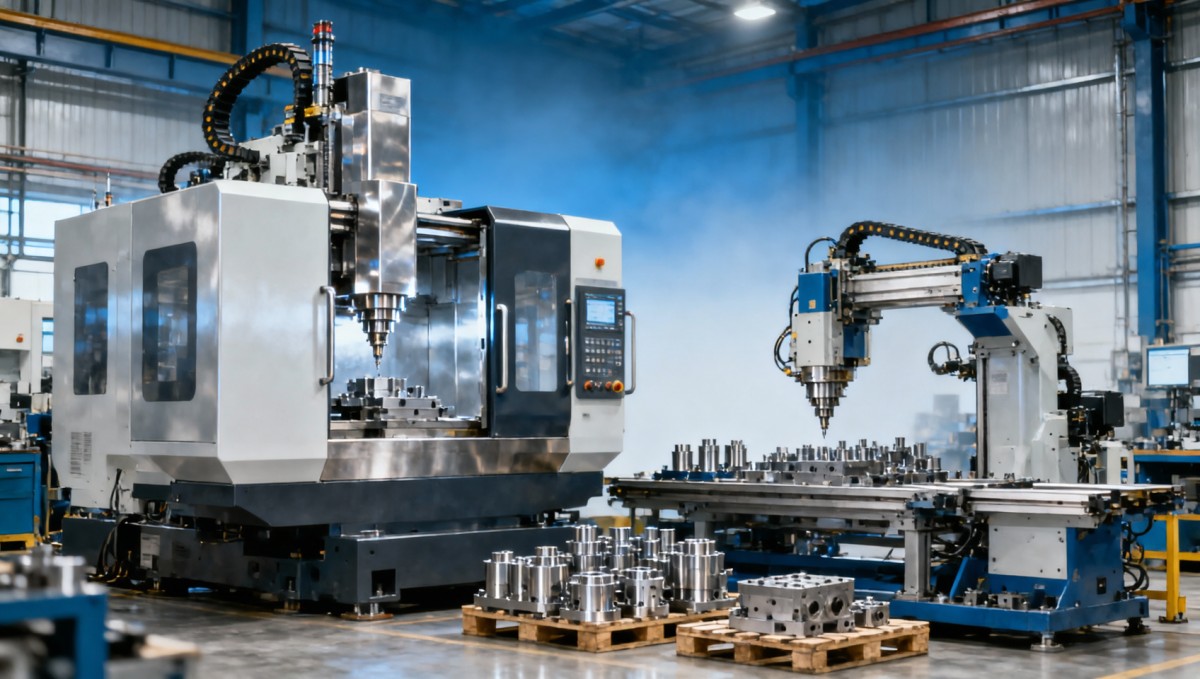
The machine tool market typically experiences replacement waves when three conditions appear at the same time: equipment aging, product complexity increases, and production economics tighten. Many factories are now operating CNC lathes, machining centers, and auxiliary automation systems installed 8 to 15 years ago. These machines may still be functional, but they often struggle with newer requirements such as unattended shifts, digital monitoring, and high-mix production.
A second driver is process capability. Newer parts often require tighter repeatability, faster spindle response, improved thermal stability, and better interpolation performance. In precision machining, a machine that once held acceptable accuracy may now produce inconsistent results when handling thinner walls, complex contours, or multi-face machining. Even a drift from ±0.01 mm to ±0.03 mm can affect yield, rework time, and customer confidence.
There is also a financial reason. Maintenance expenses tend to rise sharply after year 7 or year 10, especially when spare parts become slower to source and unplanned stoppages interrupt scheduling. A plant may tolerate 2 to 3 hours of downtime per month on a non-critical machine, but once stoppages extend to 8 to 12 hours and affect delivery performance, replacement becomes easier to justify than repeated repair.
Procurement teams are also seeing a broader operational impact. Older machine tools often consume more floor space, require more manual setup steps, and lack direct compatibility with robots, probing systems, or MES connections. As a result, replacement demand is not simply a maintenance issue; it is tied to throughput, labor allocation, traceability, and expansion planning.
The table below shows the most common triggers that move a machine from “keep running” status to “replace or upgrade” status in industrial CNC environments.
The key conclusion is that replacement demand returns when the cost of keeping an old machine becomes less predictable than the cost of investing in a new one. In that situation, buyers start looking beyond purchase price and focus on lifecycle performance, delivery stability, and production resilience.
What has changed in buyer expectations
Ten years ago, many buyers prioritized spindle power, travel, and initial budget. Today, those factors still matter, but they are no longer enough. Decision-makers increasingly expect visibility into tool life, remote diagnostics, preventive maintenance logic, and compatibility with automation cells. The modern replacement decision is as much about system integration as machine hardware.
Common evaluation priorities now include
- Cycle time reduction of 10% to 25% on recurring part families
- Stable unattended operation for 4 to 8 hours or longer
- Repeatability suited to high-precision or multi-operation workflows
- Connectivity for data collection, alarms, and production tracking
How aging equipment affects productivity, quality, and cost
An aging machine tool rarely fails all at once. More often, it loses competitiveness gradually. Setup takes longer because zero return is less stable. Surface finish worsens under heavier loads. Tool wear becomes less predictable because spindle vibration increases. Operators compensate with extra checks, slower feed rates, or manual intervention. These hidden losses often stay outside accounting reports, yet they reduce actual plant efficiency every week.
For operators, the impact is immediate. Older CNC systems may have slower interfaces, fewer automation routines, and weaker alarm diagnosis. A task that should require 3 setup adjustments may need 7 or 8. On a line producing medium-volume parts, adding even 4 minutes per setup across 20 changeovers per week can remove more than 1 full shift of productive time over a month.
For quality teams, aging machine tools increase variation risk. Thermal growth control, axis backlash, and spindle condition all influence dimensional stability. If the process requires repeatable bore size, flatness, or concentricity, the machine must remain stable through long runs, not only during first-piece inspection. Replacing a machine can reduce measurement deviations, but more importantly, it can reduce process uncertainty.
For management, the biggest issue is cost visibility. Repair invoices show only part of the burden. The larger cost often comes from missed dispatch windows, overtime, delayed fixtures, extra inspection, and lower OEE. When a machine’s effective utilization drops from 78% to 62%, the business may need more capacity than it appears on paper, even if installed equipment count stays the same.
Hidden cost areas that often justify replacement
A practical way to assess replacement demand is to compare visible and hidden cost categories over a 12-month period. This method is especially useful for procurement and finance teams that need to move the discussion beyond technical complaints and into measurable production economics.
This comparison shows why replacement decisions increasingly include OEE, changeover time, and process stability, not just machine availability. A machine that still runs may still be underperforming in the metrics that matter most to competitive manufacturing.
Warning signs operators and supervisors should track
- Repeat alarm patterns that return more than 2 times per month
- Spindle or axis temperature behavior outside normal shift-to-shift range
- Noticeable increase in setup verification points or offset corrections
- Part quality that degrades after several hours of continuous production
- Maintenance dependence on obsolete components or external retrofits
Which machine tools are most likely to be replaced first
Not every machine in a plant should be replaced at the same time. The strongest replacement demand usually appears in assets that directly affect bottlenecks, quality-critical parts, or labor-heavy processes. In many factories, this means CNC lathes handling shaft parts, vertical machining centers producing structural components, and multi-axis systems used for precision or high-value workpieces.
Single-purpose equipment can remain in service longer when part geometry is stable and tolerances are forgiving. But as product portfolios expand and batch sizes become less predictable, flexible equipment gains value. A newer machining center with better tool management, probing, and automation readiness may replace two older machines if it reduces changeover and increases available production hours.
Replacement is also common in support systems around the core machine tool. Tool presetting, chip handling, coolant management, fixturing repeatability, and robot loading all influence the return on a new machine. A replacement project that ignores these adjacent systems may improve spindle capability but fail to deliver the expected throughput increase.
For buyers, the key is to prioritize machine classes by operational pain, not only by age. A 6-year-old machine in a bottleneck process may deserve replacement before a 12-year-old machine in low-risk backup service. The right sequence depends on output criticality, tolerance demand, and labor intensity.
Priority matrix for replacement planning
The following table can help procurement teams and production managers identify where replacement demand is most urgent across a mixed machine fleet.
This matrix highlights a recurring lesson in the machine tool market: the strongest replacement value often appears where machine performance, part complexity, and labor efficiency intersect. That is why replacement demand is now being watched not only by equipment suppliers, but also by plant managers planning future capacity.
A practical prioritization method
- List the top 10 machines by downtime hours, scrap exposure, or missed production.
- Identify which of those machines serve bottleneck operations or high-margin parts.
- Estimate gains in three areas: cycle time, setup reduction, and quality stability.
- Compare replacement cost against 12 to 24 months of hidden operating losses.
How procurement teams should evaluate a replacement project
A successful replacement project starts with a broader specification than “same machine, newer version.” Procurement teams should define the production target first: part family, annual volume, tolerance level, shift pattern, staffing model, and automation intent. A machine that looks cost-effective in a brochure can become expensive if it cannot support future fixtures, tool packages, digital interfaces, or loading options.
Lead time also matters. Depending on machine type, configuration, and automation scope, delivery can range from 8 to 16 weeks for standard equipment to 4 to 9 months for more customized systems. Buyers should therefore evaluate both immediate operational pain and realistic implementation timing. Waiting too long can force emergency purchases, which often reduce negotiating power and planning quality.
Commercial evaluation should include more than machine price. Tooling compatibility, fixturing changes, training, software options, spare parts support, and service response windows should all be reviewed in advance. In many cases, a lower initial price becomes less attractive if commissioning takes longer, operator adoption is weak, or spare parts access is uncertain after warranty.
Procurement also has to translate technical language into decision language. Management will usually ask four questions: What problem does this replacement solve? How quickly will it improve output or reduce risk? What implementation support is needed? And what happens if the plant keeps the old machine for another 12 months? Clear answers make the replacement case more robust.
Core selection criteria for CNC replacement
- Process fit: spindle range, axis configuration, work envelope, and rigidity should match the real part mix rather than only maximum part size.
- Automation readiness: interface capability, door cycle reliability, chip evacuation, and workholding repeatability are essential if lights-out production is planned.
- Service support: response time targets, spare parts availability, and commissioning experience should be discussed before order placement.
- Scalability: the machine should support at least the next 3 to 5 years of product and volume development, not only current orders.
Implementation checkpoints buyers should request
Before signing, ask for a clear implementation path with milestones. A practical project usually includes 5 stages: technical review, layout confirmation, pre-delivery acceptance, installation and training, and process validation. For factories replacing critical machines, a phased switchover is often safer than immediate full-load transfer, especially when delivery commitments remain tight.
Buyers should also define acceptance criteria in measurable terms. These may include cycle time target, repeatability standard, surface finish requirement, trial run duration, and operator training scope. The more specific these points are, the lower the risk of mismatch after installation.
What replacement demand means for the next phase of the machine tool market
Replacement demand is becoming more strategic because it sits at the center of several manufacturing trends at once. Smart factory initiatives require connected machine tools. Labor constraints increase interest in automation. Product complexity supports multi-axis adoption. Sustainability targets encourage more efficient drives, coolant systems, and process control. Together, these factors push replacement decisions higher on the capital planning agenda.
This is especially relevant in major manufacturing regions such as China, Germany, Japan, and South Korea, where established machine tool clusters support both domestic upgrading and international supply. As suppliers expand globally, buyers gain access to more options, but they also face a more complex comparison process. Technical fit, local service, and long-term parts support become more important than headline specifications alone.
For machine tool users and industrial buyers, the real question is not whether replacement demand exists, but how to respond to it intelligently. Plants that assess replacement early can schedule installation during planned downtime, align machine capability with upcoming orders, and reduce the disruption that comes with reactive emergency purchasing. In contrast, delayed action often leads to rushed decisions and capacity gaps.
The most competitive manufacturers are therefore treating replacement as part of production strategy. They review machine fleets by performance tier, identify the weakest link in critical workflows, and connect equipment renewal to measurable outcomes such as shorter lead times, lower scrap, improved uptime, and greater automation coverage. In a market where delivery reliability and process capability increasingly define success, that approach is becoming a practical advantage.
FAQ: common questions about machine tool replacement demand
How do I know whether to retrofit or replace a CNC machine?
If the machine frame and core mechanics remain healthy, a retrofit can be useful for controls, drives, or selected subsystems. But if you face recurring accuracy drift, structural wear, poor automation compatibility, and spare parts risk at the same time, full replacement is usually the safer long-term option. A good rule is to compare retrofit cost against 40% to 60% of a replacement budget and then assess the remaining service life.
Which companies are most affected by replacement demand?
Replacement demand is strongest in companies with high utilization, precision-critical parts, growing automation plans, or machine fleets older than 8 to 12 years. It is particularly relevant in automotive components, aerospace structures, energy equipment, electronics hardware, and other sectors where throughput and consistency directly affect profitability.
What metrics should decision-makers review before approving a new machine?
Focus on at least 6 areas: downtime hours, setup time, scrap or rework rate, cycle time, labor dependency, and spare parts lead time. If possible, also review OEE trend, part backlog, and the machine’s role in bottleneck operations. These indicators create a stronger business case than age alone.
Replacement demand is back in focus because the machine tool market is no longer measured only by installed capacity, but by usable, efficient, and future-ready capacity. When aging equipment limits precision, automation, or delivery performance, replacement becomes a strategic investment rather than a reactive expense.
If your team is reviewing CNC lathes, machining centers, multi-axis systems, or automated production line upgrades, now is the right time to compare lifecycle cost, process fit, and implementation risk in a structured way. Contact us to discuss your application, request a tailored equipment plan, or learn more about practical machine tool replacement solutions for modern manufacturing.
PREVIOUS ARTICLE
Recommended for You
 Metal machining costs keep rising. Where is the waste?CNC Machining Technology Center
 What slows metal machining even when machines look busy?CNC Machining Technology Center
 Industrial CNC uptime drops for simple reasons too oftenMachine Tool Industry Editorial Team
 When does industrial CNC need an upgrade, not a repair?Machine Tool Industry Editorial Team
 CNC industrial demand is shifting toward smaller batch runsManufacturing Market Research Center
 Why CNC industrial projects miss deadlines after quotingCNC Machining Technology Center

Aris Katos
Future of Carbide Coatings
15+ years in precision manufacturing systems. Specialized in high-speed milling and aerospace grade alloy processing.
▶
CNC industrial demand is shifting toward smaller batch runsManufacturing Market Research Center▶
Used metal lathe or new one? The cost gap is not always realManufacturing Market Research Center▶
Why the Machine Tool Market is watching replacement demand againManufacturing Market Research Center▶
Industrial CNC lead times are shifting in 2026Manufacturing Market Research Center▶
CNC industrial demand is moving toward flexible cell layoutsManufacturing Market Research Center
Mastering 5-Axis Workholding Strategies
Join our technical panel on Nov 15th to learn about reducing vibrations in thin-wall components.

Providing you with integrated sanding solutions
Before-sales and after-sales services
Comprehensive technical support