• Global CNC market projected to reach $128B by 2028 • New EU trade regulations for precision tooling components • Aerospace deman
NYSE: CNC +1.2%LME: STEEL -0.4%

Machine Tool Market growth looks uneven across key regions
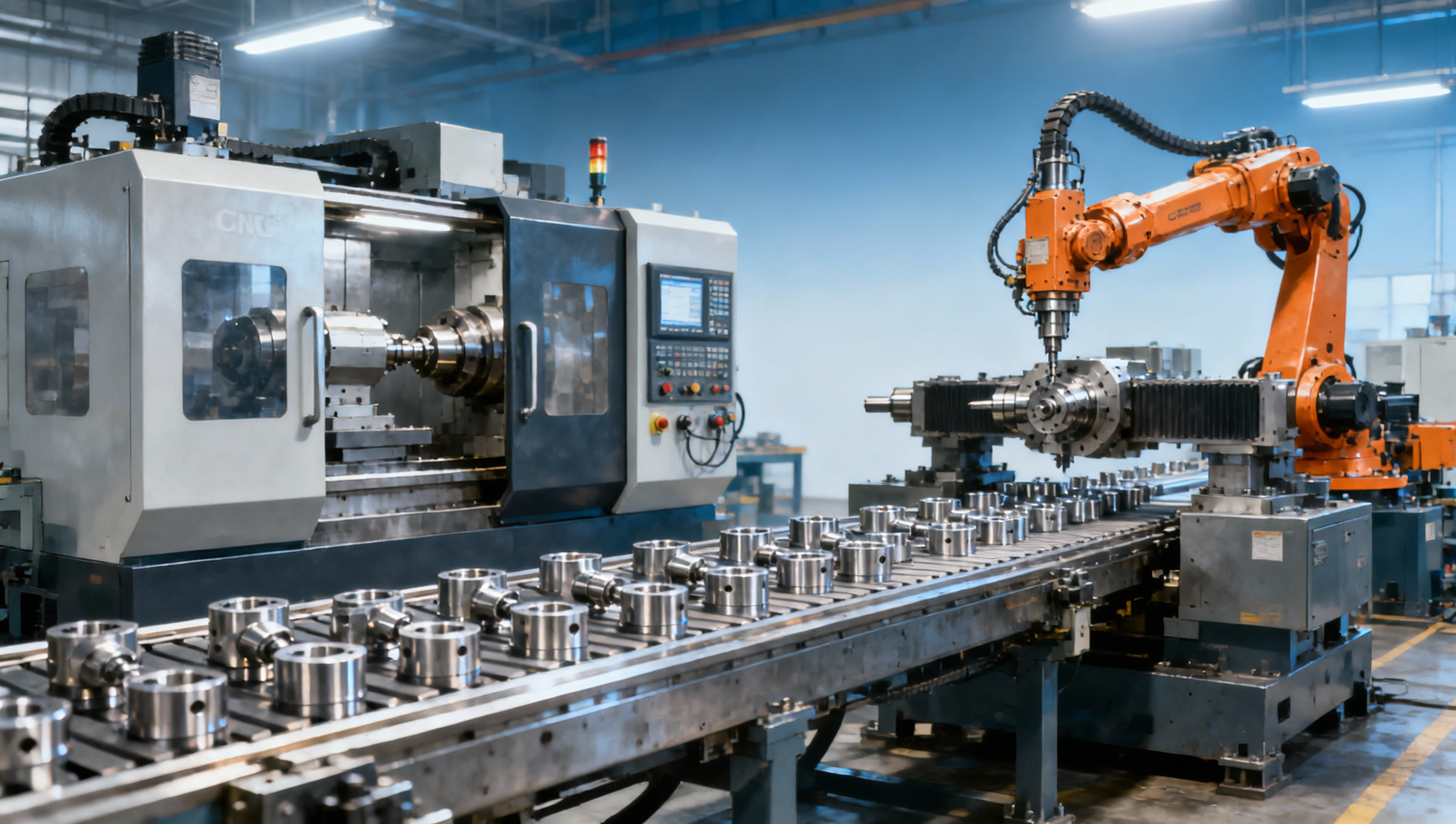
The Machine Tool Market is expanding unevenly across major regions as Global Manufacturing shifts toward industrial CNC, CNC metalworking, and automated production. From metal machining and CNC milling to automated lathes and Industrial Automation, the Manufacturing Industry is balancing cost, precision, and digital upgrades. This article explores what these regional differences mean for buyers, operators, and decision-makers shaping the next Production Process.
For procurement teams, the uneven pattern creates both opportunity and risk. A machine tool supplier in one region may offer faster lead times, while another may provide better automation integration, stronger spindle performance, or lower total operating cost over a 3- to 5-year period. For operators and plant managers, the issue is not only where growth is happening, but how regional differences affect maintenance support, parts availability, software compatibility, and workforce training.
In the CNC machine tool industry, regional growth is shaped by industrial policy, energy prices, labor cost, export demand, financing conditions, and the speed of smart factory adoption. These factors influence demand for CNC lathes, vertical machining centers, 5-axis systems, cutting tools, fixtures, industrial robots, and automated production lines. Understanding these differences helps manufacturers avoid short-term buying decisions that create long-term inefficiency.
Why regional machine tool growth is becoming more uneven
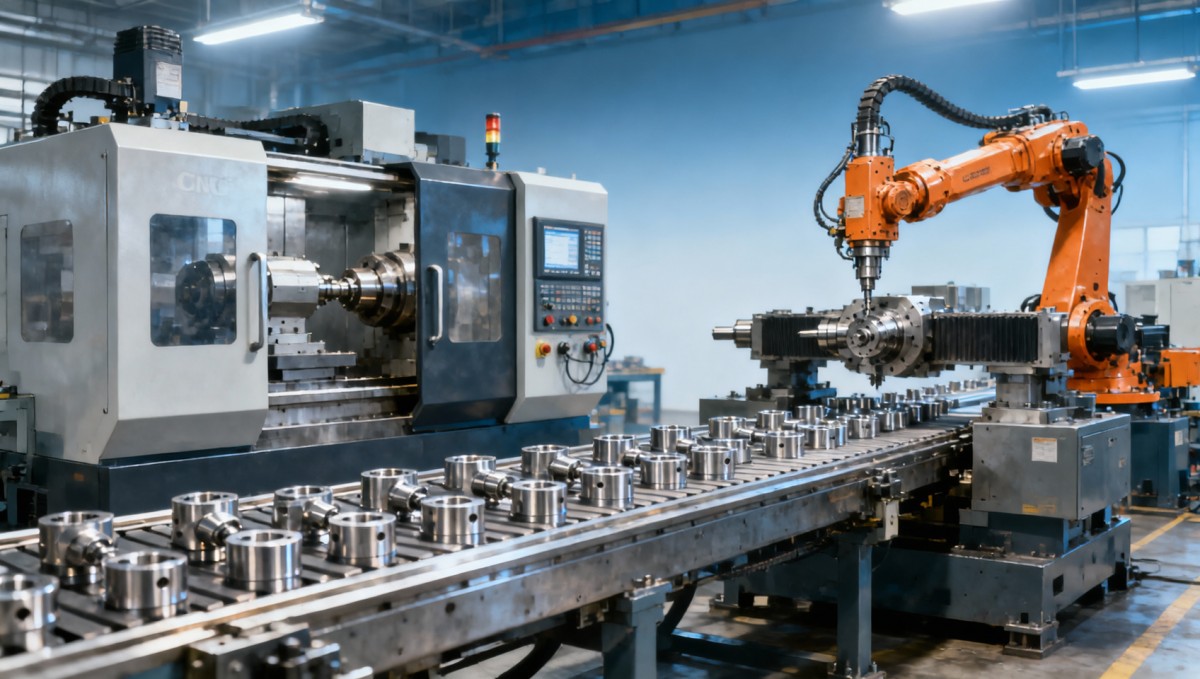
The global machine tool market no longer moves in a uniform cycle. In some regions, investment is driven by electric vehicle production, aerospace recovery, and localized supply chains. In others, growth is limited by high borrowing costs, slower factory upgrades, or weak export orders. As a result, demand for CNC metalworking equipment may rise by product segment even when overall capital spending remains cautious.
Asia remains a core growth engine because it combines large-scale manufacturing output with continued investment in industrial automation. China, Japan, and South Korea maintain strong positions in machine tools, components, and high-volume precision production. However, growth inside Asia is not equal. Mature industrial clusters may focus on replacing 3-axis equipment with 5-axis or multi-tasking systems, while emerging production bases may prioritize reliable entry-level CNC machines and automated lathes.
Europe shows a different pattern. Germany and nearby industrial markets still lead in high-precision machine tools, advanced controls, and integrated manufacturing systems. Yet energy cost pressure, compliance requirements, and slower short-cycle spending can reduce order momentum in some sectors. Buyers often respond by extending machine replacement cycles from 5 years to 7 years, or by selecting modular automation upgrades instead of full-line replacement.
North America continues to attract reshoring and nearshoring investment, especially in aerospace, defense, medical manufacturing, and selected automotive segments. This supports demand for machining centers, high-rigidity CNC milling solutions, and digitally connected production cells. Even so, labor shortages and installation bottlenecks can delay project execution by 8 to 16 weeks, making local service coverage a critical purchasing factor.
Emerging markets in Southeast Asia, India, Eastern Europe, and parts of Latin America are gaining attention because manufacturers want supply chain diversification. In many of these markets, buyers first invest in versatile machines that can handle multiple part families with tolerances around ±0.01 mm to ±0.02 mm rather than highly specialized systems. This creates a different demand profile from advanced markets focused on micron-level consistency and full digital integration.
Key forces behind the regional gap
- Industrial policy and subsidies can accelerate local factory investment within 12 to 24 months.
- Energy and labor costs directly affect machine utilization targets and automation payback periods.
- Export exposure changes demand for metal machining equipment when global orders slow.
- Digital readiness influences whether a plant buys standalone CNC equipment or connected smart production systems.
The table below highlights how regional market conditions often translate into practical buying priorities in the machine tool sector.
The key takeaway is that machine tool demand is not weak or strong in a single global sense. It is segmented by region, industry application, and the buyer’s upgrade stage. Suppliers and end users that recognize this can align product strategy, spare parts planning, and automation investment with more realistic market conditions.
How regional differences affect buyers, operators, and decision-makers
For buyers, uneven market growth changes sourcing logic. In a fast-growing region, lead time for a machining center or CNC lathe may extend from 6 weeks to 14 weeks because spindle units, control systems, and linear guide components are under pressure. In a slower market, equipment may be available sooner, but the buyer must verify whether local support teams are still sized to handle installation, training, and emergency repair.
Operators feel the difference through machine usability and service continuity. A lower-priced CNC machine can appear attractive during budget review, but if HMI language support, maintenance manuals, or spare parts channels are weak, unplanned downtime can rise. Even a 4-hour stoppage on a line producing automotive or electronics parts can interrupt delivery schedules and raise scrap risk if process stability is not quickly restored.
For enterprise decision-makers, the issue is broader than purchase price. They must evaluate total cost of ownership across 3 to 7 years, including power consumption, preventive maintenance frequency, tool wear, software updates, and operator training. In high-mix, low-volume production, flexibility may create more value than raw speed. In repetitive volume production, cycle-time reduction of 8% to 15% can justify a higher initial investment.
Regional growth differences also influence supply risk. If a factory depends on imported tooling, fixtures, or controller boards from one concentrated source, shipping delays or policy changes can disrupt machine availability. That is why many procurement teams now request a dual-source or regionalized support plan before approving a major CNC metalworking investment.
Four evaluation questions before purchase
- Can the machine maintain required tolerance, such as ±0.005 mm to ±0.02 mm, under expected production volume?
- What is the guaranteed response time for service, parts dispatch, and remote diagnostics?
- Is the machine ready for robot loading, probing, MES connection, or tool life monitoring within the next 12 months?
- Does the supplier support operator training in stages, from basic startup to advanced process optimization?
Common buyer mistake
A common mistake is comparing machines only by spindle speed or sticker price. A spindle rated at 12,000 rpm may look similar across brands, but rigidity, thermal stability, chip evacuation, tool magazine reliability, and software interface quality can produce very different results on the shop floor. Regional market pressure often encourages shortlisting based on price alone, yet long-term production efficiency depends on a wider set of factors.
The most resilient purchasing approach combines application testing, service verification, and phased automation planning. This is particularly important when a plant wants to move from standalone CNC milling toward pallet systems, robotic tending, or flexible production lines over the next 2 to 3 years.
Selecting machine tools under uneven regional demand
When machine tool market growth is uneven, equipment selection should begin with application fit rather than broad market sentiment. A supplier serving aerospace structural parts, for example, may need high-rigidity machining centers, stable thermal behavior, and advanced probing. A manufacturer producing valve bodies, shafts, or pump housings may prioritize multi-axis turning, fixture repeatability, and continuous chip control. The right decision comes from matching process requirements to equipment architecture.
Buyers should map the part range over at least 18 to 24 months. If part dimensions, materials, and tolerance requirements are expanding, a machine with stronger upgrade capacity can reduce replacement risk. For many plants, key metrics include table load, spindle power range, axis travel, tool capacity, and repeatability under actual shop conditions. In practical terms, a tool magazine with 24 positions may be enough today, but 40 positions may support future unattended production.
Another important issue is automation compatibility. As industrial automation expands, more manufacturers want CNC machines that can connect with robots, barcode tracking, in-machine measurement, and digital maintenance alerts. In regions where labor cost is rising quickly, the payback for automation can fall below 24 months. In lower-cost regions, the value may come less from labor reduction and more from quality consistency and overnight utilization.
Service footprint should also be treated as a technical criterion, not just a commercial one. A machine tool used in 2-shift or 3-shift production needs predictable support. Preventive maintenance every 1,500 to 2,000 operating hours, spindle health monitoring, and access to wear parts can have more impact on yearly output than minor differences in quoted machine speed.
Practical selection comparison
The table below summarizes how different purchase priorities align with different machine tool choices in a changing regional market.
This comparison shows why purchasing decisions must reflect actual production strategy. In uneven market conditions, companies that define machine selection around throughput, flexibility, and support readiness often achieve better long-term results than those that react only to temporary price swings.
Minimum technical checklist
- Verify tolerance capability on the intended material set, including steel, aluminum, or heat-resistant alloy.
- Confirm whether the control platform supports remote diagnostics and production data export.
- Review spare parts availability for the first 12 months and emergency support procedure.
- Ask for installation, training, and acceptance milestones, usually 3 to 5 stages depending on complexity.
Implementation, maintenance, and risk control across regions
The value of a machine tool investment depends on execution after purchase. Regional growth differences affect delivery reliability, commissioning schedules, and the availability of skilled field engineers. In some markets, a machine may ship quickly but require 2 to 4 additional weeks for electrical integration, foundation checks, coolant setup, or training. In other markets, import procedures or logistics constraints may lengthen project timelines beyond the machine build cycle itself.
A disciplined implementation plan reduces these risks. Before delivery, plants should confirm power requirements, air supply, floor loading, environmental temperature stability, material flow, and network connectivity. For precision applications, temperature fluctuation of more than 2°C to 3°C in the machining area can affect consistency, especially in long-cycle machining or high-precision finishing.
Maintenance strategy is equally important. In a competitive machine tool market, some buyers underestimate the impact of preventive service. Routine checks on lubrication, spindle vibration, backlash, coolant condition, and tool clamping can prevent expensive downtime. Plants running 16 to 24 hours per day should schedule structured reviews by operating hours rather than by calendar date alone.
Risk control should also cover people and process. Operator training is not a one-time event. Entry-level users need safe startup, zero-point setting, and alarm handling. More advanced users need process optimization, offset correction, fixture strategy, and cutting parameter adjustment. A 2-stage or 3-stage training model often delivers better results than a single compressed session.
Recommended implementation flow
- Pre-installation review: utilities, foundation, environmental conditions, and handling path.
- Machine arrival and setup: mechanical positioning, electrical connection, safety confirmation.
- Trial machining: sample parts, tolerance verification, cycle study, and fixture adjustment.
- Operator training: basic use, maintenance routines, alarms, and quality control checkpoints.
- Post-launch follow-up: first 30-day review, productivity analysis, and process refinement.
FAQ for buyers and production teams
How long does machine tool delivery usually take?
For standard CNC machines, practical lead times often fall between 6 and 14 weeks, depending on region, control configuration, and accessory requirements. Automated cells, multi-axis systems, or special fixtures can extend total project time to 12 to 24 weeks when installation and validation are included.
What should procurement teams prioritize during regional uncertainty?
They should prioritize application fit, support responsiveness, spare parts access, and digital upgrade potential. A lower initial quote may become more expensive if downtime, retraining, and process instability increase. Procurement should compare at least 4 dimensions: machine capability, service network, lead time reliability, and total operating cost.
Are automated production lines always the best upgrade path?
Not always. For plants with unstable order mix or frequent design changes, flexible CNC cells can be more practical than a fully dedicated line. Automation should match product volume, part consistency, and staffing constraints. In many cases, phased automation delivers lower risk than a full one-step transformation.
Regional growth in the machine tool market may remain uneven, but that does not make planning impossible. It makes disciplined evaluation more important. Companies that assess regional supply conditions, machine suitability, automation readiness, and service depth can build more resilient manufacturing capacity while protecting productivity and quality.
Whether you are comparing CNC lathes, machining centers, automated production equipment, or broader industrial CNC solutions, the best results come from aligning equipment decisions with real production targets, operating conditions, and lifecycle support needs. To discuss machine tool options, application requirements, or a tailored manufacturing solution, contact us to get detailed product guidance and a customized proposal.
PREVIOUS ARTICLE
Recommended for You
![]() Domestic PLM Systems Drive Green Transition in Coatings & CNC Tool CoatingCNC Machining Technology Center
Domestic PLM Systems Drive Green Transition in Coatings & CNC Tool CoatingCNC Machining Technology Center![]() Hannover Messe 2026: Green CNC & Carbon Labeling Take Center StageManufacturing Policy Research Center
Hannover Messe 2026: Green CNC & Carbon Labeling Take Center StageManufacturing Policy Research Center![]() OPC AI Maintenance Cuts CNC Downtime 42% in SuzhouMachine Tool Industry Editorial Team
OPC AI Maintenance Cuts CNC Downtime 42% in SuzhouMachine Tool Industry Editorial Team![]() Vietnam to Launch VN-CNC Mark Certification in Q3 2026Manufacturing Policy Research Center
Vietnam to Launch VN-CNC Mark Certification in Q3 2026Manufacturing Policy Research Center![]() UMC Q1 Revenue Up 18.3%; WLCSP Substrate Capacity Ramps in SuzhouManufacturing Market Research Center
UMC Q1 Revenue Up 18.3%; WLCSP Substrate Capacity Ramps in SuzhouManufacturing Market Research Center![]() Nvidia's Huang Criticizes US Chip Controls, CNC Digital Twin Solutions Expand OverseasCNC Machining Technology Center
Nvidia's Huang Criticizes US Chip Controls, CNC Digital Twin Solutions Expand OverseasCNC Machining Technology Center


Aris Katos
Future of Carbide Coatings
15+ years in precision manufacturing systems. Specialized in high-speed milling and aerospace grade alloy processing.
▶
Machine tool price: Why list pricing masks total cost of ownership over 5 yearsManufacturing Market Research Center▶
Machine tool for energy equipment: Why corrosion resistance specs often lag behind actual field exposureManufacturing Market Research Center▶
Machine tool wholesaler: Why regional stocking locations matter more than catalog depthManufacturing Market Research Center▶
CNC Metalworking Capacity Looks Strong but Margins Stay ThinManufacturing Market Research Center▶
Machine Tool Market Signals Worth Watching in 2026Manufacturing Market Research Center
Mastering 5-Axis Workholding Strategies
Join our technical panel on Nov 15th to learn about reducing vibrations in thin-wall components.

Providing you with integrated sanding solutions
Before-sales and after-sales services
Comprehensive technical support