• Global CNC market projected to reach $128B by 2028 • New EU trade regulations for precision tooling components • Aerospace deman
NYSE: CNC +1.2%LME: STEEL -0.4%

CNC Metalworking Capacity Looks Strong but Margins Stay Thin
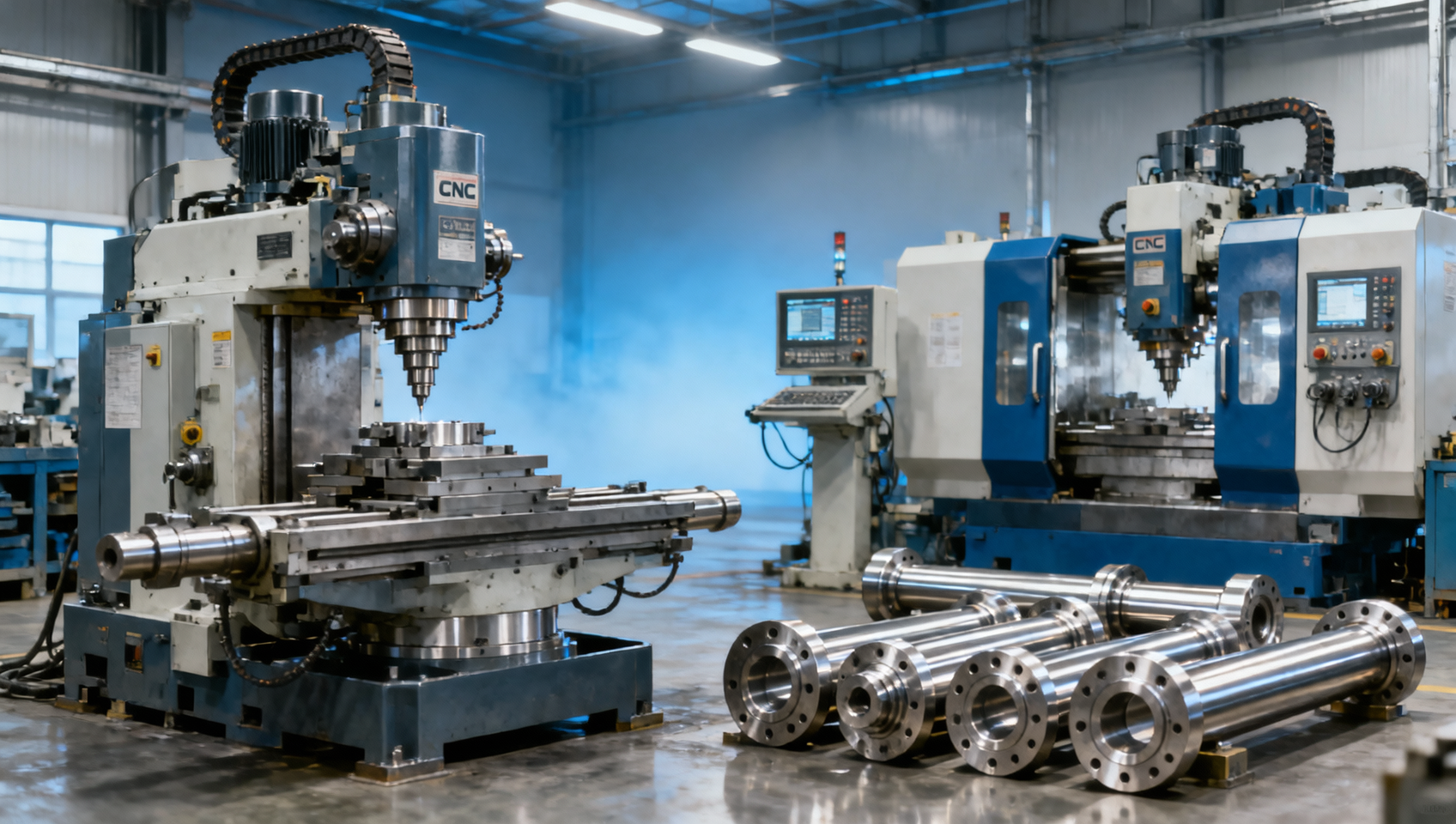
Global Manufacturing demand keeps CNC metalworking and industrial CNC capacity resilient, but pricing pressure continues to squeeze profitability across the Machine Tool Market. From automated lathe and vertical lathe systems to CNC milling, CNC cutting, and automated production lines, manufacturers are balancing output, precision, and cost as the Manufacturing Industry adapts to tighter margins and faster industrial automation.
Why CNC Metalworking Capacity Remains Strong Even When Profitability Softens
Across the global CNC machine tool industry, capacity has held up better than many buyers expected. The reason is practical: automotive, aerospace, energy equipment, electronics, and general industrial suppliers still require precision machining for shafts, discs, housings, molds, and structural parts. Even when new investment slows, replacement demand, backlog production, and line automation projects continue to support machine utilization in the 60%–85% range for many workshops.
However, strong CNC metalworking capacity does not automatically create healthy margins. Machine shops and equipment builders face rising pressure from labor costs, tooling consumption, energy expenses, software integration, and tighter delivery expectations. In many competitive bidding environments, purchase decisions are no longer made on machine capability alone. Buyers compare total process cost, cycle time, service response, and compatibility with existing automated production lines.
For information researchers, the key question is not whether the Machine Tool Market is active, but where profitability is leaking. For operators, the issue is often machine uptime and repeatability over 8–16 hour production windows. For procurement teams, the concern is whether a lower upfront price will increase maintenance and scrap costs over the next 12–24 months. For business decision-makers, margin protection now depends on better process selection, not just more installed capacity.
What is driving utilization in today’s manufacturing industry?
- Ongoing demand for precision components in multi-sector manufacturing, especially where tolerance stability and repeatability matter.
- Continued upgrades from manual or semi-automatic processes to CNC milling, CNC turning, and automated cell production.
- Reshoring, dual-sourcing, and regional supply chain adjustments that favor flexible local machining capacity.
- Short-run and medium-batch orders that require fast changeovers, multi-axis machining, and more digital production management.
This means the market is not weak in a simple sense. It is selective. Capacity that supports automation, mixed-batch production, and process integration remains valuable. Capacity built around undifferentiated price competition faces margin compression much faster.
Where Are Margins Getting Squeezed in the Machine Tool Market?
Margin pressure in CNC metalworking usually appears in several layers at the same time. First, selling prices for standard machining work are often negotiated aggressively, especially for repeat parts where multiple suppliers can quote. Second, production costs are no longer limited to spindle power and labor hours. Shops now manage tool life, fixture complexity, quality traceability, robot integration, and software communication across more systems than before.
Third, many factories expanded industrial CNC capacity to secure throughput, but not all of that capacity is matched with high-value work. A vertical lathe or machining center running at 75% utilization can still produce poor returns if the parts mix involves high setup frequency, low schedule stability, or excessive tooling consumption. In other words, throughput alone does not protect profitability.
A common misunderstanding is that automation always improves margin immediately. In reality, automated production lines often require a 3-stage ramp-up: process validation, programming optimization, and stable repetitive output. During the first 4–12 weeks, productivity may improve while margin remains thin because debugging, training, and spare parts planning add hidden cost.
The most common sources of cost erosion
The table below shows where manufacturers often lose margin even when machine loading looks healthy. It is useful for procurement teams comparing supplier quotes and for workshop managers reviewing internal cost leakage.
The main lesson is clear: thin margins rarely come from one issue. They usually come from a combination of process instability, fragmented purchasing decisions, and underestimating the full operating model around CNC cutting, CNC milling, and automated machining systems.
A practical warning for decision-makers
If a quote looks attractive but does not clarify cycle time assumptions, fixture scope, operator requirements, and maintenance response, the apparent savings may disappear within 6–9 months. This is especially true in sectors where 2-shift or 3-shift operation is planned.
How Should Buyers Compare CNC Lathes, Vertical Lathes, Milling, and Automated Lines?
A good procurement decision starts with process fit. Not every part family benefits from the same machine architecture. CNC lathes are often favored for rotational parts, vertical lathes can support larger diameter workpieces and stable loading for heavy components, machining centers are flexible for prismatic parts, and automated lines make more sense when batch repeatability and takt discipline are already established.
Buyers should avoid selecting equipment based only on nameplate capability. In real production, a machine that can theoretically hold a tolerance band may still underperform if material handling, fixturing, or programming resources are weak. A better evaluation combines 5 core dimensions: part geometry, batch profile, tolerance demand, labor strategy, and expected delivery rhythm.
The table below helps procurement teams and plant managers compare common CNC metalworking options from a decision perspective rather than from a brochure perspective. It is especially useful when reviewing capital investment for the next 1–3 years.
This comparison shows why equipment selection should follow production reality. A smaller, well-matched CNC system can produce better return than a larger line with weak process discipline. The best investment is often the one that reduces variation, not just the one that adds raw capacity.
Three practical questions before issuing an RFQ
- Is the target part family stable enough for the next 12–18 months, or will frequent redesigns reduce machine utilization?
- Will the process run in 1 shift, 2 shifts, or lights-out periods, and is the machine prepared for that labor model?
- Are fixture design, tool presetting, and inspection resources already available, or must they be added to the project budget?
Answering these questions early reduces selection errors and makes supplier discussions far more productive.
What Should Operators, Procurement Teams, and Executives Prioritize?
Different stakeholders often look at the same CNC project from different angles. Operators want a machine that is stable, intuitive, and serviceable. Procurement teams want transparent scope, clear delivery milestones, and manageable spare parts planning. Executives want output growth without margin erosion. A stronger decision process aligns these needs instead of letting one department dominate the purchase.
In most industrial CNC projects, at least 4 implementation checkpoints should be reviewed before approval: process validation, equipment configuration, factory acceptance planning, and post-installation support. Skipping any of these steps increases the risk of commissioning delays, unstable quality, or avoidable retrofits within the first 90 days.
A practical buyer checklist for thin-margin conditions
- Confirm whether quoted cycle time is based on real cutting conditions, simulation only, or idealized assumptions without setup loss.
- Ask for the recommended maintenance interval by shift pattern, such as every month, every quarter, or after a defined spindle-hour range.
- Check whether control systems, probing, robot interfaces, and measurement devices can communicate without custom software gaps.
- Review spare part availability for wear items and critical components over a realistic 12–24 month operating horizon.
- Clarify acceptance criteria, including dimensional checks, surface finish expectations, and repeatability over multiple consecutive runs.
For users and operators, training depth matters as much as machine delivery. A machine can be installed in 7–15 days in some projects, but productivity gains may still lag if programming methods, alarm handling, fixture exchange, and tool compensation are not standardized. This is one reason strong capacity and thin margins often appear together: the hardware arrives faster than process maturity.
Where standards and compliance enter the discussion
In international trade and cross-border sourcing, buyers should also review electrical conformity, machine safety documentation, and any application-specific inspection records required by the destination market. The exact documentation varies by project, but safety, traceability, and operating manuals should never be treated as optional extras in high-value manufacturing environments.
How Can Manufacturers Protect Margin Without Sacrificing Capacity?
The most effective response to margin pressure is not simply raising prices. In many sectors, that is not realistic. A more sustainable approach is to improve the mix of equipment, tooling strategy, automation level, and quoting discipline. Manufacturers that separate high-mix flexible work from stable repeat work usually manage CNC metalworking capacity more effectively than those forcing all parts through one universal process path.
Another practical strategy is to evaluate the full cost of ownership rather than focusing only on machine purchase price. A lower-priced system may be reasonable for low-intensity production, but in 2-shift applications the total cost impact of downtime, tool inconsistency, and slow support can become far larger than the initial saving. Margin protection depends on stable production windows, predictable quality, and lower unplanned intervention.
Manufacturers should also review whether a fully automated line is necessary or whether a semi-automated cell offers a better balance. In some cases, a robot-assisted loading system with modular fixtures can deliver enough labor reduction without the rigidity of a dedicated transfer line. This is especially useful when demand changes every 3–6 months or when product variants remain high.
Margin protection actions that are often overlooked
- Group similar parts by setup logic to reduce fixture swaps and program validation time.
- Standardize tool libraries across machines to simplify inventory and reduce setup inconsistency.
- Introduce in-process measurement only where it prevents real scrap or secondary inspection bottlenecks.
- Use quoting models that separate engineering, first-article work, and repetitive production instead of blending all costs into one unit price.
These actions do not remove all market pressure, but they help manufacturers defend margin in a more disciplined way. In the current Machine Tool Market, profitability belongs more often to companies that control process details than to those that simply add more machines.
FAQ: Common Questions in CNC Capacity, Selection, and Delivery Planning
How do I know if more CNC capacity is really needed?
Start by measuring bottlenecks, not only machine occupancy. If high utilization comes from long setups, inspection delays, or poor scheduling, adding equipment may not solve the real problem. Review at least 3 indicators over 8–12 weeks: effective cutting time, changeover frequency, and delayed orders tied to capacity limits rather than planning issues.
Which is better for thin-margin production: standalone machines or automated production lines?
It depends on order stability. Standalone or semi-automated CNC systems usually perform better in high-mix, medium-volume work. Automated production lines are stronger when takt time is stable, quality logic is repeatable, and forecast visibility is reliable for at least several quarters. Thin-margin operations should avoid automation that is oversized for demand variability.
What delivery timeline should buyers normally expect?
Timelines vary by configuration and localization scope, but buyers should separate equipment lead time from commissioning time. A practical review should include 4 stages: technical confirmation, manufacturing or assembly, installation, and ramp-up. For integrated CNC and automation projects, post-install optimization may continue for several weeks after physical delivery.
What are the biggest mistakes during procurement?
The most frequent errors are comparing quotes with different scope definitions, underestimating fixture and tooling cost, and assuming operator training can be improvised later. Another common mistake is focusing on peak capability instead of stable daily output. Buyers should evaluate what the system can sustain over repeated shifts, not only what it can achieve in a demonstration.
Why Work With a Platform Focused on Global CNC Machining and Precision Manufacturing?
When margins are thin, access to clear market information becomes a competitive advantage. A specialized platform covering global CNC machining, machine tools, precision manufacturing, and industrial automation helps buyers and manufacturers compare options with more context. That includes technology trends, sourcing signals, production logic, and trade developments across major manufacturing regions such as China, Germany, Japan, and South Korea.
This matters because modern procurement is no longer a simple product comparison. Buyers often need support on parameter confirmation, process matching, delivery planning, automation scope, compliance documentation, and supplier communication. Operators need usable technical insight. Decision-makers need a broader view of capacity trends, cost structure, and risk across the Machine Tool Market.
What you can contact us about
- CNC lathe, vertical lathe, machining center, and automated line selection based on your part type and batch profile.
- Technical parameter confirmation, including capacity fit, production mode, and process compatibility.
- Lead time discussion, project staging, and practical expectations for installation and ramp-up.
- Customized solution planning for flexible production, smart factory upgrades, and automation integration.
- Support on documentation, inspection expectations, sample evaluation, and quotation alignment.
If you are comparing suppliers, validating a CNC metalworking project, or reviewing whether current industrial CNC capacity still matches your margin goals, contact us with your drawings, target output, material range, and delivery requirements. We can help you narrow the right machine path, identify cost risks early, and make procurement discussions more efficient and more actionable.
PREVIOUS ARTICLE
NEXT ARTICLE
Recommended for You
 Global Manufacturing Lead Times Improve but Not EverywhereGlobal Machine Tool Trade Research Center
 Machine Tool Market Inventory Pressure Is Building AgainGlobal Machine Tool Trade Research Center
 Metal Lathe vs CNC Milling for Low Volume Round PartsCNC Machining Technology Center
 CNC Cutting Gas Choice Affects More Than Edge FinishCNC Machining Technology Center
 CNC Metalworking Shops Face New Pressure on TraceabilityManufacturing Policy Research Center
 Automated Lathe Cycle Time Gains Can Hide Quality LossesCNC Machining Technology Center



Aris Katos
Future of Carbide Coatings
15+ years in precision manufacturing systems. Specialized in high-speed milling and aerospace grade alloy processing.
▶
CNC Metalworking Capacity Looks Strong but Margins Stay ThinManufacturing Market Research Center▶
Machine Tool Market growth looks uneven across key regionsManufacturing Market Research Center▶
Machine Tool Market demand is splitting between volume and precisionManufacturing Market Research Center▶
Machine Tool Market analysis shows China’s CNC milling exports gaining share in Tier-2 marketsManufacturing Market Research Center▶
Heavy duty machine tool selection: Why dynamic load rating matters more than table sizeManufacturing Market Research Center
Mastering 5-Axis Workholding Strategies
Join our technical panel on Nov 15th to learn about reducing vibrations in thin-wall components.

Providing you with integrated sanding solutions
Before-sales and after-sales services
Comprehensive technical support