• Global CNC market projected to reach $128B by 2028 • New EU trade regulations for precision tooling components • Aerospace deman
NYSE: CNC +1.2%LME: STEEL -0.4%

Machine Tool Market demand is splitting between volume and precision
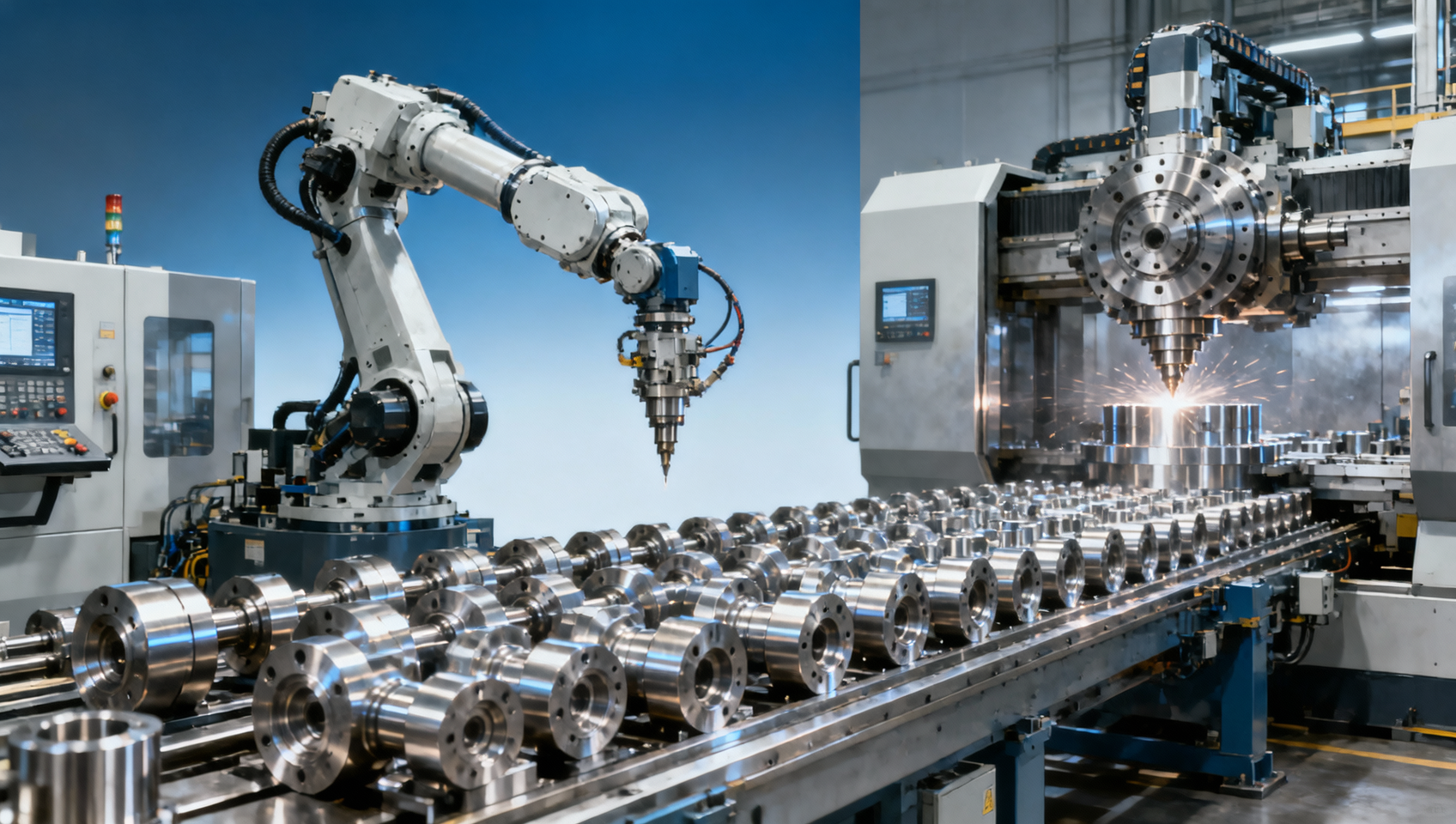
The Machine Tool Market is increasingly divided between high-volume output and ultra-precision demand, reshaping the Global Manufacturing landscape. From metal machining and CNC milling to automated production lines and industrial robotics, manufacturers across the Manufacturing Industry are balancing speed, flexibility, and accuracy. This shift is driving new strategies in industrial CNC investment, CNC production, and the wider production process.
For market researchers, operators, procurement teams, and business decision-makers, this split is no longer a broad industry trend. It directly affects equipment selection, cost structure, delivery planning, workforce training, and long-term competitiveness. A factory producing 50,000 standard components per month faces a very different machine tool strategy from a supplier machining aerospace housings at tolerances below ±5 μm.
In practical terms, the machine tool market is not moving in one direction. It is separating into two strong demand tracks: one focused on throughput, automation, and stable cycle times, and another centered on precision, traceability, and process control. Understanding where a business sits on this spectrum is now essential for smart investment and reliable production planning.
Why the machine tool market is splitting into two demand tracks
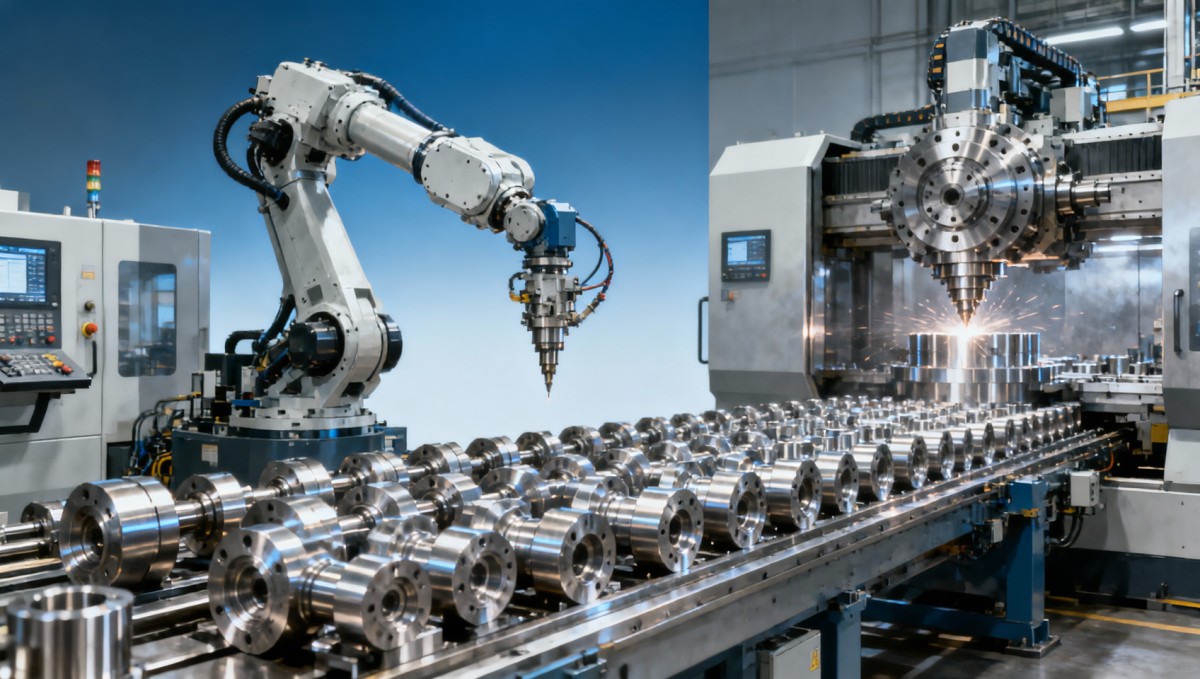
The machine tool market has always responded to downstream manufacturing requirements, but current demand is more polarized than in previous cycles. On one side, automotive parts, standard metal components, consumer electronics hardware, and general industrial products require fast output, repeatable quality, and lower cost per piece. On the other side, aerospace, medical devices, precision molds, semiconductor-related hardware, and advanced energy equipment require micron-level stability and tighter process windows.
This split is being accelerated by three parallel forces. First, labor and energy costs are pressuring factories to improve efficiency by 10% to 30% through automation and shorter setup time. Second, product complexity is increasing, especially for parts requiring 5-axis machining, thermal stability control, and digital quality records. Third, supply chains are becoming less tolerant of inconsistency, pushing buyers to evaluate machine capability, software integration, and service response more carefully.
A high-volume production line may value spindle uptime, automatic tool change speed, and pallet handling more than extreme geometric accuracy. By contrast, a precision-focused operation may accept lower throughput if the machine can hold roundness, flatness, and positional accuracy within a narrow range over a 12-hour to 24-hour production cycle.
The two dominant purchasing logics
Buyers are increasingly filtering machine tools through two different investment logics. The first logic is volume-oriented: reduce cycle time, stabilize output, lower manual intervention, and support batch production. The second logic is precision-oriented: maintain process consistency, reduce scrap on complex parts, and support traceable manufacturing for higher-value sectors.
- Volume-oriented demand often prioritizes 2-shift or 3-shift operation, automatic loading, and lower cost per finished unit.
- Precision-oriented demand often prioritizes thermal compensation, vibration control, tool path accuracy, and inspection compatibility.
- Hybrid demand appears in sectors such as EV components and energy equipment, where both output scale and dimensional stability matter.
The table below outlines how the market split typically appears in real purchasing discussions across CNC lathes, machining centers, and automated production systems.
The key takeaway is that machine tool demand is not weakening; it is becoming more specialized. Suppliers and buyers that treat all CNC investment as a single category risk selecting equipment that performs well on paper but fails under actual production conditions.
What high-volume manufacturers need from modern CNC production
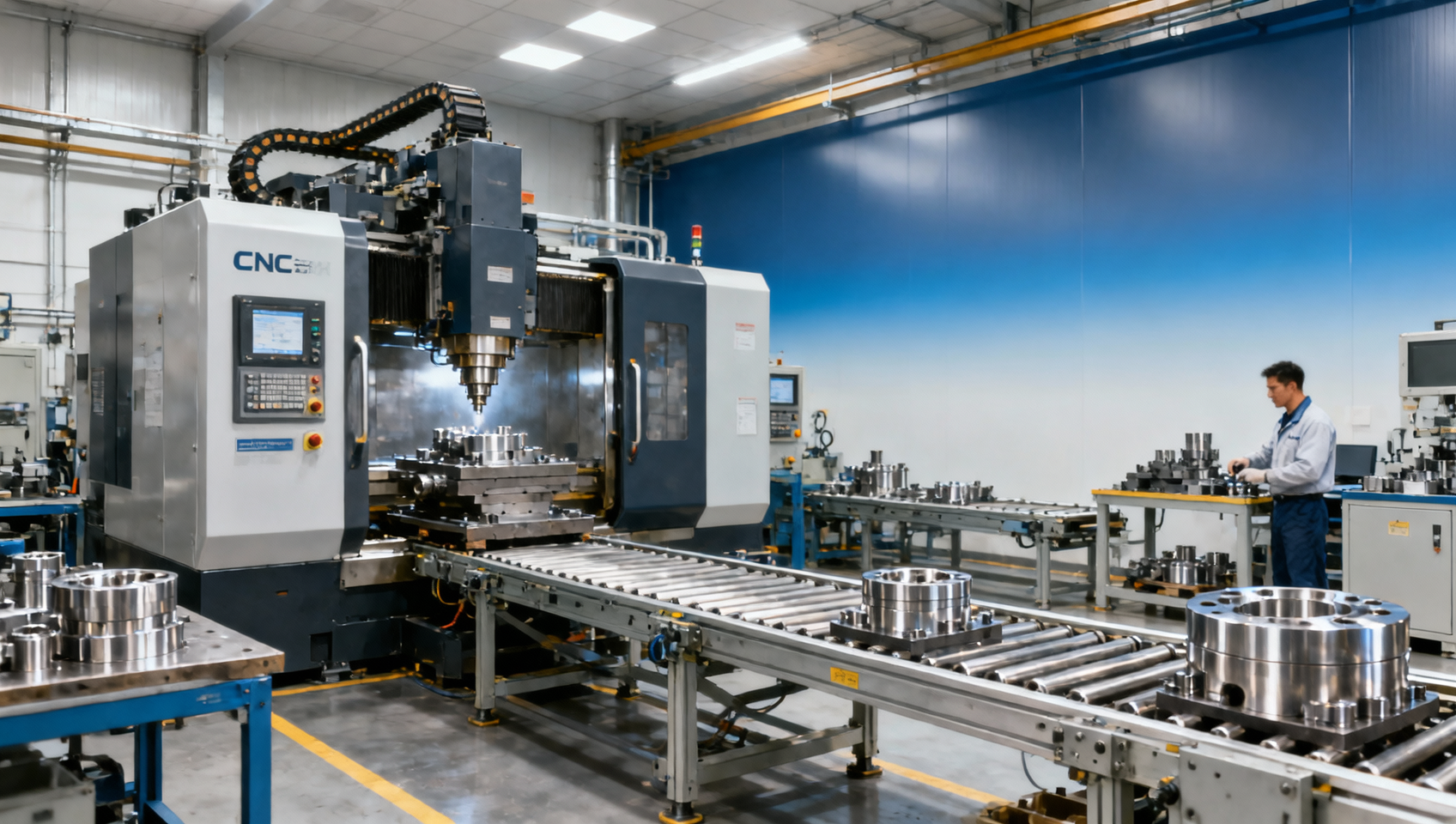
In high-volume environments, the first priority is consistent output over long runs. A plant producing 5,000 to 20,000 components per week is less concerned with exceptional single-part performance than with repeatable cycle time, low operator dependence, and minimal downtime. Machine tools in this segment must support efficient loading, standardized fixtures, predictable tool wear management, and stable performance across multiple shifts.
For these users, productivity is shaped by the whole production process, not only spindle power. Tool magazine size, chip evacuation, robot compatibility, and software support for scheduling can influence overall line efficiency by 8% to 15%. In many factories, a machine with slightly lower peak specifications but better automation integration delivers stronger annual output.
Operators also benefit when machine tools are designed for fast setup and straightforward maintenance. If a job change requires 90 minutes, the cost impact over a month can be substantial. Reducing that time to 20 to 30 minutes through standardized workholding, probe-assisted setup, and repeatable offsets can produce measurable gains without adding more machines.
Key selection factors for throughput-driven operations
Procurement teams evaluating high-volume CNC systems should compare not only machine price, but also throughput-related operating factors. A lower capital cost can become expensive if unplanned stoppages exceed 3% to 5% of scheduled runtime or if spare parts lead time reaches 4 to 6 weeks.
- Check target cycle time under real material and tooling conditions, not only demo conditions.
- Confirm tool change speed, pallet exchange options, and compatibility with automated loading systems.
- Review maintenance intervals for spindle, lubrication, coolant, and linear motion components.
- Assess whether the control system supports production monitoring, alarm history, and remote diagnostics.
Typical requirements in high-output machining
The following comparison helps purchasing teams align machine configuration with throughput goals in automotive, electronics hardware, and general industrial production.
High-volume buyers should interpret these ranges as planning benchmarks rather than fixed rules. The main lesson is that production-oriented machine tool investment should be evaluated at line level, where machine, tooling, fixturing, robot handling, and maintenance all affect final unit economics.
Why precision demand is rising in aerospace, energy, and advanced components
Ultra-precision demand is growing because parts are becoming more complex, tolerances are tightening, and failure costs are increasing. In aerospace and high-end energy equipment, a rejected part may involve expensive material, long machining time, and project delay. In these applications, machine tool capability is judged not only by nominal accuracy but by sustained accuracy over time, temperature change, and part variation.
For example, many precision machining tasks require tolerances in the ±2 μm to ±10 μm range, with careful control of spindle growth, axis response, and workholding stability. Surface finish, concentricity, and geometry can matter as much as dimensional size. This changes the value equation: a machine that reduces scrap from 4% to 1% may justify a higher purchase price when the part value is significant.
Operators in precision environments also need stronger support systems. Stable coolant temperature, tool measurement, in-process probing, and shop-floor cleanliness become critical. In some cases, ambient temperature control within 20°C ±1°C can materially improve repeatability, especially for long-cycle machining or multi-axis finishing operations.
Precision risk factors that buyers often underestimate
Many procurement decisions focus heavily on headline specifications, but precision machining performance often depends on surrounding conditions and process discipline. A capable machine can still produce inconsistent results if the fixture design is weak, tool life is not tracked, or maintenance intervals are ignored.
- Thermal drift over an 8-hour shift can affect dimensional stability more than initial alignment values.
- Workholding and clamping force variation can deform thin-wall or complex parts.
- Tool wear progression may alter finish quality and hole position before visible failure occurs.
- Insufficient calibration frequency can undermine confidence in batch traceability.
Decision-makers should therefore evaluate machine tools as part of a precision manufacturing system. The machine, software, tool management, inspection process, and operator discipline must work together. Precision demand is not simply a specification issue; it is an operational capability issue.
Capability checkpoints for precision-focused investment
The table below provides a practical checklist for companies purchasing machine tools for high-accuracy production in sectors such as aerospace, medical devices, precision molds, and electronics components.
This shows why precision demand supports a different buying model from high-volume production. The goal is not simply to machine faster, but to machine reliably within a narrow quality window while protecting valuable material, tooling, and delivery commitments.
How procurement and management teams should evaluate machine tool investments
For procurement managers and executives, the central question is not whether to buy a more advanced machine tool, but which capability profile fits the business model. A machine tool that is ideal for mass production may underperform in low-volume, high-mix precision work. Likewise, a premium precision machine may not deliver acceptable payback in standard high-throughput machining. Investment logic must match customer demand, margin profile, and operational maturity.
A practical evaluation framework usually includes at least four dimensions: production fit, technical capability, lifecycle support, and total cost of ownership. Purchase price is only one element. Tool consumption, downtime exposure, training needs, floor space, utilities, and spare parts availability can reshape the actual 3-year to 5-year cost picture.
For businesses managing international supply chains, after-sales responsiveness is especially important. If a critical spindle or control issue takes 10 to 14 days to resolve, the resulting production interruption may cost more than the original equipment discount. Service network depth, remote diagnostics, and local parts access should therefore be part of supplier comparison from the beginning.
A practical 5-step purchasing process
- Define target parts by material, size, tolerance, and monthly output volume.
- Map the process chain, including tooling, fixturing, loading, inspection, and data collection.
- Compare suppliers based on machine capability, integration support, delivery lead time, and service access.
- Request trial cutting or reference process validation under realistic operating conditions.
- Estimate total ownership cost across 36 to 60 months, including maintenance and training.
This process helps both growing manufacturers and established groups avoid a common mistake: buying for nominal specification instead of production outcome. In the current machine tool market, fit is often more valuable than maximum complexity.
Procurement comparison points
The comparison below can support RFQ reviews, supplier meetings, and internal approval discussions.
Using a structured procurement model helps organizations compare offers more objectively and align machine tool investment with real production priorities rather than short-term price pressure alone.
Implementation, maintenance, and common mistakes after purchase
Successful machine tool investment depends heavily on post-purchase execution. Even a well-selected CNC machine can underperform if implementation is rushed, operators are undertrained, or preventive maintenance is treated as optional. In many shops, the first 60 to 90 days after installation determine whether expected productivity gains will be achieved.
A practical rollout should include machine acceptance, process verification, operator training, tooling validation, and maintenance planning. These steps are especially important when introducing automated production lines, multi-axis systems, or precision machining centers. Without clear operating standards, factories may face rising scrap, unstable cycle times, or avoidable machine alarms.
Maintenance should also be matched to the demand track. High-volume systems need close attention to wear points, chip handling, lubrication, and uptime-critical components. Precision systems require stricter calibration discipline, thermal checks, and inspection alignment. In both cases, poor maintenance often appears first as inconsistency rather than complete failure.
Common mistakes to avoid
- Choosing equipment based on maximum specification while ignoring actual part mix and staffing level.
- Underestimating training needs for programmers, operators, and maintenance technicians during the first 2 to 6 weeks.
- Separating machine purchase from tooling, fixturing, probing, and inspection planning.
- Failing to define spare parts policy for components with 1-week to 6-week lead times.
- Assuming precision performance will remain stable without periodic verification and environmental control.
FAQ for buyers and production teams
The following questions reflect common search intent from buyers, operators, and production planners working in the CNC machine tool industry.
How do I know whether my factory needs a volume-focused or precision-focused machine tool?
Start with three factors: monthly part volume, tolerance requirement, and cost of scrap. If output is high and tolerances are moderate, a throughput-focused CNC solution is usually more suitable. If tolerances are tight, part geometry is complex, or rejected parts are expensive, precision-focused capability is often the better investment.
What is a typical delivery and commissioning cycle?
For standard machine configurations, delivery can often fall within 4 to 12 weeks depending on origin, options, and logistics. Commissioning and operator training may take an additional 3 to 10 days. More complex automated cells or customized production lines generally require longer planning and integration time.
Which indicators matter most during machine acceptance?
Focus on real-cut performance, repeatability over multiple cycles, alarm stability, tool change consistency, and measurement correlation. For precision projects, verify process stability over several hours rather than relying only on a single sample part.
The machine tool market is no longer defined by a single path of industrial growth. Demand is splitting between volume and precision, and that split affects machine selection, automation strategy, maintenance planning, and supplier evaluation. Companies that understand their real production profile can invest more accurately, reduce risk, and build stronger long-term manufacturing capability.
Whether your focus is high-output CNC production, precision machining, or a flexible model between the two, the right decision starts with clear process requirements and structured comparison. If you are evaluating CNC machines, automated production solutions, or precision manufacturing upgrades, contact us to discuss your application, request a tailored solution, and explore more machine tool market insights.
NEXT ARTICLE
Recommended for You
 What causes chatter in metal machining and how to stop itCNC Machining Technology Center
 Industrial CNC lead times are shifting in 2026Manufacturing Market Research Center
 When CNC industrial upgrades cut output instead of raising itMachine Tool Industry Editorial Team
 Automated lathe errors that often start with bar feedingMachine Tool Industry Editorial Team
 Why CNC metalworking scrap rates rise on thin wall partsCNC Machining Technology Center
 CNC cutting speed or finish quality: where losses beginCNC Machining Technology Center

Aris Katos
Future of Carbide Coatings
15+ years in precision manufacturing systems. Specialized in high-speed milling and aerospace grade alloy processing.
▶
Machine Tool Market demand is splitting between volume and precisionManufacturing Market Research Center▶
Machine Tool Market analysis shows China’s CNC milling exports gaining share in Tier-2 marketsManufacturing Market Research Center▶
Heavy duty machine tool selection: Why dynamic load rating matters more than table sizeManufacturing Market Research Center▶
Portable machine tool use cases: Where mobility sacrifices rigidity — and where it doesn’tManufacturing Market Research Center▶
Machine tool wholesaler margins: How regional logistics costs erode quoted pricesManufacturing Market Research Center
Mastering 5-Axis Workholding Strategies
Join our technical panel on Nov 15th to learn about reducing vibrations in thin-wall components.

Providing you with integrated sanding solutions
Before-sales and after-sales services
Comprehensive technical support