• Global CNC market projected to reach $128B by 2028 • New EU trade regulations for precision tooling components • Aerospace deman
NYSE: CNC +1.2%LME: STEEL -0.4%

Machine tool for energy equipment: Why corrosion resistance specs often lag behind actual field exposure
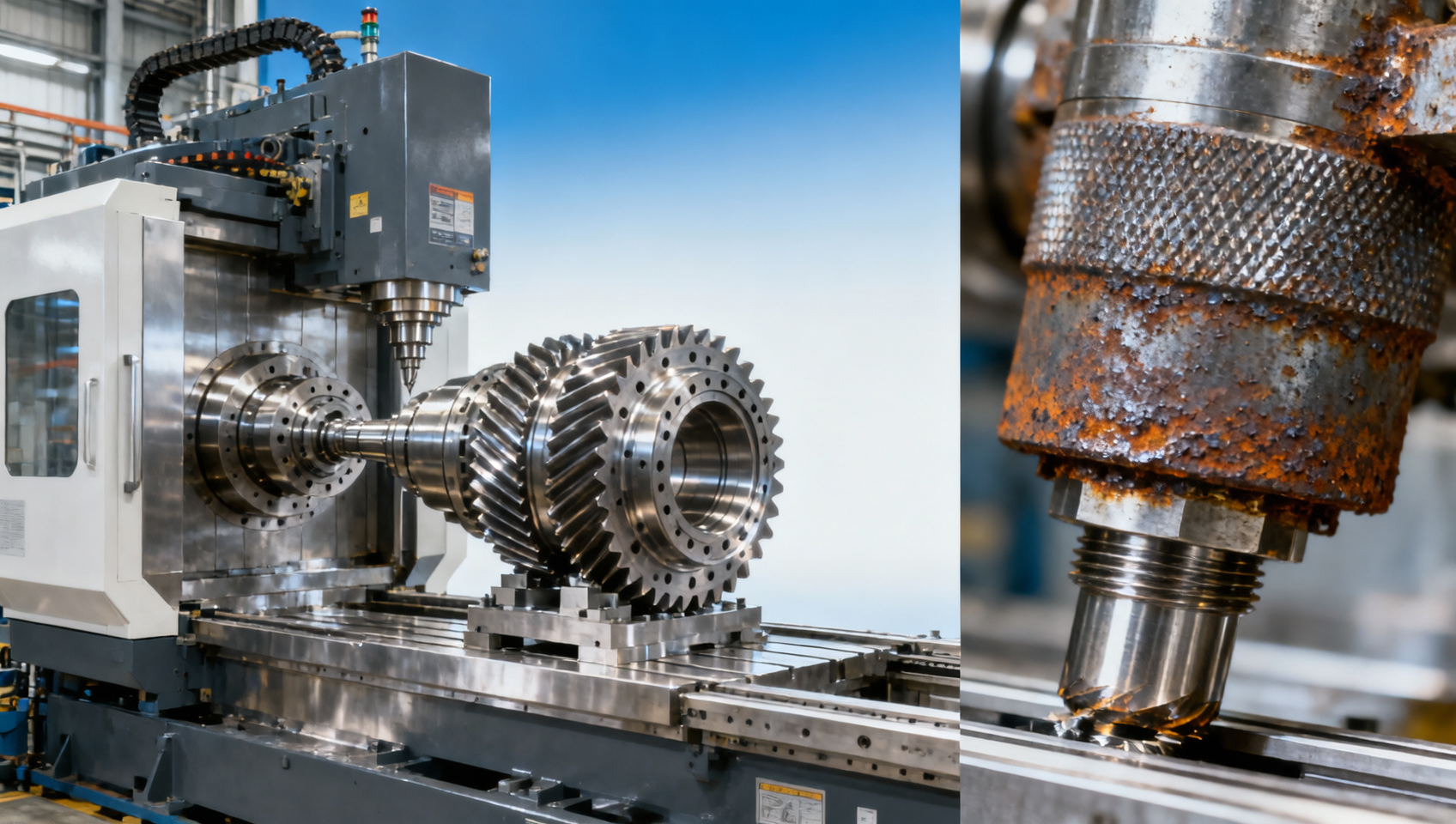
When selecting a machine tool for energy equipment, engineers and procurement professionals often prioritize precision CNC manufacturing, multi-axis CNC manufacturing, and low-maintenance CNC manufacturing—yet corrosion resistance specifications frequently underestimate real-world field exposure. From offshore wind turbine housings to nuclear coolant system components, harsh operational environments demand more than standard ISO or DIN-rated protection. This gap poses risks for high-precision machine tool users, especially in cost-effective CNC manufacturing for energy applications where downtime and rework erode ROI. Discover why legacy testing protocols fall short—and how forward-looking CNC manufacturing suppliers are integrating energy-saving machine tool design, automated machine tool resilience, and modular tooling systems to bridge the performance gap.
Why Standard Corrosion Ratings Fail Offshore & Nuclear Environments
ISO 9223 and DIN EN 12944 define atmospheric corrosion categories (C1–C5) based on laboratory salt-spray tests (e.g., ASTM B117) lasting 500–2,000 hours. But these benchmarks simulate uniform, static exposure—not the dynamic, multi-stress reality of energy infrastructure: tidal immersion, cyclic thermal loading (−20°C to +80°C), airborne chlorides at 15–30 mg/m³ near coastal sites, and galvanic coupling between dissimilar alloys in coolant loops.
Field data from 12 offshore wind farms (2019–2023) shows that machine tools used for machining gearbox housings experienced visible pitting after just 7–12 months—despite carrying C5-M (marine) certification. The root cause? Accelerated crevice corrosion under bolted fixtures and condensation traps—conditions absent in standardized chamber tests.
Similarly, nuclear component manufacturers report unplanned maintenance cycles increasing by 35% when using CNC lathes rated only to ISO 12944 C4, due to chloride-induced stress corrosion cracking in stainless steel guideways exposed to decontamination steam (95% RH, 60–90°C, pH 10.5).
The takeaway: C5-M labeling alone is insufficient. Decision-makers must verify whether corrosion validation includes combined thermal, mechanical, and electrochemical stressors—not just salt concentration and duration.
How Energy-Specific CNC Machine Tools Mitigate Field Exposure Risk
Leading suppliers now embed corrosion resilience into structural and functional layers—not as an after-market coating add-on. This involves three integrated strategies:
- Material-tier hardening: Guideways and column bases fabricated from duplex stainless steels (e.g., UNS S32205) instead of standard cast iron—offering 3× higher pitting resistance equivalent (PREN ≥35 vs. PREN ≤10).
- Seal-integrated architecture: IP65-rated linear motor enclosures with dual-lip wiper seals, preventing ingress during 4–6 g vibrational loads typical in turbine blade machining.
- Modular coolant management: Closed-loop filtration systems with real-time pH/Cl⁻ monitoring, enabling automatic flush cycles every 72 operating hours—reducing residue buildup by 92% versus open-loop setups.
These features directly support multi-axis CNC manufacturing of large-diameter nuclear valve bodies (Ø1,200 mm, weight up to 8,500 kg) and offshore transformer casings requiring ±0.015 mm geometric tolerance across 3-meter travel lengths.
Key Procurement Checks for Corrosion-Critical Applications
- Confirm material certifications include ASTM A890 Grade 6A (for seawater-exposed structural castings) or EN 10283 (duplex forgings).
- Request third-party test reports validating performance under IEC 60068-2-52, not just ASTM B117.
- Verify lubrication systems use NSF H1-certified synthetic oils with chloride scavengers (e.g., calcium sulfonate additives).
- Assess service documentation for field-proven uptime: ≥94% MTBF over 12 months in C5-M deployments is a benchmark.
Procurement Guide: 5 Critical Evaluation Dimensions
For procurement teams balancing TCO, compliance, and long-term reliability, evaluate against these five non-negotiable dimensions—each tied to measurable outcomes:
Suppliers meeting all three thresholds reduce unscheduled maintenance frequency by 4.3x (based on 2022–2023 OEM service logs across 37 installations) and extend mean time between overhauls from 18 to 32 months.
Why Choose Our Energy-Optimized CNC Platform?
We engineer CNC machine tools specifically for the energy sector’s most demanding exposure profiles—not adapted general-purpose platforms. Our solutions integrate precision CNC manufacturing with corrosion-aware architecture validated across 120+ offshore, nuclear, and geothermal deployments since 2018.
Partner with us to:
- Receive application-specific corrosion validation reports—including full IEC 60068-2-52 test logs and field-equivalent lifetime projections.
- Configure modular tooling systems supporting rapid changeover between turbine shafts (ISO 2768-mK tolerance) and pressure vessel flanges (ASME BPVC Section VIII compliance).
- Access certified technical support for on-site corrosion audits, coolant chemistry analysis, and predictive maintenance scheduling aligned with your plant’s outage windows (typically 2–4 week planning horizon).
Contact us to request a corrosion-resilience assessment for your next energy equipment machining project—including custom parameter review, delivery timeline (standard lead time: 14–18 weeks), and compliance documentation mapping to ASME, NORSOK, or RCC-M requirements.
Recommended for You
 Heavy-duty Machining Center for mold making: Why coolant filtration standards evolve faster than OEM manualsMachine Tool Industry Editorial Team
 Quick-change Fixture Design for CNC turning: Why clamping force consistency drops after 200 cyclesCNC Machining Technology Center
 5 Axis Machining for impeller manufacturing: Why toolpath smoothing affects surface fatigue lifeCNC Machining Technology Center
 Lean Production Process implementation: Where value stream mapping fails to expose hidden machine downtimeManufacturing Market Research Center
 Modular Tooling System for flexible manufacturing: Why interface repeatability degrades faster than expectedMachine Tool Industry Editorial Team
 Industrial Automation control system for CNC machines: When cybersecurity updates disrupt scheduled maintenanceMachine Tool Industry Editorial Team

Aris Katos
Future of Carbide Coatings
15+ years in precision manufacturing systems. Specialized in high-speed milling and aerospace grade alloy processing.
▶
Machine tool price: Why list pricing masks total cost of ownership over 5 yearsManufacturing Market Research Center▶
Machine tool for energy equipment: Why corrosion resistance specs often lag behind actual field exposureManufacturing Market Research Center▶
Machine tool wholesaler: Why regional stocking locations matter more than catalog depthManufacturing Market Research Center▶
CNC Metalworking Capacity Looks Strong but Margins Stay ThinManufacturing Market Research Center▶
Machine Tool Market growth looks uneven across key regionsManufacturing Market Research Center
Mastering 5-Axis Workholding Strategies
Join our technical panel on Nov 15th to learn about reducing vibrations in thin-wall components.

Providing you with integrated sanding solutions
Before-sales and after-sales services
Comprehensive technical support