• Global CNC market projected to reach $128B by 2028 • New EU trade regulations for precision tooling components • Aerospace deman
NYSE: CNC +1.2%LME: STEEL -0.4%

Machine Tool Market Signals Worth Watching in 2026
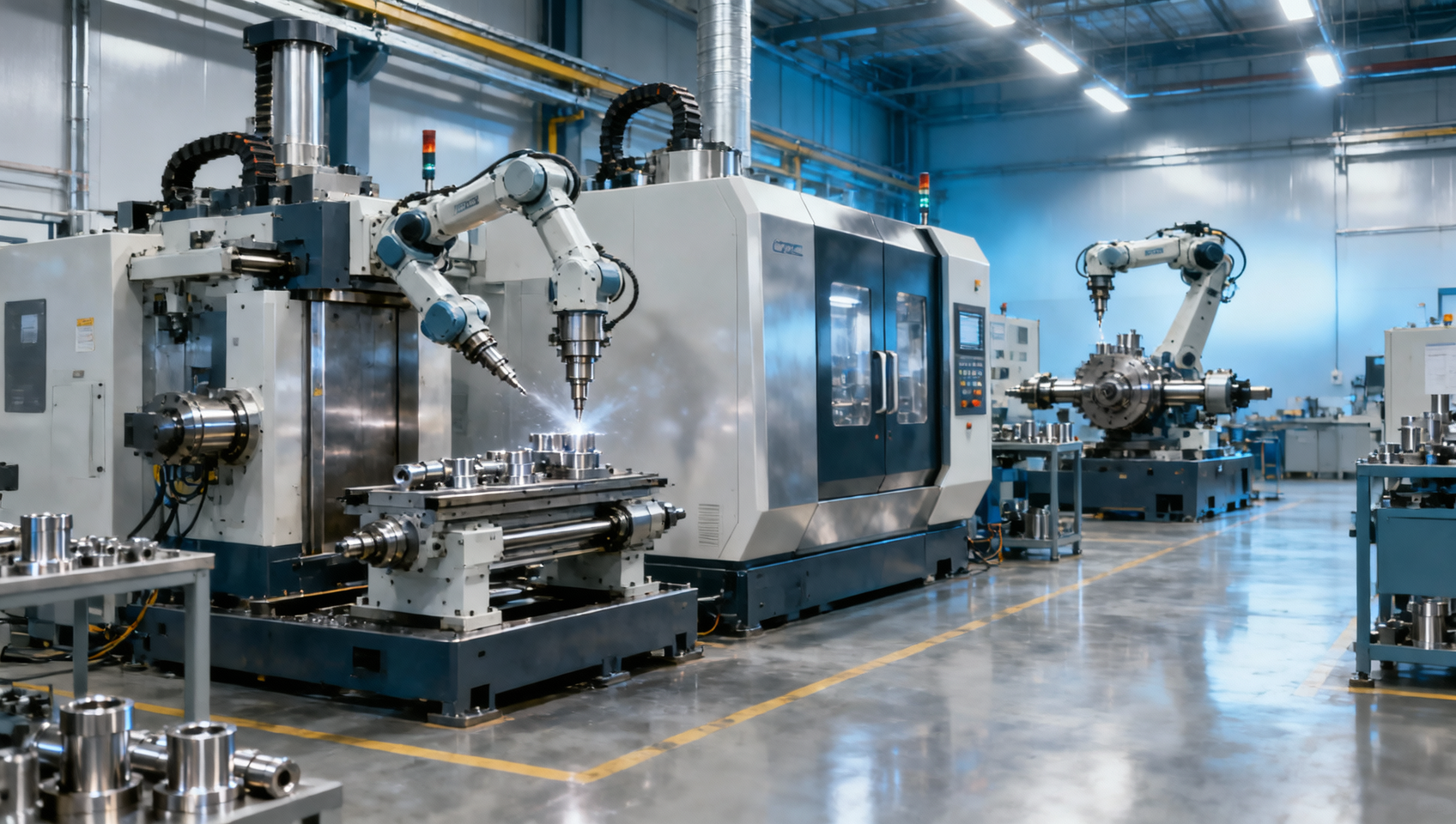
As the Machine Tool Market heads toward 2026, shifts in industrial CNC, automated production, and Global Manufacturing are creating new opportunities and risks for manufacturers, buyers, and operators alike. From CNC metalworking and CNC milling to industrial robotics and automated production line upgrades, the Manufacturing Industry is entering a more precise, digital, and competitive phase worth watching closely.
Why 2026 Matters for the Machine Tool Market
The machine tool market is not moving in a straight line. By 2026, many manufacturers will be balancing three pressures at once: tighter precision requirements, shorter delivery windows, and more cautious capital spending. For information researchers, this means market signals should be read beyond headline demand. For procurement teams and decision-makers, the more useful question is which signals affect utilization, payback period, and supply risk over the next 12–24 months.
CNC lathes, machining centers, and multi-axis systems remain central to automotive, aerospace, energy equipment, and electronics production. Yet the market is increasingly shaped by digital integration rather than stand-alone machine capacity. A buyer comparing a 3-axis or 5-axis machine in 2026 will likely evaluate not only spindle performance and travel range, but also controller compatibility, automation readiness, data collection, and remote diagnostics support.
Another reason 2026 matters is the uneven pace of industrial recovery across regions. China, Germany, Japan, and South Korea continue to influence machine tool production, component sourcing, and export competitiveness. That creates opportunities for cross-border procurement, but it also introduces lead-time variation, after-sales complexity, and compliance review requirements that can extend project planning by 2–6 weeks.
For operators and plant managers, the machine tool market is also about workforce adaptation. As more systems integrate tool monitoring, robotic loading, and flexible production cells, skill requirements shift from pure manual setup toward digital operation, process verification, and preventive maintenance. This is why market signals should be interpreted through an operational lens, not only a purchasing lens.
- Demand is being driven by precision manufacturing, near-shoring decisions, and line automation upgrades.
- Supply conditions are influenced by controller availability, critical components, and regional export structures.
- Investment decisions increasingly depend on machine uptime, software integration, and service response time within 24–72 hours.
The market signals worth tracking first
A practical reading of the machine tool market starts with a few measurable signals. Watch order backlogs, replacement cycles, financing conditions, and project type. A surge in replacement demand often signals that users are upgrading old CNC metalworking equipment for automation compatibility rather than simply adding new capacity. That distinction matters because it changes the value of retrofit-friendly machines, tooling packages, and software support.
It is also useful to separate high-mix, low-volume demand from stable mass production demand. A plant serving aerospace structures may prioritize 5-axis flexibility and process repeatability, while an automotive supplier may focus on cycle time stability over three shifts. In both cases, the machine tool market signal is not just “growth” but what type of production environment is spending first.
Which demand segments are likely to shape industrial CNC investment?
Industrial CNC investment is increasingly tied to application-specific pressure. Automotive programs continue to require efficient machining of shaft parts, transmission housings, and aluminum components. Aerospace buyers look for stable contouring, tighter tolerance control, and traceable process data. Energy equipment and electronics manufacturers need a mix of precision, repeatability, and adaptable production cells that can support medium-batch or variable-batch production.
For procurement teams, the most important takeaway is that machine selection should start with part family and production rhythm. A machining center optimized for precision discs may not be the best answer for long shaft components or unattended night shifts. In 2026, buyers who align machine tools with real production scenarios will usually control operating cost better than those who compare only purchase price.
The application environment also changes the supporting equipment decision. Cutting tools, fixtures, chip management, automated loading, and in-process inspection all affect output quality. In many plants, these supporting elements account for a significant portion of implementation complexity during the first 30–90 days after installation, especially when changing from manual cells to semi-automated or fully automated production lines.
The table below compares common machine tool demand drivers by scenario. It can help researchers, operators, and buyers understand where investment logic differs across production contexts.
The comparison shows why a single machine tool market trend can mean different things to different buyers. High-volume sectors may respond first to automation-friendly equipment, while high-precision sectors often prioritize process capability and digital verification. Buyers who define production type, part geometry, and shift model early usually avoid costly re-selection later.
Application signals buyers should not ignore
Three demand-side signals are especially relevant in 2026. First, more factories are consolidating multiple operations into fewer setups, which raises demand for multi-axis machining and integrated probing. Second, labor constraints are encouraging robotic loading and pallet systems, especially where machines run beyond 16 hours per day. Third, product customization is expanding, which makes flexible fixtures and faster program changeover more valuable.
If your plant handles both prototype and repeat production, the machine tool market should be read through utilization flexibility. If your plant is focused on stable output, then spindle duty cycle, tooling cost per part, and maintenance intervals may matter more than maximum feature count.
What should buyers compare before choosing CNC machine tools in 2026?
Procurement mistakes in the machine tool market usually happen when comparison criteria are too narrow. A lower machine price can be offset by weaker automation compatibility, longer commissioning, or higher consumable cost. In B2B purchasing, the more reliable approach is to compare machine tools across four layers: production fit, technical performance, service support, and lifecycle cost over 3–5 years.
Technical comparison should begin with actual part requirements. Common checks include spindle power range, axis travel, positioning consistency, tool magazine capacity, and controller ecosystem. For many precision manufacturing users, the practical question is not the highest possible spec, but whether the machine can hold process stability during continuous operation, frequent changeovers, or thermal variation across an 8–12 hour shift.
Service comparison is equally important. Installation, training, spare parts availability, preventive maintenance plans, and troubleshooting workflow can change the total cost of ownership. A machine with a 2–4 week faster delivery may still be the weaker option if replacement parts require long overseas dispatch or if commissioning support is limited.
The following table gives a practical procurement framework for comparing industrial CNC and automated production equipment before issuing a final RFQ.
This type of comparison is especially useful for companies selecting between standalone CNC machine tools and more integrated automated production line solutions. A machine that fits current jobs but blocks future robotics or MES connectivity may become a bottleneck within 18–36 months.
A practical 5-point buying checklist
Before final approval, confirm these items
- Can the machine process your top 3 part families without major fixture redesign?
- Does the proposed configuration match your target batch size: prototype, medium batch, or high-volume output?
- What is the normal delivery window for the machine, tooling, and automation package: 6–10 weeks, 10–16 weeks, or longer?
- How many days are planned for installation, commissioning, and operator training, and who is responsible for each stage?
- Are there clear spare parts and remote support arrangements for the first 12 months of operation?
For decision-makers, this checklist turns a technical conversation into a business case. It also helps operators raise practical concerns early, before production launch dates are committed.
How automation, digital integration, and robotics are changing machine tool value
The machine tool market in 2026 will reward equipment that works as part of a system. Industrial robotics, automated loading, pallet changers, tool monitoring, and production data feedback are no longer optional in many competitive plants. Even when a company starts with a single CNC machine, buyers increasingly ask whether the equipment can connect to future cells, scheduling software, or traceability requirements.
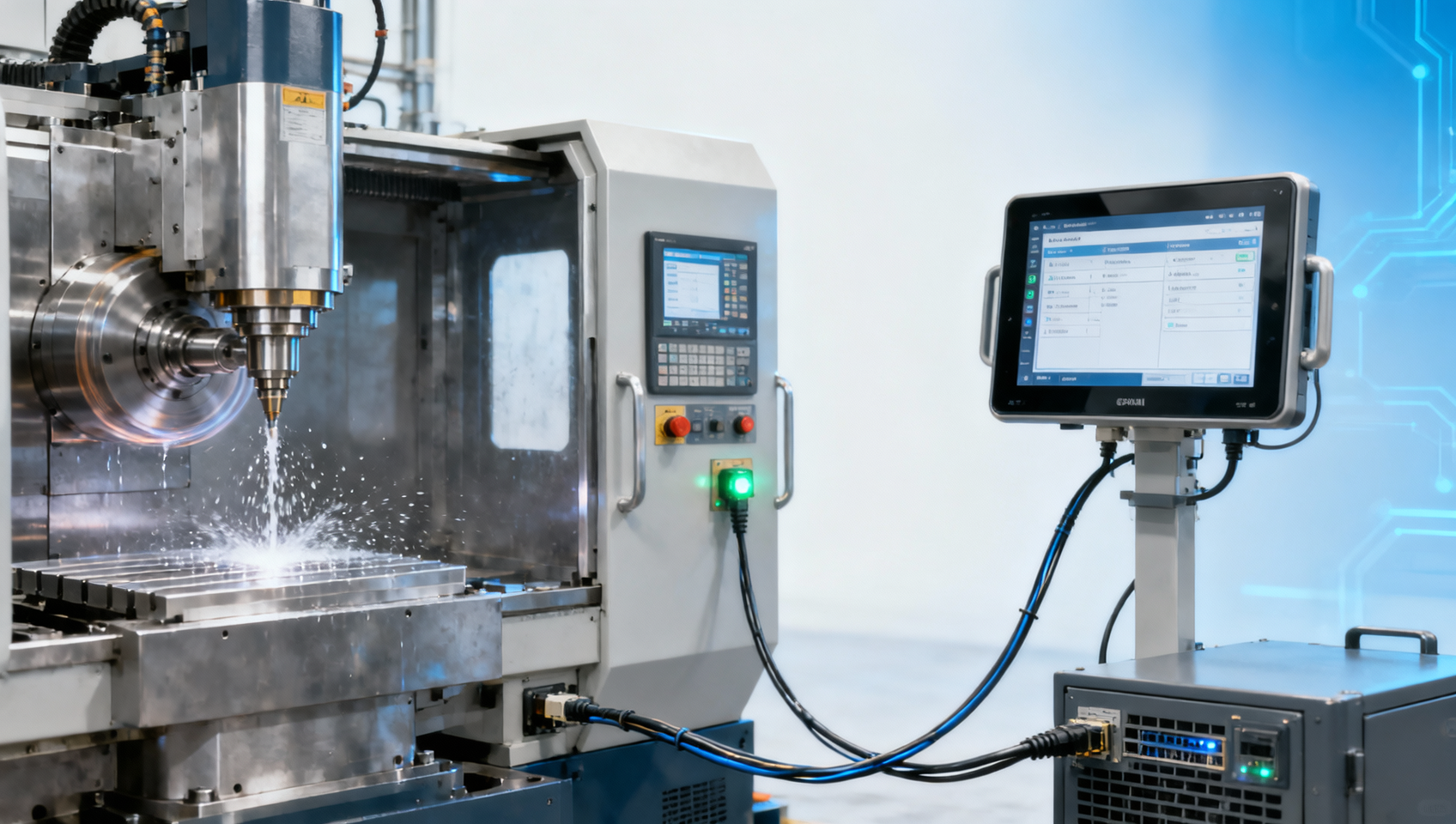
For operators, the value of digital integration is practical. It can reduce setup errors, improve alarm response, and help identify tool wear before defective parts accumulate. For purchasing teams, digital readiness affects labor planning, machine utilization, and expansion cost. A machine that supports unattended operation for several hours can create a very different return profile from one that requires constant manual intervention.
However, automation is not automatically the better option. In high-mix workshops with frequent product changes, a fully automated production line can become underutilized if fixtures, programs, and scheduling are not standardized. In these cases, semi-automated layouts or modular robotic loading can offer a more balanced path over a 1–3 year horizon.
Digital integration should therefore be evaluated in stages. Many manufacturers succeed by first implementing data visibility and standard work, then adding robotic handling, and only later expanding to flexible production cells. This staged approach reduces disruption and spreads investment risk.
A realistic implementation path
- Stage 1: Verify machine capability, basic controller functions, and process stability for key parts over 2–4 weeks.
- Stage 2: Add fixtures, tool management, and simple data collection to improve repeatability over the next 1–2 months.
- Stage 3: Expand to robotic loading, pallet handling, or MES connection when utilization and process consistency justify the investment.
This sequence is particularly relevant in the global machine tool market, where capital budgets are controlled more tightly. It allows manufacturers to improve output while preserving flexibility if market demand changes unexpectedly.
What risks and misconceptions should the market watch in 2026?
One common misconception is that higher machine specification always leads to better business performance. In reality, over-configured equipment can increase capital cost, training burden, and maintenance complexity without improving throughput. If a part family does not require 5-axis capability or advanced automation, a well-matched 3-axis or turning solution may deliver faster payback.
Another risk is underestimating implementation time. Buyers often focus on quoted machine delivery, but production readiness also depends on tooling, fixtures, program validation, utilities, and operator training. In practice, a machine delivered in 8 weeks may still require an additional 2–6 weeks before stable output begins, especially if multiple vendors are involved.
There is also a misconception that global sourcing always lowers total cost. International purchasing can improve access to competitive CNC machine tools and components, but currency fluctuations, shipping schedules, local support gaps, and documentation differences can all affect project certainty. Buyers should compare landed project cost, not only factory quotation.
Compliance should not be ignored either. Depending on export destination and factory policy, buyers may need to review electrical conformity, safety requirements, control system documentation, and operating manuals. These checks are not glamorous, but they often determine whether equipment can be commissioned on schedule.
FAQ for researchers, operators, and procurement teams
How do I know whether to buy a standard CNC machine or a customized solution?
Start with three factors: part complexity, batch variability, and automation needs. Standard machines are often suitable for stable parts and predictable output. A customized solution becomes more relevant when your process requires special fixtures, robotic loading, in-line inspection, or integration with an existing automated production line. If your product mix changes every few weeks, modular customization may be more practical than a fully dedicated line.
What delivery period is typical in the machine tool market?
Delivery periods vary by configuration and sourcing region. Standard equipment may be planned within 6–12 weeks, while complex multi-axis systems or automation-integrated cells can extend to 12–24 weeks. Buyers should also confirm separate timelines for tooling, fixtures, electrical preparation, operator training, and trial production.
What matters most for operators using industrial CNC equipment daily?
Ease of setup, alarm clarity, tool access, programming support, and maintenance routine matter more than brochure claims. A machine that is simple to verify and maintain over every shift often delivers better real-world performance than one with advanced features that operators cannot use efficiently. Training coverage over the first 3–5 days after installation is especially important.
Which market signal usually deserves the fastest reaction?
For many buyers, the clearest signal is a gap between current demand and available production stability. If order flow is improving but downtime, setup time, or labor constraints are limiting output, then investment in machine tools, tooling systems, or automation may have stronger logic than simple capacity expansion alone.
Why work with a platform focused on global CNC machining and precision manufacturing?
When the machine tool market becomes more complex, access to structured industry insight matters. A professional platform focused on global CNC machining and precision manufacturing can help buyers compare production solutions more clearly, follow regional market changes, and understand how CNC lathes, machining centers, tooling systems, and automated production lines fit specific manufacturing goals.
This is especially useful for information researchers who need reliable market direction, operators who need practical technology insight, procurement teams comparing options, and business leaders evaluating investment timing. Instead of treating machine tools as isolated products, the better approach is to assess the full manufacturing chain: machine, tooling, fixture, automation, service, and trade conditions.
If you are reviewing 2026 machine tool opportunities, you can contact us to discuss parameter confirmation, product selection, delivery cycle planning, automation matching, certification and documentation needs, sample or part-process evaluation, and quotation communication for different sourcing routes. These discussions are most effective when based on actual part drawings, batch forecasts, tolerance targets, and shift plans.
Whether you are comparing CNC milling systems, precision machine tools, industrial robotics, or a broader automated production line upgrade, we can help turn market signals into a more actionable buying framework. That reduces uncertainty, supports better internal decision-making, and helps your team move faster from research to implementation.
PREVIOUS ARTICLE
Recommended for You
 Heavy-duty Machining Center for mold making: Why coolant filtration standards evolve faster than OEM manualsMachine Tool Industry Editorial Team
 Quick-change Fixture Design for CNC turning: Why clamping force consistency drops after 200 cyclesCNC Machining Technology Center
 5 Axis Machining for impeller manufacturing: Why toolpath smoothing affects surface fatigue lifeCNC Machining Technology Center
 Lean Production Process implementation: Where value stream mapping fails to expose hidden machine downtimeManufacturing Market Research Center
 Modular Tooling System for flexible manufacturing: Why interface repeatability degrades faster than expectedMachine Tool Industry Editorial Team
 Industrial Automation control system for CNC machines: When cybersecurity updates disrupt scheduled maintenanceMachine Tool Industry Editorial Team


Aris Katos
Future of Carbide Coatings
15+ years in precision manufacturing systems. Specialized in high-speed milling and aerospace grade alloy processing.
▶
Machine tool price: Why list pricing masks total cost of ownership over 5 yearsManufacturing Market Research Center▶
Machine tool for energy equipment: Why corrosion resistance specs often lag behind actual field exposureManufacturing Market Research Center▶
Machine tool wholesaler: Why regional stocking locations matter more than catalog depthManufacturing Market Research Center▶
CNC Metalworking Capacity Looks Strong but Margins Stay ThinManufacturing Market Research Center▶
Machine Tool Market Signals Worth Watching in 2026Manufacturing Market Research Center
Mastering 5-Axis Workholding Strategies
Join our technical panel on Nov 15th to learn about reducing vibrations in thin-wall components.

Providing you with integrated sanding solutions
Before-sales and after-sales services
Comprehensive technical support