• Global CNC market projected to reach $128B by 2028 • New EU trade regulations for precision tooling components • Aerospace deman
NYSE: CNC +1.2%LME: STEEL -0.4%

Industrial Robotics adoption is growing fastest in repetitive loading
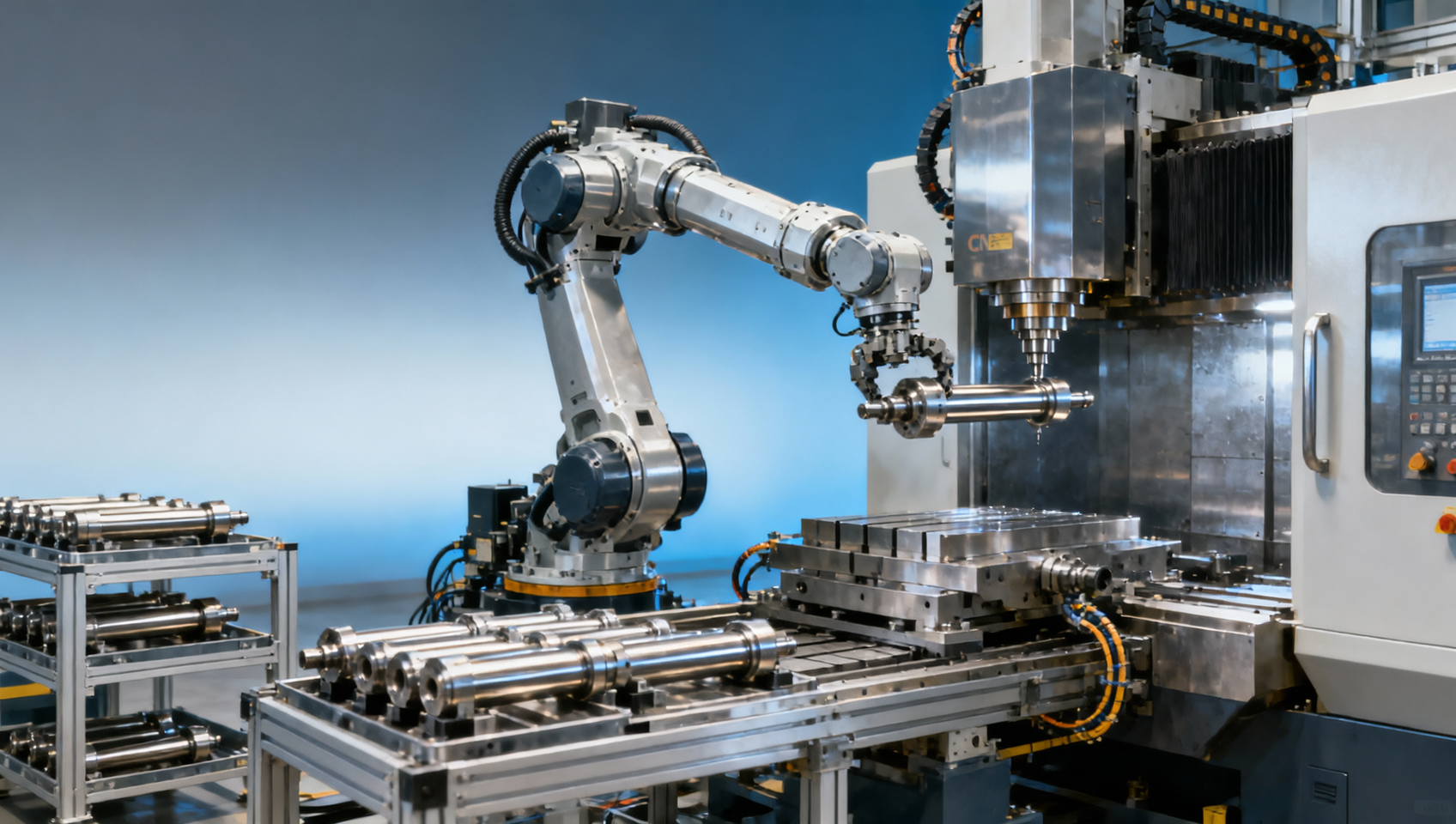
Industrial Robotics adoption is accelerating fastest in repetitive loading, reshaping metal machining, industrial CNC, and automated production across the Global Manufacturing landscape. As CNC production, CNC milling, automated lathe systems, and Automated Production Line solutions evolve, manufacturers are rethinking the production process for shaft parts, precision components, and high-volume operations to improve efficiency, consistency, and competitiveness.
For researchers, operators, buyers, and decision-makers, the shift is no longer theoretical. Repetitive loading tasks—feeding raw blanks, unloading finished parts, transferring workpieces between CNC lathes and machining centers, and supporting secondary inspection—have become one of the clearest entry points for industrial robotics. These tasks are predictable, labor-intensive, and often measurable in cycle time, uptime, scrap rate, and labor hours.
In CNC machining and precision manufacturing, repetitive loading offers a strong balance between technical feasibility and commercial return. Compared with fully autonomous factory transformation, a robot loading cell can often be deployed in 8–16 weeks, integrated with 1–3 machines at first, and then scaled to larger automated production lines. That makes it highly relevant for factories pursuing faster payback without disrupting their entire plant layout.
This article examines why repetitive loading is becoming the fastest-growing robotics application, where it delivers the most value in CNC environments, how to evaluate deployment options, and what procurement teams should check before investing in robotic loading systems for industrial CNC production.
Why repetitive loading is the fastest path to robotics adoption
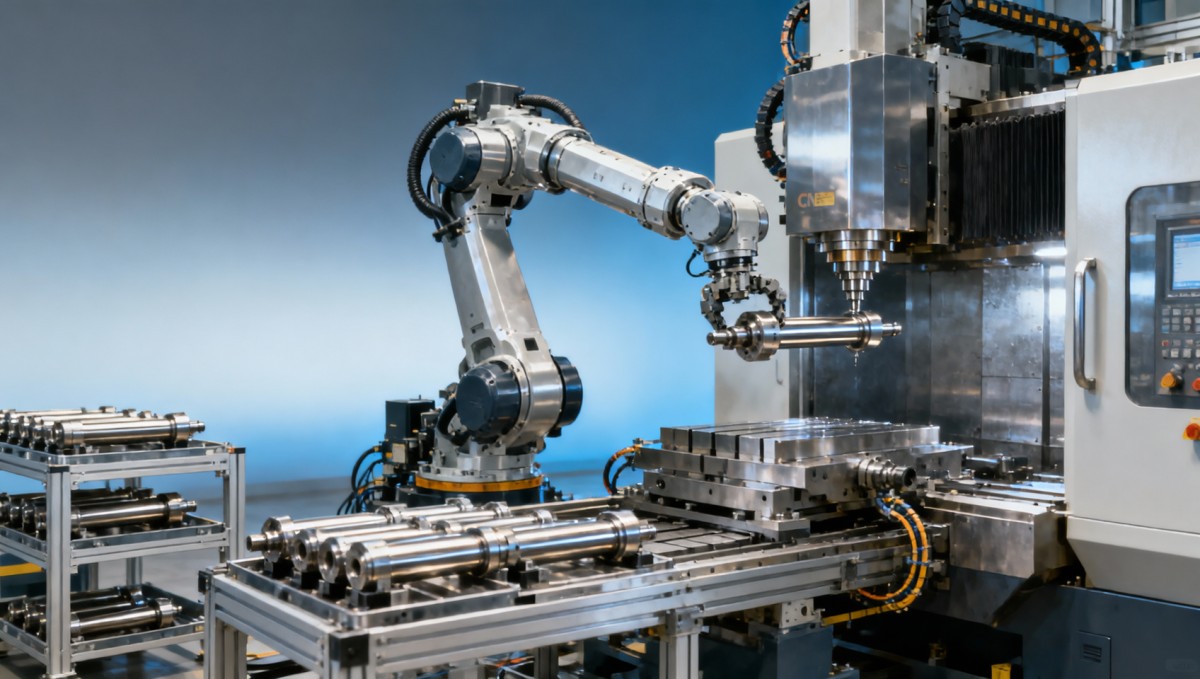
Repetitive loading is a natural automation target because the task structure is stable. In many machine shops, an operator repeats the same pick, place, chucking support, and part transfer sequence every 30 seconds to 5 minutes. When this happens across 2 shifts or 3 shifts, the labor demand becomes significant, while process variation caused by fatigue also increases.
From a production engineering perspective, loading and unloading sit at the interface between machine capacity and human availability. A CNC lathe may have a cutting cycle of 90 seconds, but if manual loading takes 20–30 seconds and operator response is inconsistent, actual spindle utilization drops. Robotic loading reduces this gap by standardizing material handling timing and minimizing idle seconds between cycles.
The economics are also easier to justify than in more complex robotic applications. Repetitive loading usually requires fewer variables than adaptive assembly or unstructured bin-picking. In a typical cell, the integration scope may include a 6-axis robot, gripper, safety enclosure, machine interface, and part presentation device. This limited scope lowers implementation risk and shortens validation time to around 2–6 weeks after installation.
Another driver is workforce pressure. In regions with aging labor pools or high operator turnover, machine tending roles can be hard to fill. By moving repetitive loading to robots, factories can reassign skilled workers to setup, inspection, tool monitoring, or process optimization. For decision-makers, that shift is often more valuable than a simple headcount reduction because it improves operational resilience.
What makes repetitive loading especially suitable
The application is best suited when part dimensions are consistent, machine access is predictable, and handling steps can be repeated within fixed tolerances. In many CNC turning and milling environments, raw stock diameters, chuck locations, door opening sequences, and unload positions are already standardized. That gives robotics integrators a clear path to stable programming and repeatable throughput.
- Cycle time repeatability often falls within ±1–3 seconds when part feeding is organized well.
- Robot payload requirements for shaft parts, discs, and medium billets commonly range from 3 kg to 35 kg.
- Cell uptime targets in practical projects are frequently planned at 85%–95% after ramp-up, depending on part mix and fixture quality.
- Initial deployments usually begin with 1 machine and expand to 2–4 linked stations after process stability is proven.
Typical value areas
The strongest gains usually appear in three areas: longer unattended runtime, lower handling variation, and safer part movement. These benefits matter most in high-volume shaft production, precision disc machining, and component batches where 500 to 5,000 pieces per run justify setup discipline and automation planning.
Where robotic loading creates the most value in CNC and automated production lines
In the CNC machine tool industry, robotic loading is not limited to one machine category. It is increasingly used with CNC lathes, vertical machining centers, horizontal machining centers, dual-spindle turning systems, and compact automated lathe cells. The common requirement is not the machine type itself, but a repeatable flow of raw material in and finished parts out.
Shaft parts are among the most common examples. These parts often involve turning, facing, drilling, and secondary transfer operations. Manual loading may seem manageable for one machine, but when a production line runs 16–20 hours per day, loading consistency affects spindle utilization, fixture wear, and the rhythm of downstream inspection or packaging.
Precision components for automotive, aerospace support manufacturing, energy equipment, and electronics hardware also benefit from robot tending. In these sectors, even a small loading error can produce clamping instability or cosmetic damage. A robotic cell with stable gripper force, part orientation control, and interlock signals can reduce such handling-related variability.
For buyers evaluating automated production line upgrades, the key question is not whether every process should be robotic. The better question is which repetitive node creates the biggest bottleneck today. In many factories, that first bottleneck is machine loading, not machining capability.
Common application scenarios in precision manufacturing
The following comparison helps illustrate where robotic loading fits best in industrial CNC operations and what practical gains can be expected from each scenario.
A practical takeaway from these scenarios is that robotic loading brings the fastest payoff where part handling is frequent, process timing is repeated, and the machine itself already has strong machining stability. In other words, robotics amplifies a sound production process; it does not fix an unstable one.
When value is lower
The return can be weaker when product mix changes every few hours, fixture references are inconsistent, or parts are highly deformable and difficult to grip. In those cases, semi-automation, quick-change tooling, or standardized loading trays may be necessary before a full robotic cell becomes efficient.
Selection criteria: what buyers and engineering teams should evaluate first
A robotic loading project should begin with process evaluation, not equipment catalogs. Buyers often compare robot brands first, but the real success factors are part stability, loading method, machine interface compatibility, and target throughput. If these fundamentals are unclear, even a technically capable robot may underperform in production.
Engineering teams should map at least 4 core variables: part size range, payload, cycle time, and changeover frequency. For example, a line producing 8 kg shaft parts every 75 seconds has very different needs from a cell handling 0.6 kg precision discs every 18 seconds. Gripper style, robot reach, feeder design, and safety layout all depend on these details.
Procurement teams should also look beyond the robot arm. In real machine tending environments, grippers, end-of-arm sensors, machine communication modules, guarding, loading trays, and infeed-outfeed logic often determine 40%–60% of the application outcome. A low-price robot cell with poor fixture integration can create more downtime than it saves.
The table below summarizes practical selection checkpoints for CNC production, automated lathe systems, and integrated production lines.
The most important conclusion is that selection should be process-led and data-led. A robot should have enough reach and payload margin—often 15%–30% above actual part demand—to accommodate gripper weight, orientation changes, and future part updates without oversizing the cell unnecessarily.
A practical buyer checklist
- Define the target machine utilization increase, such as from 62% to 80% or from 1.5 shifts to 2 shifts.
- Group parts into 2–4 automation families based on shape, diameter, length, and loading orientation.
- Verify whether loading accuracy requirements are mechanical, visual, or sensor-assisted.
- Review operator intervention points, including tray refill, tool change coordination, and alarm recovery.
- Estimate maintenance support needs over the first 6–12 months, not just the installation period.
Implementation, risk control, and day-to-day operation in the shop floor
Successful robotic loading depends on disciplined implementation. Even when the robot application itself is straightforward, delays often come from inconsistent part presentation, unstable fixtures, or poorly defined machine signals. A well-run project usually moves through 5 stages: process review, concept design, offline verification, installation and debugging, then production ramp-up.
For most CNC machine tool plants, installation can be completed within 1–3 weeks, but stable ramp-up may take another 2–4 weeks. During this period, operators and maintenance staff need practical training, not only basic robot operation. They should know recovery steps after a part pick failure, sensor contamination issue, or machine alarm interruption. This is where many projects either gain long-term reliability or accumulate hidden downtime.
Risk control should focus on the production process rather than the robot alone. For example, chip accumulation can affect gripper contact surfaces, coolant mist can interfere with sensors, and slight raw material dimensional variation can cause loading inconsistency. These issues are manageable, but only if they are anticipated in the design stage.
Operators also need clear boundaries between manual and automatic intervention. In well-designed cells, mode switching, safety reset, and restart sequences are standardized into a small number of steps. This reduces accidental downtime and helps maintain throughput consistency across different shifts.
Common implementation risks
- Part trays or feeders do not maintain orientation after 200–500 cycles, leading to picking errors.
- Chucking or fixture repeatability is weaker than expected, so robotic consistency exposes an existing process issue.
- Machine doors, air pressure, or clamping feedback signals are too slow or unstable for unattended operation.
- Cycle time calculations ignore human support tasks such as tray replenishment every 20–40 minutes.
- Spare grippers, wear parts, and recovery procedures are not prepared before start-up.
Operational habits that improve results
Factories that achieve better results typically standardize 3 areas: raw material presentation, preventive maintenance frequency, and alarm handling discipline. Simple routines—such as inspecting gripper contact points every shift, cleaning sensors daily, and reviewing cycle deviation weekly—can do more for stability than adding unnecessary control complexity.
Future direction: scaling from a single loading cell to smart manufacturing
Repetitive loading is often the first practical step toward broader smart manufacturing. Once a plant proves stable robot tending on one CNC lathe or machining center, the next stage is often linking multiple machines, adding in-process gauging, or connecting material flow data to production planning systems. This progression is more realistic than attempting full-scale digital transformation in one investment cycle.
In global manufacturing clusters such as China, Germany, Japan, and South Korea, many suppliers are moving toward modular automation. Instead of building one rigid line for a single product family, they prefer flexible cells that can support 2–6 part variants with quick-change grippers, recipe-based programs, and standardized machine interfaces. This approach helps balance automation with changing market demand.
For enterprise decision-makers, the strategic value is not only labor substitution. Robotic loading improves scheduling confidence, supports longer runtimes, and generates more stable production data. Those gains matter when a company wants to improve delivery reliability, expand export capacity, or compete in industries where consistency is as important as machining precision itself.
For operators and procurement teams, the practical message is equally clear: start with the repetitive process that is already measurable. If a task repeats hundreds of times per shift, creates avoidable waiting time, and depends heavily on manual discipline, it is a strong candidate for robotic loading in industrial CNC and automated production line environments.
FAQ for buyers and production teams
How long does a robotic loading project usually take?
For a standard machine tending cell, concept confirmation to installation commonly takes 8–16 weeks. If fixture redesign, multiple machine interfaces, or complex part families are involved, the timeline can extend to 16–24 weeks. Ramp-up should be planned separately from delivery.
Which companies benefit most from repetitive loading automation?
The best fit is usually a manufacturer with stable batches, repeatable workholding, and at least one process that runs across 2 shifts or more. This includes automotive component suppliers, precision shaft manufacturers, energy equipment part makers, and machine shops with medium-to-high-volume CNC production.
What is the most common mistake during selection?
A frequent mistake is focusing only on robot speed or price while ignoring feeder design, machine communication, and changeover reality. In practice, stable part presentation and reliable interlocks usually determine whether the system performs well day after day.
Industrial robotics adoption is growing fastest in repetitive loading because it solves a visible and measurable problem at the center of CNC production: how to keep machines cutting with less waiting, less variation, and better use of skilled labor. In metal machining, automated lathe systems, and integrated production lines, robotic loading offers a practical route to higher consistency and scalable automation.
If you are evaluating robotic loading for shaft parts, precision components, or multi-machine CNC operations, the best next step is to assess cycle time, part handling stability, and changeover needs in detail. Contact us to discuss your production process, get a tailored automation plan, and explore the right solution for your factory’s next stage of manufacturing efficiency.
Recommended for You
![]() Iranian LNG Vessels Breach U.S. Strait Blockade; Shanghai Crude Surges 4%Manufacturing Market Research Center
Iranian LNG Vessels Breach U.S. Strait Blockade; Shanghai Crude Surges 4%Manufacturing Market Research Center![]() Pakistan Launches CNC Localization Tender for CPEC II Smart Manufacturing ParkGlobal Machine Tool Trade Research Center
Pakistan Launches CNC Localization Tender for CPEC II Smart Manufacturing ParkGlobal Machine Tool Trade Research Center![]() NVIDIA Joins $1T Club; AI-Driven CNC Digital Twin Gains Global TractionCNC Machining Technology Center
NVIDIA Joins $1T Club; AI-Driven CNC Digital Twin Gains Global TractionCNC Machining Technology Center![]() World's First 5-Axis Middle-Grade Wire EDM Machine Enters Mass ProductionMachine Tool Industry Editorial Team
World's First 5-Axis Middle-Grade Wire EDM Machine Enters Mass ProductionMachine Tool Industry Editorial Team![]() China’s CNC Machine Tool Export Prices Up 11.3% in Q1 2026Global Machine Tool Trade Research Center
China’s CNC Machine Tool Export Prices Up 11.3% in Q1 2026Global Machine Tool Trade Research Center![]() Saudi Energy Security Boosts CNC Import Efficiency in Middle EastGlobal Machine Tool Trade Research Center
Saudi Energy Security Boosts CNC Import Efficiency in Middle EastGlobal Machine Tool Trade Research Center


Aris Katos
Future of Carbide Coatings
15+ years in precision manufacturing systems. Specialized in high-speed milling and aerospace grade alloy processing.
▶
Production Line Automation Integration Problems to Fix EarlyCNC Machining Technology Center▶
Why automated production lines still struggle with changeoversCNC Machining Technology Center▶
When does an Automated Production Line become too rigid?CNC Machining Technology Center▶
Industrial Robotics integration costs more in low mix productionCNC Machining Technology Center▶
Industrial Robotics adoption is growing fastest in repetitive loadingCNC Machining Technology Center
Mastering 5-Axis Workholding Strategies
Join our technical panel on Nov 15th to learn about reducing vibrations in thin-wall components.

Providing you with integrated sanding solutions
Before-sales and after-sales services
Comprehensive technical support