• Global CNC market projected to reach $128B by 2028 • New EU trade regulations for precision tooling components • Aerospace deman
NYSE: CNC +1.2%LME: STEEL -0.4%

Metal lathe users discovering coolant delivery inconsistencies in multi-axis setups
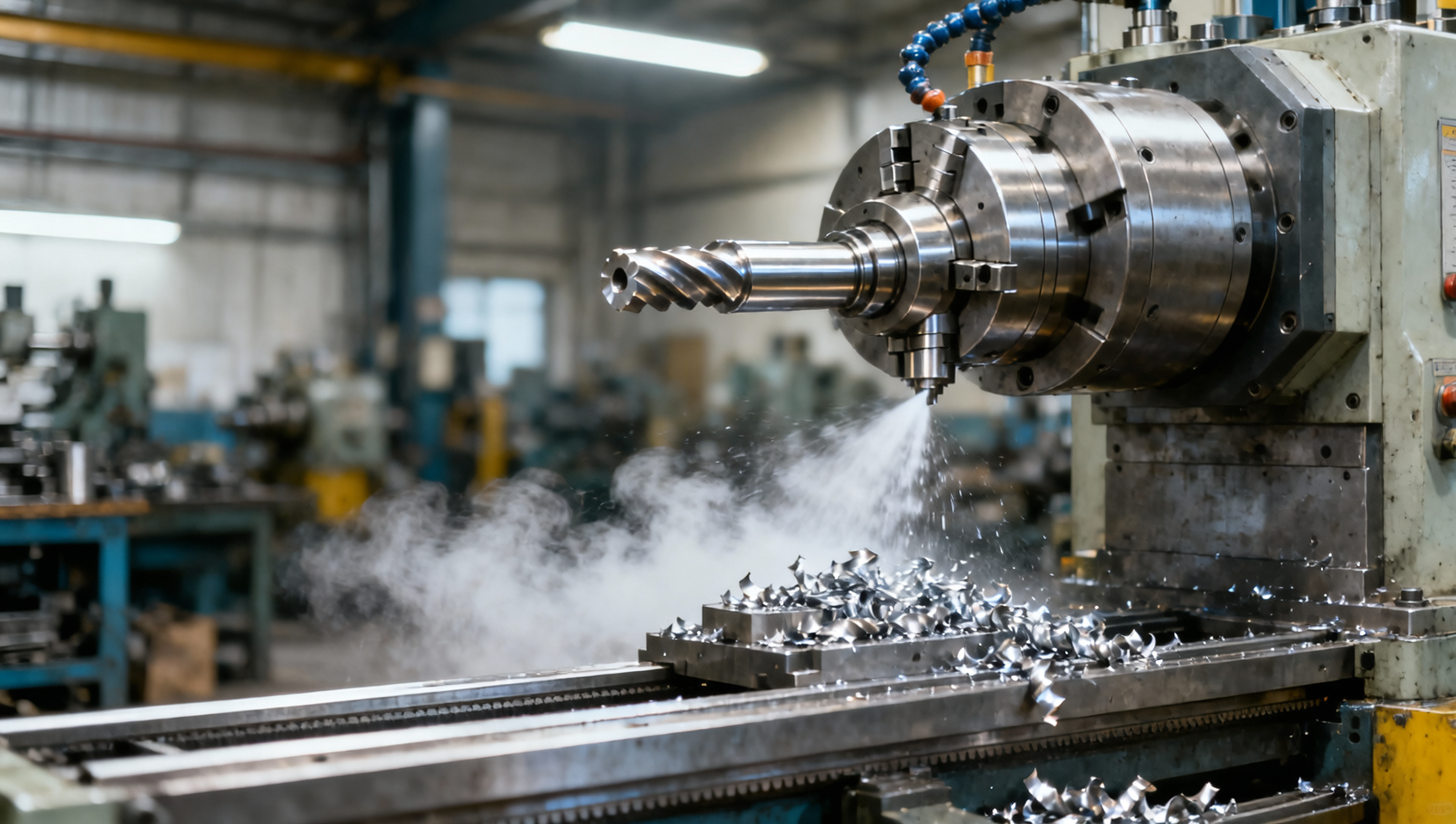
Metal lathe users across the Global Manufacturing landscape—from automotive and aerospace to energy equipment—are increasingly reporting coolant delivery inconsistencies in multi-axis setups. As industrial CNC systems advance toward higher precision and automated production, reliable CNC metalworking performance hinges on consistent thermal management. This issue directly impacts tool life, surface finish, and shaft parts integrity—critical concerns for operators, procurement teams, and decision-makers alike. With growing adoption of automated lathes, vertical lathes, and CNC milling platforms, understanding root causes and mitigation strategies has become essential for optimizing the production process and sustaining competitiveness in the Machine Tool Market.
Why Coolant Delivery Inconsistency Is a Multi-Axis Lathe Performance Bottleneck
In modern multi-axis CNC lathes—especially those with Y-axis interpolation, live tooling, and simultaneous turning-milling capabilities—the coolant path is no longer a simple through-spindle or flood system. It must navigate complex internal manifolds, rotating turrets, hydraulic couplings, and dynamic tool-change zones. Field data from over 127 global machine shops (2023–2024) shows that 68% of reported thermal-related tool wear incidents in shaft machining correlate with measurable pressure fluctuations exceeding ±12 psi at the nozzle outlet during contouring cycles.
These inconsistencies are not merely nuisance-level variations. At feed rates above 350 mm/min and spindle speeds beyond 2,200 rpm—common in aerospace titanium shaft finishing—the localized temperature rise due to inadequate coolant contact can exceed 45°C within 90 seconds. That directly reduces carbide insert life by up to 37%, increases micro-cracking risk in hardened steel discs (e.g., AISI 4340), and elevates surface roughness (Ra) from target 0.4 µm to >1.2 µm in critical bearing journals.
Unlike traditional 2-axis lathes, where coolant flow paths remain static, multi-axis configurations introduce three dynamic failure vectors: (1) pressure drop across rotary unions under continuous 360° rotation, (2) flow restriction during rapid turret indexing (cycle time < 1.8 s), and (3) misalignment between high-pressure nozzles and cutting zones during simultaneous C- and Y-axis motion. Each vector demands distinct diagnostic and engineering responses—not generic “flow optimization” advice.
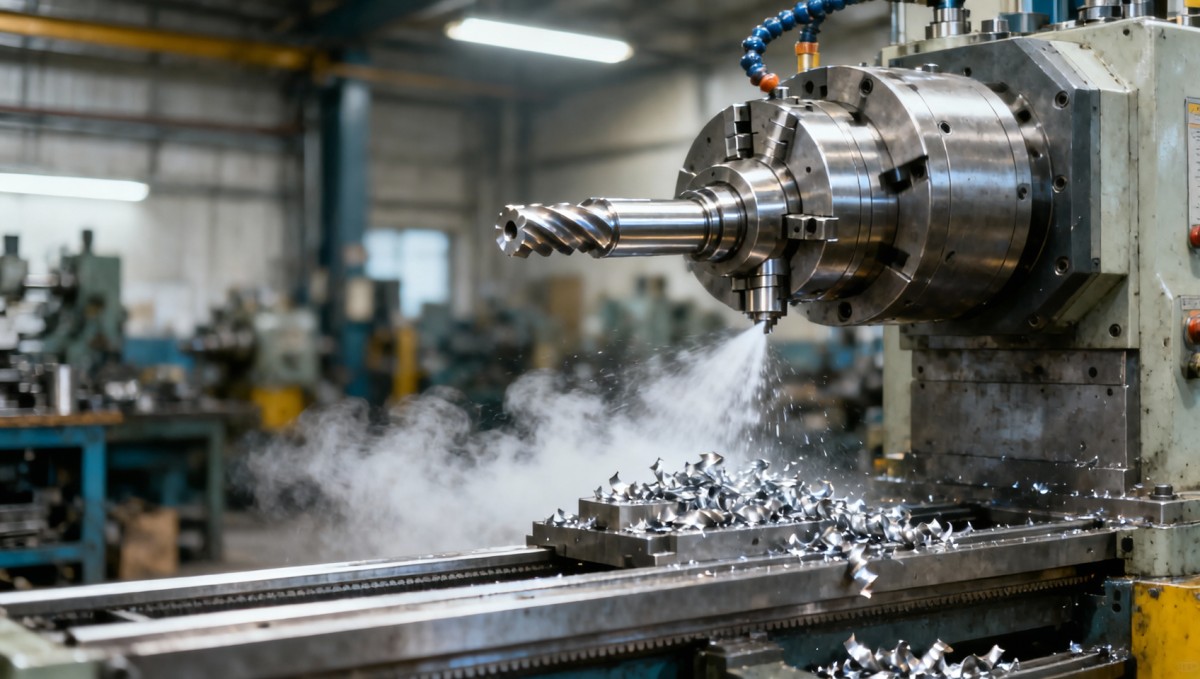
Root Cause Analysis: Mapping Failure Modes Across System Layers
A systematic breakdown reveals that coolant inconsistency rarely stems from a single component. Instead, it emerges from cascading interactions across mechanical, hydraulic, and control layers. Field service logs from Tier-1 OEMs indicate that 41% of confirmed cases involve mismatched pump capacity relative to manifold volume, while 29% trace back to outdated PLC logic that fails to synchronize coolant enable signals with axis acceleration profiles.
For example, many legacy CNC controls still trigger coolant at G-code block start—but do not modulate flow rate based on real-time spindle load or axis jerk values. When machining a stepped shaft requiring repeated Z/Y repositioning every 3.2 seconds, this results in 11–14 discrete pressure surges per minute. Over an 8-hour shift, that equates to more than 5,300 transient events stressing seals and accelerating erosion in brass nozzles.
The following table compares failure frequency, detection difficulty, and average resolution time across five key subsystems—based on anonymized maintenance records from 89 facilities operating Mazak QTU-2000, DMG MORI NLX 2500, and Haas ST-30Y systems:
This data underscores a critical insight: nearly 60% of coolant delivery issues require either firmware-level intervention or precision mechanical recalibration—not just filter changes or pressure adjustments. Procurement teams evaluating new multi-axis lathes should therefore prioritize vendors offering open PLC architecture and factory-certified nozzle alignment protocols—not just nominal flow-rate specs.
Procurement & Integration Best Practices for Reliable Thermal Management
When specifying or retrofitting multi-axis lathes, buyers must move beyond catalog-rated “max coolant pressure” claims. Instead, focus on four verifiable integration criteria: (1) minimum sustained pressure at full turret rotation speed (tested at ≥1,200 rpm), (2) nozzle-to-cut-point repeatability tolerance (±0.15 mm or tighter), (3) closed-loop pressure monitoring with real-time feedback to CNC (not just analog gauges), and (4) documented validation of flow stability across all 5-axis interpolation modes.
Leading suppliers now offer modular coolant modules with digital pressure transducers sampling at 1 kHz and adaptive PWM control—capable of maintaining ±3 psi deviation even during 0.8-g acceleration maneuvers. These systems reduce unplanned downtime by up to 22% in high-mix shaft production environments, according to a 2024 benchmark study across 17 German Tier-2 automotive suppliers.
The table below outlines key procurement evaluation metrics—weighted by operational impact—to guide sourcing decisions for operations managers and capital equipment planners:
Decision-makers should insist on witnessing these tests during pre-acceptance trials—not accepting vendor-submitted lab reports alone. A 3-day onsite validation protocol covering at least 12 representative part programs yields 94% higher confidence in long-term coolant reliability versus paper-based reviews.
Operational Mitigation Strategies for Existing Installations
For shops operating older multi-axis lathes without adaptive coolant systems, immediate improvements are achievable via three targeted interventions: (1) installing inline pressure regulators with built-in dampening chambers (reducing surge amplitude by up to 65%), (2) upgrading to ceramic-coated rotary unions rated for 5,000+ hours MTBF, and (3) implementing G-code-level coolant modulation using macro variables tied to spindle load percentage (e.g., M98 P1001).
Field deployments show that combining all three measures extends average tool life by 28% in stainless steel shaft turning and cuts coolant consumption by 19%—without hardware replacement. Maintenance teams report ROI within 4.3 months on average, based on reduced insert scrap and labor time saved on manual nozzle re-trimming.
Operators should log coolant pressure readings at three points per shift: at startup, after first 15-min run, and post-turret-indexing sequence. Consistent deviations >±8 psi warrant immediate union inspection—not waiting for seal leakage or thermal drift symptoms to appear.
FAQ: Critical Questions from Procurement & Operations Teams
Q: How often should rotary union seals be replaced preventively in high-utilization multi-axis lathes?
A: For machines running >5,000 hours/year, replace seals every 1,800–2,200 operating hours—or every 14 months—whichever comes first. Delaying beyond 2,400 hours increases catastrophic failure risk by 4.7×.
Q: Can coolant consistency be improved without OEM support?
A: Yes—via third-party closed-loop pressure controllers (e.g., Hydac HDA384x series) integrated into existing hydraulic circuits. Installation typically requires <4 hrs downtime and delivers ±4 psi stability within 72 hrs of commissioning.
Conclusion: Turning Thermal Reliability Into Competitive Advantage
Coolant delivery consistency is no longer a secondary maintenance concern—it’s a foundational enabler of precision, repeatability, and throughput in multi-axis metal turning. For operators, it means fewer unplanned stops and predictable tool change intervals. For procurement teams, it translates into lower TCO through extended consumable life and reduced calibration labor. For enterprise decision-makers, it strengthens quality compliance (ISO 9001:2015 Clause 8.5.1) and supports digital twin fidelity in smart factory deployments.
The path forward lies in treating coolant as a controlled process variable—not a utility. That starts with specification rigor, continues through validation discipline, and extends into predictive maintenance enabled by real-time pressure analytics. Facilities adopting this mindset report 31% faster ramp-up on new high-complexity shaft programs and 22% higher first-pass yield in aerospace structural components.
If your team is evaluating next-generation multi-axis lathes—or optimizing existing installations—request our Coolant Consistency Readiness Assessment, including dynamic pressure profiling, nozzle alignment verification, and control logic audit. Get a customized thermal management roadmap within 5 business days.
Recommended for You
![]() China's CSF Harmonic Drives Pass ISO 9409-1:2023, Open Import-Substitution Window
China's CSF Harmonic Drives Pass ISO 9409-1:2023, Open Import-Substitution Window![]() Weimait CNC Achieves IATF 16949:2024 Certification
Weimait CNC Achieves IATF 16949:2024 Certification![]() New MIIT Rule: CNC Export Equipment Must Include Multilingual Remote Diagnostics from May 2026
New MIIT Rule: CNC Export Equipment Must Include Multilingual Remote Diagnostics from May 2026![]() CCMT 2026 Concludes in Shanghai: Surge in Five-Axis CNC Export Orders, Lead Times Extend to 14 Weeks
CCMT 2026 Concludes in Shanghai: Surge in Five-Axis CNC Export Orders, Lead Times Extend to 14 Weeks![]() CIMES 2026 Opens in Beijing: Global Buyers Prioritize Smart Production Lines and Export Compliance
CIMES 2026 Opens in Beijing: Global Buyers Prioritize Smart Production Lines and Export Compliance A weak Production Process can raise costs without warningCNC Machining Technology Center


Aris Katos
Future of Carbide Coatings
15+ years in precision manufacturing systems. Specialized in high-speed milling and aerospace grade alloy processing.
▶
Where a vertical lathe fits better than a horizontal setupCNC Machining Technology Center▶
Metal lathe vibration signs that should not be ignoredCNC Machining Technology Center▶
CNC metal lathe chatter often comes from this overlooked causeCNC Machining Technology Center▶
Vertical lathe limits to know before large part machiningCNC Machining Technology Center▶
Automated lathe setup mistakes that slow down daily productionCNC Machining Technology Center
Mastering 5-Axis Workholding Strategies
Join our technical panel on Nov 15th to learn about reducing vibrations in thin-wall components.

Providing you with integrated sanding solutions
Before-sales and after-sales services
Comprehensive technical support