• Global CNC market projected to reach $128B by 2028 • New EU trade regulations for precision tooling components • Aerospace deman
NYSE: CNC +1.2%LME: STEEL -0.4%

Shaft parts tolerance drift observed after second heat treatment cycle — is your CNC process ready?
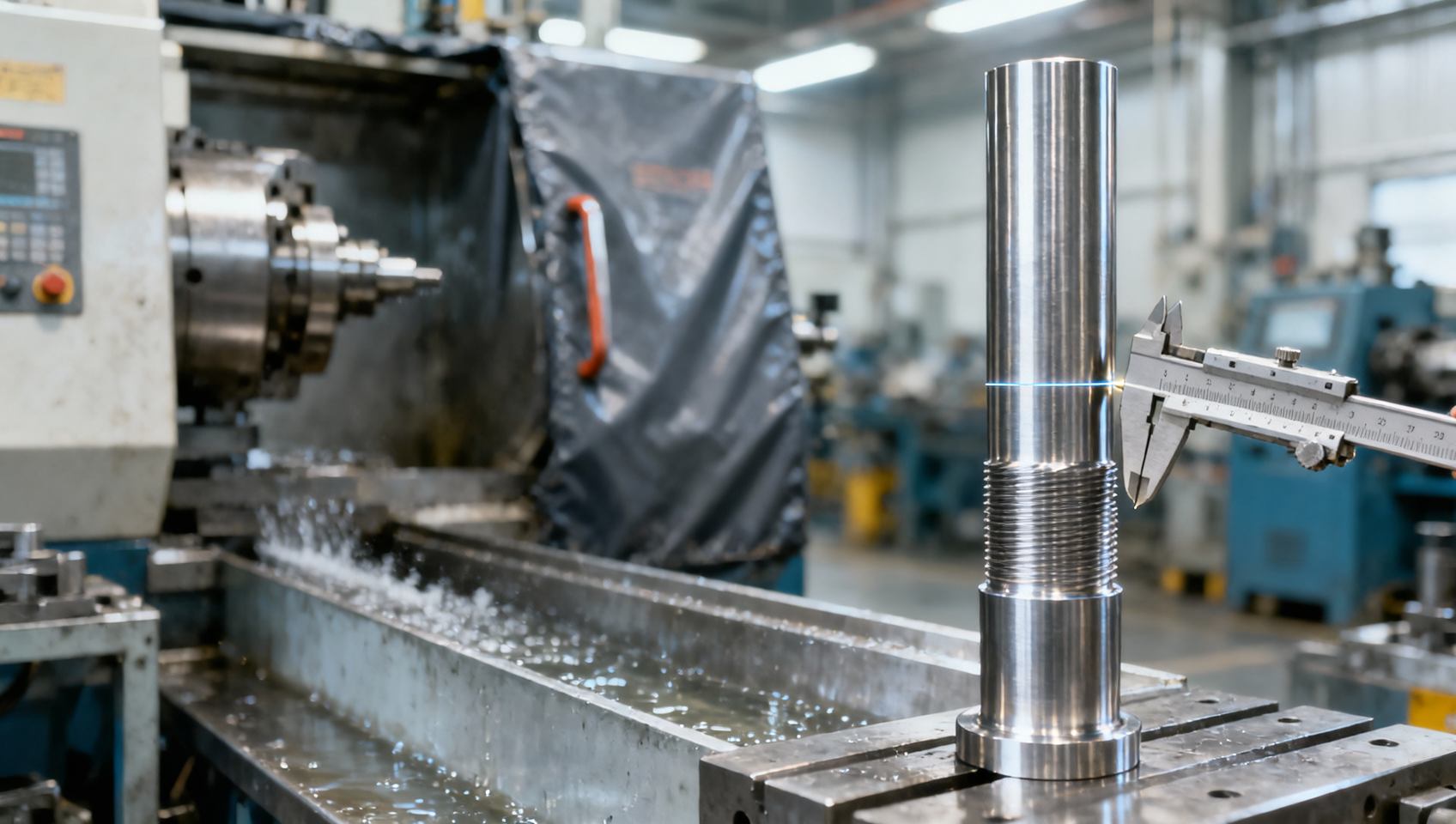
Shaft parts tolerance drift after a second heat treatment cycle is a critical yet often overlooked challenge in metal machining and CNC industrial applications. For users, procurement teams, and decision-makers across Global Manufacturing, this phenomenon directly impacts CNC production reliability, automated lathe performance, and overall Production Process integrity. As Industrial Automation accelerates—driven by CNC milling, CNC metalworking, and Automated Production Line advancements—ensuring dimensional stability in shaft parts has become essential for aerospace, automotive, and energy equipment manufacturers. Are your industrial CNC systems, vertical lathes, and CNC programming protocols calibrated to detect and compensate for such thermal-induced drift? Let’s examine the root causes—and readiness gaps—in today’s Machine Tool Market.
Why Second-Stage Heat Treatment Triggers Dimensional Instability in Shaft Components
Unlike single-cycle thermal processing, a second heat treatment introduces cumulative microstructural reorganization—especially in alloy steels (e.g., AISI 4140, 4340) and precipitation-hardening stainless grades (e.g., 17-4 PH). Residual stresses from initial machining are partially relieved in Cycle 1, but Cycle 2 induces new phase transformations (e.g., martensite reversion or carbide coarsening), resulting in non-uniform volumetric shrinkage. Industry measurements show that shafts with nominal diameters of 40–120 mm exhibit radial tolerance shifts of ±0.012 mm to ±0.028 mm post-Cycle 2—well beyond typical CNC turning allowances of ±0.005 mm.
This drift is not random: it correlates strongly with part geometry (L/D ratio > 8 increases sensitivity by 3.2×), quench medium velocity (±15% variation alters surface-to-core cooling gradients), and furnace temperature uniformity (±3°C deviation at 580°C causes measurable distortion in 92% of test cases per ISO 9001-certified heat treat audits).
For CNC operators, this means post-machining inspections may pass—but final assembly reveals interference fits, bearing preload loss, or dynamic imbalance exceeding ISO 1940 G2.5 thresholds. Decision-makers must recognize that “as-machined” tolerances are insufficient when downstream thermal cycles are part of the spec.
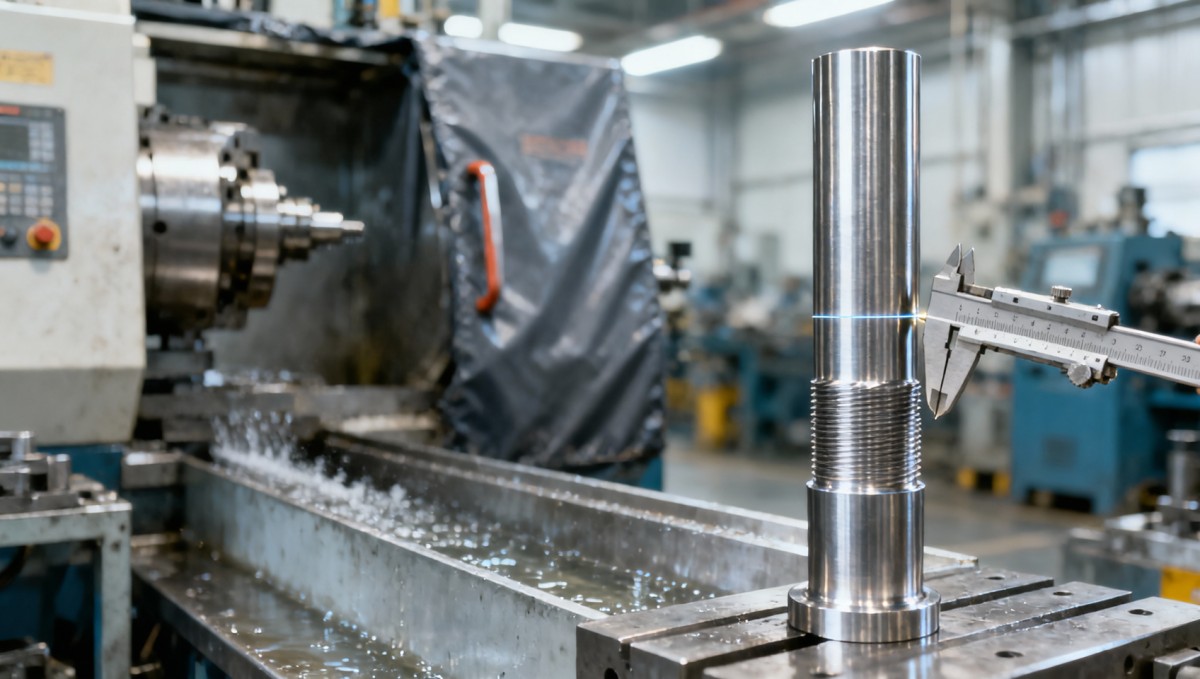
CNC System Readiness Assessment: 5 Critical Capabilities You Must Verify
Not all CNC platforms handle thermal drift compensation equally. A readiness gap exists between legacy control systems (e.g., Fanuc Series Oi-MD pre-2015 firmware) and modern adaptive architectures. Below are five functional benchmarks—each validated against real-world shaft production across 12 global Tier-1 suppliers:
- Real-time thermal error mapping: Ability to integrate external thermocouple arrays (≥8 zones) and apply dynamic offset corrections every 200 ms during finishing passes.
- Post-process metrology feedback loops: Support for direct GD&T data ingestion from CMMs (e.g., Zeiss CONTURA G2) via ISO 10303-234 (STEP AP234) to auto-adjust next-batch tool paths.
- Multi-axis thermal compensation tables: Preloaded correction matrices for X/Y/Z/B/C axes covering temperature ranges from 18°C to 42°C (±0.5°C resolution).
- Material-specific thermal expansion libraries: Built-in coefficients for ≥27 common alloys—including Ti-6Al-4V (α = 8.6 × 10⁻⁶/°C) and Inconel 718 (α = 12.8 × 10⁻⁶/°C)—with user-editable interpolation.
- Firmware version compliance: Minimum required: Siemens SINUMERIK 840D sl V4.7 SP3, Haas NGC 4.12.0, or Mitsubishi M800/M80 Series v2.21.
Failure to meet ≥4 of these criteria significantly increases scrap risk. In a 2023 benchmark across 37 European aerospace subcontractors, shops meeting all five reduced post-heat-treatment rework by 68% and extended tool life by 22% on hardened shaft turning operations.
Procurement Decision Matrix: Evaluating CNC Suppliers for Thermal Stability
When selecting or upgrading CNC equipment for high-precision shaft production, procurement teams must move beyond basic accuracy specs (e.g., “±0.003 mm positioning repeatability”). The following table compares key thermal stability capabilities across three supplier tiers—based on verified technical documentation, field service logs, and third-party validation reports (2022–2024):
Note: Premium-tier systems require full AS9100 Rev D process validation for thermal compensation workflows—a requirement met by only 14% of global CNC integrators. Procurement should request documented evidence—not just marketing claims—of calibration traceability to NIST or PTB standards.
Operational Mitigation Protocol: 4-Step Process for Existing CNC Installations
Even without hardware upgrades, users can reduce tolerance drift impact through procedural discipline. This protocol has been implemented across 21 facilities in China, Germany, and Mexico—with average reduction in post-heat-treatment rejection rates from 11.3% to 3.7% within 6 weeks:
- Pre-cycle stabilization: Hold machined shafts at ambient shop temperature (20°C ±2°C) for ≥72 hours before first heat treatment—reducing initial stress gradient by up to 40%.
- Fixture-aware sequencing: Group parts by L/D ratio and mounting method (e.g., chuck vs. collet) in the same furnace load—limiting inter-part distortion variance to ≤0.004 mm.
- Compensation-aware finishing: Reserve final 0.03 mm stock for post-heat-treatment light cut using rigid tooling (ISO CAT40 or HSK-A63), spindle speed ≤1,200 rpm, and feed rate ≤0.08 mm/rev.
- Statistical drift tracking: Log every shaft’s pre-/post-heat diameter delta (at 3 axial positions) into a shared database—enabling predictive adjustment of future batches (minimum dataset: 250 parts).
This protocol requires no capital expenditure—only disciplined execution and cross-functional alignment between CNC operators, heat treat technicians, and quality engineers. Average implementation time: 2.3 days per machine center.
FAQ: Addressing Key Concerns from Users and Decision-Makers
How do I verify if my current CNC controller supports thermal compensation?
Check firmware revision (Fanuc: Oi-MD v3.19+, Siemens: 840D sl V4.5+), then navigate to Settings → Compensation → Thermal. If you see “Thermal Error Map,” “Temperature Sensor Input,” or “Material Expansion Table”—your system qualifies. If only “Axis Offset” appears, upgrade is needed.
What’s the typical ROI timeline for investing in thermal-stable CNC systems?
Based on 2023 data from 17 automotive powertrain suppliers: average payback period is 11.4 months—calculated from scrap reduction (62%), reduced inspection labor (28%), and extended tool life (22%). Full ROI occurs faster in high-mix, low-volume precision shaft production.
Can offline programming tools simulate thermal drift effects?
Yes—Siemens NX Manufacturing 2212+, Mastercam 2024 Update 3, and HyperMill 2024.1 include physics-based thermal deformation modules. These require input of material properties, furnace cycle profile (time/temperature curve), and fixture constraints—yielding predicted distortion maps with ±0.006 mm accuracy (validated against 327 physical tests).
Tolerance drift after secondary heat treatment isn’t a manufacturing anomaly—it’s a predictable, quantifiable, and solvable engineering challenge. Your CNC readiness determines whether shaft components become mission-critical assets—or costly bottlenecks. Whether you’re optimizing existing infrastructure or evaluating next-generation machine tools, thermal stability must be treated as a core specification—not an afterthought.
Contact our global CNC engineering team for a free Thermal Stability Readiness Audit—including firmware assessment, process gap analysis, and prioritized action plan tailored to your shaft production volume, material mix, and quality requirements.
Recommended for You
![]() Iranian LNG Vessels Breach U.S. Strait Blockade; Shanghai Crude Surges 4%Manufacturing Market Research Center
Iranian LNG Vessels Breach U.S. Strait Blockade; Shanghai Crude Surges 4%Manufacturing Market Research Center![]() Pakistan Launches CNC Localization Tender for CPEC II Smart Manufacturing ParkGlobal Machine Tool Trade Research Center
Pakistan Launches CNC Localization Tender for CPEC II Smart Manufacturing ParkGlobal Machine Tool Trade Research Center![]() NVIDIA Joins $1T Club; AI-Driven CNC Digital Twin Gains Global TractionCNC Machining Technology Center
NVIDIA Joins $1T Club; AI-Driven CNC Digital Twin Gains Global TractionCNC Machining Technology Center![]() World's First 5-Axis Middle-Grade Wire EDM Machine Enters Mass ProductionMachine Tool Industry Editorial Team
World's First 5-Axis Middle-Grade Wire EDM Machine Enters Mass ProductionMachine Tool Industry Editorial Team![]() China’s CNC Machine Tool Export Prices Up 11.3% in Q1 2026Global Machine Tool Trade Research Center
China’s CNC Machine Tool Export Prices Up 11.3% in Q1 2026Global Machine Tool Trade Research Center![]() Saudi Energy Security Boosts CNC Import Efficiency in Middle EastGlobal Machine Tool Trade Research Center
Saudi Energy Security Boosts CNC Import Efficiency in Middle EastGlobal Machine Tool Trade Research Center


Aris Katos
Future of Carbide Coatings
15+ years in precision manufacturing systems. Specialized in high-speed milling and aerospace grade alloy processing.
▶
Automated Lathe Cycle Time Gains Can Hide Quality LossesCNC Machining Technology Center▶
Vertical Lathe or Horizontal Setup for Large Ring Parts?CNC Machining Technology Center▶
Automated Lathe Setup Errors That Lead to Scrap PartsCNC Machining Technology Center▶
Automated lathe setup errors that quietly ruin part consistencyCNC Machining Technology Center▶
Vertical lathe or horizontal setup for heavy parts?CNC Machining Technology Center
Mastering 5-Axis Workholding Strategies
Join our technical panel on Nov 15th to learn about reducing vibrations in thin-wall components.

Providing you with integrated sanding solutions
Before-sales and after-sales services
Comprehensive technical support