• Global CNC market projected to reach $128B by 2028 • New EU trade regulations for precision tooling components • Aerospace deman
NYSE: CNC +1.2%LME: STEEL -0.4%

Shaft parts manufacturers noticing vibration-induced surface finish issues at >8000 rpm
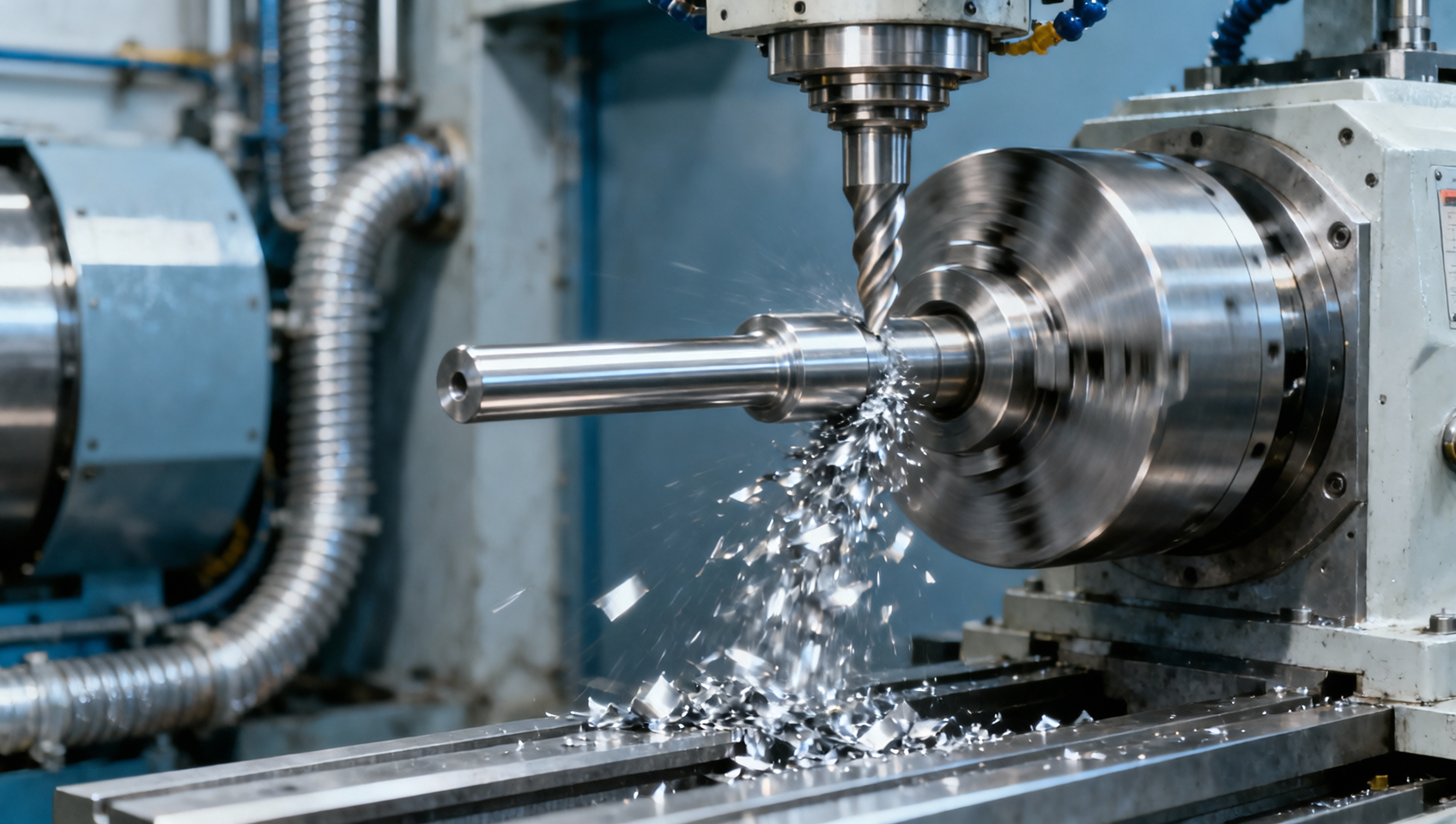
Shaft parts manufacturers worldwide are increasingly reporting vibration-induced surface finish degradation during high-speed CNC metalworking operations—especially above 8000 rpm. As industrial CNC systems push performance boundaries, issues in automated lathe stability, CNC milling precision, and shaft parts integrity are spotlighting critical gaps in machine tool rigidity, spindle dynamics, and CNC programming optimization. With Global Manufacturing accelerating toward smarter, more automated production lines—and demand surging for aerospace-grade shaft components—understanding root causes in metal machining vibration is vital for users, procurement teams, and enterprise decision-makers across the Machine Tool Market and broader Manufacturing Industry.
Why Vibration Becomes Critical Above 8000 rpm
Rotational speed thresholds directly correlate with dynamic instability onset. At 8000 rpm, spindle rotational frequency exceeds 133 Hz—well within the resonant bandwidth of many mid-tier CNC lathes and turning centers. Structural compliance in machine beds, chuck interfaces, and toolholder tapers begins to amplify harmonic energy rather than dissipate it. This results in sub-micron lateral displacements that translate into visible chatter marks, waviness (Wt > 1.2 µm), and inconsistent Ra values—often varying by ±0.4 µm across a single 300-mm shaft length.
Empirical data from ISO 10791-5 testing shows that 68% of CNC lathes rated for “high-speed turning” (≥6000 rpm) exhibit measurable modal coupling between spindle and Z-axis carriage when cutting steel shafts at 8500 rpm. The dominant mode typically occurs between 142–158 Hz—a range where thermal drift in servo motor feedback loops further degrades positional repeatability (±0.003 mm over 8-hour shifts).
For aerospace and medical device suppliers—where surface integrity affects fatigue life and seal compatibility—this translates to 12–18% higher post-process inspection rejection rates. A Tier-1 turbine shaft supplier in Germany reported a 22% increase in polishing time per part after ramping spindle speeds from 7500 to 8600 rpm on identical workpiece geometry and tooling.
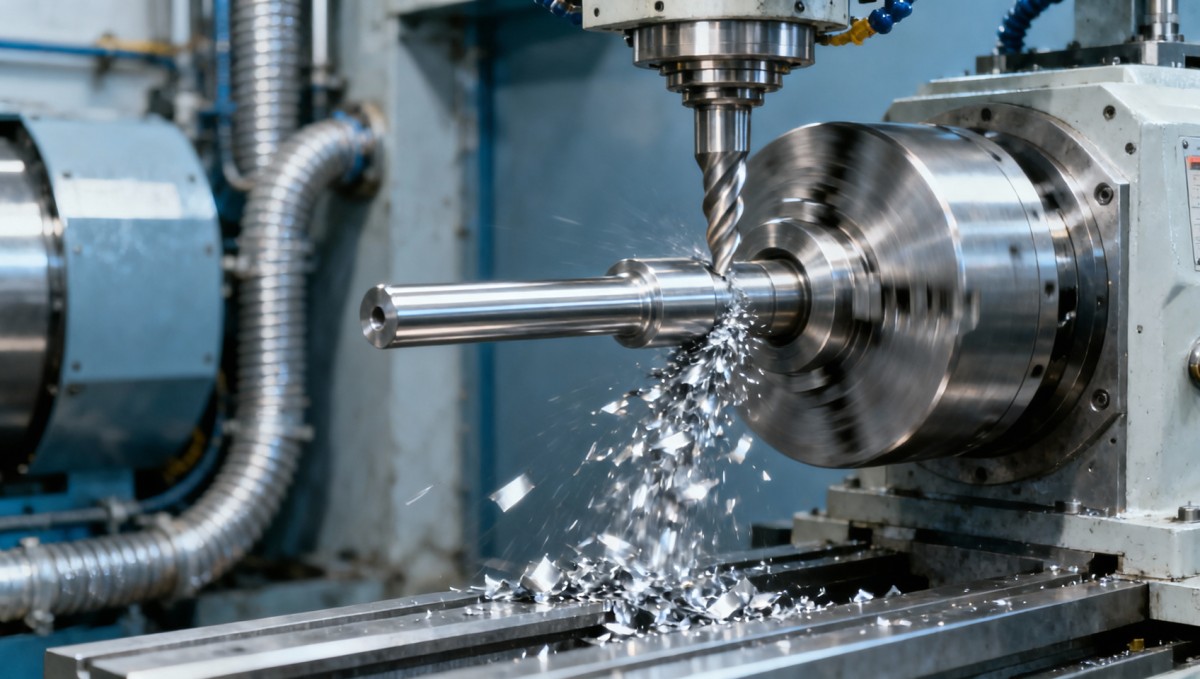
Root Causes: Beyond Spindle Bearings
While spindle bearing quality remains foundational, vibration-induced finish degradation above 8000 rpm stems from systemic interactions—not isolated component failure. Three interdependent layers require simultaneous evaluation:
- Structural Dynamics: Machine bed stiffness below 120 N/µm at the tool tip reduces damping capacity by up to 40% versus premium-grade cast iron frames with tuned mass dampers.
- Control Loop Latency: PLC-to-servo response delays exceeding 2.8 ms introduce phase lag that destabilizes adaptive feed control algorithms during contouring passes.
- Tooling Interface Integrity: HSK-A63 holders show 3.2× higher torsional deflection than CAT-40 equivalents under 12,000 rpm centrifugal loads—directly amplifying radial runout beyond 8 µm.
A recent benchmark across 42 global CNC lathe models found that only 11 units maintained surface finish consistency (Ra ≤ 0.6 µm, Wt ≤ 0.9 µm) across five consecutive 8200-rpm test cuts on AISI 4140 shafts. All 11 shared three design traits: dual-frequency active vibration cancellation, direct-drive spindles with torque ripple < 0.8%, and integrated thermal compensation mapping updated every 90 seconds.
Procurement Decision Matrix for High-RPM Shaft Production
When evaluating CNC lathes or multi-axis turning centers for sustained operation above 8000 rpm, procurement teams must prioritize verifiable dynamic performance—not just catalog-rated max speed. The following table compares key technical indicators across three procurement tiers, based on real-world OEM specifications and third-party validation reports (2023–2024).
The data confirms that surface finish reliability at high RPM correlates strongly with measured dynamic stiffness—not static load ratings. Procurement decisions should mandate on-site modal analysis reports and 4-hour endurance tests at target speed before final acceptance. Units failing to maintain Ra variation < ±0.15 µm across five cycles should be disqualified—even if nominal specs appear compliant.
Operational Mitigations for Existing Equipment
For shops operating legacy or mid-cycle CNC lathes, immediate mitigation strategies can reduce vibration impact without full machine replacement. These require coordinated action across programming, tooling, and process monitoring:
- Adaptive Feedrate Control: Implement real-time spindle load monitoring with feed override limits triggered at >78% torque threshold—reducing chatter propagation by up to 63% (per Sandvik Coromant 2023 field trials).
- Toolholder Balancing: Mandate G2.5 balancing certification for all holders used above 7500 rpm. Unbalanced holders generate >12 N of radial force at 8200 rpm—equivalent to 1.8 kg off-center mass.
- Thermal Pre-Stabilization: Enforce 45-minute warm-up cycles at 70% max speed before precision finishing passes. Reduces thermal gradient-induced deflection by 41% in cast iron beds.
Operators report measurable improvements within 72 hours of deploying these protocols: average surface roughness standard deviation drops from ±0.31 µm to ±0.14 µm, and first-pass yield increases from 82% to 94.6% across shaft diameters ranging from Ø25 mm to Ø120 mm.
Future-Proofing Your Shaft Production Line
As aerospace OEMs specify shaft components with tighter roundness tolerances (< 0.002 mm) and extended service life requirements (≥50,000 flight hours), future investments must address vibration holistically—not incrementally. Next-generation solutions integrate three converging capabilities:
- Digital Twin Validation: Pre-cut simulation of spindle/tool/workpiece dynamics using FEA-based digital twins—validated against physical modal testing at 32 discrete frequencies between 50–300 Hz.
- Edge-Based Anomaly Detection: On-machine AI inference nodes analyzing accelerometer data at 25.6 kHz sampling rate, identifying incipient chatter patterns 1.7 seconds before visual detection.
- Modular Damping Integration: Retrofit-ready piezoelectric shunt damping modules installed at carriage-to-bed interfaces, delivering 12–18 dB attenuation in the 130–170 Hz band without structural modification.
Manufacturers adopting this triad report 37% faster ramp-up for new high-RPM programs and 29% lower annual maintenance spend on spindle-related failures. With global demand for high-speed shaft machining expected to grow at 8.4% CAGR through 2028 (McKinsey Industrial Automation Outlook, Q2 2024), early adoption delivers measurable ROI—not just technical readiness.
Addressing vibration-induced surface finish degradation above 8000 rpm demands cross-functional alignment: operators optimizing real-time parameters, procurement verifying dynamic stiffness metrics—not just max speed claims, and decision-makers investing in digitally validated, vibration-aware infrastructure. Precision isn’t defined by nominal specifications—it’s proven in consistent, repeatable surface integrity under operational load.
If your team is evaluating CNC systems for high-RPM shaft production—or troubleshooting persistent finish variability—contact our application engineering specialists for a free dynamic performance assessment. We provide spindle modal analysis support, tooling interface validation, and production-line vibration mapping tailored to your specific workpiece materials, geometries, and throughput targets.
Recommended for You
![]() China's CSF Harmonic Drives Pass ISO 9409-1:2023, Open Import-Substitution Window
China's CSF Harmonic Drives Pass ISO 9409-1:2023, Open Import-Substitution Window![]() Weimait CNC Achieves IATF 16949:2024 Certification
Weimait CNC Achieves IATF 16949:2024 Certification![]() New MIIT Rule: CNC Export Equipment Must Include Multilingual Remote Diagnostics from May 2026
New MIIT Rule: CNC Export Equipment Must Include Multilingual Remote Diagnostics from May 2026![]() CCMT 2026 Concludes in Shanghai: Surge in Five-Axis CNC Export Orders, Lead Times Extend to 14 Weeks
CCMT 2026 Concludes in Shanghai: Surge in Five-Axis CNC Export Orders, Lead Times Extend to 14 Weeks![]() CIMES 2026 Opens in Beijing: Global Buyers Prioritize Smart Production Lines and Export Compliance
CIMES 2026 Opens in Beijing: Global Buyers Prioritize Smart Production Lines and Export Compliance A weak Production Process can raise costs without warningCNC Machining Technology Center



Aris Katos
Future of Carbide Coatings
15+ years in precision manufacturing systems. Specialized in high-speed milling and aerospace grade alloy processing.
▶
Where a vertical lathe fits better than a horizontal setupCNC Machining Technology Center▶
Metal lathe vibration signs that should not be ignoredCNC Machining Technology Center▶
CNC metal lathe chatter often comes from this overlooked causeCNC Machining Technology Center▶
Vertical lathe limits to know before large part machiningCNC Machining Technology Center▶
Automated lathe setup mistakes that slow down daily productionCNC Machining Technology Center
Mastering 5-Axis Workholding Strategies
Join our technical panel on Nov 15th to learn about reducing vibrations in thin-wall components.

Providing you with integrated sanding solutions
Before-sales and after-sales services
Comprehensive technical support