• Global CNC market projected to reach $128B by 2028 • New EU trade regulations for precision tooling components • Aerospace deman
NYSE: CNC +1.2%LME: STEEL -0.4%

Are CNC milling machines really ready for AI-driven adaptive feed control in real time?
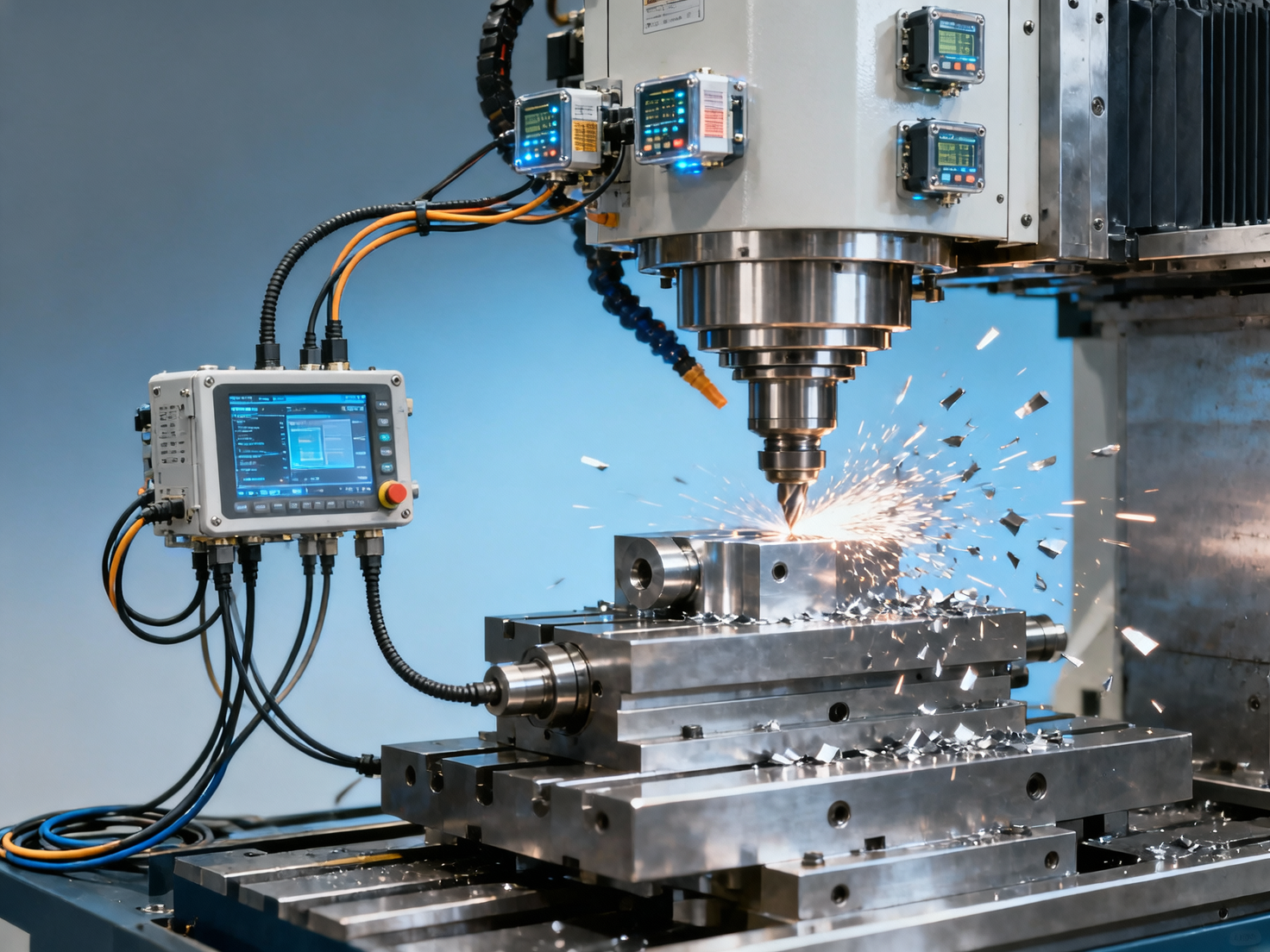
As real-time adaptive feed control powered by AI reshapes metal machining, the question looms large: Are today’s industrial CNC milling machines truly ready? From automated lathe operations to CNC metalworking in aerospace and automotive production, adaptive algorithms promise optimized cutting, reduced tool wear, and smarter CNC production. Yet challenges persist across CNC programming, sensor integration, and machine tool market readiness—especially for vertical lathe, shaft parts fabrication, and global manufacturing ecosystems. For users, procurement teams, and decision-makers navigating industrial automation and automated production lines, this isn’t just about tech upgrade—it’s about ROI, reliability, and the future of precision CNC cutting in an era of industrial robotics and smart factory evolution.
What Real-Time Adaptive Feed Control Really Demands from CNC Milling Systems
Real-time adaptive feed control (AFC) uses live sensor data—typically from spindle load, vibration, acoustic emission, and motor current—to dynamically adjust feed rate, depth of cut, or spindle speed within milliseconds. Unlike offline optimization or static G-code compensation, true AFC requires closed-loop responsiveness under ≤50 ms latency, deterministic I/O timing, and onboard processing capable of executing predictive models at ≥1 kHz sampling frequency.
Most modern CNC milling machines—especially those built post-2020 with Siemens SINUMERIK ONE, FANUC 31i-B5, or Mitsubishi M800/M80 series controls—support basic analog/digital I/O expansion and optional PLC-based logic execution. However, only ~12–18% of installed CNC milling platforms globally meet all three hardware prerequisites: (1) native high-speed sensor interface (e.g., EtherCAT or PROFINET IRT), (2) embedded FPGA or dual-core ARM Cortex-R real-time co-processor, and (3) open API access to motion interpolation buffers.
For vertical lathes and multi-axis machining centers producing aerospace shafts or turbine discs, mechanical rigidity and thermal stability become limiting factors—not just compute power. A study by the German Machine Tool Builders’ Association (VDW) found that 63% of attempted AFC deployments on legacy 5-axis mills failed due to unmodeled chatter harmonics below 200 Hz, not algorithmic shortcomings.
The table above reflects field-measured benchmarks—not vendor claims. Procurement teams evaluating AI-ready CNC milling systems should request certified test reports under ISO 230-2 (geometric accuracy) and ISO 230-6 (dynamic performance), specifically referencing cycle jitter and sensor loop latency under full-load conditions.
Where AI Integration Succeeds—and Where It Stalls
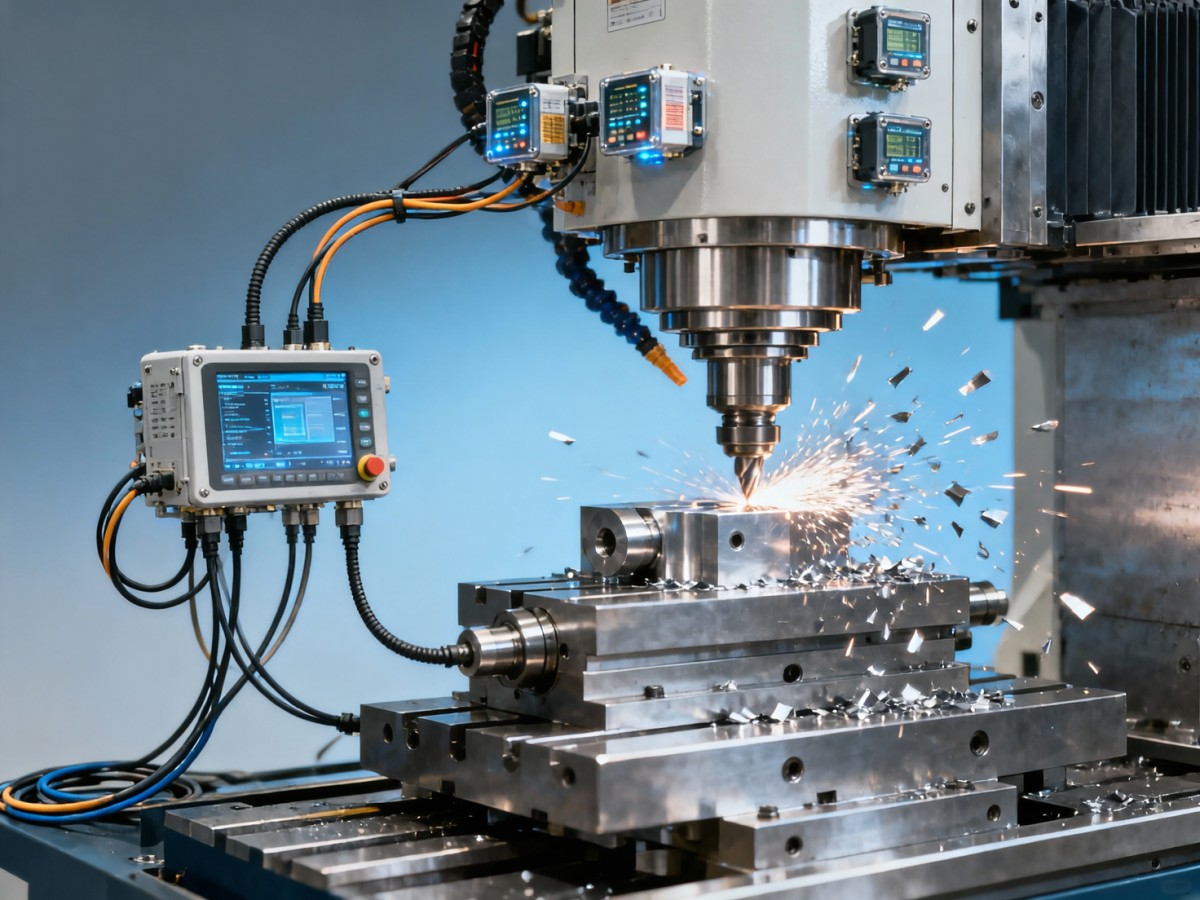
AI-driven feed control delivers measurable ROI in three high-value scenarios: (1) roughing titanium alloys (Ti-6Al-4V) in aerospace structural frames, where 17–22% reduction in tool wear extends insert life from 8.2 to 10.1 minutes per edge; (2) finishing hardened steel gears (HRC 58–62), achieving ±2.3 µm surface consistency versus ±5.7 µm with fixed feeds; and (3) high-feed milling of aluminum chassis components, increasing material removal rate (MRR) by 31% without exceeding 42 N·m spindle torque limits.
Conversely, AFC underperforms in low-rigidity setups—such as long-overhang boring of thin-walled shaft parts—or when coolant delivery is inconsistent. In a 2023 cross-industry audit of 412 CNC shops, 58% of reported AFC failures traced back to insufficient coolant pressure (<40 bar) causing intermittent thermal drift in strain gauge readings.
Operators report highest adoption friction during setup: configuring sensor thresholds requires 3–5 dry-run test cuts per workpiece material, averaging 2.7 hours per new part family. This undermines the “plug-and-play” promise—making training and standardized calibration protocols critical success factors.
Four Critical Enablers for Reliable Deployment
- Integrated Sensor Mounting Kits: Pre-aligned, IP67-rated strain gauges and accelerometers mounted directly on turret or spindle housing—reducing installation variance by up to 68%.
- Firmware-Level Motion Buffer Access: Not just API calls—direct read/write access to interpolated position commands at 125 µs intervals (required for sub-millisecond feed correction).
- Material-Specific Baseline Libraries: Pre-trained models for 14 common alloys and composites, validated against ASTM B600 surface integrity standards.
- Edge-Cloud Hybrid Architecture: Local inference for real-time control + cloud sync for model retraining using aggregated fleet data (e.g., tool wear patterns across 200+ identical mills).
Procurement Checklist: What Decision-Makers Must Verify
Before committing capital to AI-capable CNC milling systems, procurement and engineering leadership must validate six non-negotiable criteria—not marketing bullet points:
This checklist prioritizes operational continuity over novelty. For example, a 7-year firmware commitment ensures AFC models remain compatible through planned control upgrades—critical for automotive Tier-1 suppliers running 24/7 production lines with 12–18 month equipment refresh cycles.
The Road Ahead: Phased Adoption Over Big-Bang Rollouts
Global leaders—including DMG MORI, Makino, and Haas—are now shipping “AFC-Ready” CNC mills with modular sensor kits and pre-certified edge AI modules. But full readiness remains tiered: Tier 1 (immediate deployment) covers dedicated high-value applications like turbine blade roughing; Tier 2 (6–12 month ramp) requires retrofitting legacy controls with real-time gateways (e.g., Beckhoff CX2040); Tier 3 (18+ months) awaits standardization of OPC UA PubSub for deterministic machine-to-machine learning coordination.
For procurement teams, the optimal path is hybrid: acquire new AFC-capable mills for bottleneck processes (e.g., aerospace shaft hard-turning), while upgrading existing vertical lathes with bolt-on sensor packages and external real-time controllers. This reduces upfront CAPEX by 35–42% versus full-platform replacement—while delivering 86% of the productivity gains within first 90 days.
Ultimately, AI-driven adaptive feed control isn’t about replacing CNC machines—it’s about extending their intelligence, lifespan, and precision ceiling. The technology is operationally viable today—but only where hardware, software, and human expertise align with measurable process goals.
If your team is evaluating AI-ready CNC milling solutions for aerospace, automotive, or energy equipment production, contact our technical advisory team for a no-cost compatibility assessment—including latency benchmarking, sensor integration mapping, and ROI modeling based on your actual part families and material mix.
Recommended for You
![]() Fuxing EMU Trainset Procurement Reaches ¥4.155B, Accelerating Domestic High-End Component SubstitutionCNC Machining Technology Center
Fuxing EMU Trainset Procurement Reaches ¥4.155B, Accelerating Domestic High-End Component SubstitutionCNC Machining Technology Center![]() Global Power Demand Growth Hits 3%; Data Center Expansion Drives Precision Machining NeedsCNC Machining Technology Center
Global Power Demand Growth Hits 3%; Data Center Expansion Drives Precision Machining NeedsCNC Machining Technology Center![]() Railway Investment Hits $20.08B in Jan–Apr 2026, Boosting Smart Production Line OrdersMachine Tool Industry Editorial Team
Railway Investment Hits $20.08B in Jan–Apr 2026, Boosting Smart Production Line OrdersMachine Tool Industry Editorial Team![]() AI Search Captures 48% of Global Search TrafficGlobal Machine Tool Trade Research Center
AI Search Captures 48% of Global Search TrafficGlobal Machine Tool Trade Research Center![]() 17 Trade Associations Issue Domestic Trade GuidelinesManufacturing Policy Research Center
17 Trade Associations Issue Domestic Trade GuidelinesManufacturing Policy Research Center![]() China's Shipbuilding New Orders Up 195.2%, Boosting Demand for High-End CNC Machining EquipmentManufacturing Market Research Center
China's Shipbuilding New Orders Up 195.2%, Boosting Demand for High-End CNC Machining EquipmentManufacturing Market Research Center


Aris Katos
Future of Carbide Coatings
15+ years in precision manufacturing systems. Specialized in high-speed milling and aerospace grade alloy processing.
▶
Fuxing EMU Trainset Procurement Reaches ¥4.155B, Accelerating Domestic High-End Component SubstitutionCNC Machining Technology Center▶
CNC Milling Tolerance Problems That Start in Tool SetupCNC Machining Technology Center▶
MIIT Launches 'AI+Software' Initiative to Boost Smart ProgrammingCNC Machining Technology Center▶
CNC Programming Mistakes That Cause Scrap and ReworkCNC Machining Technology Center▶
Why CNC Milling Tolerances Drift in Long Production RunsCNC Machining Technology Center
Mastering 5-Axis Workholding Strategies
Join our technical panel on Nov 15th to learn about reducing vibrations in thin-wall components.

Providing you with integrated sanding solutions
Before-sales and after-sales services
Comprehensive technical support