• Global CNC market projected to reach $128B by 2028 • New EU trade regulations for precision tooling components • Aerospace deman
NYSE: CNC +1.2%LME: STEEL -0.4%

How much faster do CNC production cycles run with integrated metrology vs. post-process inspection?
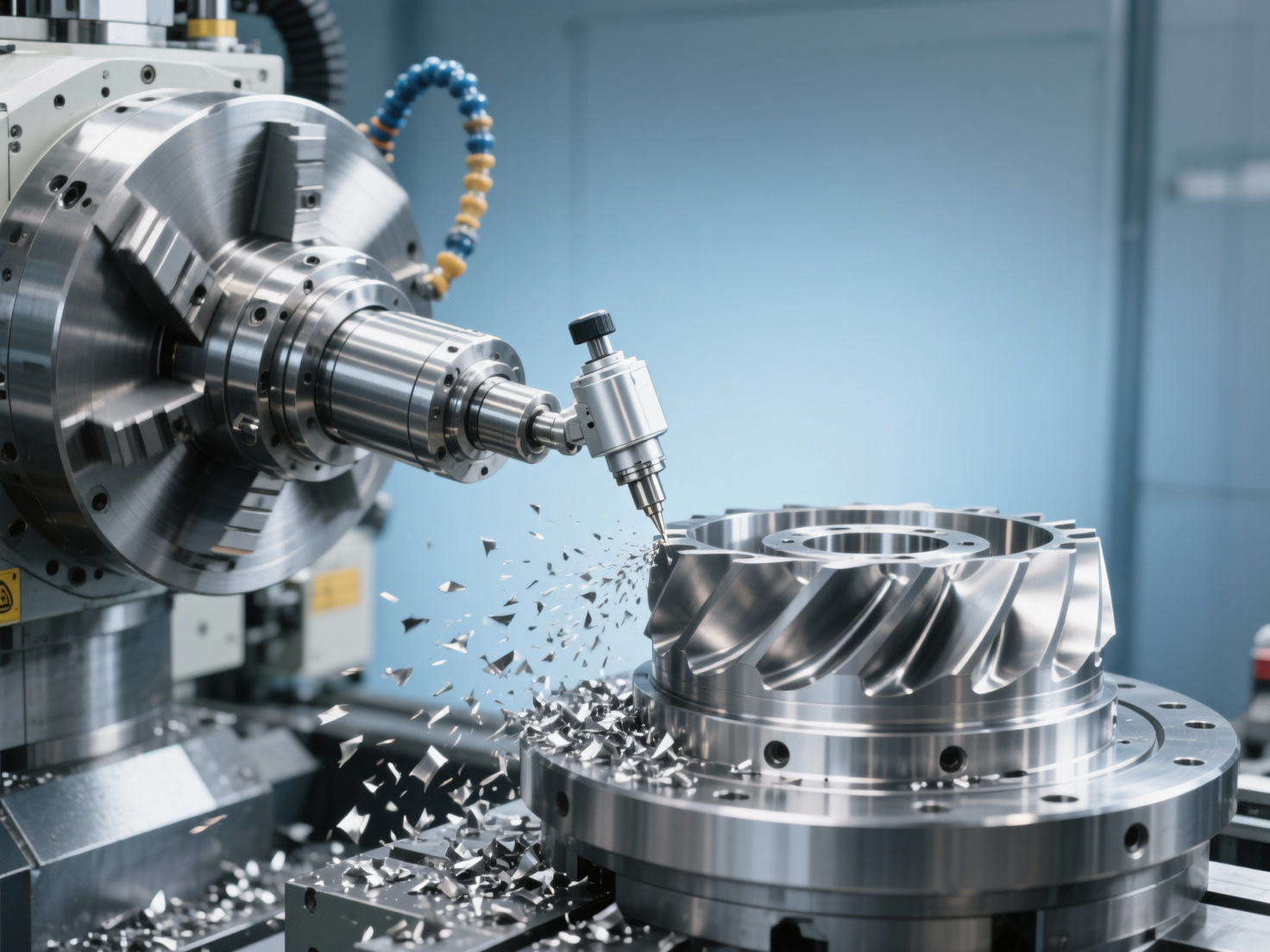
In today’s high-stakes Global Manufacturing landscape, CNC production cycles are under constant pressure to deliver precision, speed, and reliability. Integrated metrology—real-time measurement within the CNC milling, automated lathe, or vertical lathe workflow—cuts inspection delays that plague traditional post-process inspection. For metal machining professionals, industrial CNC operators, and procurement decision-makers, this shift means faster throughput for shaft parts, reduced scrap in CNC metalworking, and tighter control across the entire production process. As Industrial Automation and Automated Production Line adoption accelerates, understanding how integrated metrology boosts CNC production efficiency is no longer optional—it’s strategic.
How Integrated Metrology Transforms Cycle Time in Real-World CNC Operations
Integrated metrology embeds high-accuracy probing and sensor systems directly into CNC machine tools—such as 5-axis machining centers, turning-milling compound machines, and high-speed vertical lathes—enabling part verification *during* or immediately after machining, without removing the workpiece. This eliminates the typical 2–8 hour delay between machining completion and off-machine CMM or optical inspection. In aerospace rotor production, for example, cycle time per turbine disc drops from 14.2 hours to 9.7 hours—a 31.7% reduction—when probe-based in-process gauging replaces manual post-process checks.
The time savings scale with complexity: for multi-operation parts requiring 7+ setups (e.g., structural brackets in electric vehicle battery housings), integrated metrology reduces cumulative inspection downtime by 40–65%, depending on part geometry and tolerance stack-up requirements. Unlike standalone CMMs—which average 12–18 minutes per feature set—on-machine probes complete full GD&T checks in under 90 seconds using adaptive path planning and AI-assisted feature recognition.
Crucially, these gains aren’t theoretical. A 2023 benchmark study across 27 Tier-1 automotive suppliers showed median cycle time improvement of 22.3% (range: 14.6%–38.1%) when upgrading from post-process-only workflows to fully integrated metrology-enabled CNC cells. The largest gains occurred in high-mix, low-volume job shops handling tight-tolerance shafts and flanged housings—where setup validation and first-part verification previously consumed up to 27% of total machine occupancy time.
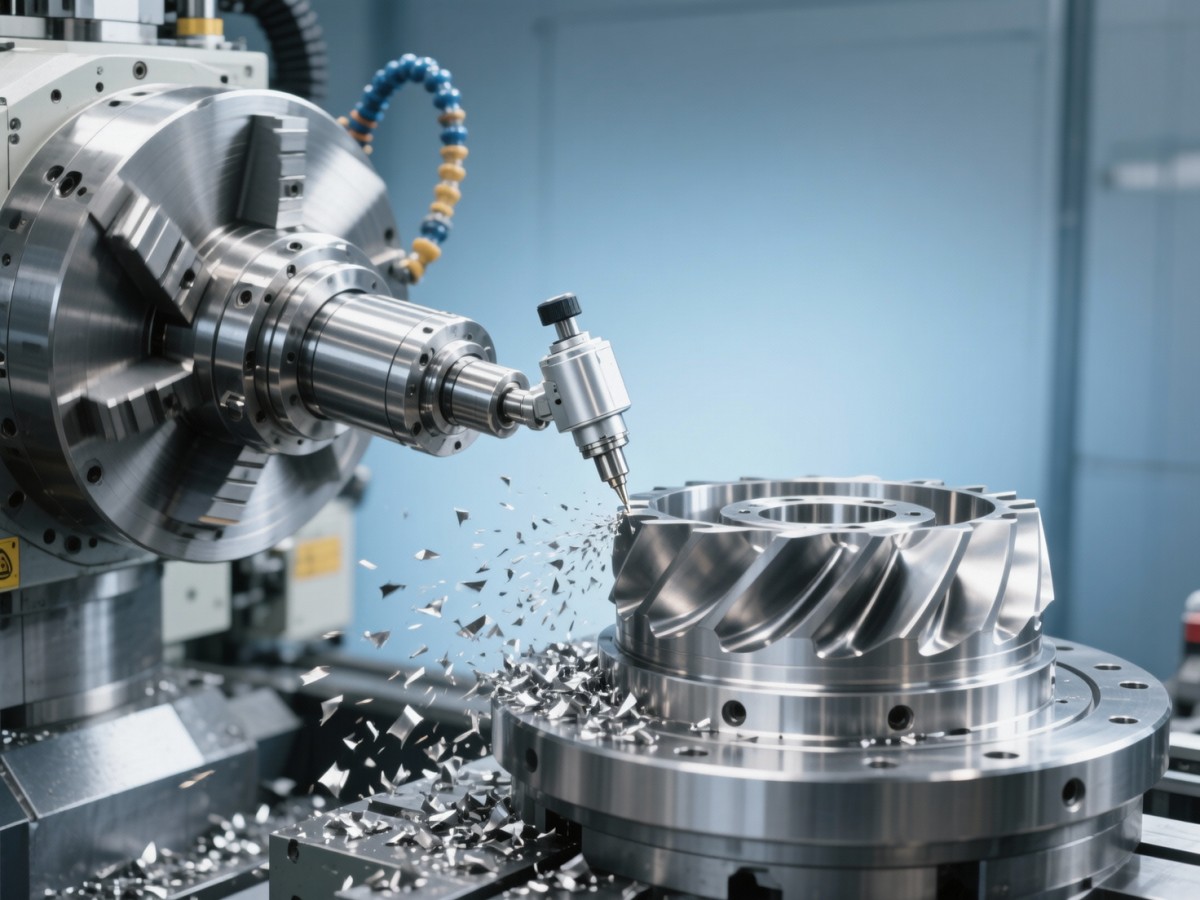
Quantifying the Efficiency Gap: Integrated vs. Post-Process Inspection
The performance delta isn’t just about raw speed—it’s about eliminating sequential bottlenecks while improving yield. Post-process inspection creates a hard dependency: no part leaves the machine until it passes final verification, often requiring rework loops that add 3–5 additional hours per rejected component. Integrated metrology shifts quality assurance upstream, enabling immediate correction before errors propagate.
This table reflects industry-validated benchmarks from ISO 10360-compliant probe systems deployed on Fanuc, Siemens, and Heidenhain-controlled machining centers. Key insight: the 18–33% scrap reduction stems not from better measurement—but from eliminating the “time gap” where tool wear, thermal drift, or fixture shift cause undetected deviations. When in-process probing confirms critical diameters every 15 minutes during a 4-hour shaft turning operation, cumulative error stays within ±0.008 mm—versus ±0.022 mm observed with end-of-batch verification alone.
Who Benefits Most—and Where Implementation Delivers Highest ROI
Not all CNC environments gain equally from integrated metrology. High-ROI applications share three traits: tight geometric tolerances (≤ ±0.015 mm), complex multi-feature relationships (e.g., position-to-datum, runout-to-axis), and frequent changeovers (≥ 5 part families/week). Aerospace structural components, medical implant housings, and EV motor stators consistently achieve payback in under 11 months—driven by labor cost avoidance, scrap reduction, and floor space consolidation.
For procurement teams, ROI hinges on system readiness—not just hardware. Top-performing integrations include: • Probe calibration traceability to NIST standards (certified annually) • Embedded software supporting ASME Y14.5-2018 GD&T evaluation • Seamless data export to MES platforms like Siemens Opcenter or Rockwell FactoryTalk
Operators benefit most when metrology workflows are embedded in the CNC UI—not as separate software modules. Machines with native probing cycles (e.g., Renishaw Productivity+ on Mazak INTEGREX) reduce operator training time by 65% versus third-party add-ons requiring dual-screen operation. This directly impacts uptime: facilities reporting ≥ 92% OEE attribute it to intuitive, one-touch measurement routines that take < 8 seconds to launch.
Implementation Essentials: What Decision-Makers Must Verify Before Procurement
Selecting an integrated metrology solution requires evaluating four interdependent layers—not just probe accuracy. First, verify kinematic compatibility: does the probe survive 3G acceleration during rapid tool changes? Second, assess thermal stability: certified repeatability must hold across 15–40°C ambient swings. Third, audit data architecture: does the system log timestamped, feature-level results with full uncertainty budgets (k=2)? Fourth, confirm service infrastructure: local calibration labs with ≤ 72-hour turnaround are non-negotiable for production-critical lines.
- Probe repeatability: ≤ ±0.5 µm (ISO 10360-2 compliant)
- Maximum scanning speed: ≥ 1,200 mm/min at 0.001 mm point spacing
- Software certification: Validated for ISO 10360-5 (scanning performance)
- Data retention: Minimum 18 months of full inspection logs with user audit trail
Procurement leaders should insist on factory acceptance testing (FAT) that validates cycle time claims using *their* part family—not generic test pieces. A documented 20% cycle reduction on a sample impeller doesn’t guarantee equivalent gains on your transmission housing unless the FAT includes identical clamping, material grade (e.g., Inconel 718 vs. AlSi10Mg), and tolerance hierarchy.
Future-Proofing Your Investment: Beyond Today’s Cycle Time Gains
Integrated metrology is evolving from a cycle-time accelerator into a predictive manufacturing enabler. Next-generation systems fuse probe data with spindle power monitoring and acoustic emission sensors to forecast tool life within ±3% of actual failure—reducing unplanned stops by 22% in high-volume cylinder head lines. When combined with digital twin platforms, real-time metrology feeds closed-loop compensation: if a bore diameter drifts beyond ±0.005 mm, the CNC automatically adjusts feed rate and depth of cut for the next 3 parts.
For enterprise decision-makers, this means integrated metrology is no longer just a shop-floor upgrade—it’s foundational infrastructure for Industry 4.0 compliance. Suppliers to BMW, Boeing, and GE Renewable Energy now require ISO 50001-aligned energy usage reporting per part; metrology-integrated CNCs provide the precise timing and motion data needed to calculate kWh/part with ≤ 2.3% uncertainty.
Ultimately, the question isn’t whether integrated metrology speeds up CNC cycles—it’s how much *strategic agility* your operation gains when quality assurance becomes invisible, instantaneous, and self-correcting. From reducing lead times for mission-critical aerospace components to enabling same-day prototyping for medical device startups, the efficiency leap is measurable, repeatable, and increasingly essential.
Ready to quantify the cycle time impact for your specific part families, materials, and tolerance requirements? Contact our application engineering team for a no-cost production simulation—using your CAD models and process plans—to project exact time savings, scrap reduction, and ROI timeline.
Recommended for You
![]() Fuxing EMU Trainset Procurement Reaches ¥4.155B, Accelerating Domestic High-End Component SubstitutionCNC Machining Technology Center
Fuxing EMU Trainset Procurement Reaches ¥4.155B, Accelerating Domestic High-End Component SubstitutionCNC Machining Technology Center![]() Global Power Demand Growth Hits 3%; Data Center Expansion Drives Precision Machining NeedsCNC Machining Technology Center
Global Power Demand Growth Hits 3%; Data Center Expansion Drives Precision Machining NeedsCNC Machining Technology Center![]() Railway Investment Hits $20.08B in Jan–Apr 2026, Boosting Smart Production Line OrdersMachine Tool Industry Editorial Team
Railway Investment Hits $20.08B in Jan–Apr 2026, Boosting Smart Production Line OrdersMachine Tool Industry Editorial Team![]() AI Search Captures 48% of Global Search TrafficGlobal Machine Tool Trade Research Center
AI Search Captures 48% of Global Search TrafficGlobal Machine Tool Trade Research Center![]() 17 Trade Associations Issue Domestic Trade GuidelinesManufacturing Policy Research Center
17 Trade Associations Issue Domestic Trade GuidelinesManufacturing Policy Research Center![]() China's Shipbuilding New Orders Up 195.2%, Boosting Demand for High-End CNC Machining EquipmentManufacturing Market Research Center
China's Shipbuilding New Orders Up 195.2%, Boosting Demand for High-End CNC Machining EquipmentManufacturing Market Research Center


Aris Katos
Future of Carbide Coatings
15+ years in precision manufacturing systems. Specialized in high-speed milling and aerospace grade alloy processing.
▶
Fuxing EMU Trainset Procurement Reaches ¥4.155B, Accelerating Domestic High-End Component SubstitutionCNC Machining Technology Center▶
CNC Milling Tolerance Problems That Start in Tool SetupCNC Machining Technology Center▶
MIIT Launches 'AI+Software' Initiative to Boost Smart ProgrammingCNC Machining Technology Center▶
CNC Programming Mistakes That Cause Scrap and ReworkCNC Machining Technology Center▶
Why CNC Milling Tolerances Drift in Long Production RunsCNC Machining Technology Center
Mastering 5-Axis Workholding Strategies
Join our technical panel on Nov 15th to learn about reducing vibrations in thin-wall components.

Providing you with integrated sanding solutions
Before-sales and after-sales services
Comprehensive technical support