• Global CNC market projected to reach $128B by 2028 • New EU trade regulations for precision tooling components • Aerospace deman
NYSE: CNC +1.2%LME: STEEL -0.4%

CNC Programming for complex surfaces still fails at post processing
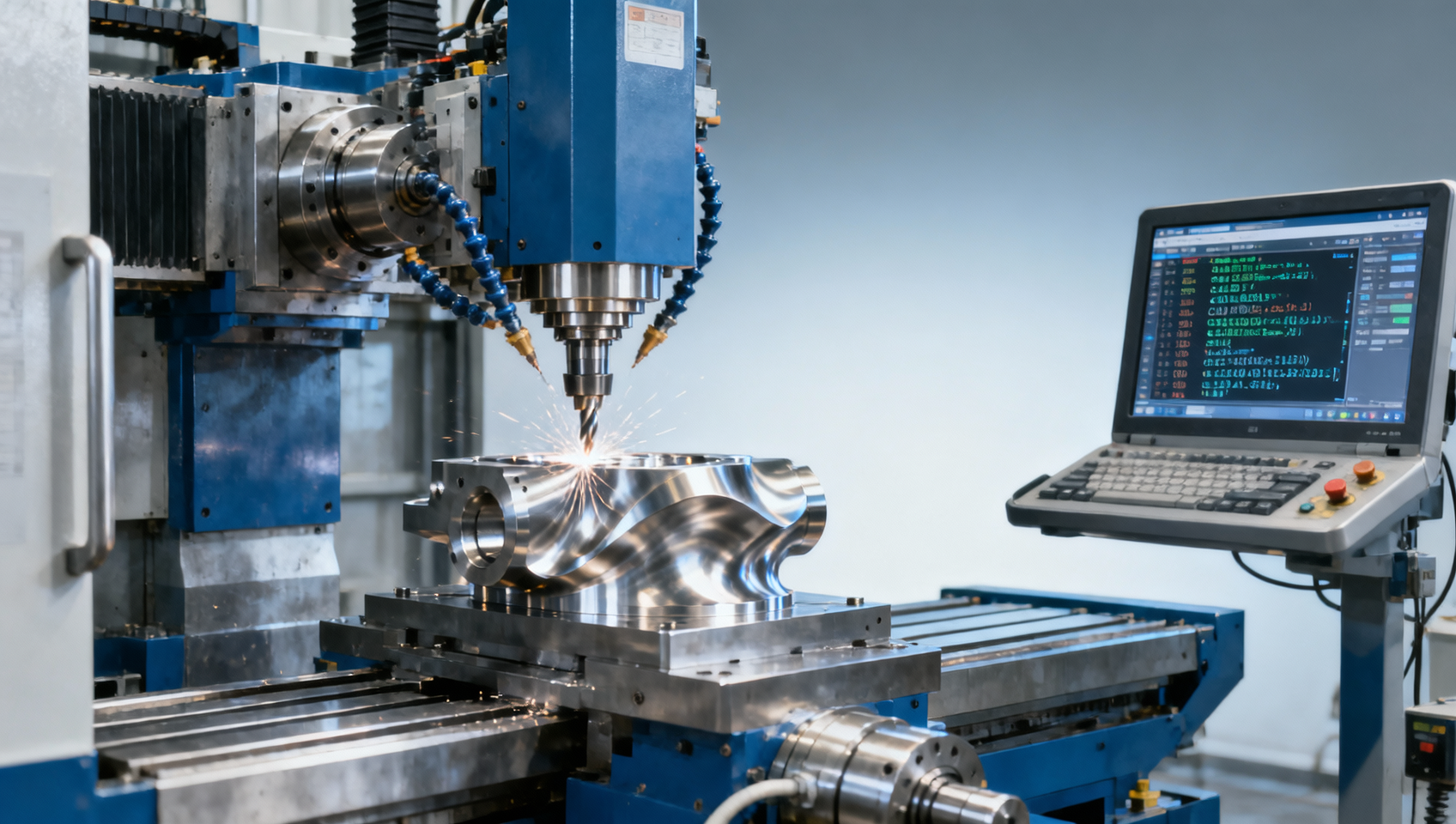
As Global Manufacturing pushes toward higher precision, CNC Programming for complex surfaces remains a weak point when post processing breaks toolpaths, tolerances, and machine compatibility. For professionals in metal machining, industrial CNC, and CNC production, this challenge affects the entire production process—from CNC milling and CNC cutting to automated production line efficiency, purchasing decisions, and long-term industrial automation planning.
In practical production, the problem rarely starts on the machine. It usually starts earlier, when a CAM strategy that looks correct in simulation is translated into machine-ready code through a post processor that does not fully match the controller, kinematics, or surface machining logic. The result can be unexpected axis motion, feed instability, poor surface finish, or even machine alarms during high-value jobs.
For researchers, operators, buyers, and decision-makers, post processing is no longer a minor software setting. It is a production risk factor tied directly to scrap rates, setup time, reprogramming workload, and delivery reliability. This is especially true in aerospace, automotive, energy equipment, and precision electronics, where freeform surfaces, tight tolerances, and multi-axis machining are increasingly common.
A reliable approach requires more than better CAM software. It requires alignment across CAD geometry quality, toolpath strategy, machine configuration, controller capability, tooling selection, verification workflow, and post processor customization. Companies that treat post processing as a strategic manufacturing capability usually reduce troubleshooting cycles from several shifts to a few hours and improve first-pass success rates on complex parts.
Why post processing breaks complex surface machining
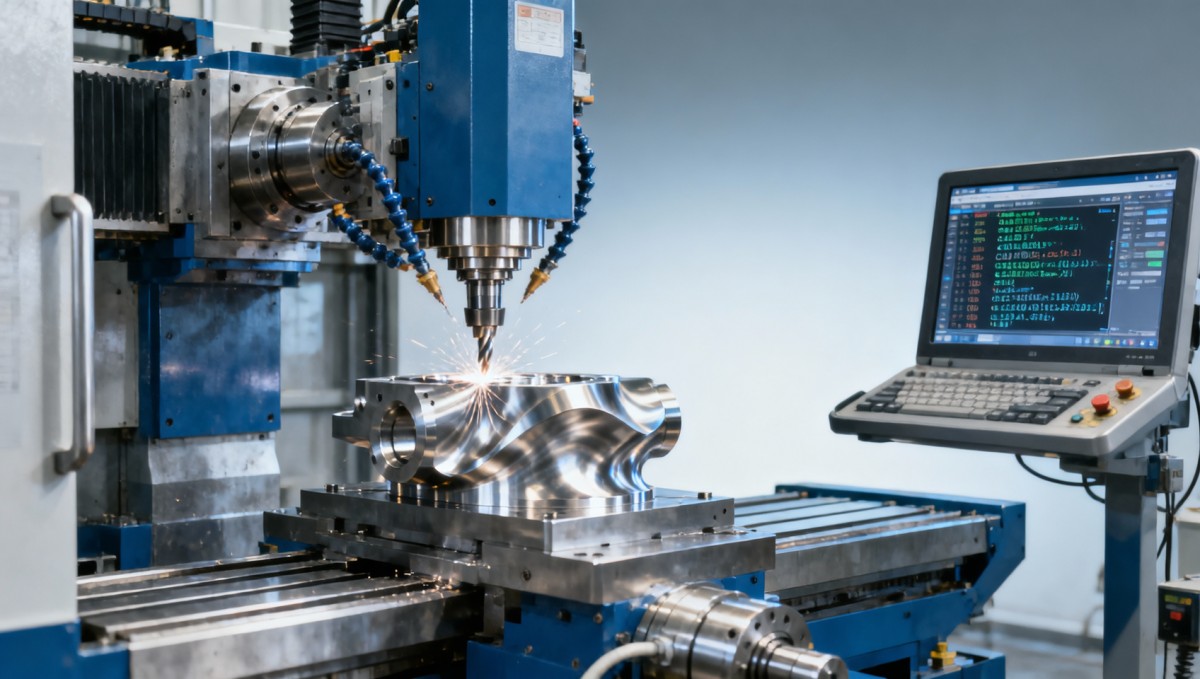
Complex surface machining depends on continuous and accurate conversion of CAM output into NC code. On simple 2.5-axis work, many generic posts are acceptable. On 3-axis sculpted surfaces or 5-axis simultaneous toolpaths, even a small mismatch in rotary limits, linearization settings, or smoothing logic can distort the intended motion. A tolerance of ±0.01 mm in CAM can become unacceptable on the machine if the output code is not optimized for the actual control.
One common failure point is kinematic interpretation. A trunnion-style 5-axis machine, a swivel head machine, and a gantry configuration do not behave the same way. If the post processor assumes the wrong pivot point or axis priority, the tool tip may deviate from the intended contact path. This can lead to scallop inconsistency, cutter overload, or collisions, especially at steep wall angles above 60 degrees.
Another issue is controller language and data handling. Different CNC controls interpret arcs, splines, look-ahead, and feedrate in different ways. Some controllers handle short line segments well at 2,000 to 5,000 blocks per second, while others lose smoothness when code becomes too dense. When a freeform surface toolpath is over-fragmented, machine acceleration limits and servo lag can reduce actual feed by 20% to 40%, affecting both cycle time and finish quality.
Operators also face real-world gaps between virtual output and shop-floor execution. A CAM simulation may not include exact toolholder geometry, machine travel restrictions, or fixture offsets. If post processing does not account for safe retract behavior, rotary unwind strategy, and machine-specific macros, an apparently valid toolpath can become unstable during setup or dry run.
The table below shows the most frequent reasons why CNC programming for complex surfaces fails after post processing and how those failures typically appear during production.
The main conclusion is simple: post processing is not a final export step. It is a core part of CNC production engineering. If it is treated as a generic software output, complex surfaces will continue to fail where precision matters most.
Where the risk appears across machining, purchasing, and production planning
The effects of weak post processing extend beyond programmers. In many factories, surface machining issues first appear as machine-side corrections, manual feed overrides, or finishing defects. By the time management notices, the problem has already increased setup hours, consumed expensive tooling, and disrupted delivery schedules. On a multi-axis part with 6 to 12 operations, one unstable post can affect the whole sequence.
Impact on operators and process engineers
Operators need predictability. When NC code behaves differently from simulation, they compensate manually through reduced feed, extra dry runs, or segmented execution. That may protect the machine, but it reduces productivity. A job planned for 8 hours may stretch to 10 or 11 hours if the surface finishing passes require constant supervision.
Process engineers face an additional burden: they must determine whether the problem comes from toolpath strategy, tooling, machine dynamics, or post logic. Without a structured validation workflow, troubleshooting often becomes trial and error. That is costly when the part material is titanium, Inconel, hardened steel, or high-value aluminum aerospace stock.
Impact on buyers and decision-makers
For procurement teams, software and machine specifications can look complete on paper while still failing in production. A machine may offer 5-axis capability, but if the post processor ecosystem is weak, implementation time may extend from 2 weeks to 8 weeks. A lower purchase price can become a higher ownership cost if every complex surface job requires custom edits and repeated prove-outs.
Decision-makers should therefore evaluate CNC production as a linked system, not as separate purchases. The machine tool, CAM platform, controller, post processor, digital verification tools, and application support must work together. In flexible manufacturing or smart factory environments, these integration gaps become more visible because bad NC output disrupts scheduling, tool management, and automated handoff across cells.
Four operational warning signs
- Complex surface jobs need more than 2 prove-out cycles before stable production starts.
- Actual machine feed regularly falls 15% or more below programmed feed on finishing passes.
- Surface rework, polishing, or hand blending is routine on parts with freeform geometry.
- New machines or controllers require frequent manual code edits after every CAM update.
These warning signs are useful because they connect technical post processing quality to business-level indicators such as delivery reliability, operator load, and cost per part.
How to evaluate post processing capability before selecting machines, software, or suppliers
Companies often compare spindle power, travels, rapid rates, and controller brand, but they spend too little time validating post processing performance. For complex surfaces, a stronger selection method is to test the complete digital-to-machine chain using real part geometry. This should include at least 3 sample jobs: one 3-axis sculpted surface, one indexed 3+2 part, and one simultaneous 5-axis finishing application.
The goal is not only to see whether code can be generated. The goal is to see whether code is stable, readable, controller-compatible, and repeatable across machines of the same type. Buyers should ask whether the supplier supports post tuning for specific controllers, safe axis unwinding, machine simulation alignment, and output validation after software version updates.
The table below can be used as a practical procurement and technical review checklist when evaluating CNC systems for complex surface machining.
The most important insight is that buying a CNC machine without validating post processing is similar to buying tooling without checking toolholder fit. It may appear workable at first, but hidden incompatibilities create downstream cost. A stronger buying process reduces commissioning delays and protects long-term CNC production performance.
Key questions to ask vendors
- Can the post processor be tuned to the exact controller and machine kinematics in use?
- What is the typical lead time for initial post setup: 3 days, 2 weeks, or longer?
- How are software updates tested to prevent output changes on existing jobs?
- Is machine simulation driven by the same post logic used for NC code generation?
Implementation workflow that reduces failure on complex surfaces
A more reliable CNC programming workflow starts before CAM. Surface quality from CAD matters because gaps, overlaps, and trimmed boundary errors can cause unstable cutter contact. For precision industries, geometry should be reviewed before programming, especially on imported models and revision-controlled assemblies. Even a deviation of 0.02 mm between adjacent surfaces can create visible marks after finishing.
Recommended five-step process
- Validate model integrity, stock definition, fixture positions, and machine envelope before toolpath creation.
- Select toolpath strategies based on curvature, contact method, and required finish, not only on shortest programming time.
- Run post output through machine-aware verification, checking axis travel, unwinding behavior, and collision zones.
- Perform controlled prove-out with dry run, feed limits, and setup verification before full-speed machining.
- Record machine-side observations and feed them back into post tuning, templates, and standard process libraries.
This five-step process is especially effective for factories handling multiple materials and batch sizes. In low-volume, high-mix production, standardization is often weak, so post processing problems repeat. In larger automated production lines, the same issues spread faster across multiple machines. In both cases, a closed-loop workflow saves time.
For 5-axis surface finishing, many teams also benefit from practical guardrails. These include limiting rapid orientation changes, using filtered tool axis motion, defining maximum rotary reversals per path segment, and choosing output tolerances that match controller capacity rather than the smallest possible CAM value. A common shop range for finishing tolerance may be 0.005 mm to 0.02 mm depending on part function, material, and controller performance.
Common implementation mistakes
- Using the same post settings for different machine builds, even when rotary axes or control options differ.
- Optimizing only for simulation appearance instead of actual machine acceleration and look-ahead behavior.
- Skipping version control for posts, setup sheets, and NC output, which makes repeatability difficult.
- Allowing manual edits on the shop floor without feeding those changes back into the master process.
When these mistakes are controlled, prove-out time can shrink noticeably. In many production environments, the improvement is not dramatic in percentage terms on one part, but across 20 to 50 recurring part families, the cumulative gain in capacity and predictability becomes significant.
Practical FAQ for manufacturers dealing with post processing failures
How can a factory tell whether the issue is CAM strategy or the post processor?
Start with comparison tests. Run the same geometry using one proven strategy and one alternative strategy, then compare machine behavior after post output. If both toolpaths show similar machine alarms, axis irregularity, or feed collapse, the post or controller handling is a strong suspect. If only one strategy fails, the issue may be more related to tool engagement, path density, or surface contact method.
What types of companies are most exposed to this problem?
The highest exposure is usually found in aerospace machining, mold and die work, medical components, energy equipment, and high-end automotive parts. These sectors often require freeform surfaces, thin walls, or 5-axis access. Shops producing low-cost prismatic parts may not feel the issue as strongly, but once simultaneous multi-axis work rises above 15% to 20% of output, post processing quality becomes much more important.
How long does post optimization usually take?
For a standard machine-controller combination with clear documentation, initial post tuning may take 3 to 10 working days. For custom machines, retrofit controls, or demanding 5-axis applications, the cycle may extend to 2 to 6 weeks including test cuts. What matters most is not speed alone, but whether the output is verified under real production conditions before release.
Which metrics should management track?
Good tracking metrics include first-pass acceptance rate, prove-out hours per new part, actual-versus-programmed cycle time variance, number of manual code edits per job, and rework hours on surface finishing. Even 4 or 5 consistent metrics can reveal whether post processing is improving or quietly increasing production cost.
Is generic post processing ever enough?
For simple turning, drilling, or standard 3-axis work, a generic post may be acceptable if tested properly. For complex surfaces, high-speed finishing, and simultaneous 5-axis machining, it is rarely enough over the long term. The financial risk comes not from one obvious failure, but from repeated small losses in machine time, surface quality, and operator confidence.
CNC programming for complex surfaces fails at post processing when digital intent and machine reality are not aligned. The strongest manufacturers reduce that gap by treating post processors as production assets, not export utilities. They validate machine kinematics, controller behavior, verification workflow, and supplier support before those issues reach the shop floor.
If your team is evaluating CNC machines, refining multi-axis workflows, or trying to stabilize complex surface machining, a structured review of post processing capability can quickly reveal hidden risks and practical improvement points. Contact us to discuss your application, get a tailored workflow recommendation, or learn more about solutions for CNC production, precision machining, and industrial automation planning.
Recommended for You
![]() Iranian LNG Vessels Breach U.S. Strait Blockade; Shanghai Crude Surges 4%Manufacturing Market Research Center
Iranian LNG Vessels Breach U.S. Strait Blockade; Shanghai Crude Surges 4%Manufacturing Market Research Center![]() Pakistan Launches CNC Localization Tender for CPEC II Smart Manufacturing ParkGlobal Machine Tool Trade Research Center
Pakistan Launches CNC Localization Tender for CPEC II Smart Manufacturing ParkGlobal Machine Tool Trade Research Center![]() NVIDIA Joins $1T Club; AI-Driven CNC Digital Twin Gains Global TractionCNC Machining Technology Center
NVIDIA Joins $1T Club; AI-Driven CNC Digital Twin Gains Global TractionCNC Machining Technology Center![]() World's First 5-Axis Middle-Grade Wire EDM Machine Enters Mass ProductionMachine Tool Industry Editorial Team
World's First 5-Axis Middle-Grade Wire EDM Machine Enters Mass ProductionMachine Tool Industry Editorial Team![]() China’s CNC Machine Tool Export Prices Up 11.3% in Q1 2026Global Machine Tool Trade Research Center
China’s CNC Machine Tool Export Prices Up 11.3% in Q1 2026Global Machine Tool Trade Research Center![]() Saudi Energy Security Boosts CNC Import Efficiency in Middle EastGlobal Machine Tool Trade Research Center
Saudi Energy Security Boosts CNC Import Efficiency in Middle EastGlobal Machine Tool Trade Research Center


Aris Katos
Future of Carbide Coatings
15+ years in precision manufacturing systems. Specialized in high-speed milling and aerospace grade alloy processing.
▶
NVIDIA Joins $1T Club; AI-Driven CNC Digital Twin Gains Global TractionCNC Machining Technology Center▶
Nvidia's Huang Criticizes US Chip Controls, CNC Digital Twin Solutions Expand OverseasCNC Machining Technology Center▶
Composite Material Machining Gets Harder on Multi-axis SystemsCNC Machining Technology Center▶
Where Multi-axis Machining Pays Off for Complex ComponentsCNC Machining Technology Center▶
Stainless Steel Machining Process Gaps That Raise Scrap RatesCNC Machining Technology Center
Mastering 5-Axis Workholding Strategies
Join our technical panel on Nov 15th to learn about reducing vibrations in thin-wall components.

Providing you with integrated sanding solutions
Before-sales and after-sales services
Comprehensive technical support