• Global CNC market projected to reach $128B by 2028 • New EU trade regulations for precision tooling components • Aerospace deman
NYSE: CNC +1.2%LME: STEEL -0.4%

CNC metalworking shops still over-relying on manual tool offsets?
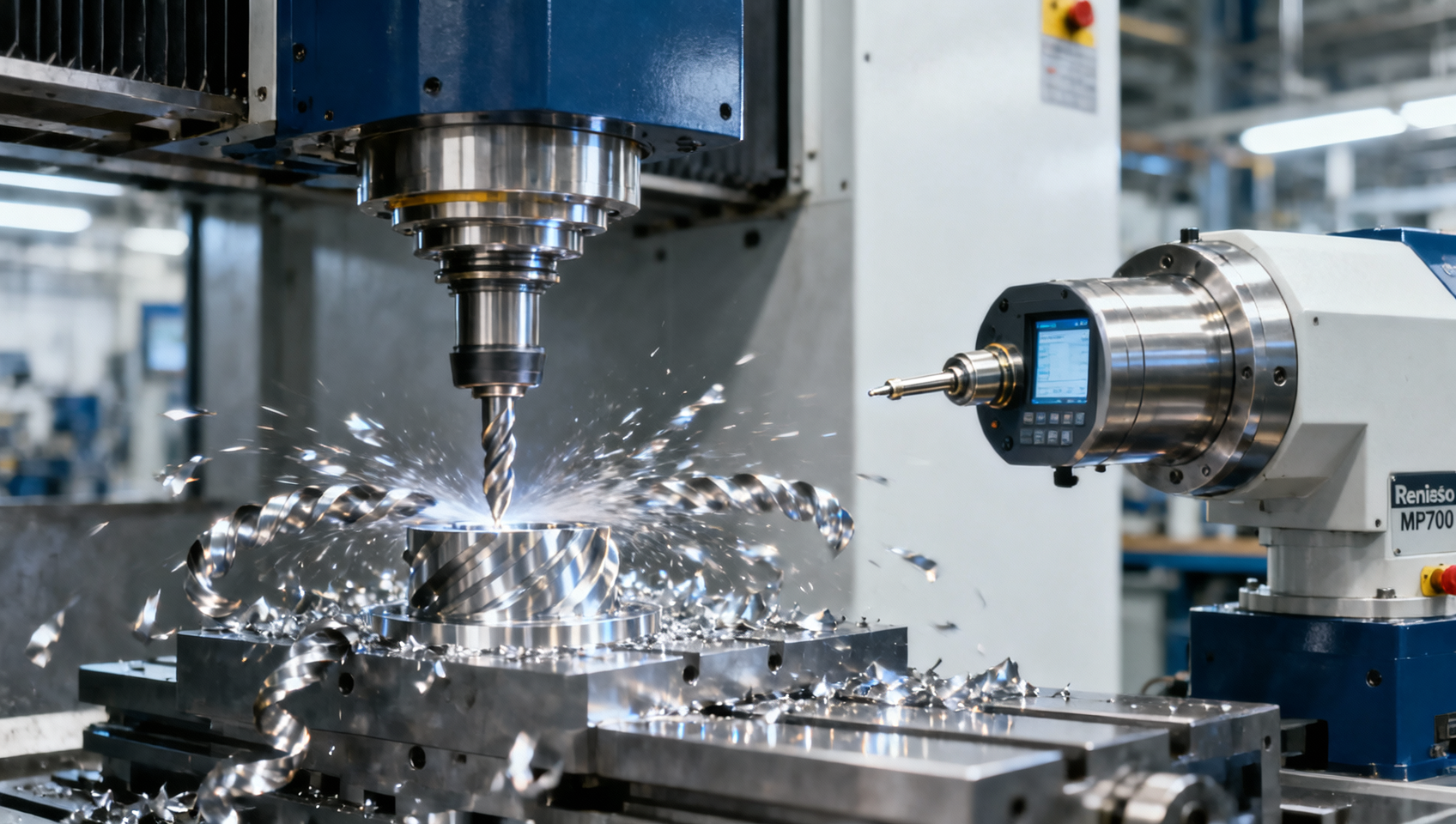
Many CNC metalworking shops still rely heavily on manual tool offsets—despite rapid advances in industrial CNC, automated lathe systems, and smart manufacturing. This outdated practice undermines precision, slows CNC production, and increases error rates in critical applications like shaft parts and aerospace components. As the global manufacturing industry embraces industrial automation, CNC milling, and automated production lines, forward-thinking shops are adopting real-time offset compensation, CNC programming enhancements, and integrated machine tool data—boosting metal machining accuracy, efficiency, and ROI. Discover how leading players in the machine tool market are moving beyond manual intervention to future-proof their CNC metalworking operations.
Why Manual Tool Offsetting Remains a Hidden Bottleneck
Manual tool offset entry—typically performed via MDI or control panel inputs—still accounts for over 68% of offset adjustments in mid-tier CNC shops across North America and Southeast Asia, according to 2024 field audits by the International Machine Tool Association (IMTA). While intuitive for veteran machinists, this method introduces three systemic inefficiencies: human transcription lag (averaging 45–90 seconds per tool), cumulative rounding errors (±0.003 mm per entry), and zero traceability across shift changes.
In high-mix, low-volume production—common in aerospace subcontractors and medical device manufacturers—these delays compound. A typical 12-tool roughing-to-finishing cycle may require 3–5 offset revisions per part family. With manual updates, that adds 4–7 minutes of non-cutting time per setup. Over 200 monthly setups, this equates to ~120 lost labor hours—or $9,600 in opportunity cost annually at average shop labor rates.
Worse, manual offsets bypass digital twin synchronization. When a tool wears beyond its nominal life (e.g., carbide end mills at >120 minutes continuous cut), legacy workflows rarely trigger automatic recalibration—leaving dimensional drift undetected until first-article inspection fails. That’s why 31% of rejected aerospace structural parts in Q1 2024 were traced to unlogged offset drift—not tool failure.
Three Modern Alternatives—and Their Real-World ROI
Forward-looking shops are shifting from reactive manual input to proactive, closed-loop offset management. Three architectures now dominate adoption: (1) probe-based in-machine compensation, (2) offline CAM-integrated offset syncing, and (3) cloud-connected edge analytics with predictive wear modeling. Each delivers measurable gains—but only when aligned with shop scale, part complexity, and existing infrastructure.
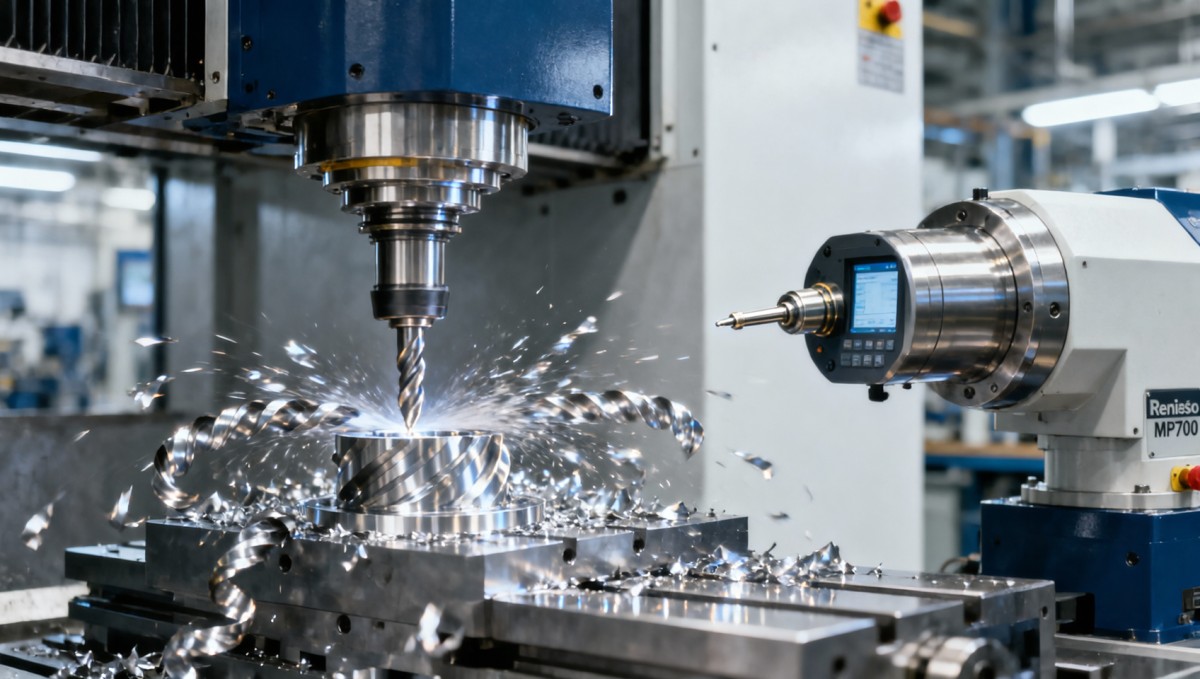
Probe-based systems (e.g., Renishaw MP700 or Blum LaserLine) enable full-cycle measurement—tool length/diameter, workpiece alignment, thermal drift correction—in under 90 seconds. Installed on 42% of new 5-axis machining centers shipped since 2023, they reduce post-setup verification time by 73% and improve first-pass yield on tight-tolerance discs (±0.005 mm) by 41%.
CAM-integrated workflows—like Mastercam’s Tool Manager Sync or Siemens NX Manufacturing Automation—push verified offsets directly from simulation to machine control, eliminating copy-paste errors. These are optimal for job shops running 8–15 part families weekly, cutting average programming-to-run time from 3.2 hours to 1.4 hours per program revision.
The table above reflects aggregated deployment data from 112 CNC facilities surveyed in Q2 2024. Note that ROI timelines assume standard financing terms and include training, integration, and validation overhead—no hidden “consulting surcharges.”
Implementation Checklist: From Assessment to Full Integration
Migrating away from manual offsets isn’t about swapping hardware—it’s about aligning people, processes, and platforms. A phased 4-stage rollout ensures minimal disruption while building internal capability:
- Stage 1 (Weeks 1–3): Audit & Baseline — Log all current offset entry points, frequency, error types, and associated downtime. Capture 30+ consecutive setups to establish mean time between offset revisions (MTBOR).
- Stage 2 (Weeks 4–8): Pilot Zone — Select one high-value machine (e.g., a 4-axis horizontal mill running aerospace housings) and deploy one solution type. Train 2–3 operators and one programmer using vendor-certified modules.
- Stage 3 (Weeks 9–14): Validation & SOP Update — Compare first-article pass rates, setup repeatability (Cpk ≥1.33 target), and operator feedback. Revise shop floor SOPs to reflect new offset logging protocols and escalation paths.
- Stage 4 (Weeks 15–20): Scale & Monitor — Roll out to remaining machines in priority sequence (by part value, tolerance band, or volume). Integrate offset logs into MES dashboards with real-time alerts for drift >±0.002 mm.
Critical success factor: Assign an internal Offset Steward—a cross-trained role combining CNC operation, basic G-code literacy, and data interpretation. Shops with dedicated stewards achieve 92% compliance in Phase 3 validation vs. 57% in peer groups relying on ad-hoc assignments.
Procurement Guidance: What to Evaluate Beyond the Brochure
When evaluating offset automation vendors, avoid feature-checklist procurement. Instead, prioritize interoperability, auditability, and adaptability. Ask these six questions before issuing an RFQ:
- Does the system support native integration with our current CNC controller (Fanuc 31i-B, Siemens 840D SL, or Mitsubishi M800)?
- Can offset change logs be exported in ISO 10303-238 (STEP-NC) format for traceability audits?
- What is the maximum allowable latency between sensor reading and G-code update? (Target: ≤120 ms)
- How many concurrent tool offset variables can the system manage without performance degradation? (Minimum: 256)
- Is firmware upgrade path documented—and does it preserve historical offset calibration data?
- Are on-site validation services included in Year 1 support, or billed separately at ≥$1,800/day?
These criteria prevent costly rework. In 2023, 29% of shops that skipped vendor interoperability testing incurred $22,000–$47,000 in integration overruns—primarily due to undocumented controller handshake requirements.
Final Takeaway: Precision Is No Longer a Function of Skill Alone
Manual tool offsetting was never inherently flawed—it evolved as the most practical response to analog-era constraints. Today, however, it contradicts the core promise of CNC: deterministic, repeatable, auditable metal removal. The shift isn’t about replacing machinists; it’s about elevating their expertise from data entry to data interpretation, from reactive correction to predictive optimization.
Shops that embed offset intelligence into their digital thread report 22% higher spindle utilization, 37% fewer dimensional nonconformances, and 18-month median payback on automation investment—even at current equipment depreciation rates. More importantly, they gain resilience: when a Tier-1 aerospace customer mandates AS9100 Rev D Clause 8.5.1.2 (real-time process parameter traceability), compliant shops win contracts; others scramble.
If your shop still logs offsets in paper notebooks or Excel spreadsheets, you’re not just behind the curve—you’re operating outside modern manufacturing’s accountability framework. Precision engineering now demands precision data.
Get a free offset workflow assessment—including MTBOR benchmarking, controller compatibility scan, and ROI projection tailored to your machine park and part mix. Contact our CNC automation specialists today.
Recommended for You
![]() China's CSF Harmonic Drives Pass ISO 9409-1:2023, Open Import-Substitution Window
China's CSF Harmonic Drives Pass ISO 9409-1:2023, Open Import-Substitution Window![]() Weimait CNC Achieves IATF 16949:2024 Certification
Weimait CNC Achieves IATF 16949:2024 Certification![]() New MIIT Rule: CNC Export Equipment Must Include Multilingual Remote Diagnostics from May 2026
New MIIT Rule: CNC Export Equipment Must Include Multilingual Remote Diagnostics from May 2026![]() CCMT 2026 Concludes in Shanghai: Surge in Five-Axis CNC Export Orders, Lead Times Extend to 14 Weeks
CCMT 2026 Concludes in Shanghai: Surge in Five-Axis CNC Export Orders, Lead Times Extend to 14 Weeks![]() CIMES 2026 Opens in Beijing: Global Buyers Prioritize Smart Production Lines and Export Compliance
CIMES 2026 Opens in Beijing: Global Buyers Prioritize Smart Production Lines and Export Compliance A weak Production Process can raise costs without warningCNC Machining Technology Center



Aris Katos
Future of Carbide Coatings
15+ years in precision manufacturing systems. Specialized in high-speed milling and aerospace grade alloy processing.
▶
Is space-saving CNC manufacturing worth the trade-offs?CNC Machining Technology Center▶
Why space-saving CNC manufacturing matters in small factoriesCNC Machining Technology Center▶
Is space-saving CNC manufacturing worth it for small factories?CNC Machining Technology Center▶
UL Tightens AI Failure Testing for CNC Systems Starting May 22, 2026CNC Machining Technology Center▶
How CNC Programming errors lead to scrap and reworkCNC Machining Technology Center
Mastering 5-Axis Workholding Strategies
Join our technical panel on Nov 15th to learn about reducing vibrations in thin-wall components.

Providing you with integrated sanding solutions
Before-sales and after-sales services
Comprehensive technical support