• Global CNC market projected to reach $128B by 2028 • New EU trade regulations for precision tooling components • Aerospace deman
NYSE: CNC +1.2%LME: STEEL -0.4%

CNC milling finish problems linked to toolpath choices
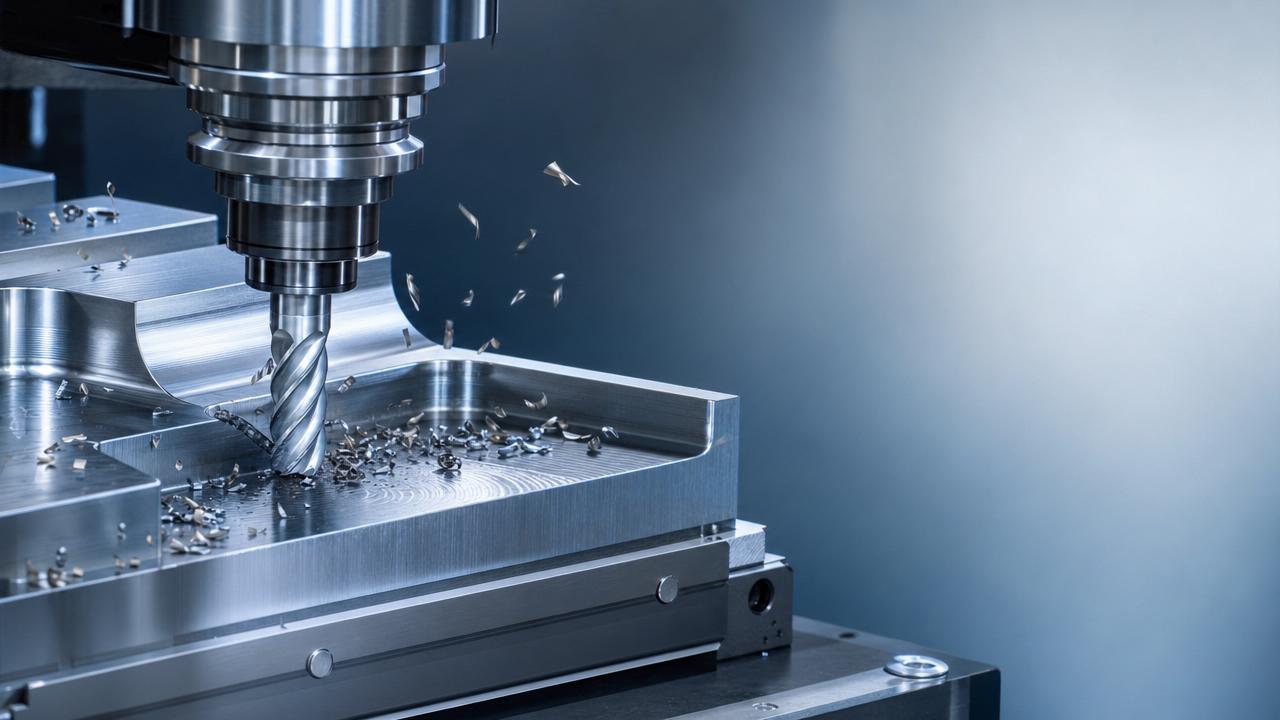
Poor surface quality in CNC milling is often traced not only to tooling or machine condition, but also to toolpath choices that directly affect cutter engagement, vibration, and chip load. For operators, understanding how path strategies influence finish can help reduce rework, improve consistency, and achieve better part quality across complex machining tasks.
Understanding finish problems in CNC milling
In daily CNC milling work, surface finish is one of the clearest indicators of process stability. A part may be dimensionally acceptable yet still fail because of visible tool marks, chatter patterns, torn material, waviness, or inconsistent gloss. Operators often first suspect worn tools, spindle runout, poor fixturing, or incorrect feeds and speeds. These are valid checks, but toolpath design is just as important. In many cases, the finish problem is created by how the cutter enters, exits, overlaps, and engages material through the programmed path.
This matters across the broader precision manufacturing industry because modern machine tools are expected to handle complex geometries, tighter tolerances, and shorter production cycles. From aerospace brackets to automotive housings and electronic device components, CNC milling strategies now influence not only cycle time but also downstream polishing, fitting, coating, and inspection results. For operators, better understanding of toolpath behavior creates practical value: fewer rejected parts, more predictable finish quality, and improved machine utilization.
At its core, a toolpath is the route the cutter follows and the logic that controls how it engages the workpiece. Two programs can remove the same volume of material, yet one may leave a smooth and uniform surface while the other causes vibration and inconsistent scallops. That difference often comes from path direction, step-over, corner treatment, radial engagement, lead-in and lead-out style, and whether the strategy keeps cutting load stable.
Why the industry pays close attention to toolpath quality
The global machine tool sector continues moving toward high precision, automation, and digital integration. As machining centers and multi-axis systems become more capable, expectations for surface integrity rise as well. A poor finish is no longer a small cosmetic issue. It can reduce fatigue performance, interfere with assembly fits, affect sealing surfaces, and increase manual finishing costs. In high-mix or export-oriented manufacturing, inconsistent surface quality also weakens process repeatability and customer confidence.
For this reason, CNC milling programming and shop-floor operation are becoming more closely linked. CAM software can generate advanced strategies, but operators still need to recognize whether the selected path suits the machine, holder, tool length, material, and fixture rigidity. In smart manufacturing environments, process data can help refine performance, yet practical judgment on the floor remains essential when finish issues appear.
What toolpath choices most often affect surface finish
Several toolpath features directly influence finish in CNC milling. The first is cutter engagement consistency. When radial engagement changes sharply, chip load can spike, causing deflection or chatter. This often happens in sharp corners, narrow slots, and sudden step transitions. The second is path direction. Climb milling and conventional milling leave different cutting characteristics, especially in materials prone to smearing or work hardening. The third is entry and exit behavior. Aggressive plunging or abrupt retraction can leave marks near walls and floor surfaces.
Step-over and path overlap also matter. If step-over is too large in finishing, scallop height becomes visible. If overlap is inconsistent, the surface may show bands or witness lines. In addition, long linear passes on thin-walled parts may excite vibration differently from arc-based or smoothing toolpaths. Even a capable machine can produce poor finish if the path repeatedly pushes the tool into unstable engagement zones.
For operators in production settings, this table is a practical reminder that many finish problems in CNC milling are process-behavior issues rather than isolated machine faults.
Common CNC milling scenarios where toolpath makes the biggest difference
Not every feature responds the same way to a given path strategy. Flat surfaces, deep pockets, open contours, and thin walls all create different cutting conditions. On broad flat faces, a parallel finishing path may leave directional lines, while a cross-hatch approach can improve visual uniformity but may increase cycle time. In deep cavities, a path that repeatedly changes engagement near corners can amplify tool vibration because of longer tool overhang. On thin ribs and walls, cut direction and sequence become critical because material can move during finishing.
Complex 3D surfaces are especially sensitive. A toolpath with poor smoothing tolerance may cause small machine decelerations and accelerations that print onto the part as texture changes. Ball nose finishing, common in mold and contour work, must be carefully matched with step-over, tool inclination, and machine motion quality. In these situations, CNC milling finish quality depends on both geometry strategy and machine dynamics.
Typical part-feature considerations
How operators can diagnose whether the toolpath is the real cause
A useful approach is to study the pattern left on the surface. Repeating marks at corner transitions often point to engagement spikes. Finish that worsens only at one wall depth can indicate local deflection linked to a path segment rather than an overall spindle problem. If changing the tool does not remove the pattern, and if machine condition checks are normal, the path deserves closer review.
Operators should compare the bad area with the cutter motion in simulation or on-screen backplot. Look for sudden direction reversals, full-width contact, extra stock left in corners, or high feed carry-through into delicate finishing areas. Listening during the cut is also valuable. A stable sound during most of the toolpath and harsh noise only at repeated locations usually signals a path-related load variation. In CNC milling, these clues can save time by narrowing the troubleshooting path before unnecessary machine adjustments are made.
Practical improvements that often deliver better finish
The most effective improvement is often to stabilize cutter load. Adaptive roughing, trochoidal motion, or other constant-engagement approaches can reduce sudden force changes before the finish pass even begins. A better roughing path leaves more predictable stock, which helps finishing tools cut evenly. For final finishing, reducing step-over, adding a spring pass where appropriate, and using smooth lead-in and lead-out motion can make a major difference.
Another common improvement is to separate roughing logic from finishing logic. A roughing strategy designed mainly for metal removal rate should not automatically be used for visible surfaces. Finishing toolpaths should prioritize stable contact, reduced tool pressure, and consistent surface pattern. On parts with varying wall support, sequence the operations so the most sensitive features are finished when the setup is still rigid and material balance remains favorable.
Machine motion settings also support better outcomes. If available, smoothing functions, jerk control, and high-speed contour options can help the machine follow the programmed path more cleanly. However, these should complement a sound toolpath, not compensate for a poor one. In CNC milling, software settings and shop-floor judgment work best when aligned.
Business value of improved finish strategy in modern manufacturing
For manufacturers operating in automotive, aerospace, energy, and electronics supply chains, finish quality has direct cost implications. Better toolpath choices reduce hand polishing, cut inspection failures, and improve process consistency from machine to machine. In automated and flexible production systems, this consistency supports better scheduling and more reliable throughput. A well-optimized CNC milling process also extends tool life because it avoids repeated force spikes that damage cutting edges.
This is why toolpath awareness belongs not only to CAM programmers but also to operators, supervisors, and process engineers. In digital manufacturing environments, shops that connect programming intent with real cutting behavior are better positioned to improve quality without relying only on trial and error.
Key points operators should keep in mind
When finish problems appear in CNC milling, start with a balanced view. Check the basics such as tool wear, holder condition, runout, workholding, coolant delivery, and spindle health. But do not stop there. Review whether the path causes unstable engagement, excessive step-over, abrupt motion, or poor sequencing. Many recurring finish defects come from a strategy mismatch between the part feature and the programmed cutter motion.
The most practical habit is to treat surface finish as a process signal. If the same mark appears in the same location across multiple parts, the toolpath is likely telling you something. By reading that signal correctly, operators can support higher part quality, reduce rework, and contribute directly to more efficient precision manufacturing. For shops aiming to strengthen CNC milling performance, refining toolpath choices is often one of the fastest and most cost-effective ways to improve results.
PREVIOUS ARTICLE
Recommended for You
![]() Five Ministries Launch Joint Enforcement on EV Battery RecyclingManufacturing Policy Research Center
Five Ministries Launch Joint Enforcement on EV Battery RecyclingManufacturing Policy Research Center![]() Top 10 Future Industries Roadmap 2026 ReleasedManufacturing Market Research Center
Top 10 Future Industries Roadmap 2026 ReleasedManufacturing Market Research Center![]() Global Methanol-Electric Ecosystem Alliance LaunchedManufacturing Market Research Center
Global Methanol-Electric Ecosystem Alliance LaunchedManufacturing Market Research Center![]() ISO 23218-3:2026 Enters Force: CNC Digital Twin Interoperability Standard Goes GlobalCNC Machining Technology Center
ISO 23218-3:2026 Enters Force: CNC Digital Twin Interoperability Standard Goes GlobalCNC Machining Technology Center![]() ANVISA New Rule: Portuguese Biocompatibility Labels for Medical CNC EquipmentManufacturing Policy Research Center
ANVISA New Rule: Portuguese Biocompatibility Labels for Medical CNC EquipmentManufacturing Policy Research Center![]() KATS Updates KC Certification: CNC Cybersecurity Modules Must Comply with IEC 62443-4-2Manufacturing Policy Research Center
KATS Updates KC Certification: CNC Cybersecurity Modules Must Comply with IEC 62443-4-2Manufacturing Policy Research Center


Aris Katos
Future of Carbide Coatings
15+ years in precision manufacturing systems. Specialized in high-speed milling and aerospace grade alloy processing.
▶
ISO 23218-3:2026 Enters Force: CNC Digital Twin Interoperability Standard Goes GlobalCNC Machining Technology Center▶
CNC Programming errors that create repeat scrap patternsCNC Machining Technology Center▶
CNC milling finish problems that tool changes alone cannot fixCNC Machining Technology Center▶
CNC metalworking mistakes that lead to costly reworkCNC Machining Technology Center▶
Is space-saving CNC manufacturing losing service accessCNC Machining Technology Center
Mastering 5-Axis Workholding Strategies
Join our technical panel on Nov 15th to learn about reducing vibrations in thin-wall components.

Providing you with integrated sanding solutions
Before-sales and after-sales services
Comprehensive technical support